 Bellingham Siding
 Blaine sits right where the Salish Sea meets the Canadian border, and that location comes with a siding problem most inland Washington towns never have to think about: salt-laden marine air moving in off the water almost year-round, wind-driven rain that hits walls sideways instead of straight down, and a moss and algae season that can run eight or nine months out of the year in shaded, north-facing exposures. Siding that would hold up fine in a drier part of Whatcom County can start showing problems in Blaine within a few seasons if it wasn't chosen or installed with this climate in mind.
This page covers what that means specifically for fiber cement siding on a Blaine home — what the local climate actually does to exterior walls, what a correct James Hardie installation looks like on the coast, and why the crew doing the work matters as much as the product itself.
What Blaine's Climate Does to Siding
Blaine's exposure to open water means three climate stresses stack on top of each other in a way that's harder on siding than any one of them alone would be.
Salt Air
Airborne salt from the water settles on exterior surfaces and accelerates corrosion of fasteners, trim, and any metal components in a wall assembly. Over time it can also degrade paint films and cause premature fading or chalking on materials that weren't engineered to resist it. Homes closer to the water — including many around Drayton Harbor and Semiahmoo Bay — see this faster than homes set farther back, but the whole town gets some exposure.
Driving Rain
Wind off the strait doesn't just bring rain straight down — it pushes it sideways into walls, seams, and trim joints. That matters because most siding failures aren't caused by water landing on a wall; they're caused by water finding a gap, seam, or fastener hole and working its way behind the cladding where it can't dry out. A wall system that manages bulk water well in a calm rain can still fail in wind-driven rain if the details weren't built for it.
Moss and Algae Season
Cool, damp, and often overcast conditions for much of the year create ideal conditions for moss and algae growth, especially on north- and west-facing walls, under eaves, and in areas that stay shaded most of the day. Left unaddressed, sustained moss growth holds moisture against a wall surface far longer than open air would, which is a problem for any siding material but especially for ones that aren't dimensionally stable when wet.
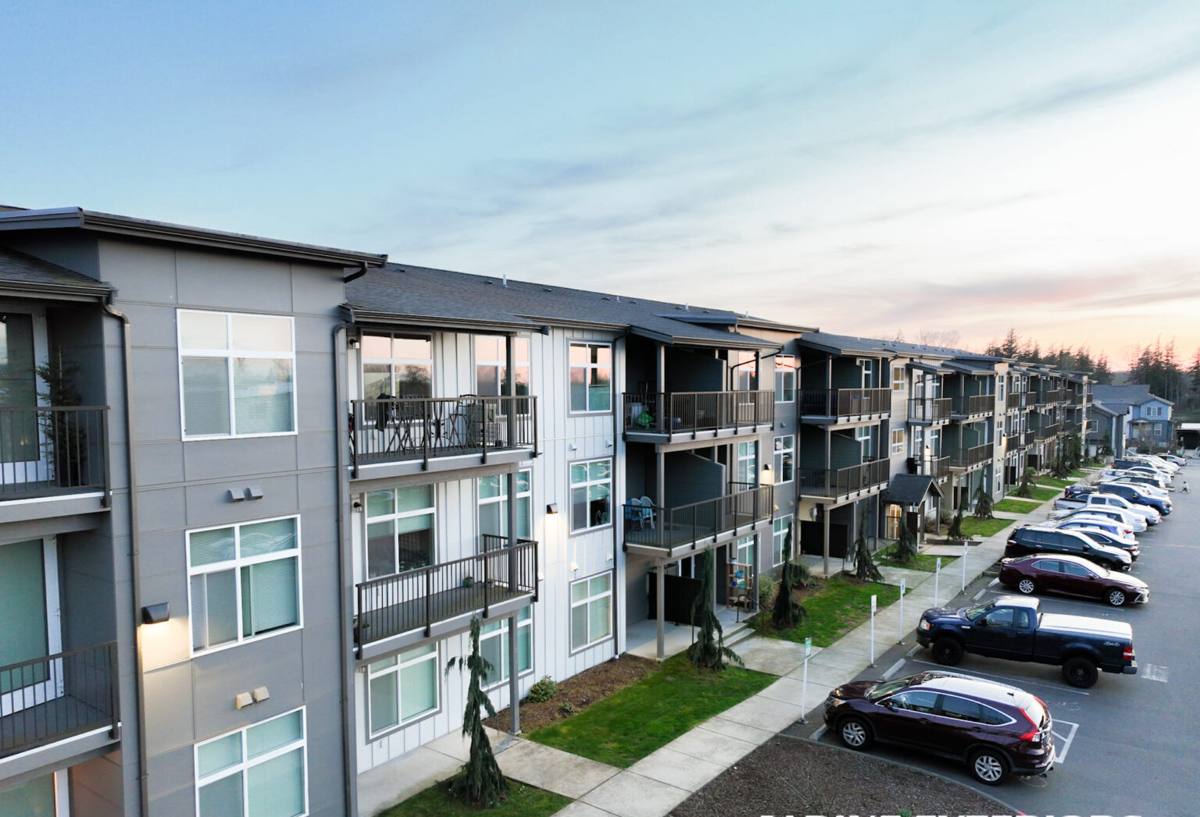
Why We Only Install James Hardie Fiber Cement Here
We install James Hardie fiber cement siding exclusively — we don't offer vinyl, LP SmartSide, Cemplank, Allura, or primed wood siding, and in a coastal town like Blaine that's a deliberate choice, not a brand preference.
- Non-combustible core. Hardie's fiber cement composition doesn't burn, which matters on any home but carries extra weight given Washington's wildfire seasons and insurance considerations.
- Engineered for wet marine climates. Hardie's HZ5 product line is specifically formulated for regions with prolonged moisture exposure and freeze-thaw cycling — the Pacific Northwest coast is exactly the climate zone it's built for.
- ColorPlus factory finish. A baked-on finish applied in controlled conditions holds color and resists the fading and chalking that salt air and UV exposure cause faster in field-applied paint.
- Dimensionally stable when wet. Fiber cement doesn't swell, cup, or delaminate the way some wood-based and engineered wood products can when they stay damp for extended periods — a real risk during Blaine's long wet season.
- Transferable warranty backed by a large manufacturer. That matters more in a climate that's actively testing the material, not less.
None of this means other products are junk. It means that after years of installing and standing behind siding in this specific climate, fiber cement from a manufacturer with a climate-engineered product line is what we're willing to warranty our workmanship on.
What a Correct Installation Looks Like on the Coast
Fiber cement siding is only as good as the installation behind it. In a wind-driven-rain environment like Blaine, the details that get skipped on an easier job are exactly the details that cause callbacks two or three winters later.
Water Management Comes First
Before a single piece of siding goes up, the wall needs a correctly lapped weather-resistive barrier, properly integrated flashing at every window, door, and penetration, and a drainage plane that lets any water that does get behind the cladding find its way back out instead of sitting against the sheathing. On a marine-exposed wall, this layer is doing more work than the siding itself.
Fastening and Clearances
Hardie's installation specifications call for specific fastener types, spacing, and embedment depth, plus minimum clearances from grade, roof lines, and other surfaces where water collects. In a high-moisture climate, skipping the manufacturer's clearance requirements is one of the fastest ways to trap water against the bottom edge of a wall.
Joints and Caulking
Every butt joint, corner, and trim seam is a potential entry point for wind-driven rain. Correctly sized gaps, backer rod where called for, and the right sealant — applied so it can actually flex with the building instead of cracking after one wet season — are what keep those joints working over the long term rather than just looking finished on install day.
Field-Cut Edge Sealing
Every field cut exposes raw fiber cement that isn't factory-finished. Sealing those cut edges before installation is a small step that's easy to rush, and it's one of the more common shortcuts we see on jobs that weren't done to spec — it's also one of the first places moss and staining show up first in a climate like this one.
Our Process for a Blaine Fiber Cement Project
- On-site assessment. We look at wall exposure, existing moisture damage, current siding condition, and which elevations take the worst of the wind and rain off the water.
- Tear-off and sheathing inspection. Old siding comes off and we check the sheathing underneath for rot or moisture damage before anything new goes up — this is often where hidden problems from a prior installation show up.
- Weather barrier and flashing. A correctly lapped water-resistive barrier and flashing at every penetration, sized for this climate's rain exposure, not the minimum code allows.
- Hardie installation to manufacturer spec. Fastening, clearances, joint treatment, and cut-edge sealing done to James Hardie's published installation requirements.
- Final walkthrough. We review the finished work with the homeowner and address any punch-list items before calling the job done.
Comparing Siding Materials for Blaine's Coastal Climate
| Factor | Vinyl | Untreated/Primed Wood | James Hardie Fiber Cement |
|---|---|---|---|
| Behavior in prolonged damp conditions | Can warp or gap over time | Prone to swelling, rot risk | Dimensionally stable |
| Salt air / UV fading resistance | Fades over time, color not repairable | Requires repainting on a cycle | ColorPlus finish holds color longer |
| Fire resistance | Combustible | Combustible | Non-combustible |
| Moss/algae resistance | Moderate | Low without regular maintenance | Good with routine cleaning |
| Typical maintenance cycle | Periodic cleaning | Repaint every few years | Wash periodically; factory finish reduces repainting need |
What Drives Cost on a Blaine Fiber Cement Job
| Cost Factor | Why It Matters Here |
|---|---|
| Wall exposure and elevation count | Water-facing sides often need extra flashing and detailing attention |
| Condition of existing sheathing | Moisture-damaged sheathing found during tear-off adds repair scope |
| Trim and siding profile complexity | More corners, joints, and transitions mean more sealing and detail work |
| Home size and story height | Access and staging costs scale with height and footprint |
| Color and plank style selection | ColorPlus finishes and specialty profiles vary in material cost |
We don't publish flat per-square-foot pricing because these factors genuinely change the scope from one Blaine home to the next — a walkthrough is the only honest way to price it.
Why a Crew That Already Works in Blaine Matters
Installation quality is the single biggest variable in how fiber cement siding performs over time, and that's especially true in a climate that will find every shortcut eventually. A crew that regularly works Whatcom County's coastal homes already knows which elevations in Blaine typically take the worst wind-driven rain, how far back from grade and roof lines to keep clearances given the local rain volume, and what the region's building department expects for flashing and drainage details. That's different knowledge than a crew that mostly works drier inland jobs and treats every coastal install as a one-off.
Questions to Ask Before You Hire
- Do you install to James Hardie's published specifications, including fastener type, spacing, and clearance requirements?
- How do you handle water-resistive barrier lapping and flashing at windows, doors, and penetrations?
- Are cut edges sealed before installation, not after?
- What's your experience with homes exposed to direct marine wind and rain, specifically in Whatcom County?
- Is your workmanship backed by a written warranty, separate from the manufacturer's product warranty?
- Will you inspect the sheathing during tear-off and tell me honestly if there's hidden moisture damage?
Maintaining Fiber Cement Siding in a Marine Climate
Correctly installed Hardie siding is low-maintenance, not no-maintenance. In Blaine's climate, a periodic rinse to remove salt residue and organic buildup on shaded elevations, prompt attention to any caulking that starts to crack or pull away, and keeping gutters and downspouts clear so water isn't dumping directly onto walls will keep the siding performing the way it's designed to for decades.
If you're planning a siding project on a Blaine home, we're happy to walk the property, look at what the local exposure has done to your current siding, and put together a straightforward, no-pressure estimate for a James Hardie installation done to spec for this climate.