 Bellingham Siding
 Board & Batten Siding in Puget: A Style That Has to Earn Its Keep
Board and batten has a strong pull in Puget and the surrounding Bellingham neighborhoods that sit close to the water — the vertical lines read as clean, modern, and a little bit coastal without trying too hard. It works on a full facade, a gable accent, or a mix with lap siding on the lower level. But in this part of Whatcom County, board and batten is also one of the least forgiving siding profiles if it's installed wrong. The vertical seams, the batten strips, and the flat panel faces all create more opportunities for water to find a way in than a standard horizontal lap does. Get the details right and it's one of the best-looking, longest-lasting choices for a Puget home. Get them wrong and you're chasing rot behind the battens within a handful of winters.
This page is about doing board and batten correctly for this specific area — what the salt air and driving rain off Bellingham Bay actually do to a vertical siding system, what a correct installation looks like, and why a crew that already works in Puget matters more here than it might inland.
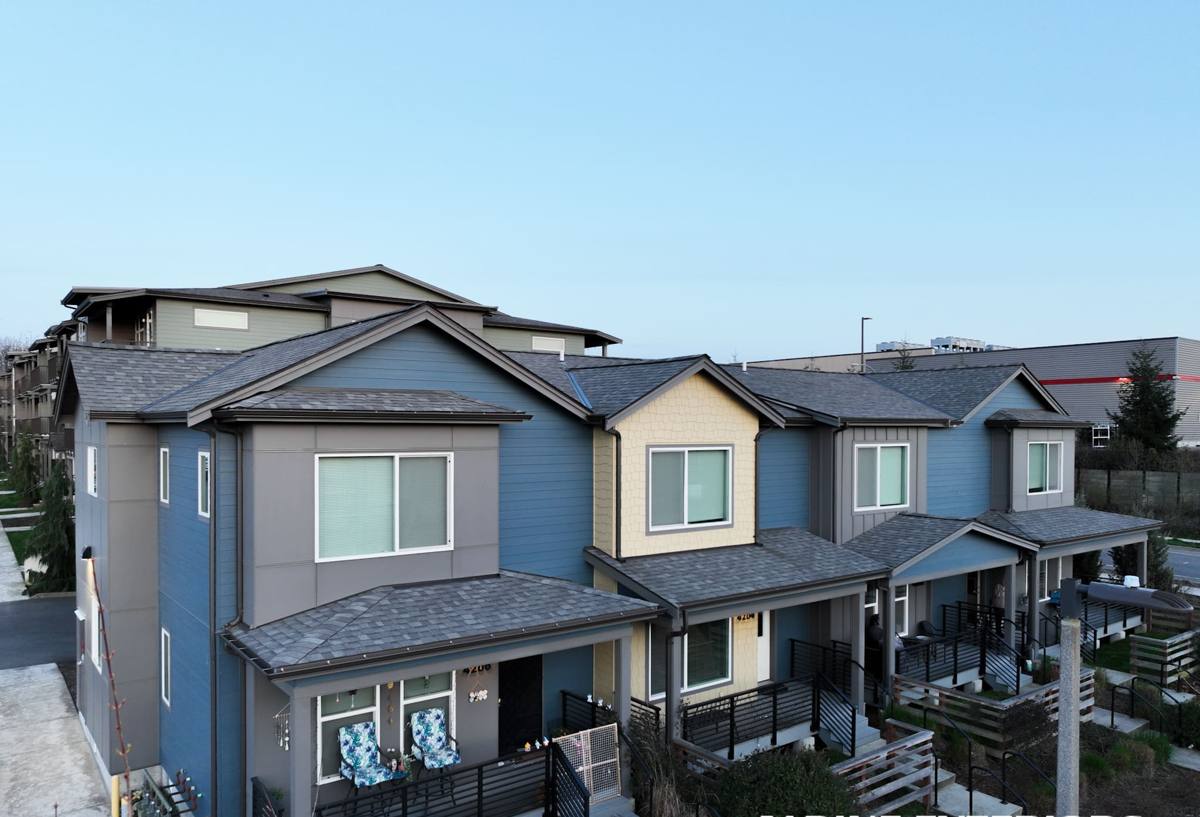
What Puget's Climate Does to Vertical Siding
Puget sits close enough to Bellingham Bay that salt-laden air is a real factor, not a theoretical one. Combine that with the long stretches of driving rain that come through Whatcom County most of the year, plus a moss season that can run from fall through spring on shaded and north-facing walls, and you get a specific set of stresses that board and batten has to handle differently than lap siding does.
Salt Air and Fastener Corrosion
Salt exposure accelerates corrosion on anything metal — fasteners, flashing, trim screws. On a board and batten wall, the battens themselves are fastened either through the underlying panel or blind-nailed between boards, and every one of those fastener points is a potential failure spot if the wrong hardware is used. Corroded fasteners loosen over time, which lets battens shift, seams open, and water get behind the cladding.
Driving Rain and the Vertical Seam Problem
Horizontal lap siding sheds water downward by design — each course overlaps the one below it. Board and batten doesn't have that same built-in overlap at every seam; the battens cover the vertical joints between boards, and those seams run straight up and down the wall. When wind-driven rain hits a wall hard (common on exposed Puget elevations facing the water or open weather), it can be pushed sideways and even upward at those seams if the batten spacing, fastening, and water-resistive barrier underneath aren't handled correctly.
Moss and Trapped Moisture
Whatcom County's moss season isn't just cosmetic. Moss holds moisture against the siding surface for extended periods, particularly on north-facing and tree-shaded walls that don't get much direct sun to dry out. On a board and batten wall, moss that establishes in the batten reveals or at the base of the boards keeps that specific area damp far longer than the rest of the wall, which is exactly where you don't want a vertical seam sitting wet.
What a Correct Board & Batten Job Actually Involves
The look of board and batten is simple — vertical boards or panels with narrower strips covering the seams. The system behind that look is where the job is won or lost.
- Water-resistive barrier first. A continuous, properly lapped weather barrier goes under the siding before a single board goes up. This is the layer that actually keeps the wall dry if any water gets past the cladding — the siding is the first line of defense, not the only one.
- Correct furring or drainage plane. Vertical siding benefits from a drainage gap behind it so any moisture that does get in has somewhere to go besides sitting against the sheathing. This detail matters more in a wet climate like ours than in drier regions.
- Fastener placement and hardware. Fasteners need to land in framing or blocking at the correct spacing, using corrosion-resistant hardware rated for coastal exposure — not general-purpose fasteners that will start rusting within a few seasons of salt air.
- Batten spacing and overlap. Battens need consistent width and correct overlap onto the boards beneath them so the vertical seams are actually covered, not just visually aligned.
- Flashing at every horizontal transition. Window heads, door heads, roof-to-wall intersections, and any horizontal trim need proper flashing that directs water out and away rather than letting it track down behind the siding.
- Bottom termination and clearance. The bottom edge of the siding needs proper clearance from grade, decks, and roof lines so it isn't sitting in standing water or splash-back during Whatcom County's wetter months.
Why We Install Board & Batten Only in James Hardie Fiber Cement
We don't offer board and batten in vinyl, LP SmartSide, or primed wood. On a profile that already has more seams and more exposure than lap siding, we don't want to compound that risk with a substrate that swells, softens, or degrades at those seams over time.
James Hardie's fiber cement board and batten panels and boards are non-combustible, dimensionally stable in wet climates, and engineered specifically for the kind of rain exposure Western Washington sees. The HZ5 product line, in particular, is formulated for regions with more moisture cycling, which fits Puget's rain and moss pattern well. The factory-applied ColorPlus finish also matters more on a vertical profile than a horizontal one — board and batten shows streaking and fading unevenly because water runs down the wall in straight lines along the boards, and a factory finish resists that far better than field-applied paint, which tends to wear first at the seams.
Board & Batten Siding: Substrate Comparison for Puget's Climate
| Factor | James Hardie Fiber Cement | Vinyl | Primed Wood / LP SmartSide |
|---|---|---|---|
| Behavior at wet seams | Dimensionally stable, won't swell | Can warp or gap with temperature swings | Prone to swelling and softening if seams stay wet |
| Moss & algae resistance | Factory finish resists staining | Surface can hold algae film | Bare or painted wood surface feeds moss growth |
| Salt air exposure | Non-combustible, stable material | Can become brittle over time near salt air | Wood fibers vulnerable to moisture wicking |
| Finish longevity on vertical runs | Factory ColorPlus, streak-resistant | Color molded in, but can chalk and fade | Field-applied paint wears fastest at seams |
| Fire resistance | Non-combustible | Combustible | Combustible |
How We Approach a Board & Batten Job in Puget
1. Site and Exposure Assessment
We walk the specific elevations of the home — which walls face the prevailing weather off the bay, which stay shaded and moss-prone, where the roof lines create extra water volume at transitions. Board and batten performance is very elevation-specific, so this isn't a one-size-fits-all plan even on a single house.
2. Barrier and Drainage Plane Installation
We install and inspect the water-resistive barrier and drainage detailing before any siding goes up. This step doesn't show in the finished look, but it's the one that determines whether the wall stays dry for the next few decades.
3. Board, Batten, and Fastener Installation to Hardie Spec
We follow James Hardie's fastening and clearance requirements exactly — spacing, fastener type, and penetration depth — because those specs exist for a reason, and deviating from them is where board and batten jobs commonly fail in wet climates.
4. Flashing and Trim Detailing
Every window, door, and roofline intersection gets flashed before trim goes on, not after. This is the step most often shortcut on lower-bid jobs, and it's the step that determines whether driving rain stays outside the wall assembly.
5. Final Walkthrough
We check batten alignment, fastener finish, clearances at grade and hard surfaces, and overall sealant detailing before calling the job done.
Why a Crew That Already Works Puget Matters
Board and batten doesn't fail everywhere the same way. A crew that's only worked drier inland regions may not think twice about batten spacing or drainage gaps, because in those climates the margin for error is bigger. In Puget, with salt air off the bay, sustained driving rain, and a moss season that keeps shaded walls damp for months, those same shortcuts show up as problems in years, not decades. A crew that already works this area knows which elevations need extra attention on a given lot, understands how the moss and rain pattern behaves locally, and isn't guessing at fastener specs for the first time on your house.
Simple Maintenance Checklist for Board & Batten in Puget
- Rinse moss and algae growth off shaded and north-facing walls before it establishes and holds moisture against seams.
- Keep gutters clear so overflow doesn't run down the wall at batten seams during heavy rain.
- Trim back vegetation and tree cover that keeps specific wall sections shaded and slow to dry.
- Check caulking at window and door trim yearly — this is the first place seals tend to open on a vertical profile.
- Watch the bottom edge of the siding near grade, decks, and walkways for splash-back staining, which can signal a clearance issue.
What Board & Batten Costs to Do Right
Board and batten typically runs a bit higher than standard lap siding in labor, because the drainage detailing, batten installation, and flashing work all take more time per square foot. The material itself is comparable to Hardie lap siding, but a correctly detailed vertical system is more labor-intensive to install properly — and in Puget's climate, that labor is not the place to cut corners. We'll walk you through actual project pricing once we've seen the specific elevations and existing wall condition on your home.
If you're considering board and batten for a home in Puget, we're glad to come take a look and talk through what your specific walls need. The estimate is free, there's no pressure, and you'll get a straight answer about what's involved — just fill out the form below to get started.