 Bellingham Siding
 Roofing in Columbia: A Different Climate Problem Than Most of the Country
The Columbia neighborhood sits close enough to Bellingham Bay that salt-laden air is a real factor in how roofing materials age here, not just a coastal talking point. Add Whatcom County's long, wet fall-through-spring stretch and the shade cover common on Columbia's older, tree-lined lots, and you get a roofing environment that punishes the wrong material and the wrong installation choices faster than drier parts of the country. A roof that would hold up fine in Spokane or Yakima can fail early in Columbia if it wasn't built for this specific mix of salt air, driving rain, and moss.
We install new roofs in Columbia and the surrounding Bellingham neighborhoods regularly, and the failures we get called out to inspect almost always trace back to the same handful of causes: inadequate ventilation trapping moisture under the deck, flashing details that weren't sealed for wind-driven rain, or a material choice that wasn't suited to a shaded, moss-prone lot in the first place. A correct installation addresses all three from the start.
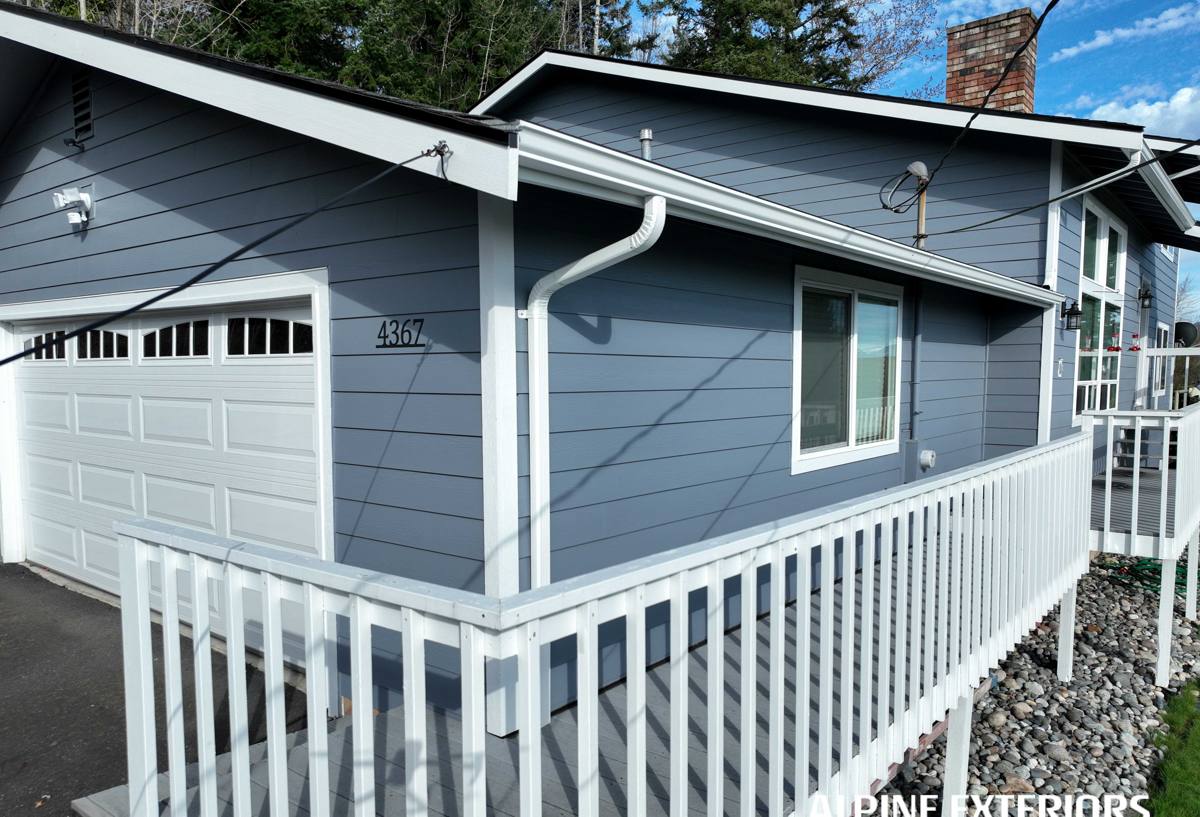
What Columbia's Climate Does to a Roof Over Time
Salt Air
Proximity to Bellingham Bay means airborne salt settles on roofing surfaces and works into exposed metal fasteners, flashing, and vents. Over years, untreated or lower-grade metal components corrode faster here than they would inland, which is why fastener and flashing material selection matters as much as the shingle or panel on top.
Driving Rain
Whatcom County storms frequently come in sideways off the water. Wind-driven rain doesn't just test a roof's surface — it tests every seam, valley, and penetration where water can be pushed uphill against gravity. Roofs that rely on gravity alone at these details tend to leak first at valleys, chimney flashing, and skylight curbs.
Moss Season
Bellingham's moss season runs long — realistically most of the year on shaded, north-facing, or tree-covered roof planes, which describes a lot of Columbia's mature lots. Moss holds moisture against the roofing surface, works into shingle laps, and can lift edges over time. It also adds weight and traps organic debris that clogs valleys and gutters, backing water up under the roofing material.
Signs a Columbia Home Needs a New Roof, Not Another Repair
Not every roofing problem calls for a full replacement, but there's a point where patching becomes a waste of money. Use this list as a general guide before you decide which route makes sense for your home.
- Granule loss heavy enough that you're finding grit in gutters or downspout runoff after every rain
- Shingles that are curling, cupping, or cracking across multiple roof planes, not just one isolated area
- Persistent moss or algae growth that returns within a season or two of cleaning
- Daylight visible through the roof deck from inside the attic
- Soft or spongy decking underfoot when walked (a sign of trapped moisture damaging the sheathing)
- Two or more roofing layers already present, which limits repair options and often requires a full tear-off by code
- The roof is nearing or past the manufacturer's expected service life for its material and local exposure
- Recurring interior leaks near valleys, chimneys, or skylights despite prior repair attempts
If you're seeing two or more of these, a replacement estimate is worth getting even if the roof "still looks okay" from the ground.
What a Correct Roof Replacement Actually Involves
A lot of roofing quotes look similar on paper until you get into what's actually included. For Columbia homes specifically, the details below are the ones we treat as non-negotiable, because skipping them is where premature failures start.
Full Tear-Off and Deck Inspection
We remove the existing roofing down to the deck rather than layering over it. This lets us inspect the sheathing for rot, soft spots, or moisture damage that's common under older or poorly ventilated roofs, and replace any compromised decking before new material goes down. Roofing over hidden deck damage just seals the problem in.
Ice and Water Shield at Vulnerable Areas
Valleys, eaves, and roof-to-wall transitions get self-adhering waterproof membrane underneath the primary roofing material. These are the spots wind-driven rain and ice-dam-style backup are most likely to exploit, and they're exactly the areas where standard felt underlayment alone isn't enough in this climate.
Proper Flashing at Every Penetration
Chimneys, skylights, plumbing vents, and roof-wall intersections all need step flashing, counter-flashing, or pipe boots sized and installed correctly — not just caulked over. Given the salt air exposure near the bay, we favor corrosion-resistant flashing materials and fasteners over standard-grade options.
Balanced Attic Ventilation
Intake at the eaves and exhaust at the ridge need to work together to move moist air out of the attic year-round. Unbalanced or blocked ventilation is one of the most common causes of premature deck rot and shortened shingle life we see on Whatcom County homes, and it's frequently invisible until the roof is opened up.
Moss-Resistant Details on Shaded Planes
On roof sections that stay shaded most of the day — common on tree-covered Columbia lots — we look at options like zinc or copper strips near the ridge and material choices that resist moss colonization better than standard options, so the homeowner isn't stuck power-washing the roof every year.
Material Options for Columbia Homes
There's no single "best" roofing material for every home — it depends on the roof's exposure, the home's structure, budget, and how much long-term maintenance the homeowner wants to take on. Here's an honest comparison of the main options we install in this area.
| Material | Typical Lifespan (this climate) | Moss Resistance | Maintenance Level |
|---|---|---|---|
| Architectural asphalt shingle | 25–30 years | Moderate (better with zinc strips on shaded planes) | Low to moderate |
| Standing seam metal | 40–50+ years | High | Low |
| Cedar shake | 20–30 years with upkeep | Low without regular treatment | High |
| Synthetic/composite shingle | 30–50 years | Moderate to high | Low |
For heavily shaded, moss-prone Columbia lots, we often steer homeowners toward metal or a quality synthetic product, or toward an architectural shingle paired with proper zinc detailing. We're generally cautious about cedar shake on north-facing or shaded roof planes in this specific climate — it can look great, but it demands consistent moisture management and periodic treatment to avoid moss and rot taking hold, which is a real ongoing cost homeowners should go in expecting.
Our Installation Process
- On-site inspection and estimate. We walk the roof, check attic ventilation and insulation, and look at exposure — sun, shade, tree cover, and wind direction — before recommending materials.
- Written scope and material selection. You get a clear breakdown of what's included: tear-off, decking replacement allowance, underlayment type, flashing, ventilation work, and cleanup.
- Permitting. We handle the City of Bellingham permit process for the roof replacement so you don't have to track it down yourself.
- Tear-off and deck repair. Old roofing comes off, the deck gets inspected, and any damaged sheathing is replaced before anything new goes down.
- Underlayment and flashing installation. Ice and water shield at vulnerable areas, synthetic underlayment across the field, and correctly detailed flashing at every penetration.
- Roofing material installation. Installed to manufacturer specification, including fastening patterns rated for the wind exposure common on this side of Whatcom County.
- Ventilation tie-in and final details. Ridge and soffit ventilation connected and verified, moss-prevention details installed on shaded planes as specified.
- Cleanup and magnetic sweep. Full site cleanup including a magnetic nail sweep of the yard and driveway.
- Final walkthrough. We review the finished roof with you and go over warranty paperwork before calling the job done.
What Affects the Cost of a New Roof
Every roof is different, so exact pricing depends on a site visit, but these are the main factors that move the number up or down.
| Cost Factor | Why It Matters |
|---|---|
| Roof size and number of planes | More square footage and more valleys/hips mean more material and labor |
| Roof pitch and accessibility | Steep or hard-to-access roofs take longer and require more safety setup |
| Existing layers to remove | Tearing off multiple old layers adds labor and disposal cost |
| Deck condition | Rotten or damaged sheathing found during tear-off adds material and time |
| Material choice | Asphalt, metal, and synthetic products all carry different material and labor costs |
| Ventilation and flashing upgrades | Bringing older ventilation or flashing up to current standards adds scope but reduces future failures |
Broadly speaking, a straightforward architectural asphalt shingle replacement on an average Columbia home tends to fall in the low-to-mid five figures, with metal and premium synthetic products running higher due to material cost. We'll give you a specific number after seeing the roof — we don't quote sight unseen, and we don't believe in lowball numbers that grow once the tear-off starts.
Why Hiring a Crew That Already Works in Columbia Matters
Roofing crews that work Whatcom County regularly understand things a traveling or out-of-area crew often gets wrong: how the City of Bellingham permitting process actually works, what wind and rain exposure looks like on a bay-adjacent lot versus an inland one, and how much attic ventilation a home in this climate really needs versus what a generic spec sheet says. That local pattern recognition shows up in fewer callbacks and roofs that hold up through their first few real Whatcom County winters, not just on a sunny installation day.
It also matters for the practical side of the job — knowing which streets have tight access for material delivery and disposal, understanding typical lot layouts and mature tree cover in older Bellingham neighborhoods, and being available locally if a warranty question comes up down the road instead of being three hours away.
Warranty and Ongoing Care
A new roof is a system, not just a shingle. Manufacturer warranties typically cover material defects, and installation workmanship should be backed separately by whoever does the labor — ask any contractor you're considering to spell out both in writing before you sign anything. Beyond the warranty paperwork, a little ongoing care extends any roof's life in this climate: keeping gutters and valleys clear of debris, having moss growth addressed before it spreads rather than after, and getting an occasional visual check after major storms. None of that requires a maintenance contract — just paying attention.
If your Columbia home's roof is showing its age, or you just want an honest read on how many years it's realistically got left, we're happy to take a look. Use the form below to request a free, no-pressure estimate — we'll walk the roof, answer your questions straight, and give you a real number to work with.