 Bellingham Siding
 Window Replacement in Columbia: Built for a Wet, Salt-Air Climate
Columbia sits close enough to Bellingham Bay that homes here deal with a specific combination of weather stress: salt-laden air off the water, driving rain that comes in sideways during winter storms, and long stretches of gray, damp months where moss and algae get a foothold on anything that stays wet. Windows take the brunt of all three. Aluminum hardware pits and corrodes faster near the water. Wood sashes that aren't properly sealed or flashed start absorbing moisture at the joints. And older single-pane or first-generation vinyl windows simply weren't built with this climate in mind.
Window replacement isn't just a cosmetic upgrade in Whatcom County — it's one of the few home improvements that directly affects comfort, energy bills, and moisture control inside the walls. A window that leaks air or water doesn't just make a room drafty; it can quietly feed rot into the framing around it. We treat every window replacement in Columbia as a weatherproofing job first and an appearance upgrade second.
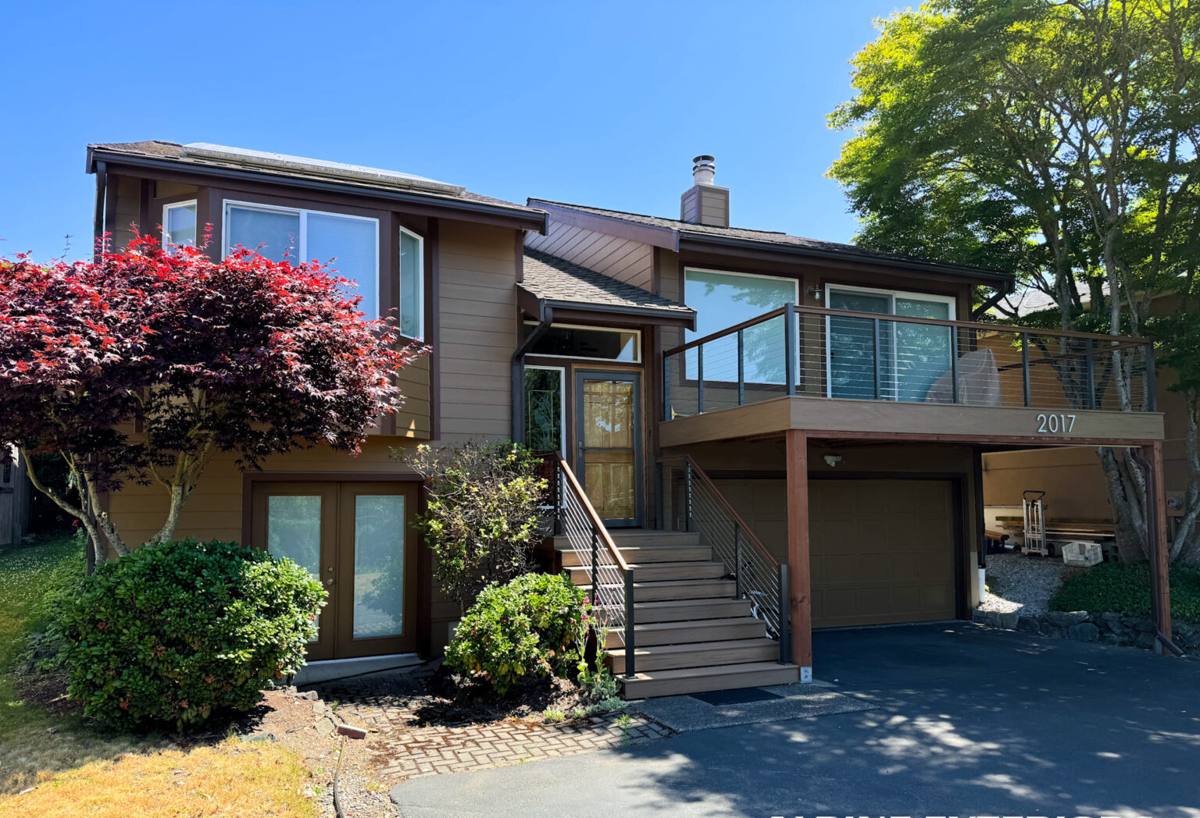
Signs Your Columbia Home's Windows Need Attention
Most homeowners don't think about window replacement until something is visibly wrong, but by the time you see the obvious signs, there's often been moisture intrusion happening for a while. Here's what we look for, and what you should watch for between visits from a contractor:
- Condensation or fogging trapped between the panes of a double-pane window — this means the seal has failed and the insulating gas has escaped
- Visible gaps, cracked caulk, or daylight showing around the frame when the window is closed
- Soft or discolored wood on the sill, jamb, or the trim just outside the window
- Windows that are hard to open, close, or lock — frames can swell, warp, or settle out of square
- A noticeable draft near the window even with it fully closed and locked
- Rising heating bills without any other explanation
- Moss or dark streaking building up on the sill or the siding just below the window
- Noticeably louder outside noise than in other rooms, which often points to a failed seal or thin original glass
Any one of these on its own might not mean full replacement is necessary. Several together, especially on windows facing the prevailing weather, usually mean it's time.
What a Correct Window Replacement Job Actually Involves
Window replacement done right is mostly about what happens before the new window ever gets set in the opening. A window is only as good as the opening it sits in and the flashing and sealing around it.
Inspecting the opening
Before removing the old window, we check the condition of the framing, sill, and sheathing behind it. If there's rot or water damage from a prior leak, that gets addressed before a new window goes in — installing a new window over a compromised opening just hides the problem for a few more years.
Flashing and water management
This is the step that matters most in a climate like ours. Proper flashing directs any water that gets past the exterior cladding back out, rather than letting it collect at the sill or work its way into the wall cavity. With the amount of driving rain Whatcom County gets in the fall and winter, a window installed without correct flashing will eventually leak — it's a matter of when, not if.
Sealing and insulation
Once the window is set plumb, level, and square, the gap between the window frame and the rough opening needs to be insulated and sealed on both the interior and exterior — not just caulked around the outside trim. Skipping the interior air seal is one of the most common shortcuts we see in past installs, and it's a major source of drafts and condensation later.
Exterior trim and finish
The trim and caulking around the finished window need to shed water, not trap it against the siding. This is especially important on window replacement jobs in Columbia where salt air accelerates the breakdown of lower-quality caulks and finishes.
Full-Frame Replacement vs. Insert (Pocket) Replacement
Not every window needs to come out down to the studs. Depending on the condition of the existing frame, we'll typically recommend one of two approaches:
| Approach | What It Involves | Best For |
|---|---|---|
| Insert (pocket) replacement | New window fits inside the existing, sound frame; original trim and siding stay in place | Frames that are still structurally solid and square, with no rot or water damage |
| Full-frame replacement | Old window and frame removed down to the rough opening; new flashing, insulation, and trim installed | Frames with rot, water damage, out-of-square openings, or a change in window size |
Insert replacements are faster and less disruptive, but they only make sense when the existing frame is genuinely sound. Given how much moisture Columbia homes see, we don't recommend an insert replacement without actually opening things up enough to confirm there's no hidden rot behind the trim. Covering up a problem to save a day of labor isn't a trade-off we're willing to make.
Choosing Materials for This Climate
Frame material matters more here than in drier parts of the country. Salt air and constant damp weather are hard on some materials and much easier on others.
| Frame Material | Performance in Salt Air / Driving Rain | Maintenance |
|---|---|---|
| Vinyl | Doesn't corrode or rot; handles moisture well; performance depends heavily on installation quality | Low — occasional cleaning |
| Fiberglass | Very stable in temperature swings and moisture; resists corrosion | Low |
| Wood (clad or unclad) | Warm appearance but vulnerable at joints and sills if the exterior cladding or finish is compromised | Higher — finish needs monitoring and occasional refinishing |
| Aluminum | Prone to corrosion and pitting in salt-air exposure over time | Moderate to high near the water |
We don't push one brand or product line as the only answer — the right choice depends on your home's style, budget, and how exposed the window is to weather and salt air. What we do insist on is glass packages rated for the moisture and temperature swings typical of Whatcom County, and hardware that won't seize up or corrode within a few years of coastal exposure.
A note on why we're selective about low-end window lines
Some budget window products use thinner vinyl profiles, simpler weep systems, or hardware that isn't built for constant damp exposure. That's not a defect claim against any specific manufacturer — it's a maintenance and longevity trade-off. In a climate that stays wet for months at a time, a window with a marginal weep system or corrosion-prone hardware will show problems years sooner than it would in a drier region. We'd rather explain that trade-off upfront than install something that needs revisiting in five years.
Our Process for Columbia Window Replacement Projects
- On-site assessment: We look at every window being considered for replacement, check the surrounding framing and siding, and note any existing moisture or rot issues.
- Honest recommendation: We tell you which windows genuinely need replacing now, which can wait, and whether insert or full-frame replacement makes sense for each opening.
- Written estimate: Clear pricing by window, material, and installation type — no vague lump-sum numbers.
- Scheduling around the weather: We plan installation days with an eye on the forecast so openings aren't sitting exposed during a heavy rain system.
- Installation: Old window removed, opening inspected and repaired if needed, new window set and flashed, insulated, and sealed inside and out.
- Final check: We test operation, locks, and weatherseal on every window before calling the job done.
Why It Matters to Hire a Crew That Already Works in Columbia
Window replacement isn't a one-size-fits-all trade. A crew that mostly works in drier inland climates may not think twice about flashing details or weep systems that are non-negotiable here. Working regularly in Bellingham and the surrounding Whatcom County neighborhoods means we're used to building in the margin this climate demands — bigger allowances for driving rain, materials chosen with salt air in mind, and a habit of checking for hidden moisture damage before it becomes a bigger repair.
It also means we're familiar with the kind of housing stock common in and around Columbia — the mix of home ages and window types you tend to find in established Bellingham neighborhoods — so the assessment and recommendations are grounded in what actually shows up on these jobs, not generic advice.
After Installation: Keeping New Windows Performing
New windows still need a small amount of upkeep in this climate, especially with a long moss season working against anything that collects moisture:
- Rinse sills and tracks periodically to clear salt residue, pollen, and organic buildup before it turns to moss or algae
- Check exterior caulking once a year, particularly after a hard winter, and touch up any cracked sections
- Keep weep holes clear of debris so water can drain out as designed
- Operate locks and hardware a few times a year even on windows you don't open often, so they don't seize up
None of this is intensive maintenance — it's the same handful of checks that keep any exterior feature performing well in a wet coastal climate.
Get a Straightforward Estimate
If your windows in Columbia are showing their age, fogging up, or just letting in more draft and noise than they should, we're happy to take a look and give you an honest read on what's needed — no pressure, no inflated scope. Fill out the form below and we'll set up a time to walk the property and put together a clear, itemized estimate.