 Bellingham Siding
 Why Puget Siding Wears Differently Than Siding Inland
Homes in the Puget area of Bellingham sit close enough to open water and marine weather patterns that their siding takes on a different kind of stress than a house twenty miles inland in Whatcom County. Salt-laden air works on fasteners, trim, and paint film year-round, not just during storms. Driving rain off the water doesn't fall straight down — it hits siding at an angle, which means it finds every gap, lap seam, and nail hole that a calmer rain would never reach. And the long, wet Pacific Northwest moss season means anything shaded or north-facing stays damp for weeks at a stretch, which is exactly the condition moss, algae, and wood rot need to get established.
None of that is unusual for this part of Washington. It's just the reality of building here, and it's why siding repair in Puget isn't really a cosmetic job — it's a moisture-management job. Get the moisture handling wrong and the same failure comes back in a year or two, often worse than before.
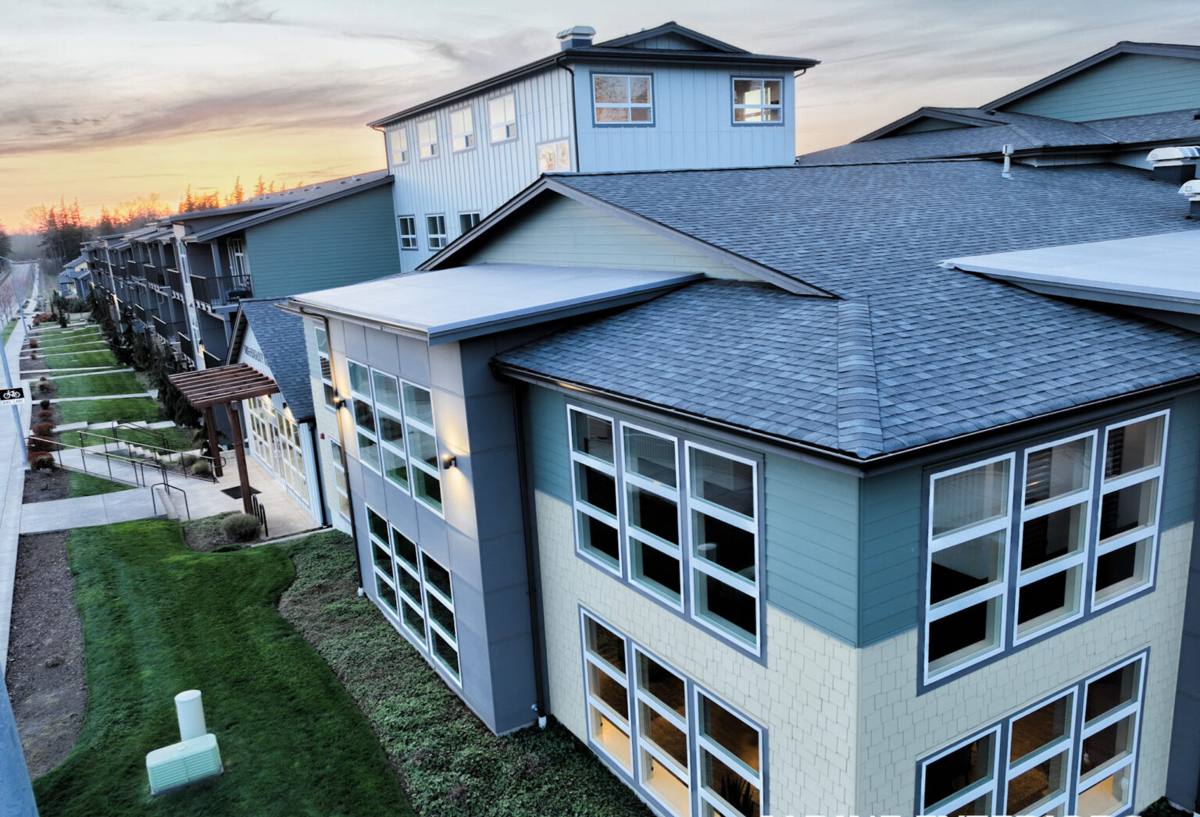
What Actually Fails on Puget Homes
We see the same handful of problems repeatedly on siding calls in this area, and almost all of them trace back to water finding a way in and staying there.
Moisture intrusion at seams and penetrations
Butt joints, window and door trim, hose bib penetrations, and anywhere siding meets a dissimilar material are the weak points. Once caulk fails or flashing was installed short, driving rain pushes water behind the siding instead of over it.
Moss, algae, and staining
Shaded elevations and anything under a roofline with poor drip edge tend to stay damp long enough for moss and algae to take hold. On some siding types this is just a cosmetic problem you can wash off. On others — particularly wood-based products — sustained dampness means the substrate underneath is absorbing moisture every time it rains, whether you can see it or not.
Impact and fastener damage
Wind-driven debris, ladder contact, and settling all crack panels or back out fasteners over time. A cracked panel isn't just an eyesore — it's an open door for water until it's fixed.
Paint and finish breakdown
Field-applied paint on siding in a marine climate has a shorter honest lifespan than most homeowners are told at the time of installation. Salt air and UV both accelerate the breakdown, and once the finish goes, the substrate underneath is exposed on every rain event.
Repair or Replace: How We Make the Call
Not every damaged section needs to come off the house. Not every problem can be solved by patching, either. We look at three things before recommending anything: how much of the wall is actually compromised, what's underneath the siding (housewrap, sheathing, framing), and whether the damage is isolated or a symptom of a systemic problem like a missing kick-out flashing or a chronic moss zone.
| Situation | Typical Approach | Why |
|---|---|---|
| A few cracked or impact-damaged panels, substrate dry | Section repair, matched siding | Isolated damage, no underlying moisture problem |
| Soft or spongy siding near ground level or trim | Remove, inspect sheathing, repair or replace as needed | Soft siding usually means water has already reached the substrate |
| Chronic moss/algae staining on one elevation | Clean, treat, address drainage/shade cause, repair as needed | Staining without substrate damage is often a drainage or airflow issue, not a siding failure |
| Widespread failure across multiple elevations | Full re-side conversation | Patchwork on a system that's failing broadly rarely holds up, and costs stack up fast |
That last row matters. If we pull a few boards and find the same moisture pattern repeating across the wall, we'll tell you honestly that a repair is a short-term fix, not a real solution — even if that's not the answer you were hoping for.
What a Correct Repair Involves
A siding repair that actually holds up in this climate is more than swapping a damaged board for a new one. The steps that get skipped on a rushed job are exactly the ones that matter most here:
- Removing enough surrounding material to see the actual extent of the damage, not just the visible piece
- Checking housewrap and flashing at the repair area — a new board over failed flashing just delays the next failure
- Confirming the sheathing underneath is sound before closing anything back up
- Re-establishing proper lap and clearance so water sheds the way it's supposed to
- Sealing penetrations and seams with the correct sealant, not whatever caulk is on the truck
- Matching material, profile, and finish closely enough that the repair doesn't stand out
- Documenting what was found underneath, especially if it points to a bigger issue you should know about
Skipping any of those steps is how a "repaired" section fails again within a season or two.
Why We Repair With James Hardie Fiber Cement
We install and repair with James Hardie fiber cement siding exclusively. We don't install LP SmartSide, vinyl, Cemplank, Allura, primed spruce, or cedar, and when a repair calls for new material, we're not going to introduce a different product into a wall system just because it's faster to source. There's a practical reason for that beyond consistency.
Fiber cement doesn't absorb water the way wood-based siding does, which matters directly in a climate with a long wet season and driving rain — it's not feeding the kind of sustained moisture exposure that leads to soft substrate and rot. It's non-combustible, which isn't a Puget-specific concern but is part of why we standardized on it everywhere we work. And the ColorPlus factory finish holds up to sun and salt air meaningfully longer than field-applied paint, which reduces the number of "the paint failed and now the board is exposed" calls we get a few years down the line.
When we match a repair into existing Hardie siding, we're matching a known, engineered product — same plank profile, same finish process, predictable behavior. When a repair involves replacing a damaged section of a different siding product, we'll say so honestly and talk through the trade-offs rather than quietly patching it with something incompatible.
Our Repair Process
We keep the process straightforward because the value is in doing the inspection and the flashing details right, not in a complicated sales process.
- On-site inspection of the damaged area and a check of adjacent sections for related issues
- Honest assessment of whether this is a repair, a larger repair, or a conversation about replacement
- Written scope and estimate before any work starts
- Removal and inspection of what's underneath before closing anything up
- Repair with matched James Hardie material and correct flashing/sealant details
- Cleanup and a final walk-through so you can see what was done
Cost Factors on a Puget Repair
Every repair is different, so we're not going to put a number on a job we haven't seen. What we can tell you is what tends to move the price up or down.
| Factor | Effect on Cost |
|---|---|
| Damage limited to visible siding, dry substrate | Lower — straightforward panel-level repair |
| Substrate or sheathing found to be wet or soft | Higher — repair scope expands to fix what's underneath |
| Access (height, landscaping, elevation) | Moderate increase for difficult-to-reach areas |
| Color match on older Hardie siding | May require a repaint of the section or full elevation for a clean match |
| Number of separate damage locations | Fewer, consolidated visits keep costs down versus multiple return trips |
Why a Crew That Already Works Puget Matters
Siding repair isn't just a materials question — it's a judgment call about what a specific wall in a specific location is dealing with. A crew that already works this part of Bellingham has seen how a particular exposure to weather off the water behaves on a wall, which elevations in this neighborhood tend to hold moss longer, and where builders in this area have historically skimped on flashing details that show up as repair calls years later. That local pattern recognition is what keeps a repair from becoming a guessing game, and it's why we'd rather send someone who's worked this area before than someone reading the situation cold.
If you're seeing cracked panels, soft spots, persistent staining, or you just want a second opinion on whether something needs attention before the next wet season, we're happy to take a look. We offer free, no-pressure estimates — no obligation, just an honest read on what your siding needs and what it would take to fix it right.