 Bellingham Siding
 Building Decks for Sudden Valley's Wooded, Lakeside Setting
Sudden Valley sits in a different microclimate than a lot in downtown Bellingham. Homes here are tucked into mature tree cover, many with lots that slope toward Lake Whatcom, and a lot of decks get built in partial or near-full shade most of the year. That combination — shade, moisture, and tree debris — changes how a deck should be designed, framed, and finished compared to a deck out in the open on a flat, sunny lot. We've built and repaired decks throughout this community long enough to know which details matter here and which ones are just extra cost with no real benefit.
A deck built with a generic, one-size-fits-all approach tends to show its age fast in a setting like this: green streaks on the boards by year two, soft spots at the ledger by year five, hardware bleeding rust stains by year seven. None of that is inevitable. It comes down to material choice, ventilation, flashing, and fastener selection done right the first time.
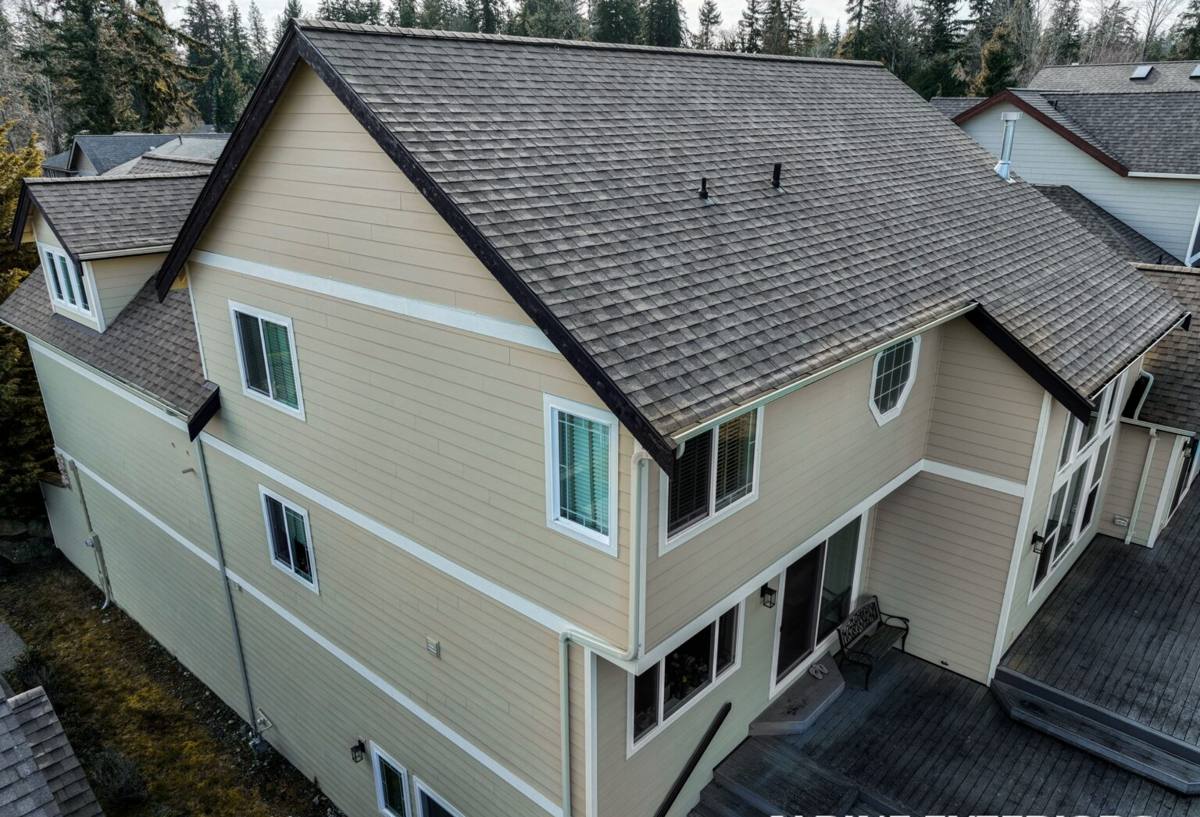
What This Climate Does to an Outdoor Deck
Whatcom County's climate is hard on exterior wood and metal in a few specific ways, and Sudden Valley's tree-shaded lots tend to see the worst of it.
A long moss season
Between the tree canopy, lake-effect humidity, and our long stretch of overcast, damp months, moss and algae get a real foothold on any deck surface that doesn't dry out quickly. Boards that stay wet longer than they should — because of poor spacing, low airflow underneath, or heavy shade — will grow moss faster than the same boards on an open, sunny lot. Moss holds moisture against the wood surface, which accelerates rot in untreated or poorly finished lumber.
Driving rain
Wind-driven rain here doesn't just fall straight down — it gets pushed sideways into ledger connections, stair stringers, and any gap where flashing was skipped or done poorly. Over time, water finds its way behind rim joists and into end grain, which is where rot almost always starts on a deck.
Salt air and corrosion
Bellingham's proximity to Puget Sound means the whole region deals with salt-laden air moving inland, and it's harder on fasteners, brackets, and any exposed metal than most homeowners expect. Standard fasteners can start showing rust streaks and pitting well before a deck's structural lumber is anywhere near replacement, which is why hardware selection matters as much as the decking material itself.
Choosing the Right Decking Material
There's no single "best" decking material — there's the right material for your budget, your sun exposure, and how much upkeep you actually want to do. Here's how the common options compare for a shaded, damp Sudden Valley lot specifically.
| Material | Moss/moisture resistance | Maintenance | Typical lifespan here |
|---|---|---|---|
| Pressure-treated wood | Fair — needs regular cleaning and sealing to resist moss and rot | Annual cleaning, re-sealing every 1-2 years | 10-15 years with upkeep |
| Cedar | Good natural rot resistance, but surface still needs cleaning in shade | Cleaning and oil/stain every 1-2 years | 15-20 years with upkeep |
| Composite decking | Very good — won't rot, but can still grow surface moss/algae in deep shade | Periodic washing, no sealing or staining | 25-30+ years |
| PVC/capped composite | Excellent — fully synthetic surface, low organic growth foothold | Occasional washing | 25-30+ years |
For heavily shaded lots — which describes a good number of Sudden Valley properties — we lean toward recommending composite or capped composite decking to clients who want to minimize the moss battle, since the board surface itself doesn't feed algae growth the way untreated wood fibers do. That said, plenty of homeowners still prefer the look and feel of real wood, and a well-built cedar deck with a disciplined cleaning schedule holds up fine here too. We'll walk you through the honest trade-offs rather than push one product because it's easier for us to install.
A note on why we're selective about which wood products we install
Not every treated lumber or composite product on the market performs the same in a wet, shaded environment. Some lower-grade composite boards absorb more moisture at the core and are more prone to staining and mold in constant shade; some treated lumber varies in how evenly the preservative penetrates. We stick to decking products with warranty structures and moisture ratings suited to Pacific Northwest conditions, not just whatever is cheapest at the yard.
Framing and Structure: What's Underneath Matters Most
The decking boards are the part everyone sees, but the framing underneath is what determines whether a deck lasts 10 years or 30. This is where most corner-cutting on a budget deck shows up later.
- Footings sized for the soil. Sudden Valley's terrain includes sloped and sometimes soft ground near tree roots — footings need to be sized and set to the actual soil conditions on your lot, not a generic minimum.
- Ledger flashing done properly. The ledger board connection to the house is the single most common failure point on older decks. Proper flashing — with a drip cap and correct lap order — keeps driving rain from getting behind the siding.
- Joist tape or protective coating. A strip of butyl flashing tape over the top of every joist keeps deck screws from creating a water entry point into the top of the framing lumber, which matters a lot under a long, damp fall and winter.
- Corrosion-rated hardware throughout. Given the salt air this region sees, we spec fasteners, joist hangers, and structural connectors rated for coastal/high-corrosion exposure, not the bargain-bin galvanized option.
- Airflow underneath. Adequate ground clearance and skirting that still allows ventilation keeps the underside of the deck drying out between rain events instead of staying damp for weeks at a time.
Design Considerations Specific to Sudden Valley Lots
Working with slope and tree cover
Many lots in this community aren't flat, and a lot of yards have significant tree canopy close to the house. That affects footing placement, stair layout, and how much sun (or shade) different parts of the deck will get through the day. We look at your specific lot before recommending a layout rather than defaulting to a standard rectangle off the back door.
Community design review
Homes in Sudden Valley are often part of a community association with its own architectural or design review process for exterior projects, including decks. We factor that into scheduling from the start — getting your plans in front of the right approval process early avoids delays once construction is ready to begin. If you're not sure what applies to your property, that's worth confirming before we finalize a design.
Privacy and lake views
A lot of Sudden Valley homeowners are balancing two goals at once: keeping some privacy from neighboring lots while still taking advantage of tree gaps or partial lake views. Railing style, deck height, and where we place any privacy screening all get decided with that balance in mind, not as an afterthought.
Our Process, From Estimate to Finished Deck
- On-site visit. We walk your specific lot — slope, sun exposure, tree cover, existing structure if you're replacing a deck — and talk through what you actually want to use the space for.
- Design and material selection. We lay out options with honest cost and maintenance trade-offs, sized to your budget, and help you navigate any community design approval your property requires.
- Permitting. We handle the permit application and inspection scheduling with Whatcom County so you don't have to chase paperwork.
- Demo and framing. Old structure removal (if applicable), footings, ledger flashing, and framing — the part that determines how long the deck actually lasts.
- Decking, railing, and finish work. Board installation, railing, stairs, and any lighting or skirting details.
- Final walkthrough. We go over the finished deck with you, plus a simple maintenance rundown specific to the material you chose.
Maintenance Checklist for Long Deck Life in This Climate
Whatever material you choose, a little seasonal upkeep goes a long way in a wet, shaded environment like this one.
- Sweep leaves and needles off the deck surface regularly — trapped organic debris holds moisture and feeds moss growth
- Rinse or wash the deck surface at least once or twice a year to knock back early moss and algae before it takes hold
- Check railing posts and stair connections annually for movement or corrosion at the hardware
- Keep gutters and downspouts near the deck clear so runoff isn't dumping directly onto the structure
- For wood decks, reseal or re-stain on the schedule recommended for the product — don't wait until it's visibly gray or worn
- Trim back overhanging branches where practical to improve sun exposure and airflow across the deck surface
- Inspect underneath the deck once a year for standing moisture or signs of rot at the ledger and posts
Why Hire a Crew That Already Works in Sudden Valley
A deck built by a crew unfamiliar with this specific area tends to make assumptions that don't hold up here — treating it like a flat, sunny suburban lot instead of a sloped, tree-covered, lake-adjacent one. We've built and repaired decks throughout Sudden Valley and the greater Bellingham area, so we already know how the local terrain, tree cover, and community design review process factor into a project before we even show up for the first site visit. That means fewer surprises, fewer change orders mid-project, and a deck that's actually built for the conditions it has to survive — not just the conditions on a spec sheet.
We're also a local crew, which matters when it comes to warranty follow-up. If a connection needs a look after a hard winter storm or you notice something worth checking a few years down the road, we're not driving in from out of the area to take care of it.
If you're planning a new deck or replacing an aging one in Sudden Valley, we're happy to take a look at your lot and put together a straightforward estimate — no pressure, no pushy upsells, just an honest read on what your project needs. Use the form below to get started.