 Bellingham Siding
 Windows Built for Cordata's Weather, Not Just Its Houses
Cordata sits far enough north in Bellingham that it catches the full range of what Whatcom County weather can do to a house: salt-laden air drifting in off the Strait, months of driving rain that comes in sideways more often than straight down, and a moss season that seems to start earlier and last longer every year. Windows in this part of town don't just have to look good and keep the heat in — they have to survive a climate that's actively working to find every gap, every weak seal, and every spot where water can sit and soak in.
A window that's correctly installed and correctly flashed will shrug off decades of that weather. A window that's installed even slightly wrong — missing a drip cap, sealed with the wrong product, or set without proper sill pan flashing — will start showing problems within a few winters. In Cordata specifically, where many homes were built across different decades with different original window quality, we see the full spectrum: aging aluminum single-pane units from older construction, builder-grade vinyl from the 1990s and 2000s that's reached the end of its seal life, and the occasional custom or architectural window that needs a careful, non-standard replacement.
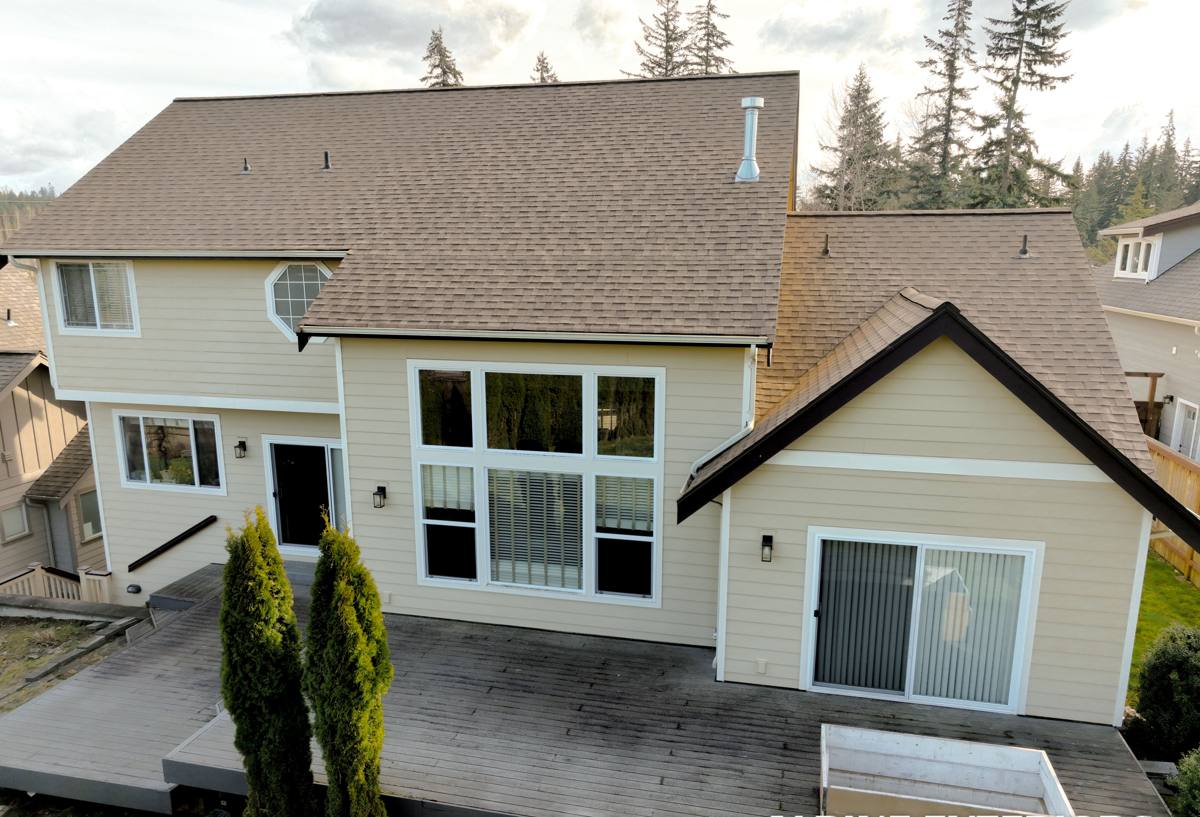
How Bellingham's Climate Actually Wears Down a Window
Salt Air and Metal Hardware
Bellingham isn't a heavy salt-spray environment the way an oceanfront town is, but Cordata is close enough to Bellingham Bay and the Strait that airborne salt is a real, slow-acting factor. It attacks exposed metal hardware first — hinges, cranks, locks, and older aluminum frames — long before it does any damage to the glass or the wood. Left unaddressed, that corrosion works its way into moving parts until a window that used to open smoothly starts binding, and eventually won't latch tight at all.
Driving Rain and Wind-Driven Water
Whatcom County storms frequently push rain sideways, which means water hits window assemblies at angles a lot of installation shortcuts simply don't account for. A window that's fine in a straight-down rain can still leak in a wind-driven storm if the flashing wasn't lapped correctly or the sill pan wasn't sloped to drain outward. This is the single biggest cause of the rot and interior water staining we get called out to fix around older Cordata windows.
Moss and Sustained Moisture
Moss doesn't grow on the glass, but it grows in the grime and organic debris that collects in window tracks, sills, and the gaps around poorly sealed trim — especially on north- and west-facing walls that stay shaded and damp for long stretches of the year. Once moss and mildew take hold in those areas, they hold moisture against the frame and trim far longer than the wood or composite material was ever designed to tolerate, which accelerates rot from the outside in.
Signs a Cordata Home Needs Window Attention
- Visible fogging or a permanent haze between the panes of a double-pane window — the seal has failed and the gas fill is gone
- Drafts you can feel by hand near the frame, even with the window fully latched
- Paint or trim that's peeling, bubbling, or soft to the touch around the window perimeter
- Windows that are difficult to open, close, or lock — often a sign of frame swelling or hardware corrosion
- Visible moss, black staining, or algae buildup in the tracks or on the sill
- A noticeable rise in heating costs with no other explanation
- Condensation forming on the inside of the glass regularly during colder months
Any one of these on its own isn't necessarily an emergency, but a few of them together usually means the window assembly — not just the glass — is compromised.
What a Correct Custom Window Installation Actually Involves
"Custom" windows means the unit is built to the exact rough opening rather than pulled off a shelf in a standard size — common in Cordata's mix of older homes, additions, and non-standard openings. Getting a custom window right takes more care than a stock replacement, and it's where a lot of the long-term performance is decided before the glass ever goes in.
The Steps That Matter Most
- Accurate measurement of the rough opening — including checking for square, level, and plumb, since older framing has often shifted slightly over time.
- Removal of the old unit and inspection of the framing — this is when hidden rot or water damage from a prior bad install gets found and addressed, not covered over.
- Sill pan flashing — a sloped, waterproof pan under the window that directs any water that gets past the frame back outside instead of into the wall cavity.
- Proper flashing sequence around the opening — installed shingle-style so each layer overlaps the one below it, matching how wind-driven rain actually moves down a wall.
- Setting the window level, plumb, and square — a window that's slightly racked in the opening will bind, seal poorly, and wear out its hardware faster.
- Insulating the gap around the frame — filled correctly (not overpacked, which can bow the frame) to stop air infiltration without interfering with drainage.
- Exterior sealing and trim work — with the right sealant for the material, applied at the joints that actually need it rather than everywhere as a blanket fix.
Skip or rush any one of these steps and the window may look fine for a year or two before a leak shows up — often in a spot that's hard to trace back to the actual cause.
Choosing the Right Window Material for This Climate
There's no single "best" window material — the right choice depends on the home's age, style, budget, and how much upkeep the owner wants to take on. Here's how the common options hold up under Bellingham's specific conditions:
| Material | Moisture Performance | Maintenance | Best Fit |
|---|---|---|---|
| Vinyl | Good — won't rot, resists salt air well | Low — occasional cleaning | Most Cordata homes prioritizing value and low upkeep |
| Fiberglass | Excellent — very stable in wet/dry cycles | Low | Homes wanting a premium, long-life option with minimal movement |
| Wood-clad | Good if the cladding and flashing are done right | Moderate — exposed wood interior needs periodic attention | Older or architectural homes where interior wood trim matters |
| Aluminum | Poor in this climate — conducts cold, prone to condensation | Low, but corrosion-prone near salt air over time | Rarely recommended for replacement in this region anymore |
We're upfront when a material isn't a good match for a given wall or exposure. For example, we're cautious about aluminum-frame replacements on Cordata homes given how much energy they lose and how they perform in salt-influenced air — not because the product is inherently bad, but because it's a poor fit for this specific climate compared to modern alternatives.
Glass and Efficiency: What Actually Matters Here
For Whatcom County's mild-but-wet climate, the glass package matters as much as the frame material. Look for:
- Low-E coatings that reduce heat loss in winter without over-darkening rooms that already get limited sun in this region
- Double or triple pane with argon or krypton fill for insulation value
- A U-factor suited to the Pacific Northwest — your installer should be able to explain why a given rating fits your home, not just quote a number
- Warm-edge spacers between panes, which resist condensation better than older metal spacers, especially relevant given how much interior/exterior temperature swing this area sees
Our Process for Cordata Projects
We start with an in-person assessment, not a phone-quoted price. That means walking the exterior, checking existing flashing and trim condition, and looking at how each opening is exposed to prevailing wind and rain direction — which varies more than people expect from one side of a house to another. From there we walk through material and glass options honestly, including what we'd choose for our own home in the same spot, and provide a clear, itemized estimate before any work begins. Installation follows the full flashing and sealing sequence outlined above, on every window, whether it's one unit or a whole-house replacement.
Maintaining Custom Windows After Installation
A well-installed window still needs basic upkeep to hit its full lifespan in this climate:
- Clear tracks and sills of debris and moss buildup a few times a year, especially on shaded walls
- Check exterior caulking annually for cracking or separation and have gaps resealed promptly
- Operate hardware periodically through the wet months to keep hinges and locks from seizing
- Watch for early condensation between panes — it's the first sign of a failing seal, and catching it early keeps the fix simple
- Keep gutters and downspouts clear so runoff isn't sheeting directly down over window heads
Why a Crew That Already Works Cordata Makes a Difference
A contractor who works regularly in Cordata and the surrounding Bellingham neighborhoods has already seen how the local mix of housing stock, tree cover, and weather exposure plays out on window installations over time — which flashing details actually hold up, which materials perform well against the salt air and rain this area gets, and where older homes tend to have hidden framing issues behind the trim. That familiarity means fewer surprises during the job and a better match between what gets installed and what the specific house and its exposure actually need.
If you're weighing whether it's time to repair, replace, or just maintain the windows on your Cordata home, we're happy to take a look and walk you through your options honestly. Reach out for a free, no-pressure estimate using the form below.