 Bellingham Siding
 Fairhaven Decks Face a Tougher Climate Than Most Builders Admit
Fairhaven sits close to Bellingham Bay, and that proximity to saltwater changes what a deck has to survive. Salt-laden air corrodes unprotected metal fasteners and hardware faster than it would a few miles inland. Add Whatcom County's long wet season — months of driving rain off the water, followed by a stretch of low sun and heavy shade that keeps surfaces damp — and you get conditions that punish decks built to a generic, one-size-fits-all spec. A deck that would hold up fine in a drier inland climate can start showing rot, corrosion, or slippery moss growth within a few seasons here if it wasn't built with this specific environment in mind.
This isn't a scare story — it's just what the materials science says happens when wood, fasteners, and coatings sit in salt air and standing moisture year after year. The fix isn't complicated, but it does require choosing the right materials and details up front, because retrofitting a poorly built deck is far more expensive than building it correctly the first time.
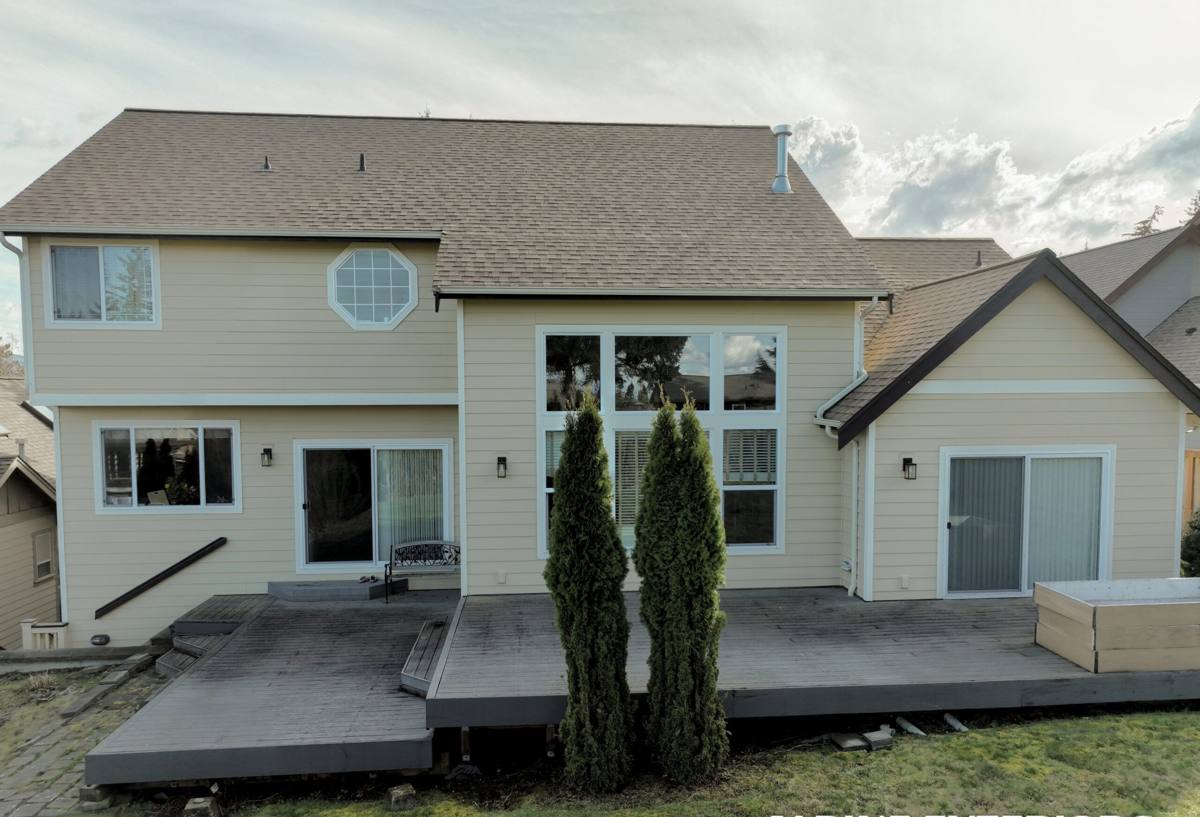
What "Built for Fairhaven" Actually Means
A deck that's genuinely suited to this neighborhood isn't dramatically different from a well-built deck anywhere — it just gets a handful of details upgraded specifically because of the salt air and rain exposure:
- Fasteners and hardware rated for coastal exposure. Standard hot-dip galvanized hardware corrodes faster near salt air than stainless steel or heavier-coated structural connectors. We match hardware to the exposure level, not just to whatever's cheapest at the yard.
- Proper drainage away from the structure and ledger. Bellingham's rainfall doesn't come in short bursts you can ignore — it's sustained, and it finds every low spot. Decking gaps, sloped ledger flashing, and grading beneath the deck all need to move water away, not let it pool.
- Ledger flashing that actually sheds water. The ledger board — where the deck attaches to the house — is the single most common source of hidden rot on any deck in a wet climate. It needs correctly lapped flashing, not just a bead of sealant.
- Airflow underneath the deck. Poor ventilation under low decks traps moisture and accelerates both wood decay and moss growth. Framing height and skirting design matter more here than in a dry climate.
- Surface material chosen for the shade and moisture profile of the specific site. A deck under mature trees or on the shaded side of a house needs a different maintenance conversation than one in full sun.
Decking Material Comparison for This Climate
| Material | How it handles salt air & rain | Moss/mildew resistance | Maintenance |
|---|---|---|---|
| Pressure-treated wood | Good if properly sealed and re-sealed on schedule | Moderate — needs periodic cleaning | Annual inspection, re-sealing every 2-3 years |
| Cedar | Naturally rot-resistant, but surface still needs protection | Moderate — moss will still grow if shaded and damp | Regular cleaning, periodic oil/sealer |
| Composite decking | Excellent — doesn't absorb moisture like wood | Better, but can still grow surface moss/algae in deep shade | Occasional washing, no sealing needed |
| PVC/capped polymer | Excellent — fully moisture-resistant surface | Best — smooth cap sheds organic growth more easily | Lowest — periodic washing only |
None of these is a wrong choice on its own — the right one depends on your budget, how much sun the deck gets, and how much upkeep you actually want to do. We'll walk through the honest trade-offs for your specific site rather than push whatever has the best margin.
Framing and Footings: The Part You Don't See but Depends On
Most deck failures start below the decking boards, not on the surface. In this climate, we pay particular attention to:
Footings sized for our soil and frost conditions
Whatcom County soil and drainage vary block by block, and footing depth needs to reflect that rather than a generic minimum. Undersized or shallow footings are one of the more common shortcuts we see on older decks brought in for repair.
Ledger attachment and flashing
As mentioned above, this is the highest-risk connection point on any attached deck. We treat it as a structural and waterproofing detail, not just a fastening step.
Joist protection
Joist tape or an equivalent moisture barrier on top of framing members significantly extends the life of the structure underneath composite or capped decking, where trapped moisture between the board and joist is a common cause of premature rot.
Moss, Algae, and the Long Wet Season
Moss doesn't just look bad — on a deck surface it's a slip hazard, and left unaddressed it holds moisture against the decking material and accelerates wear. Fairhaven's tree cover and proximity to the water mean many decks here sit in partial shade for large stretches of the year, which is exactly the condition moss and algae need to establish. A few things reduce the problem at the design stage:
- Decking material with a smoother, less porous surface sheds organic growth more easily than rough-sawn wood.
- Proper board spacing lets airflow and light reach the surface instead of trapping damp debris in tight gaps.
- Keeping overhanging branches trimmed back reduces both leaf litter and shade on the deck surface.
- Routine cleaning — even just a seasonal wash — keeps moss from getting a foothold in the first place.
We're happy to talk through a realistic maintenance schedule for whatever material you choose, because the material decision and the maintenance commitment go hand in hand.
Our Deck Building Process
- On-site assessment. We look at sun/shade exposure, drainage patterns, existing structure (for replacements), and how the deck will actually be used before recommending anything.
- Design and material selection. We walk through decking material, railing style, and layout options with honest cost and maintenance trade-offs for your specific site.
- Permitting. Deck permitting requirements depend on size, height, and attachment to the structure. We handle the permit process so you're not stuck deciphering it yourself.
- Framing and footings. Built to the structural and moisture-management standards described above, not just code minimums.
- Decking, railing, and finish work. Installed with attention to board spacing, fastener choice, and drainage.
- Final walkthrough. We go over care and maintenance expectations so there are no surprises down the road.
Permits and Local Requirements
Deck projects in and around Bellingham typically require a building permit once the deck exceeds a certain height or size, and attachment to an existing structure adds its own review requirements. Exact thresholds and processes are set by the local jurisdiction and can change, so rather than quote specifics that may be out of date, we confirm current requirements for your property and handle the application as part of the job. This isn't a step worth skipping — an unpermitted deck can create problems at resale and, more importantly, skipping inspection removes a safety check on the structural work.
What Drives the Cost of a Fairhaven Deck
| Factor | Why it matters here |
|---|---|
| Decking material | Wood costs less up front; composite and PVC cost more initially but need less upkeep against moss and moisture over time |
| Height and footing depth | Elevated decks and sites with variable soil need more substantial footings and framing |
| Ledger vs. freestanding design | Ledger-attached decks need careful flashing work; freestanding decks avoid that risk but need more footings |
| Railing style | Cable, glass, and composite railing systems cost more than standard wood balusters but hold up differently to salt air |
| Site access and shade/drainage conditions | Sites with poor natural drainage or heavy shade may need extra grading or ventilation work |
We give a firm, itemized estimate before any work starts — no vague allowances that turn into surprise add-ons later.
Why It Matters That We Already Work in Fairhaven
A crew that's built and repaired decks throughout Bellingham and Whatcom County knows which details actually matter here versus which ones are just upsells. We've seen what a few seasons of salt air and moss does to hardware and decking that wasn't specified for this environment, and we build accordingly from the start rather than learning that lesson on your project. That local track record also means we're not guessing at permit requirements or typical soil conditions in the neighborhood — we already know the landscape we're building on.
A Quick Checklist Before You Hire Anyone for Deck Work
- Ask what fastener and hardware grade they use, and whether it's rated for coastal/salt-air exposure.
- Ask how they detail ledger flashing — a vague answer here is a red flag.
- Confirm they're pulling the required permit, not working around it.
- Ask about footing depth and how it's determined for your specific site.
- Get the maintenance expectations for your chosen material in writing before you commit to it.
If you're planning a new deck or replacing one that's showing its age in Fairhaven's weather, we're glad to take a look and talk through honest options — no pressure, no obligation. Request a free estimate using the form below and we'll go from there.