 Bellingham Siding
 Deck Repair Built for Columbia's Wet Coastal Climate
Homes in the Columbia neighborhood deal with a specific combination of weather that's hard on wood: salt-tinged air drifting off Bellingham Bay, driving rain that comes in sideways during fall and winter storms, and a moss season that can stretch from October through May. None of that is unusual for Whatcom County, but it adds up fast on an exterior deck that spends all year exposed to it. A deck that would hold up fine in a drier inland climate can develop soft spots, loose fasteners, and slick, moss-covered boards within a handful of seasons here if it isn't built and maintained with our conditions in mind.
We repair decks for homeowners throughout the Columbia area and elsewhere in Bellingham, and the damage patterns we see are consistent: moisture getting trapped where it shouldn't, fasteners corroding faster than the wood around them, and moss turning walking surfaces into a fall hazard. Deck repair done right here isn't just about swapping a rotten board — it's about understanding why that board rotted in the first place and fixing the underlying cause so the repair actually lasts.
Why Salt Air and Rain Matter More Than People Expect
Salt air accelerates corrosion on metal fasteners, joist hangers, and hardware — including some galvanized products that would last much longer in a non-coastal climate. Once a fastener starts to corrode, it loses grip strength long before it looks obviously bad, which is part of why deck failures can catch homeowners by surprise. Combine that with near-constant damp conditions for months at a stretch, and you get wood that never fully dries out between rain events, which is exactly the environment rot fungus needs to take hold.
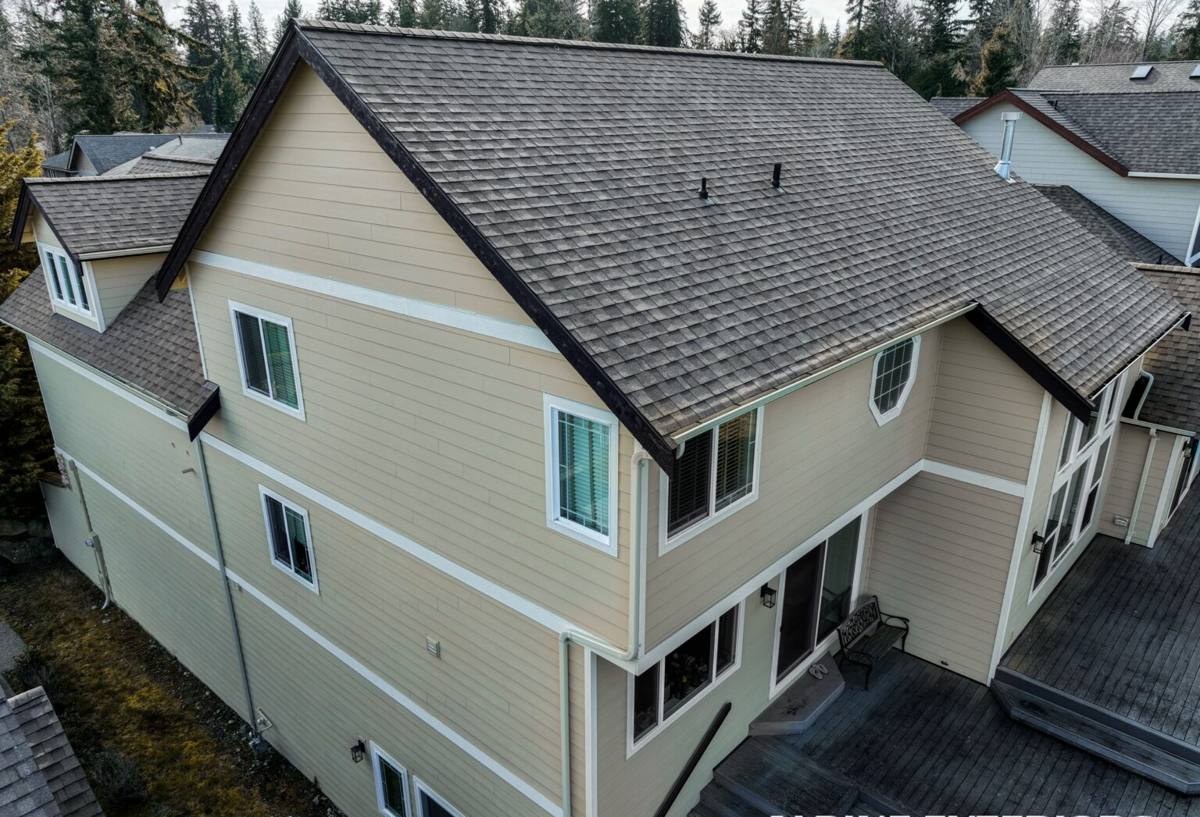
Signs a Columbia-Area Deck Needs Repair
Most deck problems don't show up overnight. They build slowly, and by the time something is visibly wrong, there's usually been months or years of moisture doing quiet damage underneath. Here's what we tell Columbia homeowners to check for, especially heading into or coming out of the wet season:
- Boards that feel spongy, springy, or soft when you walk on them, especially near the house or along the outer edge
- Green or black staining on decking, railings, or the underside of the structure — an early sign of sustained moisture and moss growth
- Gaps opening up around the ledger board where the deck attaches to the house
- Rust streaks running down from screws, bolts, or joist hangers
- Railings or stair stringers that feel loose or wobble under normal use
- Standing water that doesn't drain within an hour or two after rain stops
- Visible moss buildup on walking surfaces, particularly in shaded areas or under overhangs
- A musty smell coming from underneath the deck or around the ledger connection
If you're noticing more than one or two of these, it's worth having someone look underneath the deck, not just at the surface. Surface staining and moss are often the visible tip of a moisture problem that's been developing in the framing for a while.
What a Correct Deck Repair Actually Involves
A repair that just replaces the board you can see, without checking what's underneath it, is a repair that often has to be redone within a year or two. Here's what we actually check and do on a proper deck repair.
Structural Inspection First
Before any boards come off, we get underneath the deck and check the framing: joists, beams, posts, and post footings. This is where the real structural problems usually live, and it's the part homeowners can't easily inspect themselves without crawling under there. We're looking for soft or discolored wood, undersized or corroded hardware, and any framing that's been improperly notched or modified over the years.
The Ledger Board and Flashing
The ledger board — where the deck bolts into the house — is the single most common failure point we find on older decks in this climate, and it's also the highest-consequence one, since it's what keeps the whole deck attached to the structure. Proper flashing directs water away from this connection instead of letting it pool behind the ledger and rot both the deck framing and the house's rim joist. On a lot of older decks, especially ones built or repaired before code requirements tightened up, this flashing is missing, undersized, or was installed wrong to begin with. We don't consider a ledger repair complete unless the flashing detail is right, even if that means more work than just re-bolting the board.
Framing, Joists, and Fasteners
Any joist or beam showing rot gets sistered with new lumber or replaced outright — patching over compromised framing just hides the problem. We also upgrade fasteners and hardware where the existing ones are undersized or corroding, using connectors rated for the exposure this climate creates rather than whatever was cheapest at the time of original construction.
Decking Boards, Railings, and Stairs
Individual board replacement is the most visible part of a repair, but it only works long-term if the framing underneath is sound and drainage is correct. We also check railings and stair stringers for the same rot and fastener issues found in the main structure — a loose railing is a safety issue, not just a cosmetic one, and it's one of the more common reasons we get called out.
Repair or Replace? How We Help You Decide
Not every deck problem calls for a full teardown, and not every deck is worth continuing to patch. The honest answer depends on how much of the structure is affected and how old the deck already is. Here's the general framework we use when walking a Columbia homeowner through the decision:
| Factor | Leans Toward Repair | Leans Toward Replacement |
|---|---|---|
| Extent of rot | Isolated to a few boards or one section | Widespread through framing and multiple areas |
| Ledger board condition | Sound, properly flashed | Rotted, missing flashing, or improperly attached |
| Deck age | Under 15-20 years, built to reasonable standards | Older deck nearing the end of its structural life |
| Post and footing condition | Solid, no movement or settling | Heaving, settling, or undersized footings |
| Overall cost | Repair cost is a fraction of replacement | Repair cost approaches 50%+ of a new deck |
We'll always give you a straight answer on which side of that line your deck falls on, along with the reasoning behind it, rather than defaulting to whichever option is more profitable for us.
Deck Materials We Work With and How They Hold Up Locally
Part of a good repair is matching materials sensibly to what's already there, and part of it is being honest with homeowners about how different materials perform in this specific climate when repairs or partial replacements come up.
| Material | How It Performs Here | Maintenance Reality |
|---|---|---|
| Pressure-treated lumber | Solid and economical if properly sealed and maintained; vulnerable at cut ends and fastener points if neglected | Needs re-sealing every 1-3 years in this rainfall |
| Cedar | Naturally rot-resistant and handles moisture well, but softer and more prone to surface wear and moss uptake | Benefits from periodic cleaning and sealing |
| Composite decking | Resists rot and doesn't need sealing, but can still grow moss/algae on the surface in shaded, damp spots | Low maintenance overall; periodic cleaning still needed |
We're not going to tell you one material is universally best — each has real trade-offs in moisture behavior, upfront cost, and long-term upkeep, and the right call depends on your budget and how much maintenance you actually want to do.
Our Deck Repair Process
1. On-Site Inspection and Honest Estimate
We start by getting underneath the deck and checking the framing, not just the surface. You get a clear explanation of what we found, what's actually driving the problem, and a written estimate before any work begins — no surprise add-ons once we've started.
2. The Repair Itself
We address the root cause first — flashing, framing, drainage — before moving on to the visible fixes like board replacement, railing repair, or hardware upgrades. Work is sequenced so the structural issues are resolved before anything cosmetic gets buttoned up over the top of them.
3. Cleanup and Walkthrough
We clear debris and old material from the site and walk the finished repair with you so you know exactly what was done and what to watch for going forward. If there's a maintenance step we'd recommend — resealing a board, cleaning a drainage path — we'll tell you plainly rather than leaving you to guess.
Why a Crew That Already Works Columbia Makes a Difference
A contractor who's worked on decks throughout Bellingham and the surrounding Whatcom County neighborhoods already knows what this climate does to a deck over time — they're not learning it on your project. That familiarity matters when it comes to spotting the early, less obvious signs of moisture damage, knowing which flashing details actually hold up through a real Pacific Northwest wet season, and giving you a realistic timeline given how weather affects scheduling here. It also means less back-and-forth explaining local conditions — we've already seen how salt air, rain, and moss play out on decks in this area, and we bring that into every estimate and every repair.
Keeping Your Deck in Good Shape After the Repair
A repair is only as good as the maintenance that follows it. A little seasonal upkeep goes a long way toward making sure you're not calling us back for the same problem in a few years:
- Sweep debris off the deck regularly, especially fallen leaves and needles that trap moisture against boards
- Clean moss and algae off walking surfaces before it builds up, using a deck-safe cleaner rather than a pressure washer set too aggressively
- Check and clear drainage paths so water isn't pooling anywhere on or under the deck
- Re-seal or re-stain wood decking on the schedule appropriate to the product, typically every 1-3 years in this climate
- Do a seasonal check under the deck for new staining, soft spots, or loose hardware, particularly after the first heavy fall storms
- Trim back vegetation that's shading the deck and keeping it damp longer than it needs to be
Catching a small problem during a seasonal check is a lot less expensive and disruptive than discovering a structural issue after it's had years to develop.
Let's Take a Look at Your Deck
If your Columbia-area deck has soft boards, loose railings, moss buildup, or you're just not sure how it's holding up underneath, we're happy to come take a look. We'll give you a straight assessment of what's going on, what it would take to fix it, and whether repair or replacement makes more sense for your situation — no pressure, no obligation. Use the form below to request a free estimate.