 Bellingham Siding
 Deck Repair Built for Fairhaven's Marine Climate
Fairhaven sits close enough to Bellingham Bay that decks here take a different kind of beating than decks a few miles inland. Salt-laden air, near-constant winter drizzle, and long stretches of shade under mature trees add up to conditions that most deck lumber and hardware were never designed to shrug off indefinitely. If your deck has soft boards, rust-streaked fasteners, a spongy stair stringer, or railings that wiggle more than they used to, you're looking at normal wear for this part of Whatcom County — not a sign you did anything wrong.
We repair decks in Fairhaven and the surrounding Bellingham area regularly enough that we've stopped being surprised by what we find. The goal of this page is to explain what actually goes wrong with decks here, what a proper repair involves, and how to tell a real fix from a patch job that buys you two more summers and not much else.
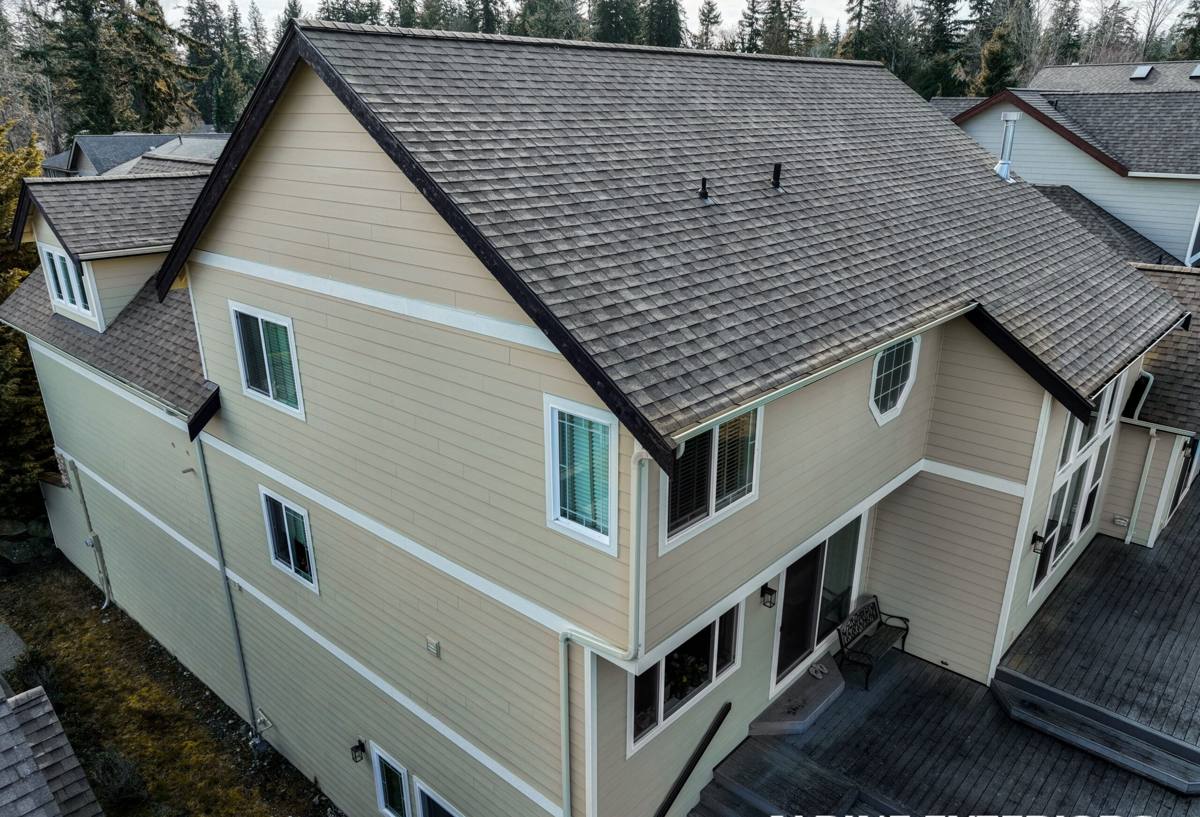
Why Decks Age Faster Near the Bay
Three things work against outdoor structures in Fairhaven, and they compound each other:
- Salt air: Moisture carrying salt accelerates corrosion on fasteners, joist hangers, and any exposed metal hardware. Once a fastener starts rusting, it loses holding strength before it looks obviously bad.
- Driving rain: Wind-driven rain off the water doesn't just fall straight down — it gets pushed sideways into ledger boards, under railing caps, and into end-grain cuts that were never properly sealed. Water finds the weak points and stays there.
- Moss and shade: Fairhaven's tree cover and long wet season give moss and algae plenty of time to establish on deck boards, especially on the north side of a house or under overhangs. Moss holds moisture against the wood surface, which is exactly what accelerates rot.
None of these are dramatic on their own. Together, over several Bellingham winters, they turn a well-built deck into one with hidden soft spots long before the boards look obviously bad from a distance.
Where We Typically Find Problems
Ledger Board and House Connection
The ledger board — where the deck attaches to the house — is the single most safety-critical part of most decks, and it's also the part most exposed to water running down siding and pooling against the connection. Flashing that was missing, undersized, or installed before current code often lets water track behind the ledger for years without any visible sign until the wood underneath is compromised.
Joists and Framing
Underneath the decking boards, joists take on moisture from above (through gaps and fastener holes) and sometimes from below if ventilation under the deck is poor. Rot here is dangerous because it's invisible from the top and directly affects structural capacity.
Deck Boards and Railings
This is the damage you can actually see: cupped or splintering boards, graying and moss-streaked surfaces, loose balusters, and railings that flex under a firm push. Railings loosen as the wood around their fasteners softens or the fasteners themselves corrode.
Stairs
Stair stringers see concentrated foot traffic and often sit closer to grade, where splashback and standing water are worse. A stringer that feels springy or a tread that flexes underfoot is worth addressing before it becomes a fall hazard.
Fasteners and Hardware
Even when the wood itself looks fine, corroded screws, nails, and joist hangers quietly lose their grip. This is one of the most common "the deck looks okay but isn't" situations we run into.
What a Correct Deck Repair Actually Involves
A lot of deck "repair" in this region amounts to swapping out the boards that look bad and calling it done. That approach misses the structural issues underneath and often just resets the visible clock while the real problems keep progressing. Our process is built around finding out what's actually going on before we decide what to fix.
1. Full Structural Inspection
We check the ledger connection and flashing, probe joists and beams for soft spots, test railing posts for movement, and inspect stair stringers under load. This tells us whether we're dealing with a cosmetic issue, a structural one, or both.
2. Moisture and Rot Assessment
Wherever we find discoloration, softness, or moss buildup, we determine how deep the damage goes. Surface graying is cosmetic. Wood that gives under a screwdriver tip is not — that section gets cut out and replaced, not painted over.
3. Targeted Repair vs. Full Rebuild
Most decks don't need to be torn out entirely. If the framing is sound, we repair or replace the affected boards, hardware, and localized framing. If the structural members are compromised — particularly around the ledger or main beams — we'll tell you honestly rather than patch around a safety issue.
4. Hardware Upgrade
Where we're opening up a deck anyway, we typically recommend upgrading to corrosion-resistant fasteners and connectors rated for the moisture and salt exposure this area sees. Using standard hardware in a marine-influenced climate is a common shortcut that leads to repeat problems.
5. Flashing and Water Management
Any repair that touches the ledger board or a horizontal surface against the house gets proper flashing and drainage attention. This is the step that's easiest to skip and most responsible for decks failing again within a few years.
6. Finish and Protection
Once structural work is done, exposed wood gets sealed or finished appropriately so it can actually handle another several seasons of Bellingham rain rather than starting the rot cycle over immediately.
Repair or Replace? A Cost-Factor Comparison
Homeowners often ask whether it's worth repairing an older deck or better to start over. It depends on where the damage is and how much of the structure is still sound.
| Factor | Favors Repair | Favors Replacement |
|---|---|---|
| Ledger board condition | Solid, well-flashed connection | Rot or poor flashing at the house connection |
| Framing condition | Joists and beams test solid | Widespread soft spots in structural members |
| Age of deck | Under 15-20 years, built to reasonable standards | Older deck nearing the end of its practical life |
| Extent of visible damage | Isolated boards or railing sections | Damage spread across most of the surface |
| Budget goals | Extend usable life at lower cost | Want updated layout, materials, or long-term low maintenance |
Broadly speaking, targeted repairs on a structurally sound deck tend to run in the hundreds to low thousands of dollars depending on scope, while a full rebuild is a larger investment but resets the clock entirely. We'll give you a straight answer on which category your deck falls into after we've actually inspected it — not before.
Materials: What Holds Up Here vs. What Doesn't
Material choice matters more in a marine climate than it does further inland. A few honest trade-offs worth knowing:
- Pressure-treated lumber is affordable and widely used, but it needs consistent sealing and maintenance to perform well against this area's rain and moss exposure. Skipping annual upkeep is the most common reason PT decks fail early here.
- Cedar has natural rot resistance and looks good, but it's softer and more prone to surface wear from foot traffic and moss staining without regular care.
- Composite decking largely eliminates rot and reduces the moss-and-moisture maintenance cycle, at a higher upfront material cost. It's a reasonable option for homeowners who want to minimize the repair cycle we've described above, though it still requires proper structural framing and hardware underneath — composite boards don't fix a rotten joist.
We don't push one material over another as a rule — we'll walk through what fits your budget, your deck's exposure, and how much maintenance you actually want to do.
Our Process, Start to Finish
- Free on-site inspection: We walk the full deck, probe suspect areas, and check the ledger, framing, railings, and stairs.
- Honest scope and estimate: You get a clear explanation of what's actually wrong, what needs to happen, and what it costs — no inflated scope, no vague allowances.
- Scheduling around Bellingham weather: We plan structural work for drier stretches where possible, since opening up framing in the middle of a rain system isn't good for the wood or the schedule.
- Repair work: Structural fixes first, then decking, railings, and hardware, then finish work.
- Final walkthrough: We check railings for rigidity, stairs for solid footing, and confirm flashing and drainage are doing their job before we call it done.
Signs Your Fairhaven Deck Needs Attention
Use this as a quick self-check before calling anyone:
- Boards that feel spongy, springy, or give slightly underfoot
- Railings or posts that move when pushed firmly
- Visible moss, algae, or persistent dark staining on the deck surface
- Rust streaking around screws, nails, or metal connectors
- Gaps, cracking, or separation where the deck meets the house
- Stair treads or stringers that flex under normal weight
- Standing water that doesn't drain within a few hours after rain
- Visible daylight or gaps at the ledger board flashing
Any one of these on its own might be minor. Two or three together usually means it's time for a real inspection rather than a wait-and-see approach.
Why a Local Crew Matters for This Job
Deck repair isn't a one-size-fits-all trade. A crew that mostly works drier inland climates can underestimate how aggressively moss and driving rain attack a deck near the water, and may not default to the corrosion-resistant hardware and flashing details that matter here. Working regularly in Bellingham and Whatcom County means we're used to diagnosing marine-climate damage specifically — we're not guessing at what a Fairhaven deck has been dealing with, we've seen the pattern before.
Being local also means we're not disappearing after the invoice clears. If something about the repair doesn't sit right once you've lived with it through a rainy season, we're a short drive away, not a name on a truck that passed through once.
Get an Honest Look at Your Deck
If your Fairhaven deck has soft spots, loose railings, or just doesn't feel as solid as it used to, it's worth getting an honest assessment before the damage spreads further into the framing. We offer free, no-pressure estimates — we'll tell you plainly whether you're looking at a targeted repair or something bigger, and why. Use the form below to schedule a visit.