 Bellingham Siding
 Deck Repair in Lynden: What Our Climate Does to a Deck
Lynden sits in the same wet, marine-influenced weather pattern as the rest of Whatcom County, and that weather is hard on outdoor wood and composite structures. Between the driving rain that comes off the Sound, the humid air that carries salt inland on windy days, and a moss season that can stretch from late fall through early spring, a deck here takes on moisture almost year-round. It's not one storm that causes damage — it's the slow, repeated cycle of wet-then-dry that works its way into joints, fastener holes, and end grain over several seasons.
We repair decks in Lynden and the surrounding Bellingham area regularly, and the failure patterns we see are consistent. Ledger boards pull moisture where they meet the house. Stair stringers rot from the bottom up where snowmelt and rain pool. Railings loosen because the posts were never properly flashed. None of this means the whole deck is a lost cause — most of it is fixable if it's caught before the structural framing is compromised.
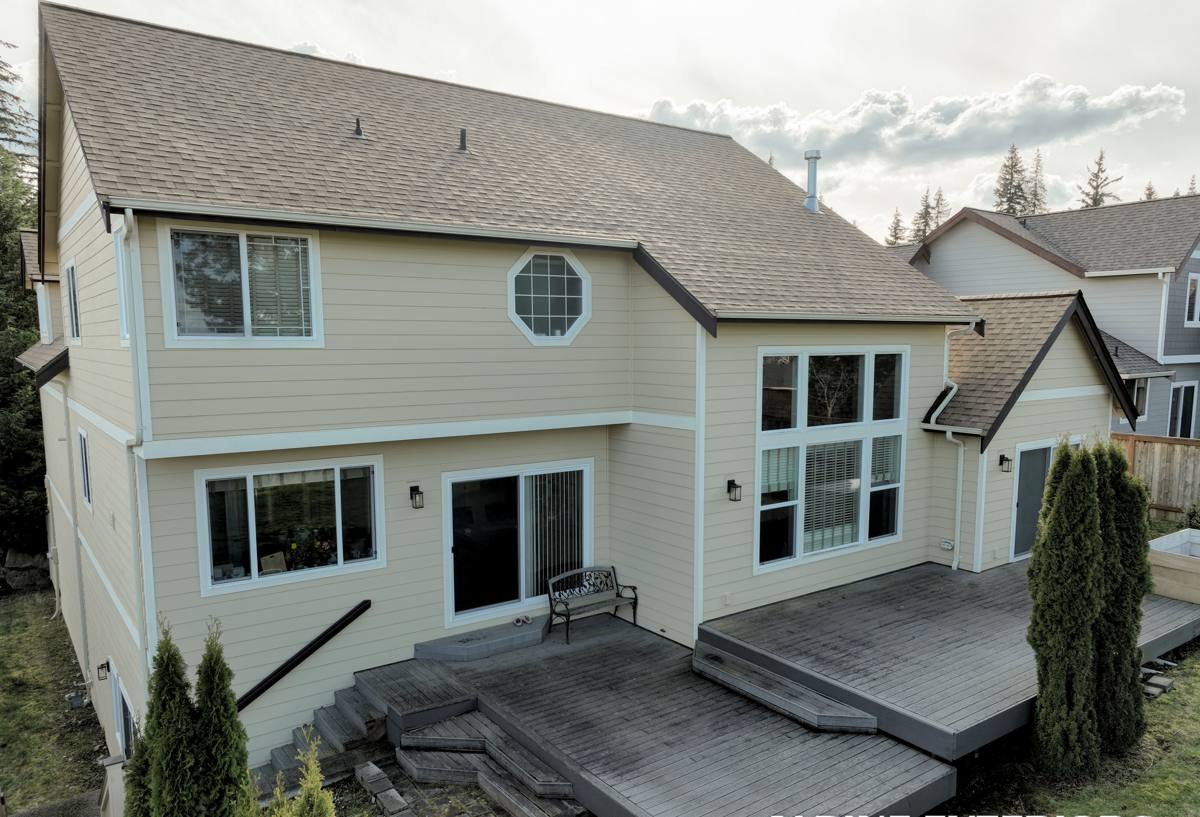
Signs Your Lynden Deck Needs Repair, Not Replacement
Homeowners often assume a deck showing wear needs to be torn out and rebuilt. That's sometimes true, but a large share of the decks we look at in Whatcom County just need targeted repair. Here's how to tell the difference before you call anyone:
- Soft or spongy spots in decking boards — usually isolated, not deck-wide
- Rust streaks around fasteners, which point to failing screws rather than failing wood
- A railing that flexes or wobbles when you lean on it
- Green or black staining that wipes clean but keeps coming back within weeks
- Gaps opening between boards, or boards cupping at the edges
- Stairs that feel slightly uneven or have visible splitting at the stringer
The one sign that usually does mean full replacement: soft, crumbling wood in the main support posts or beams, especially near ground contact. That's a structural issue, not a cosmetic one, and it's the one area where we won't cut corners with a patch repair.
Moss and Algae Aren't Just Cosmetic Here
In a lot of climates, moss on a deck is treated as a surface nuisance. In Whatcom County, it's worth taking more seriously. Moss holds moisture against the wood surface long after the rest of the deck has dried, which extends the amount of time each board spends saturated. Over several moss seasons, that constant dampness is what actually starts the rot process, even on boards that look intact on top.
What a Correct Deck Repair Involves
A repair that actually holds up through another Lynden winter is more than swapping a board for a new one. We look at the whole assembly, because rot and fastener failure are rarely isolated to a single spot — if one board failed, the boards around it and the framing underneath are usually a step behind it.
A properly done repair typically includes:
- Removing damaged decking or railing components fully, not just capping over them
- Inspecting the framing underneath — joists, ledger, beams — for hidden rot before replacing surface material
- Checking and correcting flashing at the ledger board, which is the single most common source of hidden rot on attached decks
- Replacing corroded fasteners with corrosion-resistant hardware rated for exterior/coastal-influenced exposure
- Confirming rail post attachment meets current structural expectations, not just how it was originally built
- Re-sealing or finishing repaired wood sections so they weather at the same rate as the surrounding deck
Skipping the framing inspection is the most common shortcut in deck repair, and it's the one that costs homeowners the most in the long run — a new board over a rotting joist just moves the problem out of sight for a season or two.
Common Deck Materials in Lynden and How They Age
What your deck is built from changes what "repair" actually looks like, and it changes how often you'll need to think about it.
| Material | How it typically fails here | Repair approach |
|---|---|---|
| Pressure-treated pine | Surface checking, fastener rot, ground-contact decay at posts | Board replacement plus framing check; refinish on a regular cycle |
| Cedar | Graying, splintering, soft spots where finish has worn through | Sanding and refinishing where sound; selective board replacement |
| Composite decking | Fastener pull-through, moisture trapped at cut ends, fading | Board or clip replacement; end-cap sealing to stop moisture intrusion |
| Wood railings | Post rot at base, loose balusters, cracked cap rail | Post base repair or replacement; hardware upgrade |
Composite decking gets marketed as low-maintenance, and the surface mostly lives up to that. What we see fail is the substructure underneath and the fastener system holding it down — composite doesn't rot, but the wood framing beneath it still can, and a cut end left unsealed will still wick moisture. A repair on composite is often about the hardware and framing, not the boards themselves.
Our Deck Repair Process
We keep this straightforward, because a deck repair doesn't need to be a mystery:
- On-site inspection. We walk the whole deck, check framing where accessible, and test railings and stairs by hand — not just a visual pass.
- Honest scope. We tell you what's cosmetic, what's structural, and what can wait a season versus what shouldn't. If a full rebuild genuinely makes more sense than patch repairs, we'll say so.
- Written estimate. Clear line items, no vague allowances.
- Repair work. Matching materials as closely as possible, correcting the underlying moisture path (flashing, drainage, fastener type), not just replacing what's visibly damaged.
- Finish and seal. Any exposed wood gets treated before we leave, since untreated cut ends are one of the fastest ways rot restarts.
Repair vs. Replacement: Cost Factors
There's no single number that applies to every deck, but the factors that push a job toward "repair" versus "full replacement" are consistent:
| Factor | Leans toward repair | Leans toward replacement |
|---|---|---|
| Framing condition | Solid, dry joists and beams | Soft or crumbling structural members |
| Extent of damage | Isolated boards or rail sections | Widespread rot across the deck |
| Age of the deck | Under 15-20 years, well-built originally | Original construction was undersized or poorly flashed |
| Code/attachment | Ledger and post attachment already sound | Ledger flashing missing or rail attachment unsafe |
Most of the calls we get in Lynden turn out to be repairable. Full replacement tends to come up on older decks that were never flashed correctly at the house, where the rot has had a straight path into the framing for years.
Maintenance Checklist to Extend Your Deck's Life
A few habits go a long way in this climate. This is the same list we'd hand a homeowner after finishing a repair:
- Clear leaves and debris from between boards before fall rains set in — trapped debris is where moss gets its start
- Rinse or lightly scrub moss and algae off the surface at least once during the wet season, not just in spring
- Check railings and stair stringers by hand once a year for movement or soft spots
- Keep gutters and downspouts directing water away from the deck footprint, not onto it
- Re-seal or refinish wood decking on the manufacturer's recommended cycle — don't wait until it's visibly gray and dry
- Look under the deck once a year, if accessible, since that's where early rot usually shows up first
Why Hire a Crew That Already Works in Lynden
Deck repair looks different in Whatcom County than it does in a drier climate, and a crew that mostly works elsewhere can miss things that are obvious to someone who repairs decks here every season — where moisture collects on a north-facing deck, how fast moss returns without proper drainage, which fastener types actually hold up against the salt-influenced air near the water. We work throughout Bellingham and communities like Lynden, so the recommendations we give are based on what actually fails here, not a generic checklist.
We're also straightforward about scope. If your deck needs a full rebuild, we'll tell you and explain why. If it just needs targeted repair, we won't upsell you into more work than the structure actually requires. Either way, the goal is a deck that's safe and holds up through the next several wet seasons, not just one that looks fixed for a summer.
If you've got soft boards, a wobbly railing, or a deck that hasn't been looked at in a few years, we're happy to come take a look. Reach out for a free, no-pressure estimate using the form below, and we'll give you a straight read on what your deck actually needs.