 Bellingham Siding
 Why Decks in Blaine Wear Out Faster Than the Rest of Whatcom County
Blaine sits right on Semiahmoo Bay, close enough to the water that salt-laden air is part of daily life whether a home has a water view or not. That air finds its way into fastener heads, joist hangers, and the end grain of framing lumber, and it works faster than most homeowners expect. Combine that with the long, wet stretch of fall through spring common across Whatcom County, and a deck in Blaine is dealing with two separate aging processes at once: corrosion from salt exposure and moisture damage from near-constant rain and shade.
Add in moss. Northwest Washington's moss season isn't a cosmetic nuisance — it's a moisture trap. Moss holds water against decking boards and framing members long after a storm has passed, keeping wood wet for days instead of hours. On a deck with poor drainage or tight board spacing, that trapped moisture is often the real reason a structure that looks fine on the surface is soft, rotten, or rusted underneath.
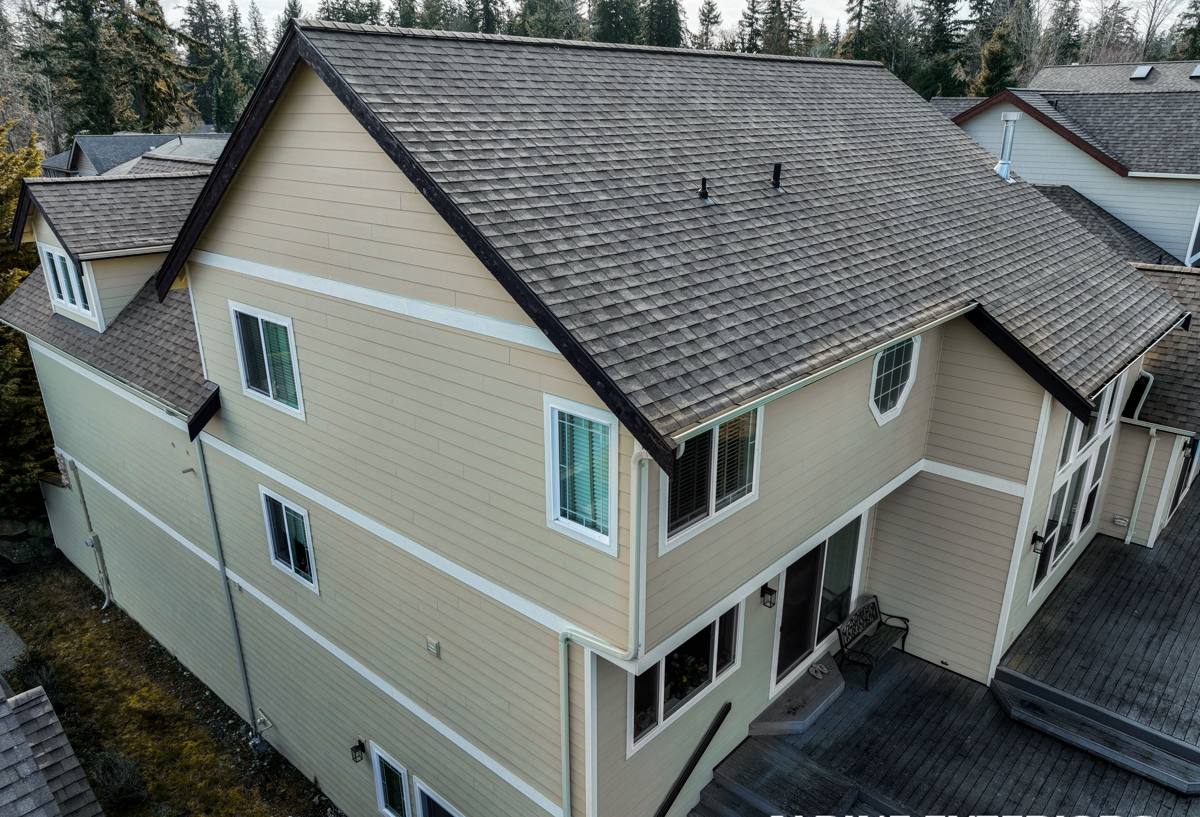
Repair or Replace? Reading the Real Signs
Not every tired-looking deck needs to come out. But there's a point where patching individual boards or re-staining stops being a fix and starts being a way to delay the inevitable. We look at the whole system, not just the surface.
Signs pointing toward replacement
- Soft or spongy spots in decking boards, especially near the house or in shaded corners
- Rust streaks running down from fasteners, joist hangers, or post bases
- Visible gaps or separation where the deck ledger meets the house siding
- Wobble or movement at the railing posts or stair stringers
- Persistent moss or algae growth that returns within weeks of cleaning
- A deck older than 15-20 years built with untreated fasteners or no flashing at the ledger
If the problems are limited to a handful of boards and the framing underneath is sound, a repair can buy real time. If the framing, ledger connection, or footings are compromised, replacement is the honest recommendation — patchwork on a failing structure just moves the cost down the road while adding risk.
Choosing Materials That Actually Hold Up Here
Material choice matters more in a place like Blaine than it does further inland. Salt air accelerates corrosion on any exposed metal, and constant moisture punishes materials that absorb water or trap it against the substrate. Here's how the common options actually perform under those conditions.
| Material | Moisture & Salt Air Behavior | Maintenance | Typical Lifespan |
|---|---|---|---|
| Pressure-treated wood | Resists rot when properly sealed; end cuts and fastener holes are vulnerable points if not treated after cutting | Annual cleaning, re-sealing every 1-2 years | 10-15 years with upkeep |
| Cedar | Naturally moisture-resistant, but softens over time under near-constant rain exposure; shows checking in salt air | Regular oiling/staining to prevent graying and splitting | 15-20 years with diligent care |
| Composite decking | Doesn't rot or absorb moisture the way wood does; performs well in coastal moisture but quality varies by product line | Occasional washing; no staining or sealing | 20-30 years |
| PVC/capped polymer | Fully sealed surface, best resistance to moisture and salt exposure among common decking materials | Low — soap and water cleaning | 25+ years |
We don't push a single product on every job. A shaded, moss-prone lot near the water is a different situation than a sunny, open backyard a few blocks inland, and the right material depends on budget, how the space is used, and how much upkeep a homeowner actually wants to do. What we won't do is install decking over framing or fasteners that can't back it up — a premium deck surface on a compromised structure is money spent in the wrong place.
What a Correct Deck Replacement Actually Involves
The decking boards are the part everyone sees, but they're the last piece of the job. Most deck failures in this climate start below the surface, so that's where a proper replacement puts the attention.
The parts that determine whether a deck lasts
- Ledger flashing: the connection where the deck attaches to the house is the single most common source of hidden rot. Correct flashing keeps water from running behind the ledger board and into the house's wall framing.
- Fasteners and hardware: in salt air, standard galvanized hardware corrodes faster than it should. We use fasteners and joist hangers rated for the exposure, not just the minimum code allows.
- Framing and joist spacing: proper spacing and blocking keep the deck rigid and reduce the flex that loosens fasteners and cracks decking over time.
- Footings: footings need to be sized and set to local frost depth and soil conditions, not guessed at. A footing that shifts even slightly will telegraph movement up through the whole structure.
- Drainage and airflow underneath: a deck built tight to the ground with no airflow holds moisture and moss longer. Grading and spacing underneath matter as much as what's on top.
Get these right and the decking material on top has a real chance of hitting its expected lifespan. Get them wrong, and even the best composite board will be sitting on framing that's failing underneath it within a decade.
Our Deck Replacement Process
We keep the process straightforward and communicate at each stage, since replacing a deck affects how a family uses their backyard for a few days.
- On-site assessment: we inspect the existing deck's framing, ledger connection, footings, and hardware to determine what's actually failing versus what's cosmetic.
- Material and layout discussion: we walk through decking options suited to the site's sun exposure, shade, and moisture patterns, along with a straightforward cost breakdown.
- Permitting: deck replacements typically require a permit through the local building authority, especially when footings, framing, or railing height are involved. We handle that paperwork.
- Demolition and disposal: the old deck comes out and old material is hauled away — no surprise dumpster left behind for weeks.
- Framing and flashing: new footings, joists, ledger flashing, and hardware go in first, built to hold up under coastal moisture and salt exposure.
- Decking, railing, and finish work: decking is installed with proper spacing for drainage, followed by railings, stairs, and any trim or finish work.
- Final walkthrough: we go over the finished deck together, including basic care guidance specific to the material installed.
Permits and Local Building Considerations
Deck replacements in Blaine and the surrounding Whatcom County area generally fall under local building permit requirements once footings, structural framing, or railings above a certain height are involved — a straightforward board-for-board resurfacing on an otherwise sound structure sometimes doesn't. We check the specifics for each project before work starts rather than assuming, since permit thresholds and inspection requirements can shift. Skipping a required permit isn't a shortcut worth taking; it can complicate a home sale down the line and, more importantly, it skips the inspection step that catches problems before they're buried under decking.
Living Near the Water: Ongoing Care After Replacement
A well-built deck still needs seasonal attention in this climate. A few habits go a long way toward getting the full lifespan out of a new deck:
- Rinse salt residue and debris off decking boards a few times a year, not just once in spring
- Keep gutters and downspouts near the deck clear so runoff isn't dumping directly onto or under it
- Sweep off moss and leaf buildup promptly, especially in shaded corners, rather than letting it sit through a wet stretch
- Check railing posts and stair connections annually for movement or loosening
- For wood decking, stay on top of the re-sealing schedule rather than waiting until graying is obvious
- Trim back overhanging vegetation that keeps sections of the deck shaded and damp longer than the rest
Why a Crew That Already Works Blaine Makes a Difference
Deck construction advice that works for a dry inland climate doesn't always translate to a bay-front town in Whatcom County. Flashing details, hardware selection, and footing depth all get adjusted when a crew has spent real time building and repairing decks in this specific environment. We've seen firsthand which fastener grades actually hold up to salt air here, which decking products handle the moss season without turning into a slip hazard, and where ledger connections tend to fail on homes built to older standards. That local pattern recognition is the difference between a deck that's built to code and one that's built to actually last in Blaine's conditions.
If your deck is showing its age or you're not sure whether it needs repair or full replacement, we're happy to take a look and give you a straightforward assessment. Reach out for a free, no-pressure estimate using the form below.