 Bellingham Siding
 Why Decks in Cordata Wear Out Faster Than the Warranty Card Suggests
Cordata sits in north Bellingham, and like the rest of Whatcom County it gets a long wet season, a lot of tree cover in the older residential streets, and enough marine influence off Bellingham Bay and the Strait of Georgia to keep everything outdoors just a little bit damp for most of the year. That combination is hard on decks in ways that don't show up in a manufacturer's brochure. A deck that would hold up fine in a dry inland climate can start failing structurally in this area in half the time if it wasn't built or maintained with local conditions in mind.
Moss, Shade, and Standing Moisture
Mature trees and cloud cover mean a lot of Cordata decks spend large stretches of fall, winter, and spring in shade, with surfaces that never fully dry out between rain events. That's exactly the environment moss and algae need. On wood decking, moss holds moisture against the boards and accelerates rot, especially at butt joints, around fasteners, and anywhere debris collects. On composite decking, moss and algae are more of a slip hazard and a cosmetic problem, but they still point to a drainage or airflow issue underneath.
Salt Air and Driving Rain
Bellingham's proximity to the water means fasteners, flashing, and any exposed metal hardware are dealing with a mild but constant dose of salt-laden moisture, on top of wind-driven rain that gets pushed sideways into ledger connections, stair stringers, and railing posts. Standard fasteners and hardware that aren't rated for coastal exposure corrode faster here than they would twenty or thirty miles inland. That corrosion is usually invisible until it isn't — a rusted-through joist hanger or a failed ledger bolt is a structural problem, not a cosmetic one.
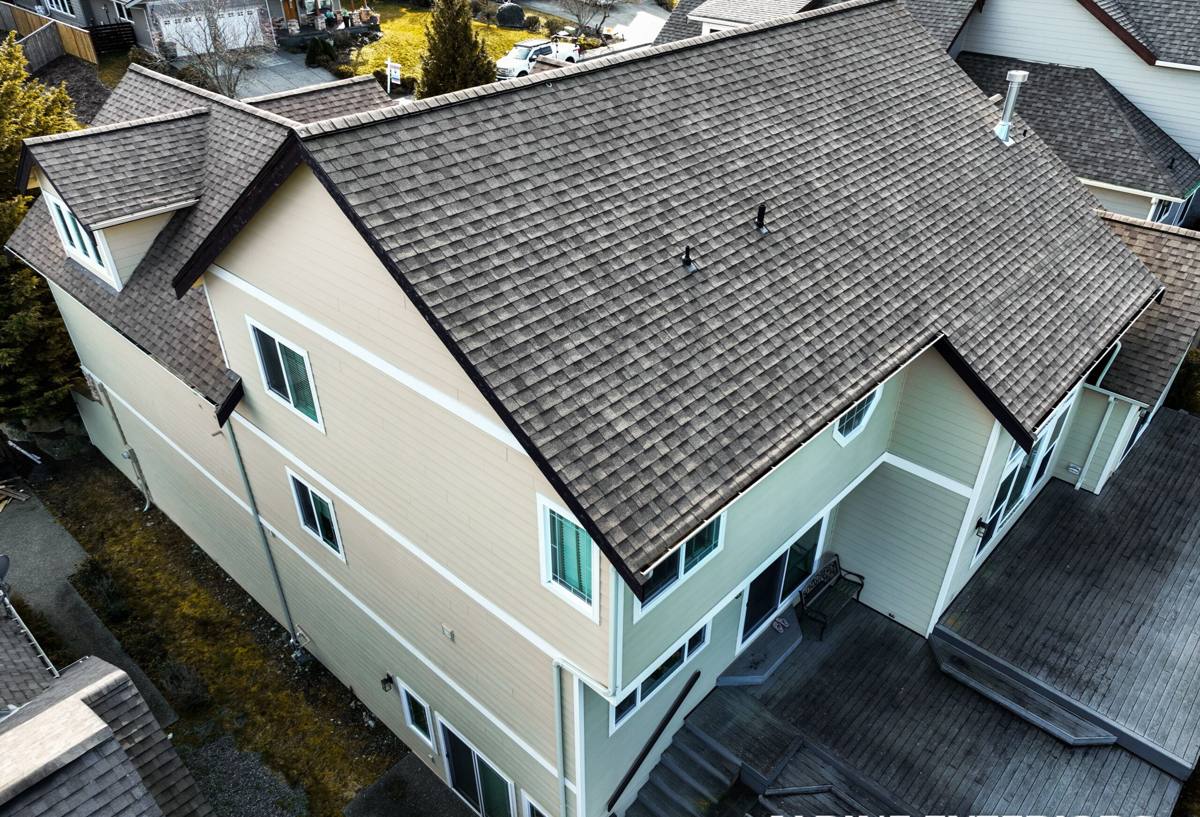
Signs a Cordata Deck Needs Replacement, Not Another Repair
Repair makes sense when the problem is isolated — a few bad boards, a loose railing baluster, a stair tread that's cupped. Replacement is the honest answer when the structure itself is compromised or when repairs would cost most of what a new deck costs anyway. Before we quote a repair, we check the framing, not just the surface.
- Soft, spongy, or bouncy spots in the decking or framing when you walk across it
- Rot or dark staining at the ledger board where the deck meets the house
- Rusted, bent, or missing joist hangers and structural fasteners
- Posts that wobble at the base, or footings that have shifted or heaved
- Persistent moss or algae growth that comes back within weeks of cleaning
- Railings that flex noticeably when leaned on — a code and safety issue, not just cosmetic
- A deck older than 20-25 years that has never had the substructure inspected
If you're only seeing one or two of these, a repair may still be reasonable. If you're seeing several at once, especially anything involving the ledger or footings, that's usually a sign the whole structure has been absorbing moisture longer than the surface has let on.
What a Correct Deck Replacement Actually Involves
Ledger and Structural Connection
The ledger board — where the deck attaches to the house — is the single most common point of failure on older decks in this climate, and it's also the connection most likely to have been done wrong the first time. A correct ledger installation uses proper flashing to keep water from tracking behind the siding and into the house framing, along with structural fasteners sized and spaced to code, not just whatever lag screws were on hand. This is also where we catch problems that started years before the deck ever needed replacing, like siding or sheathing damage behind the old ledger.
Framing and Joist Spacing
Joist size and spacing need to match the decking material and the span, not just match what was there before. Composite and PVC decking generally call for tighter joist spacing than solid wood, and undersized framing is one of the more common shortcuts we find on older Cordata decks that were built or added onto without a permit.
Decking Material Selection
There's no single right answer here — it depends on budget, how much upkeep you want to do, and how much shade the deck sits in. We'll walk through the honest trade-offs for your specific yard rather than push whatever has the best margin.
Decking Material Comparison for a Wet, Shaded Climate
| Material | Moss/Moisture Behavior | Maintenance | Typical Lifespan Here |
|---|---|---|---|
| Pressure-treated wood | Absorbs moisture; needs airflow underneath and regular cleaning to resist moss | Annual cleaning and periodic sealing/staining | 10-15 years before major repair or replacement |
| Cedar | Naturally more rot-resistant than treated pine but still needs sealing in shaded, wet spots | Sealing every 1-2 years, cleaning as needed | 15-20 years with upkeep |
| Capped composite | Won't rot, but moss/algae can grow on the surface film in shaded areas and needs washing | Occasional washing, no sealing or staining | 25-30 years, per most manufacturer warranties |
| PVC decking | Fully synthetic, no wood fiber to feed rot; still needs surface cleaning in mossy shade | Occasional washing | 25-30+ years, per most manufacturer warranties |
Composite and PVC cost more up front but remove the yearly sealing/staining cycle, which matters a lot in a climate where wood rarely gets a long enough dry stretch to properly absorb a sealer anyway. Wood remains a reasonable choice for owners who don't mind the maintenance and prefer the look and lower initial cost.
Footings, Drainage, and Grade
A deck can have brand-new decking on top and still be failing underneath if the footings and drainage weren't addressed. In this climate we pay particular attention to three things: footing depth (set below the frost line and on undisturbed soil, not just poured on grade), positive drainage away from the house so water isn't pooling under the deck year-round, and airflow underneath the structure so moisture has somewhere to go instead of sitting against the framing. On sloped Cordata lots, grading and drainage around the footings often matters more than the decking material choice.
Railings, Fasteners, and Hardware That Actually Hold Up
Hardware is where a lot of otherwise decent deck jobs quietly fail early in coastal Whatcom County. We use fasteners, joist hangers, and structural connectors rated for exterior and corrosion-resistant use — not the cheapest box at the hardware store — because standard hardware left in wind-driven, salt-tinged moisture will rust well before the decking itself wears out. Railings get the same attention: posts need a solid structural connection to the framing (not just surface-screwed), and baluster spacing needs to meet current code, especially if you're replacing an older deck that predates current railing requirements.
Permits and Code in Bellingham and Whatcom County
Deck replacement in Bellingham typically requires a building permit once you're rebuilding the structure rather than just swapping boards, and permit requirements can differ slightly depending on whether the property is inside city limits or unincorporated Whatcom County. Permitted work also means the framing, footings, and railings get inspected against current code — which matters most on older decks that were originally built under a much older, less strict standard. We handle the permit process as part of the job rather than leaving it for the homeowner to sort out.
Our Deck Replacement Process
- On-site evaluation of the existing deck, including the framing and ledger connection, not just a visual look at the decking surface
- Honest assessment of repair vs. replacement, with the reasoning explained plainly
- Written estimate covering material options, framing scope, and any drainage or grading work needed
- Permit handling with the city or county, where required
- Removal of the old deck and inspection of anything it was covering, including siding and framing behind the ledger
- Rebuild to current code: footings, framing, ledger flashing, decking, and railings
- Final walkthrough so you know what maintenance, if any, the new deck actually needs
Why Hire a Crew That Already Works Cordata
A deck built without this area's moss cycle, salt air, and driving rain in mind will look fine for a year or two and then start showing the same problems the old one had. Crews who work Cordata and the rest of Bellingham regularly know which fastener grades hold up, where drainage tends to go wrong on this area's lots, and how to build in enough airflow and slope that moss and rot don't get a foothold in the first place. That local pattern-recognition is the difference between a deck that needs attention again in five years and one that goes twenty-five.
If your deck in Cordata is showing soft spots, persistent moss, or hardware that's starting to rust, we're happy to take a look and give you a straight answer on repair versus replacement. Use the form below to request a free, no-pressure estimate.