 Bellingham Siding
 Why Edgemoor Homes Need a Different Approach to Windows
Edgemoor sits close to the water, and that proximity shapes everything about how windows perform here. Salt-laden air off the bay accelerates corrosion on hardware and metal components. Driving rain, pushed sideways by wind off the water, tests every seal and sill detail a window has. And Bellingham's long, damp moss season keeps humidity high against exterior walls for months at a stretch, which means any weak point in a window's weatherproofing gets exploited early and often. A window that would coast along for twenty years in a drier inland climate can start failing in half that time out here if it wasn't built or installed with this environment in mind.
We're not describing a hypothetical. It's the same pattern we see across Whatcom County's waterfront and near-waterfront neighborhoods: fogged double panes, soft wood at the sill, hardware that's stiff or corroded, and heating bills that creep up year over year as old seals give way. Energy-efficient windows aren't a luxury upgrade in Edgemoor — they're a practical response to a specific set of local stresses.
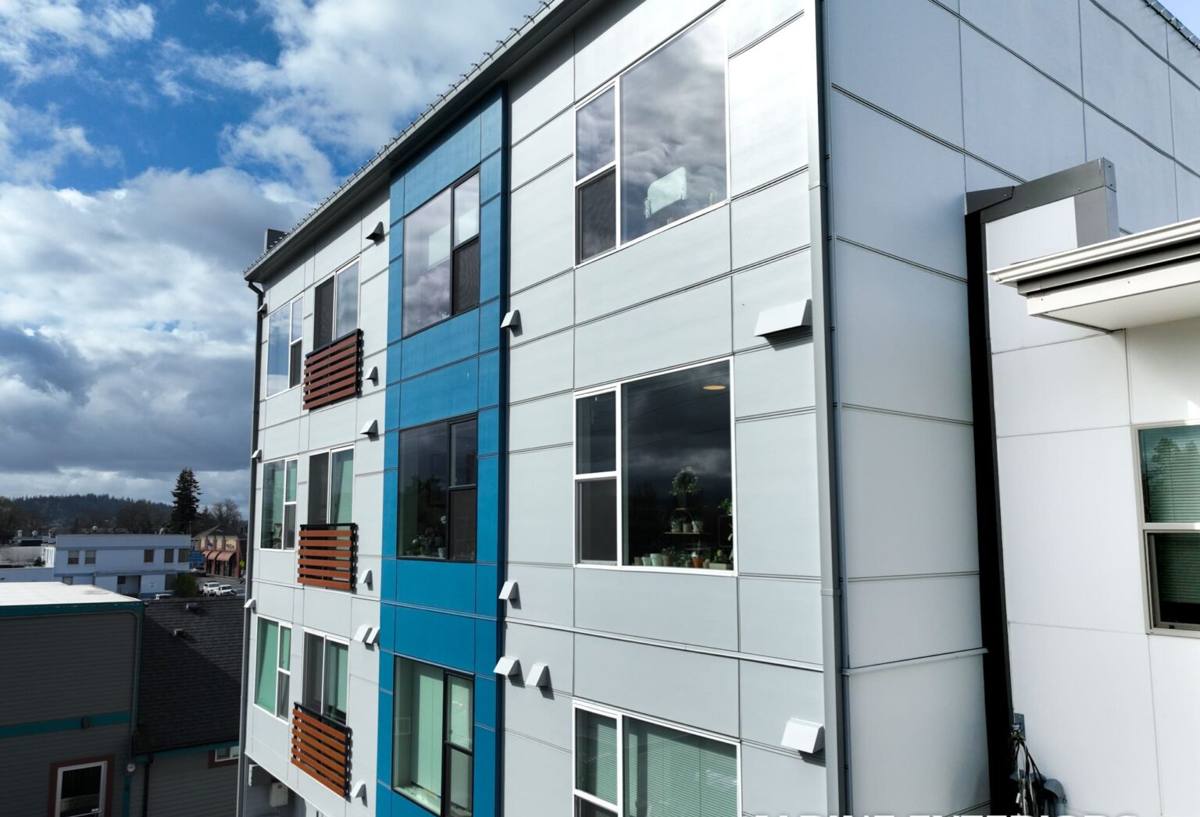
What "Energy-Efficient" Actually Means
The phrase gets used loosely in this industry, so it's worth being precise. Every window sold in the U.S. carries a National Fenestration Rating Council (NFRC) label with a handful of numbers that actually tell you how it performs:
- U-factor — how well the window resists heat loss. Lower is better. This is the number that matters most for Bellingham's cool, wet winters.
- Solar Heat Gain Coefficient (SHGC) — how much solar heat passes through. In our climate, moderate SHGC values are usually right; we don't have the intense summer sun that makes very low SHGC a priority in southern states.
- Air Leakage (AL) — how much air moves through the assembly. Lower matters a lot here, since wind-driven rain and air infiltration tend to travel together.
- Condensation Resistance — a good indicator of how a window will hold up against Bellingham's persistent humidity.
A window can be marketed as "energy-efficient" and still be a poor fit for a coastal Whatcom County home if the air leakage and condensation numbers weren't chosen with our climate in mind. Part of our job is steering homeowners toward the numbers that matter here, not just the ones that look good on a sales sheet.
Glazing and Gas Fill
Most energy-efficient windows now use double or triple glazing with a low-emissivity (low-E) coating and an inert gas fill — usually argon — between the panes. Double-pane, low-E, argon-filled units are the standard workhorse for our region and, for most Edgemoor homes, hit the right balance of performance and cost. Triple-pane windows offer a further step up in insulation and sound dampening, which can be worth it for homes closer to the water or busier roads, but they come at a real cost premium and added weight that some older window openings weren't built to handle without reinforcement.
Frame Materials: What Holds Up Near Salt Air
Frame material matters as much as the glass in a coastal environment. Here's how the common options stack up for a home in Edgemoor's conditions:
| Frame Material | Performance Near Salt Air | Maintenance | Typical Fit for Edgemoor |
|---|---|---|---|
| Vinyl | Good — won't corrode or rot, but can become brittle with age and UV exposure | Low | Strong value option; verify UV-stable formulation |
| Fiberglass | Excellent — dimensionally stable, resists moisture and salt corrosion well | Low | Often our top recommendation for waterfront-adjacent homes |
| Wood-clad | Good if cladding and flashing details are done right; wood core is the risk point | Moderate to high | Works when appearance matters, but demands disciplined installation and upkeep |
| Aluminum | Poor to fair — prone to corrosion and higher thermal conductivity unless thermally broken | Moderate | Generally not our first choice for this climate; we'll explain why on a case-by-case basis |
We're not in the business of telling homeowners a product is "bad" — every material has legitimate uses and trade-offs. But we do have a professional standard: in a salt-air, high-moisture environment, we lean toward materials and finishes with a track record of holding up without heavy ongoing maintenance, because that's what actually protects the investment over time.
What a Correct Installation Actually Involves
The window unit itself is maybe half the equation. The other half is installation, and in Edgemoor's climate, installation mistakes show up faster and more visibly than they would somewhere drier.
Our Process
- On-site assessment. We look at each opening individually — sill condition, existing flashing, signs of past water intrusion, and how exposed that particular wall is to prevailing wind and rain.
- Removal and inspection. Once the old window is out, we check the rough opening for hidden rot or moisture damage before anything new goes in. This step catches problems that a surface-level look never would.
- Flashing and moisture barrier work. Proper flashing — integrated correctly with the home's existing weather-resistive barrier — is what actually keeps driving rain out. This is the step most likely to be rushed by less careful crews, and it's the one that causes the most callbacks industry-wide.
- Precise fit and shimming. A window that's out of square or improperly shimmed will stress its seals prematurely, no matter how good the unit is.
- Sealing and insulation. Low-expansion foam and quality sealant around the frame, sized correctly to avoid bowing the frame inward.
- Exterior trim and finish work. Detailed so water sheds away from the opening rather than pooling or wicking toward it.
- Final function and seal check. Every window gets operated and inspected before we consider the job done.
Skipping or rushing any one of these steps is how a homeowner ends up with a brand-new, expensive window that still leaks or fogs within a few years. In our experience, most window failures aren't product failures — they're installation failures that the climate simply exposed faster.
Signs an Edgemoor Home's Windows Are Underperforming
- Fogging or moisture visible between panes (a sign the seal has failed)
- Persistent condensation on the interior glass, especially in winter
- Drafts you can feel near the frame even with the window closed and locked
- Soft, discolored, or swollen wood at the sill or surrounding trim
- Windows that are difficult to open, close, or lock — often a sign the frame has shifted or warped
- A noticeable jump in heating costs without a clear explanation
- Visible gaps, cracked caulk, or daylight around the frame from outside
Any one of these is worth a look. Several at once usually means it's time to talk about replacement rather than repair.
What Affects Cost
We won't quote a number here that doesn't apply to your specific home, but these are the variables that actually move the price:
| Factor | Why It Matters |
|---|---|
| Frame material | Fiberglass and quality wood-clad typically cost more upfront than standard vinyl |
| Glazing package | Triple-pane and specialty low-E coatings add cost over standard double-pane |
| Window size and configuration | Large picture windows, bays, and custom shapes cost more than standard operable units |
| Condition of the existing opening | Hidden rot or structural repair needed at removal adds labor and material |
| Number of openings | Whole-house replacement typically brings a better per-window cost than doing one or two at a time |
| Access and site conditions | Second-story or hard-to-reach windows take more labor and equipment |
A free on-site estimate is really the only honest way to price a job — anything quoted sight unseen is a guess, and we'd rather not guess with your money.
A Homeowner's Pre-Project Checklist
- Note which windows show fogging, drafts, or sticking, and roughly how long it's been happening
- Check for soft or discolored trim and sills from both inside and outside
- Ask any contractor you're vetting for their specific NFRC-rated U-factor and air leakage numbers, not just brand names
- Confirm in writing who handles flashing and moisture barrier integration, and how
- Ask how the crew inspects the rough opening for hidden damage before installing the new unit
- Get the warranty terms in writing — both the manufacturer's product warranty and the installer's labor warranty
- Ask whether the crew has worked in Edgemoor or similarly exposed parts of Bellingham before
Why Local Experience in Edgemoor Matters
A crew that mostly works inland doesn't build the same instincts as one that regularly handles homes exposed to Bellingham Bay's wind and salt air. Knowing which walls in a given part of Edgemoor take the worst weather, how the local moss and moisture cycle behaves against different siding types, and what flashing details actually hold up here isn't something you get from a general contracting background — it comes from doing this specific work in this specific place, season after season. That local familiarity shows up in fewer callbacks, better material choices from the start, and installations that are built for the conditions they'll actually face rather than a generic textbook standard.
We also know Whatcom County's permitting and inspection expectations, which keeps projects moving without avoidable delays.
Let's Take a Look at Your Windows
If your Edgemoor home has windows that are drafty, fogged, hard to operate, or just old enough that you're wondering about their condition, we're happy to come take an honest look. There's no pressure and no obligation — just a straightforward assessment and a written estimate you can take your time with.