 Bellingham Siding
 Why Edgemoor Roofs Face a Different Set of Problems
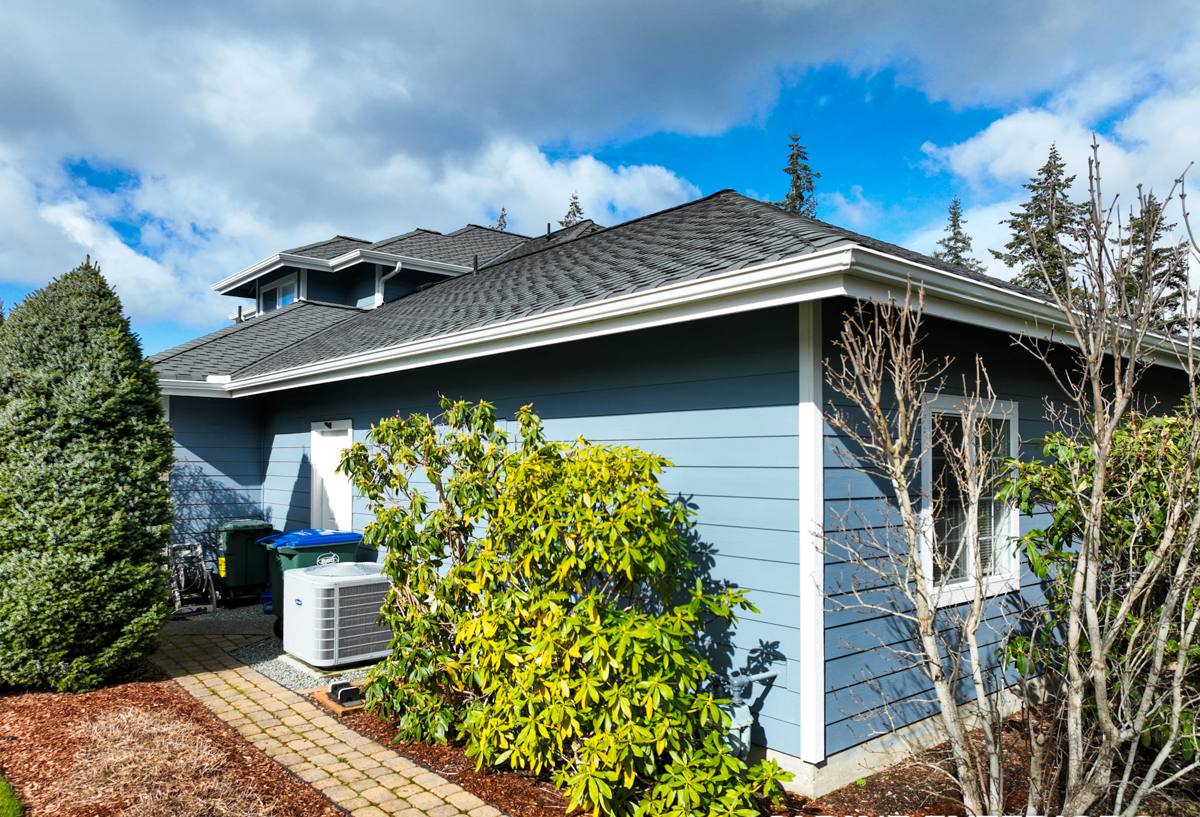
Edgemoor sits close to Bellingham Bay, under heavy tree cover, on lots that were built for views and privacy rather than easy roof access. That combination is exactly what makes a roof age faster here than it would a few miles inland. Salt-laden air off the bay accelerates corrosion on anything metal that isn't rated for it. Driving rain off Pacific storm systems pushes water sideways under poorly lapped flashing and worn underlayment. And the same mature evergreens that give Edgemoor its character also shade roofs for most of the year, which means moss, moisture, and organic debris get a long season to do their work.
None of that makes metal roofing a bad choice for the neighborhood — it's often the opposite. But it does mean a metal roof installed here has to be specified and installed differently than one going on a dry, open, inland roof. The panel, the fasteners, the flashing metal, and the underlayment all need to be chosen with Whatcom County's wet, coastal, tree-shaded conditions in mind, not a generic spec sheet.
What Correct Metal Roofing Installation Actually Involves
Metal roofing has a reputation as a low-maintenance, long-lifespan product, and that reputation is deserved — when the installation underneath the panels is done right. Most of the problems we get called out to fix on metal roofs aren't panel failures at all. They're installation shortcuts that only show up years later, once water finds the gap.
Underlayment and Moisture Protection
A metal roof is only as good as what's underneath it. On a bay-adjacent, high-rainfall property like this, we treat self-adhered, high-temperature underlayment at eaves, valleys, and penetrations as standard, not an upgrade. Synthetic underlayment across the rest of the field gives the roof a real secondary water barrier if wind-driven rain ever gets past the panels.
Fastening and Flashing
This is where climate matters most. Exposed fasteners, valley metal, and flashing all need to be matched to the panel material and rated for coastal exposure — mixing incompatible metals, or using standard fasteners in a salt-air environment, sets up galvanic corrosion that can eat through a connection well before the panels themselves would ever fail. Every penetration, from plumbing vents to chimney flashing, gets sealed and detailed to shed water downhill, not just caulked and hoped for.
Ventilation
Metal roofs move differently with temperature than asphalt, and they need a ventilated assembly underneath to manage condensation, not just heat. On homes with heavy tree canopy and persistent shade, trapped moisture in the attic is a bigger long-term risk than sun exposure, so we check ridge and intake ventilation as part of any metal roofing job, not as an afterthought.
Choosing the Right Metal Roofing Profile for Edgemoor
There isn't one "best" metal roofing profile — the right choice depends on the look you want, the roof's exposure, and your budget. Here's how the common options compare for a property in this kind of coastal, tree-covered setting.
| Profile | Fastening | Best Suited For | Relative Cost |
|---|---|---|---|
| Standing seam | Concealed clips, no exposed screws | Homes near the water where long-term, low-maintenance performance matters most | Higher |
| Exposed-fastener panel (ribbed/corrugated) | Screws with rubber washers, visible on the surface | Outbuildings, shops, or budget-conscious main-roof projects | Lower to mid |
| Stone-coated steel (shingle or shake profile) | Concealed nailing under each course | Homeowners who want a traditional shingle or shake look with metal's durability | Mid to higher |
Exposed-fastener panels cost less up front, but every screw penetration is a maintenance point — the rubber washers age faster in a wet, temperature-swinging coastal climate and eventually need re-tensioning or replacement. Standing seam avoids that entirely by keeping fasteners hidden under the seam, which is a big part of why it's become the standard choice for waterfront and near-waterfront properties. Stone-coated steel is a reasonable middle ground when the priority is matching a neighborhood's more traditional roofline while still gaining metal's lifespan.
Our Metal Roofing Process
Inspection and Tear-Off Decision
We start by getting on the roof, not just looking at it from the ground. On tree-shaded lots we're checking specifically for trapped moisture, soft decking, and moss root penetration into the existing roofing material — all common on shaded Edgemoor roofs. That inspection tells us honestly whether a tear-off to bare decking is warranted, or whether the structure and decking are sound enough to move straight to installation.
Installation
Underlayment goes down first, with extra attention at valleys, eaves, and any wall-to-roof transitions, which are common on the multi-level, view-oriented homes typical of this neighborhood. Panels are then installed to the manufacturer's coastal-exposure specifications, with flashing and fastener materials matched to avoid the corrosion issues we mentioned above.
Cleanup and Final Walkthrough
Metal roofing generates offcuts and fasteners that are sharp and easy to miss in landscaping — we do a magnetic sweep of the property and a full material cleanup before calling a job finished, and we walk the roof and the ground with the homeowner so nothing gets signed off sight unseen.
Moss, Tree Cover, and Long-Term Roof Health in Edgemoor
Bellingham's moss season is a fact of life under mature tree cover, and Edgemoor's wooded lots see more of it than most. Metal roofing handles moss far better than asphalt shingles do — there's no granule surface for spores to root into — but it isn't moss-proof. Needles, leaves, and organic debris still collect in valleys and against any obstruction, and moss can still grow on top of accumulated debris even if it can't take hold in the panel itself.
The fix isn't chemical treatment or pressure washing, which can damage panel coatings and strip protective finishes. It's keeping valleys and low-slope transitions clear of debris and making sure water has an unobstructed path off the roof. On heavily shaded lots, that's a maintenance conversation worth having up front, not something to discover the first time a valley backs up during a heavy rain.
Salt Air and Coastal Corrosion: Material Choices That Matter
Proximity to Bellingham Bay means salt air is a real factor in material selection, even a few blocks back from the water. We don't treat this as an upsell — it's a standard part of specifying a metal roof correctly in this area. That means choosing panel coatings and finishes rated for coastal exposure, avoiding fastener and flashing combinations that set up corrosion between dissimilar metals, and being honest about which lower-cost material options simply don't hold up as well this close to salt water over a multi-decade lifespan.
This is also where cutting corners on installation shows up soonest. A panel rated for coastal exposure can still fail early at a fastener or flashing point if that detail wasn't matched to the same standard.
Maintenance Checklist for Edgemoor Metal Roofs
Metal roofing needs far less upkeep than asphalt, but "low maintenance" isn't "no maintenance," especially under tree cover this close to the water. A simple annual check covers most of it:
- Clear needles, leaves, and debris from valleys and low-slope transitions, especially after fall leaf drop
- Check that gutters and downspouts are flowing freely and not backing water up under eave flashing
- Look for any moss or organic buildup collecting on top of debris rather than on bare panel
- Inspect exposed fasteners (if applicable) for loosening or worn washers
- Check flashing at chimneys, vents, and wall transitions for gaps or sealant wear
- Watch for any panel scratches or coating damage from fallen branches, and address them before bare metal is exposed to salt air
Why Local Experience in Edgemoor Matters
A metal roofing crew that hasn't worked this neighborhood is guessing at things a local crew already knows: how tree canopy on these lots affects moss and debris patterns, how close proximity to the bay changes material and fastener choices, and how Bellingham and Whatcom County permitting and inspection processes actually work in practice. That familiarity shows up in fewer surprises mid-project and a roof that's specified for the conditions it will actually face, not a generic install.
It also matters for access. Wooded, view-oriented lots often mean tighter staging areas and more careful planning around landscaping and mature trees — something that's easier to get right the second or third time in a neighborhood than the first.
Ready to Talk About Your Roof?
If you're weighing metal roofing for a home in Edgemoor, we're happy to take a look and walk you through what your specific roof, tree cover, and exposure actually call for — no pressure, no generic sales pitch. Use the form below to request a free estimate and we'll go from there.