 Bellingham Siding
 Windows in Columbia Face a Different Kind of Wear
Columbia is one of Bellingham's older, tree-shaded neighborhoods, and that shade is a mixed blessing. It keeps summer heat down, but it also means windows here rarely get a full day of sun to dry out after a storm. Add in Bellingham Bay's salt air a short distance west and the near-constant drizzle that defines a Whatcom County winter, and you've got a climate that's hard on window frames, seals, and glazing in ways that dry-climate manufacturers rarely design for.
Most of the window problems we see in Columbia aren't from bad glass. They're from moisture finding a way in around the frame, condensation building up between panes because a seal failed years ago, or old aluminum-frame windows acting like a cold, drafty hole in an otherwise well-insulated wall. Replacing windows here isn't just a cosmetic upgrade — it's about closing off the entry points that salt air, driving rain, and moss have been exploiting for years.
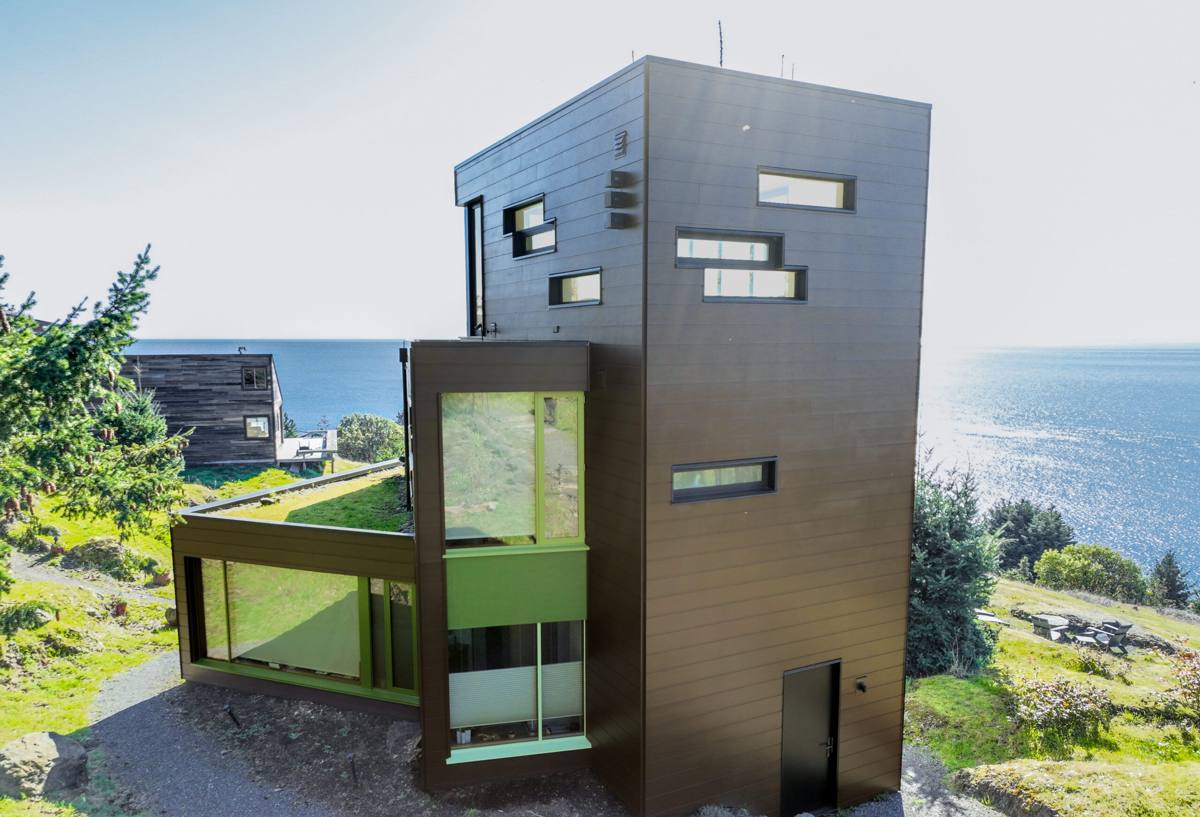
What Bellingham's Climate Does to Windows Over Time
Driving Rain and Wind-Driven Moisture
Bellingham doesn't just get rain — it gets rain pushed sideways by wind off the Strait of Georgia and the bay. That matters because a window that's watertight in a calm downpour can still leak under wind-driven rain if the flashing and sealant details weren't done right. Water finds the path of least resistance, and on an older home that path is often a compressed, UV-cracked sealant bead or a gap where the original installer skipped proper flashing.
Salt Air and Hardware Corrosion
Columbia sits close enough to the water that salt-laden air reaches the neighborhood, especially on windy days. Over years, that air corrodes window hardware — hinges, locks, balance mechanisms — faster than it would inland. Vinyl and fiberglass frames resist this better than bare aluminum, which is one of the reasons we steer most Columbia homeowners away from uninsulated aluminum replacements.
Moss, Algae, and the Long Wet Season
Whatcom County's moss season runs long — often eight months or more of conditions damp enough for moss and algae to take hold on any surface that stays wet. Window sills, especially wood ones, are prime real estate. Moss holds moisture against the frame, which accelerates rot in wood components and can stain vinyl and fiberglass if it's not kept in check. Good drainage design and material choice matter more here than in drier parts of the state.
Signs Your Columbia Home's Windows Are Underperforming
- Visible fog or moisture between the panes of a double- or triple-pane window (a sign the seal has failed)
- Cold drafts near the frame even when the window is fully latched
- Wood sills that feel soft, spongy, or show dark staining at the corners
- Difficulty opening, closing, or locking — often a sign of corroded hardware or a frame that's swelled from moisture
- Visible moss or algae growth on the exterior sill or frame
- Noticeably higher heating bills compared to similar-sized homes nearby
- Condensation forming on the inside of the glass during cold snaps
Any one of these on its own isn't necessarily an emergency. Several together, especially on a home more than 20-25 years old, usually mean the windows are past the point where caulk and weatherstripping will fix the underlying problem.
What a Correct Installation Actually Involves
The window itself only does half the job — the installation does the other half, and it's where most failures actually start. A correctly installed window in this climate needs:
Proper Flashing and Water Management
Every opening needs flashing that directs water out and away from the wall assembly, layered correctly with the house wrap or building paper so water sheds downward and outward rather than getting trapped behind the siding. This is the single most common thing we find missing or done wrong on older Bellingham homes.
Air Sealing Without Trapping Moisture
The gap between the window frame and the rough opening needs to be sealed for air infiltration, but not packed solid with a material that traps moisture against the wood framing. Low-expansion foam or backer rod with sealant, applied correctly, lets the assembly manage the moisture that inevitably gets in over time.
Sill Pan Protection
A sloped sill pan under the window directs any water that does get past the exterior seal back out instead of letting it pool and soak into the framing below. On a re-side or full window replacement, this is worth doing right the first time rather than patching around it later.
Window Types and Materials: What Holds Up in This Climate
| Frame Material | Moisture Resistance | Maintenance | Best Fit for Columbia |
|---|---|---|---|
| Vinyl | Very good — won't rot or corrode | Low — occasional cleaning | Strong all-around choice for most homes |
| Fiberglass | Excellent — dimensionally stable in wet/dry cycles | Low | Best for homes with more sun/temperature swing exposure |
| Wood (clad exterior) | Good if cladding is intact; vulnerable where cladding is damaged | Moderate to high | Works for historic-character homes willing to maintain it |
| Bare Aluminum | Poor — conducts cold, corrodes near salt air | Moderate | Not recommended for most Columbia homes |
We don't install bare aluminum replacement windows as a standard offering in this area. It's not that aluminum can't be made to work — it's that uninsulated aluminum frames conduct heat and cold directly through the frame, and in a neighborhood with regular salt air exposure, the hardware corrosion issues show up faster than most homeowners expect. Vinyl and fiberglass simply hold up better for the price without the added maintenance burden.
What "Energy-Efficient" Actually Means for Glass
"Energy-efficient" gets used loosely in window marketing, so it helps to know what actually drives performance:
- U-factor — how well the window resists heat loss. Lower is better for our heating-dominated climate.
- Solar Heat Gain Coefficient (SHGC) — how much solar heat passes through the glass. In shaded Columbia yards this matters less than in a home with full southern exposure, but it still affects comfort on the few bright days we get.
- Low-E coatings — a microscopically thin coating that reflects heat back while still letting light through, improving both U-factor and comfort near the glass.
- Gas fill (argon or krypton) — the inert gas between panes that slows heat transfer compared to plain air fill.
- Multi-point locking and weatherstripping quality — often overlooked, but a huge factor in how much draft you actually feel at the frame.
For most Bellingham homes, a double-pane window with a quality Low-E coating and argon fill hits the sweet spot of performance and cost. Triple-pane makes more sense for north-facing rooms, homes near busier streets where sound matters, or homeowners planning to stay long enough for the extra upfront cost to pay back in comfort and energy savings.
Our Process for a Columbia Window Replacement
1. On-Site Assessment
We walk the home, check existing frames for rot or hidden moisture damage, and look at how water currently moves around each opening — that tells us as much as the age of the windows themselves.
2. Honest Recommendation
Not every window needs full replacement. Some just need better flashing, resealing, or hardware repair. We'll tell you when a repair makes more sense than a replacement, and when it doesn't.
3. Product Selection
We walk through frame material, glazing package, and style options based on your home's exposure, your budget, and how long you plan to stay in the house.
4. Installation with Proper Flashing and Sealing
This is where the climate-specific details — sill pans, correct flashing sequencing, air sealing without trapping moisture — actually get done, not skipped.
5. Final Walkthrough
We check operation, sealing, and cleanup with you before calling the job finished.
Cost Factors to Expect
| Factor | How It Affects Cost |
|---|---|
| Frame material | Vinyl is typically the most budget-friendly; fiberglass and wood-clad run higher |
| Glazing package (double vs. triple-pane) | Triple-pane adds cost but improves comfort and sound dampening |
| Number and size of openings | More or larger windows increase both material and labor cost |
| Extent of existing water/rot damage | Hidden framing repair, if needed, adds to the scope |
| Full-frame vs. insert replacement | Full-frame costs more but allows proper flashing correction on older openings |
Because pricing depends heavily on what we find once we're actually assessing the openings, we don't quote sight-unseen. A walkthrough gives you a real number, not a rough guess.
Why It Matters That We Already Work in Columbia
A crew that works Columbia and the surrounding Bellingham neighborhoods regularly has already seen how this specific pocket of the city behaves — which streets get more wind-driven rain, how much moss pressure a shaded lot deals with, and where the older housing stock tends to have outdated flashing details. That local pattern recognition means fewer surprises once we open up a wall, and a realistic assessment instead of a one-size-fits-all sales pitch built for a different climate.
Whatcom County's building conditions aren't unique to us as a company, but they do require a specific approach — one built around managing water first and treating energy efficiency as something that only works long-term if the moisture management underneath it is done right.
Questions to Ask Before You Hire
- Do you install a sloped sill pan and proper flashing on every window opening, not just some?
- What frame materials do you recommend for homes near the bay, and why?
- Will you show me the actual U-factor and SHGC ratings for the windows you're proposing?
- How do you handle it if you find rot or water damage once the old window is out?
- What's covered under warranty — the glass, the frame, and the labor?
If a contractor can't answer these clearly, that's worth noting before you sign anything.
If your Columbia home has drafty, foggy, or hard-to-operate windows, we're happy to take a look and give you a straightforward, no-pressure estimate. Fill out the form below and we'll set up a time to walk the property with you.