 Bellingham Siding
 Windows Built for Fairhaven's Bay-Side Climate
Fairhaven sits close enough to Bellingham Bay that salt-laden air is a daily fact of life for the homes here, not an occasional nuisance. Add Whatcom County's long stretch of driving rain each fall and winter, plus a moss season that can run from October well into spring, and you've got a climate that is genuinely hard on window assemblies. Frames corrode faster near the water. Wood sashes hold moisture longer under tree cover. Seals that would last two decades in a drier inland climate can start failing in half that time here if they weren't installed correctly in the first place.
None of this means Fairhaven homes need exotic materials or gimmicks. It means the basics — flashing, sealing, drainage, and material selection — have to be done right, every time, with no shortcuts. That's the whole premise of this page: what a correct custom window job looks like for a Fairhaven home, and why it matters more here than it would somewhere drier and further from the water.
Why "Custom" Matters More in Fairhaven
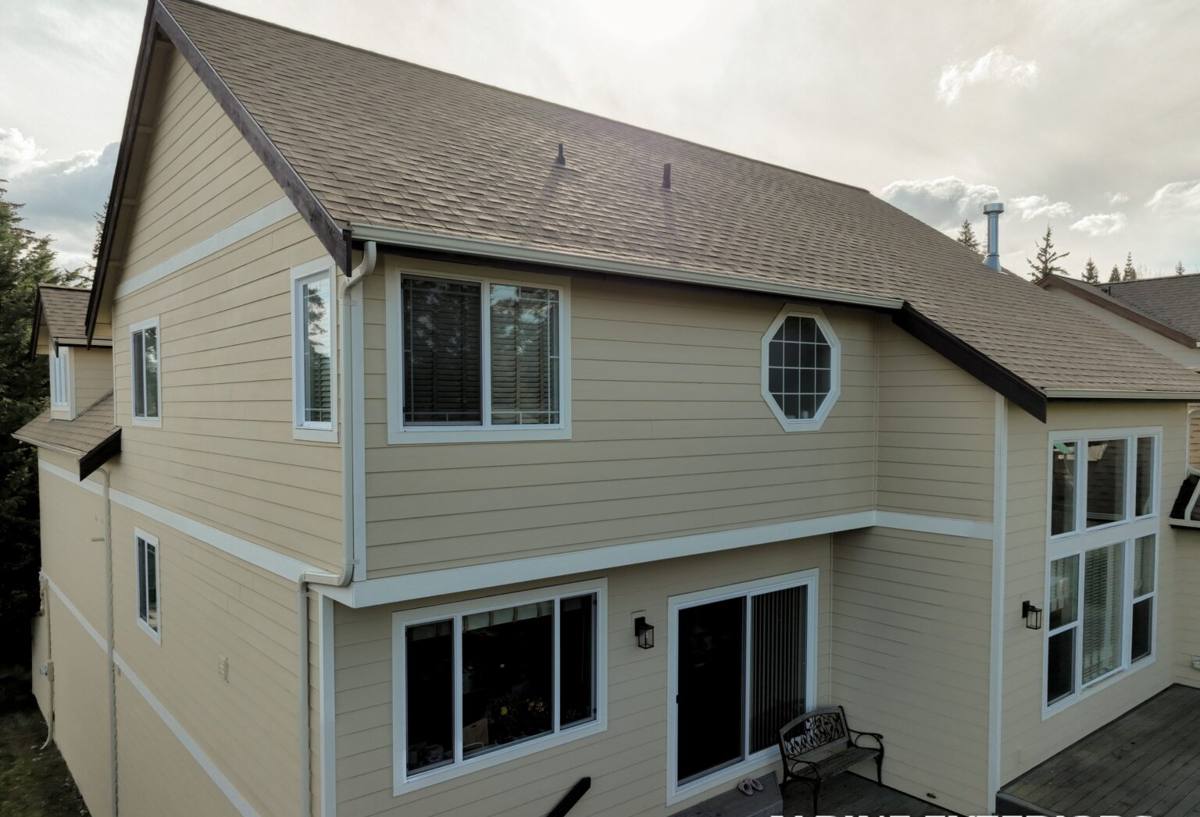
A lot of Fairhaven's housing stock predates modern standard window sizing. Older bungalows, converted multi-unit buildings, and homes with additions built at different times often have openings that don't match anything off the shelf. "Custom" here usually means one of a few things:
- Openings that are a nonstandard size and would otherwise require reframing to fit a stock window
- Matching sightlines, trim profiles, or grid patterns to the rest of the house so a replacement doesn't look out of place
- Working around older, non-square framing common in houses that have settled over decades
- Preserving a home's architectural character — proportions, sash style, or exterior casing — while upgrading what's inside the frame
Custom doesn't have to mean expensive or slow. It means measuring and specifying to the actual opening and the actual house, instead of forcing a generic unit into a space it wasn't made for. A window that's slightly undersized or shimmed heavily to fit is one of the more common causes of early water intrusion — the gap gets sealed with caulk instead of proper flashing, and caulk is not a substitute for flashing.
Common Fairhaven Window Situations
We regularly see a mix of original wood-sash windows nearing the end of their service life, older aluminum-frame replacements from a previous remodel that are now failing, and mid-life vinyl units with seal failure or fogging between panes. Each starting point calls for a slightly different approach to the opening prep, which is part of why a walkthrough matters more than a phone quote.
What a Correct Installation Actually Involves
The window unit itself is maybe half the job. The other half — the part that determines whether it performs well in a wet, salty climate for the next 20-plus years — happens at the rough opening, and it's mostly invisible once the trim goes back on.
Moisture Management, Not Just Sealant
A correct install includes a sloped sill pan so any water that does get past the exterior seal drains back out instead of pooling against the framing. It includes proper flashing tape or membrane integrated with the home's existing weather-resistive barrier — lapped correctly, not just stuck on top. Caulk and sealant are the last line of defense, not the first. Homes near the bay that rely on sealant alone tend to show water staining or soft framing at the sill within a few years.
Frame-to-Opening Fit
Shims should be placed at structural points, not used to fill a badly sized gap. Insulation around the frame should be a low-expansion foam or fiberglass that won't bow the frame out of square — over-filled gaps are a common cause of windows that won't operate smoothly a year or two after install.
Weatherstripping and Hardware
Locks and weatherstripping compress the sash against the frame to create the actual air and water seal on double-hung and casement windows. In a coastal, high-rain area, hardware that's under-spec'd or poorly adjusted is often the real reason a "good" window still leaks or whistles in a storm.
Material and Frame Options
There's no single "best" window material — the right choice depends on the home, the budget, and how much upkeep the owner wants to take on. Here's how the common options hold up specifically against salt air, driving rain, and a long moss/damp season:
| Frame Material | Salt Air Performance | Moisture/Rot Resistance | Upkeep |
|---|---|---|---|
| Vinyl | Very good — doesn't corrode | Good; no rot risk in the frame itself | Low — occasional cleaning |
| Fiberglass | Excellent — dimensionally stable, won't pit or corrode | Excellent | Low |
| Wood (unclad) | Fair — needs consistent finish maintenance | Weakest without diligent upkeep; classic look | High — repaint/reseal on a schedule |
| Wood-clad (exterior clad, wood interior) | Good on the exterior face; interior still wood | Good if cladding and flashing are done correctly | Moderate |
| Aluminum | Poor to fair unless marine-grade/anodized | Prone to condensation and corrosion near salt air | Moderate to high |
For homes within a few blocks of the bay, we generally steer owners away from bare aluminum frames — not because aluminum can't be made to work, but because standard residential aluminum extrusions weren't designed for sustained salt exposure, and the condensation issues that come with a poor thermal break get worse in our damp climate, not better. Fiberglass and vinyl are our default recommendations for straightforward replacements; wood or wood-clad stays the right call when matching a historic or architecturally distinct home is the priority, as long as the owner understands the maintenance commitment.
Our Process for a Fairhaven Window Project
- On-site assessment. We look at the actual openings, current framing condition, and any signs of past water intrusion before recommending anything.
- Measuring and specification. Custom openings get measured to the actual dimensions, not rounded to the nearest stock size.
- Material and style selection. We walk through frame material, glass package, and grid/trim options against the home's exposure and the owner's budget.
- Opening prep. Removal of the old unit, inspection of the framing and sheathing for hidden rot or moisture damage, and repair before anything new goes in.
- Flashing and sill pan installation. Integrated with the home's water-resistive barrier, sloped to drain outward.
- Window installation and shimming. Set plumb, level, and square at structural shim points.
- Insulation, sealing, and trim. Interior and exterior finish work to match the home.
- Final operation check. Every sash and lock is tested before we consider the job done.
Signs Your Fairhaven Home's Windows Need Attention
Not every issue means a full replacement — sometimes it's a hardware adjustment or a resealing job. But these are the warning signs worth having looked at before they turn into a bigger repair:
- Fogging or a hazy film between panes of double- or triple-glazed glass — a sign the seal has failed
- Visible corrosion, pitting, or white powdery residue on metal frames or hardware
- Wood sills or jambs that feel soft, spongy, or show dark staining
- Drafts you can feel around the frame during a windy, driving rain
- Windows that stick, won't stay open, or are hard to lock
- Green or black growth building up in frame corners or on the exterior sill
- A noticeable jump in heating costs without any other explanation
What Affects the Cost
Every project is different, but the main cost drivers on a Fairhaven custom window job tend to be the same handful of things:
| Factor | Why It Matters |
|---|---|
| Opening condition | Rotted framing or sheathing found during removal adds repair time before the new unit can go in |
| Frame material | Fiberglass and clad-wood run higher than vinyl; unclad wood adds long-term maintenance cost |
| Custom sizing | Non-standard openings cost more than stock sizes ordered in bulk |
| Glass package | Double vs. triple pane, low-E coatings, and impact-resistant options all shift price |
| Number of windows | Whole-house projects typically bring a better per-unit cost than one-off replacements |
| Access and site conditions | Second-story or hard-to-reach openings take more labor time |
We'd rather walk a homeowner through these factors in person and give a real number than throw out a broad range that doesn't mean much until we've seen the actual openings.
Why a Local Crew Matters for This Job
Window installation is one of those trades where the difference between "fine for now" and "fine for 20 years" is almost entirely in details you can't see once the trim is back on. A crew that already works in Fairhaven and the surrounding Bellingham area has seen how the local building stock ages under this specific climate — which framing details tend to hide moisture problems, which materials actually hold up a few blocks from the water, and how the moss and rain pattern here affects window performance differently than it would in a drier part of the state.
There's also a practical side: familiarity with Bellingham's permitting expectations, an understanding of what Whatcom County's weather does to a job site schedule, and the ability to show up for a warranty check without a long drive. Hiring outside the area isn't automatically a problem, but a crew with local reps and local knowledge starts every project with fewer unknowns.
Ready to Talk About Your Windows?
If you're dealing with drafts, fogged glass, sticking sashes, or you're just planning ahead for a home near Bellingham Bay, we're happy to take a look and talk through honest options — no pressure, no hard sell. Use the form below to request a free estimate and we'll get back to you to schedule a walkthrough of your Fairhaven property.