 Bellingham Siding
 Siding Installation in Fairhaven Starts With the Site, Not Just the Material
Fairhaven sits close to Bellingham Bay, and that changes what a correct siding installation actually requires. This isn't a neighborhood where you can spec a material, nail it up to a standard pattern, and expect it to perform the way it would forty miles inland. Salt-tinged marine air, rain that gets driven sideways by wind off the water, and a moss season that runs long on shaded, tree-covered lots all put more demand on the installation itself, not just on the product label. We install siding throughout Whatcom County, and Fairhaven is one of the areas where a marginal install shows up fastest, because the climate doesn't give shortcuts much room to hide.
This page is specifically about the installation side of siding work in Fairhaven: what the climate demands from the process, what a correct install actually involves step by step, and why the crew doing the work matters as much as the material itself.
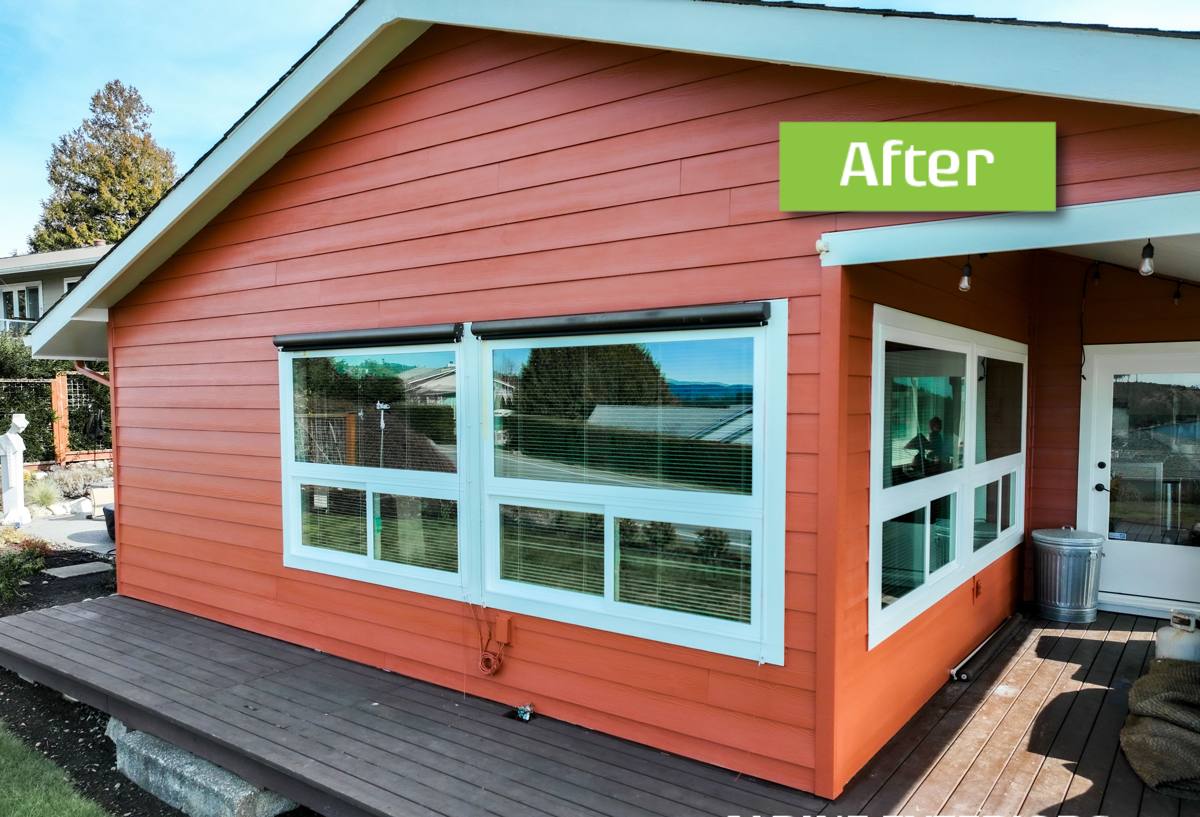
What Wind-Driven Rain and Salt Air Demand From the Install, Not Just the Product
Flashing and Water Management Have to Be Installed, Not Assumed
A siding product only performs as well as the water management system installed behind and around it. In Fairhaven, wind-driven rain finds its way into lap joints, trim seams, and wall penetrations from angles a calmer, drier climate would never test. That means flashing at windows, doors, and roof intersections has to be integrated with the house wrap as one continuous system during installation, not treated as a separate finishing step. Skipping or rushing this part of the job is invisible on install day and expensive two or three winters later.
Fastener Choice and Placement Matter More Here
Sustained marine air is mildly corrosive over time, even when it isn't obvious day to day. Fastener type, coating, and placement affect how long a fastened joint holds up before it starts bleeding rust or loosening. Getting this right during installation, rather than using whatever's fastest to run through a nail gun, is one of the quieter details that separates an install built for this climate from one built to a generic national spec.
Timing the Install Around a Long Wet Season
Bellingham's marine climate means dry, workable stretches have to be identified and used deliberately rather than assumed. Sheathing and house wrap that sit exposed too long during a stretch of driving rain can take on moisture before the siding ever goes up, and that moisture can get sealed behind the wall for years before it becomes visible. Sequencing the job, and protecting open wall sections when weather turns, is a scheduling discipline as much as a technical one.
What a Correct James Hardie Installation Involves
We install James Hardie fiber cement siding, and only James Hardie, because it's a system we understand completely and can install to spec every time. Its non-combustible core, factory-applied ColorPlus finish, and climate-engineered HZ5 formulation are built for exactly this kind of sustained marine exposure. But none of that matters if the installation itself cuts corners, and Hardie's own performance and warranty terms assume the manufacturer's installation specifications were actually followed.
Substrate and House Wrap Come First
Before a single board goes up, the substrate has to be sound and the house wrap has to be installed correctly, lapped in the right direction, and sealed at every penetration. Installing new siding over a compromised substrate or a poorly lapped wrap just seals a problem behind a new surface.
Fastening Pattern and Clearances
James Hardie specifies fastener spacing, placement relative to board edges, and clearance from grade, roofline, and adjacent surfaces like decks and walkways. Clearance in particular is easy to shortcut on a tight lot, but it's one of the details most responsible for keeping moisture away from the bottom edge of the siding over the long run.
Joint Treatment and Trim Integration
Butt joints, corners, and trim transitions need to be treated with the right sealants and flashing details, not just butted together and caulked. This is where a rushed crew and a careful one produce a wall that looks identical on install day and behaves very differently five years in.
Our Installation Process, Start to Finish
Walkthrough and Assessment
We start by walking the property in person, looking at wall orientation, existing moisture damage, trim complexity, and site access before we ever talk about a specific scope of work. A Fairhaven property close to the water or set on a slope gets assessed differently than a flat inland lot.
Permits and Local Code
Depending on the scope of work, exterior projects in Bellingham and Whatcom County can require a permit, particularly once a job moves from a simple resurfacing into a full tear-off that exposes structural sheathing. We handle that step as part of the process rather than leaving a homeowner to sort out what applies to their specific job.
Tear-Off or Install Over Existing Siding
Whether we recommend a full tear-off or a more limited approach depends on what's actually happening behind the existing siding, not on which option is faster to sell. Tear-off exposes the substrate and lets us catch hidden moisture damage before it's sealed behind a new wall; skipping that step can save time upfront and cost more later if there was a problem underneath.
Installation and Daily Weather Protection
Once work starts, open wall sections get protected at the end of each work day, especially during stretches when rain is likely. We don't leave sheathing or house wrap exposed overnight and hope for the best; that habit is exactly how good materials end up with a wet start.
Final Walkthrough and Cleanup
Before we call a job finished, we walk the completed siding with the homeowner, checking fastening, joints, trim, and finish details together, so you know exactly what was done and why, not just that the old siding is gone and new siding is up.
Common Installation Mistakes We See on Fairhaven Tear-Offs
Some of the most consistent problems we find behind failing siding in this area trace back to installation shortcuts rather than the material itself:
- House wrap lapped backward or taped incorrectly at seams, letting wind-driven rain track behind the wall
- Siding installed with insufficient clearance from grade, decks, or roof lines, trapping moisture against the bottom edge
- Fasteners driven too tight or too loose, or placed outside the manufacturer's spec for this climate
- Window and door flashing that wasn't integrated with the house wrap as one system
- New siding installed directly over a substrate with existing rot or moisture damage
- Butt joints and corners sealed with caulk alone instead of proper flashing and sealant details
Tear-Off Considerations for Fairhaven's Older, Hillside Homes
A fair amount of Fairhaven's housing sits on sloped terrain leading up from the waterfront, and much of it is older housing stock with more trim detail and roofline intersections than a newer subdivision home. Both of those things change how an installation crew plans the job. Sloped lots often need extra staging, scaffolding, and setup time just to access the wall safely, and older wall assemblies are more likely to have accumulated moisture damage that only becomes visible once the old siding comes off. A crew that hasn't planned for either of those realities tends to discover them mid-project, which is when schedules slip and costs move.
Installation Cost Factors in Fairhaven
| Factor | What It Affects | Why It Matters for the Install |
|---|---|---|
| Tear-off vs. install over existing siding | Labor scope and substrate access | Tear-off exposes hidden moisture damage common under decades-old siding this close to the bay |
| Substrate condition | Repair costs before new siding goes on | Rot or moisture damage found during tear-off has to be repaired before installation can proceed correctly |
| Slope and site access | Staging, scaffolding, and labor time | Hillside lots common in Fairhaven can add real time to safely access every wall section |
| Trim and roofline complexity | Labor time and material cutting | Older homes often have more intersections where flashing and joint work slow the install down |
| Weather scheduling | Project timeline | Open wall sections need protection during Bellingham's wet stretches, which can affect sequencing |
Real numbers depend on the specific house and what we find once work begins, which is why we walk the property and quote in person rather than pricing off square footage alone.
What to Ask a Contractor Before They Start Your Installation
- Ask them to walk you through their fastening pattern and clearance specs before work starts, not just after
- Ask how they handle hidden moisture damage discovered during tear-off, and get that process in writing
- Ask whether house wrap and flashing are installed as one integrated system or treated as separate steps
- Ask how open wall sections are protected if weather turns mid-project
- Confirm an active Washington state contractor license and current insurance before any work begins
Why a Crew That Installs in Fairhaven Regularly Gets Better Results
A crew that installs siding in this part of Whatcom County regularly has already seen how salt air, wind-driven rain, and a long moss season play out on real installations over a full year, not just on a manufacturer's spec sheet. That shows up in small decisions on install day: where to spend extra time on flashing, which wall orientations need the most attention to clearance and drying, and how to sequence a job around Bellingham's weather instead of fighting it. Fairhaven's older housing stock, hillside terrain, and closeness to the bay aren't identical to conditions across every part of Bellingham, and an installer with real time in the neighborhood plans for that instead of applying a one-size-fits-all approach to every job on the schedule.
If you're planning a siding installation in Fairhaven, whether it's a full tear-off on an older home or new construction, we're glad to walk the property and give you an honest, no-pressure estimate. Reach out using the form below to get started.