 Bellingham Siding
 Board & Batten Siding: A Good Fit for Ferndale's Look and Its Weather
Board and batten has a long history in Whatcom County — it shows up on farmhouses, barns, and newer builds alike because the vertical lines read as clean, sturdy, and distinctly Pacific Northwest. In Ferndale, we see it requested most on new construction, accent gables, and full re-sides where a homeowner wants to move away from a dated lap siding look without going somewhere trendy that won't age well.
But board and batten is not just an aesthetic choice. The vertical panel-and-batten assembly behaves differently than horizontal lap siding when it comes to shedding water, resisting wind-driven rain, and holding up to salt-laden air off the Strait and Bellingham Bay. Done right, it's one of the most durable siding profiles available. Done wrong — wrong material, wrong fastening, no drainage gap — it's one of the fastest ways to trap moisture against a wall.
What Ferndale's Climate Actually Does to Siding
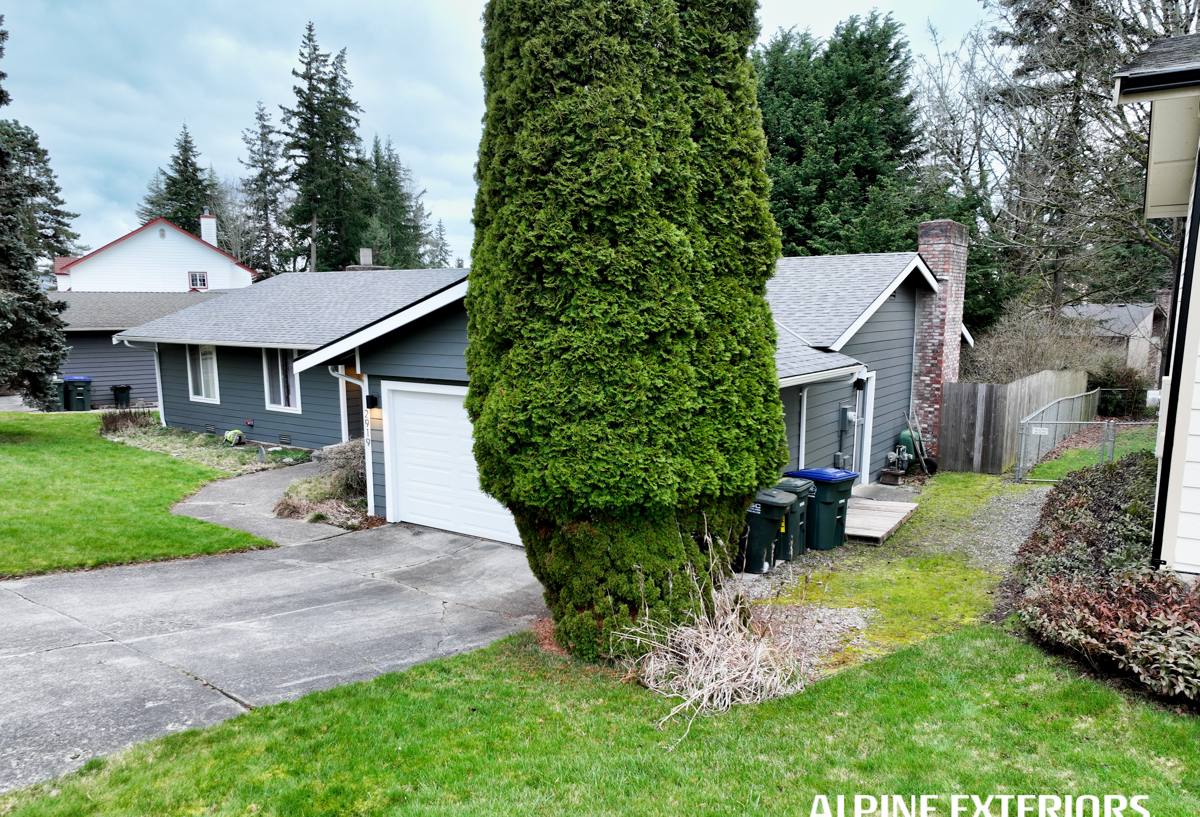
Ferndale sits close enough to the water that homes here deal with a real mix of coastal and Whatcom County inland conditions. A few things matter more here than in a lot of other markets:
- Salt air: Proximity to the Strait of Georgia and Bellingham Bay means airborne salt reaches exterior surfaces, accelerating corrosion on unprotected fasteners, trim metal, and cheap hardware.
- Driving rain: Storms here don't just fall straight down — wind pushes rain sideways into wall assemblies, which is exactly the condition vertical siding profiles need to be detailed for.
- A long moss season: Cool, damp, low-sun months stretch for much of the year. Shaded walls, north faces, and anything under tree cover stay damp long enough for moss and mildew to take hold if the siding surface and the assembly behind it can't dry out.
None of this is unique to Ferndale, but the combination — salt exposure plus sustained damp plus driving rain — is harder on a home's envelope than drier inland climates, and it's why generic siding advice written for the Midwest or the Southwest doesn't translate well here.
Why We Only Install Board & Batten in James Hardie Fiber Cement
We don't offer board and batten in vinyl, engineered wood, or primed spruce, and that's a deliberate standard, not a limitation of what's available. Vertical siding profiles have more seams and more exposed batten edges than lap siding, which means the material behind those seams has to tolerate repeated wetting without swelling, delaminating, or rotting.
James Hardie fiber cement is non-combustible, doesn't absorb water the way wood-based products do, and holds paint and factory finish far longer than site-primed materials exposed to this much rain. For board and batten specifically, we build the look using HardiePanel vertical siding — available in a smooth or Select Cedarmill texture — with battens installed over the panel seams at consistent spacing. Homes in this region typically qualify for Hardie's HZ10 formulation, engineered specifically for high-moisture, marine climates like ours, rather than the freeze-thaw formulation used in colder, drier inland regions.
The factory-applied ColorPlus finish is also a real factor here. It's baked on under controlled conditions and backed by its own finish warranty, which matters on a profile with more visible edges and seams — those are the spots where a field-applied paint job tends to fail first.
What We're Not Claiming
Other materials aren't unusable — vinyl and engineered wood board and batten are common products and plenty of contractors install them well. Our position is narrower than "those products are bad": we've made a business decision to standardize on one material system we can install to spec, warranty consistently, and stand behind on every job, and fiber cement is the one that best matches Ferndale's moisture load and salt exposure over the long run.
What a Correct Board & Batten Installation Involves
Board and batten fails, when it fails, almost always because of what's happening behind the boards, not the boards themselves. A correct install here includes:
- A weather-resistive barrier installed and lapped correctly before any siding goes up
- A drainage gap (rainscreen) behind the panels so any moisture that gets past the surface can drain and the wall can dry
- Batten spacing that lands on solid framing or properly installed furring, not just decorative placement
- Fasteners rated for the material and, given the salt air here, corrosion-resistant hardware rather than standard-grade
- Correct clearance from grade, roof lines, decks, and patios so siding isn't sitting in standing water or splashback
- Flashing at every window head, door head, and roof-to-wall intersection — this is where driving rain finds its way in if it's skipped
- Manufacturer-specified panel gaps and sealant, not just caulk wherever it looks like a seam
Skipping the drainage gap is the single most common shortcut we see on vertical siding jobs, and it's also the one most likely to cause the moss, staining, and slow rot problems that show up two or three winters later.
Our Process, Start to Finish
1. Walk and Assessment
We look at the existing wall assembly, siding condition, trim, flashing, and anything specific to the lot — tree cover, shaded faces, exposure to wind and rain off the water.
2. Plan and Estimate
We lay out batten spacing, panel texture, color, and trim details, and put together a written estimate that reflects the actual scope — tear-off, house wrap, furring, flashing, and finish — not just a per-square-foot number.
3. Prep and Weather Barrier
Old siding comes off, the sheathing gets inspected for damage, and a new weather-resistive barrier goes on correctly lapped, with furring strips set for the drainage gap.
4. Installation
Panels and battens go up to Hardie's fastening and clearance specifications, with flashing installed at every penetration and transition as we go — not patched in afterward.
5. Final Walkthrough
We walk the finished siding with the homeowner, check caulking and trim lines, and go over basic care so the finish holds up as intended.
Board & Batten Material Comparison for Ferndale Homes
| Factor | James Hardie Fiber Cement | Vinyl Board & Batten | Engineered Wood Board & Batten |
|---|---|---|---|
| Moisture tolerance | Doesn't absorb water or swell; holds up under sustained wet exposure | Won't rot, but seams and channels can trap moisture against the wall | Wood-based core is vulnerable if moisture reaches an exposed edge or cut |
| Salt air resistance | Material itself is inert to salt; hardware/fasteners are the variable | Can become brittle and discolor with prolonged coastal exposure | Coatings can wear at edges, exposing the substrate to salt and moisture |
| Finish longevity | Factory ColorPlus finish, separately warrantied | Color is through-body but can fade and chalk over time | Typically site- or factory-primed; repainting is expected maintenance |
| Fire rating | Non-combustible | Combustible | Combustible |
| Long-term maintenance | Occasional wash and caulk check | Low, but limited repair options if damaged | Repainting and edge sealing on a recurring schedule |
Maintenance Checklist for Board & Batten Siding in Ferndale
Even correctly installed siding needs a little seasonal attention in this climate. A short annual check covers most of it:
- Rinse off accumulated salt residue and grime, especially on walls facing the water or prevailing wind
- Look at shaded and north-facing walls for early moss or algae growth and address it before it spreads
- Check caulking at panel seams, window and door trim, and batten edges for cracking or gaps
- Confirm gutters and downspouts are directing water away from the wall, not sheeting down the siding face
- Trim back vegetation and tree cover that's keeping any wall section shaded and damp longer than the rest of the house
- Watch for streaking or dark staining at panel bottoms, which usually points to a drainage or flashing issue worth having looked at
Why Hiring a Crew That Already Works Ferndale Matters
Board and batten done wrong doesn't usually show itself right away — it shows up two or three wet seasons in, as staining, moss buildup in the wrong places, or soft spots at the base of the wall. A crew that's already worked on homes in Ferndale and the surrounding Whatcom County area has seen which walls take the worst of the wind-driven rain, which orientations grow moss fastest, and how much drainage detail actually matters here versus a drier market's installation habits.
That local pattern recognition is the difference between a crew following a generic install sheet and one that's adjusting furring, flashing, and fastener choices for the specific exposure your home sits in.
Get a Straight Answer on Your Board & Batten Project
If you're weighing board and batten for a Ferndale home — new construction, a full re-side, or just an accent wall — we're glad to take a look and give you an honest read on what it involves and what it should cost. Use the form below to request a free, no-pressure estimate.