 Bellingham Siding
 Deck Repair in Ferndale: What Whatcom County Weather Does to a Deck
Ferndale decks take a beating that decks in drier climates never see. You're close enough to the water and to open farmland that salt-laden air moves through regularly, driving rain comes in sideways during fall and winter storms, and a long stretch of gray, damp months keeps wood surfaces wet far longer than they were ever designed to stay. Add in tree cover and shaded north-facing decks, and you get a moss season that can run from October through May. None of this means a deck is doomed — it means a deck built or repaired without that reality in mind will fail faster than it should.
We're a Bellingham-based crew that works Ferndale regularly, so we're not guessing at what your deck is up against. We see the same failure patterns over and over: ledger boards rotting where they meet the house, fastener corrosion on older decks, moss turning boards into a slip hazard, and railings that have loosened because posts were never properly flashed. Repair work here isn't just "replace the bad board" — it's understanding why that board went bad in the first place so the fix actually lasts.
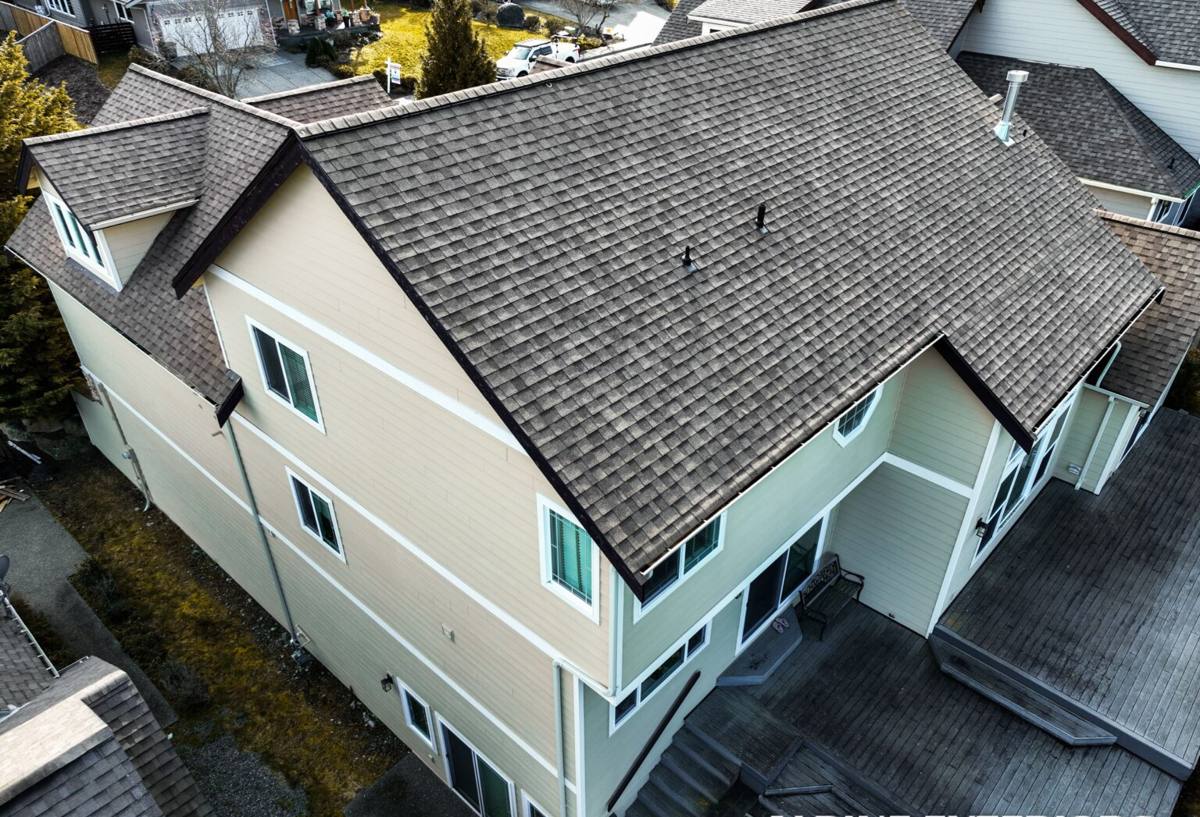
Why Decks Fail Faster in This Climate
Moisture That Doesn't Dry Out
In a drier climate, a deck gets wet and then gets a real chance to dry between rains. In Whatcom County, especially on shaded or low-airflow decks, that drying window often doesn't happen. Wood stays damp for days or weeks at a stretch, which is exactly the condition wood rot and fungal decay need to take hold. This is worse on the underside of deck boards and around any spot where two pieces of wood touch tightly — those gaps trap moisture even after the surface looks dry.
Salt Air and Metal Fasteners
Salt in the air accelerates corrosion on nails, screws, and structural hardware — joist hangers, post bases, and bolts. Corroded fasteners lose holding strength gradually and quietly; you often don't notice until a board is visibly loose or a railing has some give in it. Decks built with fasteners not rated for coastal exposure are the ones we see failing structurally first, sometimes years before the wood itself would have been a problem.
Moss, Algae, and the Slip Hazard They Create
Moss doesn't just look bad — it holds moisture against the wood surface constantly and turns stairs and walking surfaces genuinely slippery, especially on composite decking with a smooth or lightly textured finish. A deck that isn't cleaned and treated for moss on a regular schedule in this climate will develop it again within a season, even after a thorough cleaning, because the spores are simply part of the local air.
What a Correct Deck Repair Actually Involves
A repair that's done right starts with figuring out what's actually wrong, not just what's visible. A board that looks fine on top can be hiding rot underneath, and a wobbly railing post is often a symptom of a bigger structural issue below the surface. Here's what we check on every repair call in Ferndale:
- Ledger board attachment to the house — the single most common source of serious structural failure on older decks
- Joists and beams for soft spots, checking with a probe rather than relying on visual inspection alone
- Post bases and footings for movement, rot, or standing water contact
- Fastener condition — corrosion, backing out, or undersized hardware for the span
- Railing and guard post attachment, since these take lateral load that regular deck boards never see
- Stair stringers, which rot from the cut ends inward and are easy to miss from a casual look
- Flashing at the house connection, or the lack of it, which is a leading cause of hidden rot behind the ledger
- Drainage under and around the deck, since standing water at grade level speeds up post and footing decay
Once we know what's actually failing, we separate it into what needs full replacement, what can be reinforced, and what's cosmetic. Not every repair needs to be a full rebuild, and we'll tell you plainly when a targeted fix is the honest answer versus when the structure has enough going wrong that patching it would just be delaying a bigger job.
Repair vs. Rebuild: How We Make That Call
This is the question almost every homeowner asks, and it deserves a straight answer rather than an upsell. The decision usually comes down to how much of the structural framework — as opposed to the surface decking — is compromised.
| Condition Found | Typical Approach | Why |
|---|---|---|
| Isolated rotted boards, sound frame | Board-level repair | Framing is doing its job; only the wear surface needs attention |
| Loose railings, sound posts | Re-secure with corrosion-resistant hardware | Often a fastener issue, not a structural one |
| Soft or rotted ledger board | Ledger replacement with proper flashing | This connection carries major structural load — patching it isn't safe |
| Multiple rotted joists or beams | Partial to full framing rebuild | Once several structural members are compromised, the deck's load path is unreliable |
| Failing or undersized footings | Full rebuild from the ground up | Footings are the foundation — everything above them depends on them holding |
If a deck only needs surface-level attention, we'll say so and price it accordingly. If the framing has multiple points of failure, rebuilding is usually more cost-effective in the long run than chasing repairs on a structure that's already compromised in several places — we'll walk you through exactly why before you commit to anything.
Materials: What Holds Up Here and What Doesn't
Material choice matters more in Whatcom County than in a lot of the country, because everything gets tested by moisture and salt air on a near-constant basis.
Pressure-Treated Framing
For structural framing — joists, beams, posts — pressure-treated lumber rated for ground contact where applicable is the standard we build to. It's not glamorous, but it's the material that's proven itself against rot in this climate over decades of local use.
Fasteners and Hardware
We use corrosion-resistant, coastal-rated fasteners and structural connectors on repair work, even when the original build didn't. This is one of those places where using the cheaper standard hardware saves a little money up front and costs a lot more a few years down the line when it starts to corrode and lose grip strength.
Decking Surface Options
Whether we're repairing with wood or composite decking depends on what's already there and what you want going forward. Wood is more affordable and repairable board-by-board, but it needs regular sealing and moss treatment to hold up in this climate. Composite costs more upfront and doesn't need staining, but it still needs periodic cleaning to stay slip-safe under moss growth, and it's not something you patch invisibly — a repaired section can be visible next to weathered original boards. Neither is the "wrong" choice; it's a trade-off between upfront cost, ongoing maintenance, and how much matching we can realistically do.
Our Process for Ferndale Deck Repairs
- Free on-site assessment. We look at the whole deck, not just the spot you called about, because problems in this climate rarely stay isolated.
- Honest scope and estimate. You get a clear breakdown of what's failing, why, and what it'll take to fix it right — repair or rebuild, no pressure either direction.
- Structural work first. Framing, ledger, and footing issues get addressed before any cosmetic work, because there's no point in new boards over a compromised frame.
- Proper flashing and fastener upgrades. Even on a targeted repair, we address the moisture and corrosion points that caused the original failure.
- Cleanup and a maintenance rundown. We'll tell you what to watch for and how often this climate realistically calls for cleaning or resealing, based on your deck's exposure and shade.
Why a Local Crew Matters for This Job
Deck repair isn't a one-size-fits-all trade. A crew that mostly works inland, drier climates will often underestimate how aggressively moisture and salt air work on a coastal Whatcom County deck, and that shows up later as premature fastener failure or rot that comes back within a year or two. We're based in Bellingham and work in Ferndale regularly enough to know which construction shortcuts don't hold up here — undersized ledger flashing, standard-grade hardware, framing set too close to grade — because we've been called out to fix the consequences of them.
Being local also means we're not disappearing after the job. If something about the repair needs a follow-up look after the first real winter storm season tests it, we're a short drive away, not a company that worked the area once and moved on.
Simple Maintenance Checklist Between Repairs
A repaired deck holds up longer with a little regular attention, especially given the moss season here. This isn't a substitute for professional inspection of structural elements, but it covers what a homeowner can reasonably manage:
- Sweep debris and standing leaves off the deck surface regularly through fall
- Clean moss and algae buildup before it gets thick, using a deck-safe cleaner rather than a pressure washer alone, which can damage wood fibers and composite surfaces
- Check that gaps between boards stay clear so water can drain through instead of pooling
- Look underneath the deck once or twice a year for standing water, soft wood, or visible rust on hardware
- Reseal wood decking on the schedule appropriate for its exposure — shaded, damp areas typically need it more often than sun-exposed sections
- Test railings by hand periodically; any give at all is worth having looked at before it becomes a safety issue
If you're seeing soft spots, rust streaks, loose railings, moss you can't keep ahead of, or you just want an honest opinion on whether your Ferndale deck needs a repair or a rebuild, we're glad to take a look. Estimates are free and there's no pressure — fill out the form below and we'll get you scheduled.