 Bellingham Siding
 Why Ferndale's Climate Is Hard on Siding
Ferndale sits close enough to the Salish Sea and the Nooksack River lowlands that homes here deal with a specific combination of stresses most siding products were never designed around: salt-laden air moving in off the water, long stretches of driving rain that comes in sideways rather than straight down, and a moss and algae season that can run most of the year in shaded, north-facing exposures. Add Whatcom County's cool, damp winters and you get siding conditions that punish anything with a weak moisture management system or a finish that can't stand up to constant wet-dry cycling.
Wood-based and wood-adjacent siding products absorb moisture at cut edges, fastener holes, and panel seams, and once that moisture gets in, the freeze-thaw swings and mold-friendly humidity around Bellingham and Ferndale keep it there longer than in a drier climate. Salt air accelerates corrosion on fasteners and trim hardware that isn't rated for it. None of this is exotic — it's just what coastal Whatcom County does to a house, year after year.
What Fiber Cement Siding Brings to a Ferndale Home
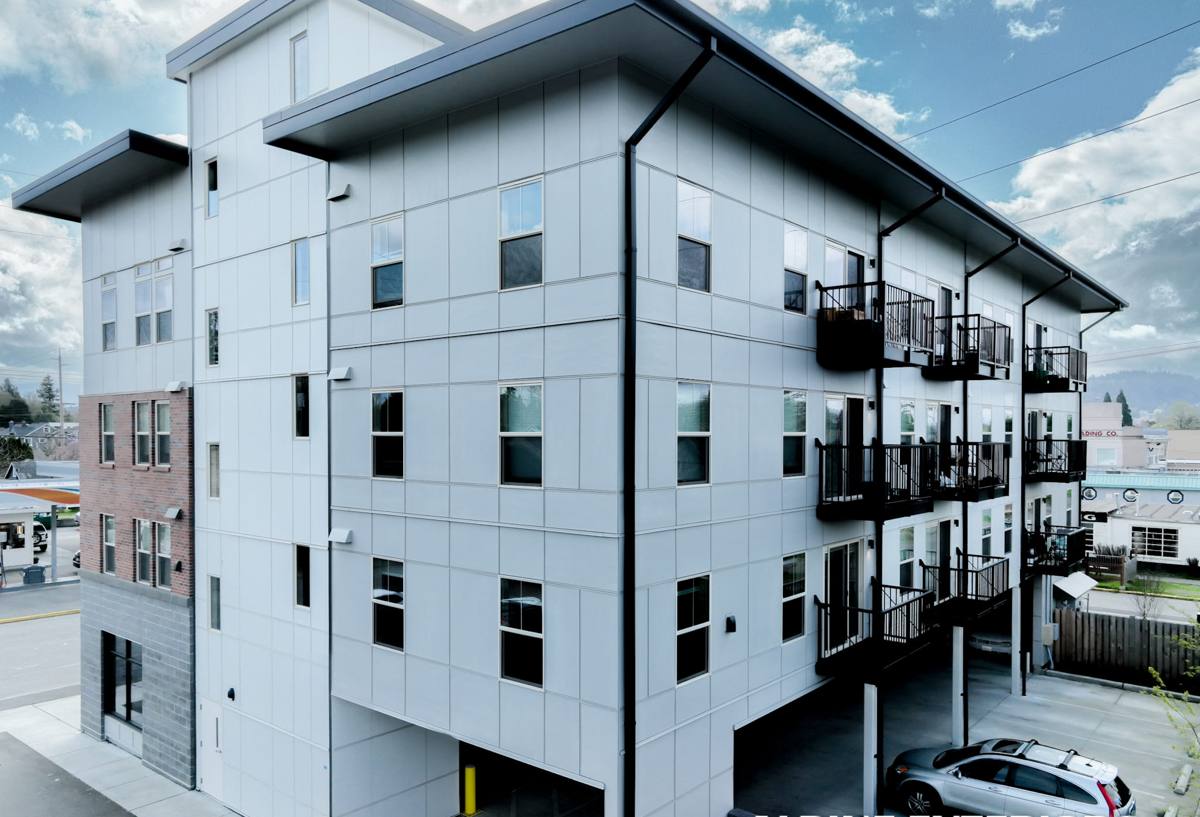
Fiber cement is a mix of cement, sand, and cellulose fiber, pressed and cured into planks or panels. It doesn't absorb water the way wood or wood-composite products do, it doesn't feed mold or moss the way organic material can, and it's non-combustible — a real consideration during dry summer stretches when wildfire smoke and regional fire risk make the news even this far north. For a Ferndale property exposed to salt air and near-constant moisture, those properties matter more than they would in a drier inland climate.
It's also dimensionally stable. Where wood siding expands and contracts with humidity swings and can cup, crack, or pull away from fasteners over time, correctly installed fiber cement holds its shape through Whatcom County's wet winters and drier summers without the same movement.
James Hardie: The Only Fiber Cement We Install
We install James Hardie products exclusively — no LP SmartSide, no vinyl, no Cemplank or Allura, no primed spruce or cedar. That's not a marketing position, it's a standard we hold because of what we've seen hold up in this region and what hasn't.
HZ5 Engineering for the Pacific Northwest
Hardie engineers its HardieZone products by climate region. HZ5 is the formulation built for the Pacific Northwest's wet, moderate climate, with moisture resistance tuned for exactly the conditions Ferndale sees — sustained rain, high humidity, and salt-influenced air near the coast. That's different from a one-size-fits-all siding product that performs the same whether it's installed in Arizona or on the Washington coast.
ColorPlus Factory Finish
Most of what we install uses Hardie's ColorPlus finish — a factory-applied, baked-on finish rather than field-applied paint. It resists fading and chipping better than a job-site paint job, and because it's cured under controlled conditions instead of on a scaffold in variable Ferndale weather, the finish quality is more consistent. It also carries its own finish warranty separate from the substrate warranty, which matters when you're comparing real coverage rather than marketing language.
What a Correct Fiber Cement Installation Involves
Fiber cement is unforgiving of shortcuts in a way that's easy to overlook until years later. A siding job that looks fine at close-out can fail early if the prep and flashing work underneath wasn't done right.
Prep Work Before the First Board Goes Up
- Removing and inspecting the old siding and sheathing for hidden rot, especially around window and door openings where Ferndale's driving rain tends to find gaps
- Repairing or replacing damaged sheathing rather than siding over it
- Installing a code-compliant weather-resistive barrier with correctly lapped seams
- Flashing all penetrations — vents, hose bibs, light fixtures, electrical — before panels go on
- Setting proper rainscreen or furring where conditions call for it, to let the wall assembly dry
Fastening, Clearances, and Flashing Details
Hardie publishes specific fastener patterns, nailing zones, and minimum clearances — siding-to-grade, siding-to-roofline, siding-to-deck — and those numbers exist for a reason. Get the grade clearance wrong on a Ferndale property with poor lot drainage and you've built in a moisture problem regardless of how good the siding itself is. Butt joints need to be flashed or caulked per spec, not just butted tight and painted over. Corner boards and trim need to shed water outward, not channel it behind the plank. This is where an inexperienced installer creates the exact failures that give fiber cement a bad reputation it doesn't deserve when installed correctly.
Fiber Cement vs. Other Siding Materials for This Climate
| Material | Moisture Behavior in Wet Climates | Salt Air / Coastal Exposure | Maintenance Burden |
|---|---|---|---|
| James Hardie Fiber Cement (HZ5) | Does not absorb water; engineered for wet regions | Holds up well with proper fasteners and trim hardware | Low — periodic wash, no repainting for years |
| Vinyl Siding | Doesn't rot, but seams and panels can warp with heat and let moisture behind the wall | Can become brittle over time with UV and temperature swings | Low upfront, but limited repair options if damaged |
| LP SmartSide / Engineered Wood | Wood-based core is more moisture-sensitive at cut edges and seams | Coastal humidity increases risk of edge swelling if not fully sealed | Moderate — edge sealing and inspection matter more |
| Primed Cedar / Spruce | Absorbs moisture readily; needs consistent maintenance to perform | Salt air accelerates weathering and finish breakdown | High — regular repainting and moisture checks |
This isn't a claim that other products are defective — vinyl and engineered wood siding both have legitimate uses and reasonable installations elsewhere. It's why, for the specific combination of rain, humidity, and salt exposure that Ferndale and the rest of coastal Whatcom County deal with, we standardized on one product line we trust to perform without surprises.
Cost Factors for a Ferndale Fiber Cement Project
Every home is different, but the same handful of variables drive cost on most Ferndale jobs:
- Condition of the existing sheathing — hidden rot found during tear-off adds repair scope
- Home size, wall height, and complexity of the roofline (dormers, gables, and cut-ins add labor)
- Plank profile and reveal chosen, plus trim and corner detailing
- Whether ColorPlus factory finish or field-applied paint is used
- Access — tight lot lines, fencing, or landscaping that slows staging and material handling
- Whether a rainscreen assembly is added for extra drying capacity
We won't quote a number without seeing the house, but we'll walk you through which of these factors apply to your project and why, so the estimate makes sense rather than feeling like a black box.
Maintenance in a Salt Air, High-Moss Climate
Fiber cement's biggest maintenance advantage in this area is what it doesn't need. It won't need repainting on the schedule wood siding does, and it doesn't feed moss and algae growth the way organic materials can. That said, "low maintenance" isn't "no maintenance" — a periodic gentle wash to clear moss spores, pollen, and salt residue from shaded and north-facing walls keeps the finish looking right and prevents buildup from trapping moisture against the surface. Caulking at trim joints should be checked every year or two, since caulk is the one component that does wear out before the siding does.
Why Hire a Crew That Already Works in Ferndale
A lot of what separates a fiber cement job that lasts decades from one that fails early isn't the product — it's whether the installer understands the specific conditions of the wall it's going on. A crew that regularly works Ferndale and greater Whatcom County knows which exposures need extra flashing attention, how local drainage patterns affect grade clearance, and what moss and salt exposure actually do to a wall assembly over a Pacific Northwest winter. That's different from a crew installing the same product in a dry climate with none of those pressures, or one working from a generic install checklist without local judgment.
It also means someone who's genuinely reachable if a question comes up two years after installation — not a name from a directory that only shows up for the sale.
Signs Your Current Siding Needs Attention
- Soft or spongy spots when you press on wood or engineered wood siding
- Persistent moss or algae growth that returns quickly after cleaning
- Visible gaps, warping, or separation at seams and corners
- Paint that's peeling, bubbling, or needing repainting more often than it used to
- Rising energy bills that might point to a compromised wall assembly behind the siding
- Staining or discoloration near the foundation line, a common sign of grade clearance problems
If any of these sound familiar, it's worth having someone take a real look before the underlying sheathing is affected — catching it early usually means a simpler, less expensive fix.
If you're weighing a siding replacement or repair in Ferndale and want a straight answer about what your home actually needs, we're happy to take a look. The estimate is free, there's no pressure, and you'll get a clear explanation of what we see and why — just fill out the form below.