 Bellingham Siding
 Building or Adding On in Happy Valley? Get the Windows Right the First Time
Happy Valley sits close enough to Bellingham Bay that salt-laden air is a fact of life, and close enough to the hills and tree cover that shade, moisture, and moss are just as constant. Whether you're framing a new home, adding a bedroom, finishing an ADU, or replacing a garage with living space, the window package you choose and how it's installed will decide whether that project stays dry and comfortable for the next thirty years or starts showing rot, fogged glass, and stains within five.
New-construction windows are a different job than swapping out old windows in an existing wall. They go in before the siding, before the trim, and often before the weather-resistive barrier is fully closed up. That's the point where flashing, water management, and air-sealing decisions get made — and it's also the point where mistakes are cheapest to fix and most expensive to leave uncorrected. This page covers what that job actually involves for a Happy Valley property, and why it's worth hiring a crew that already knows this part of Bellingham.
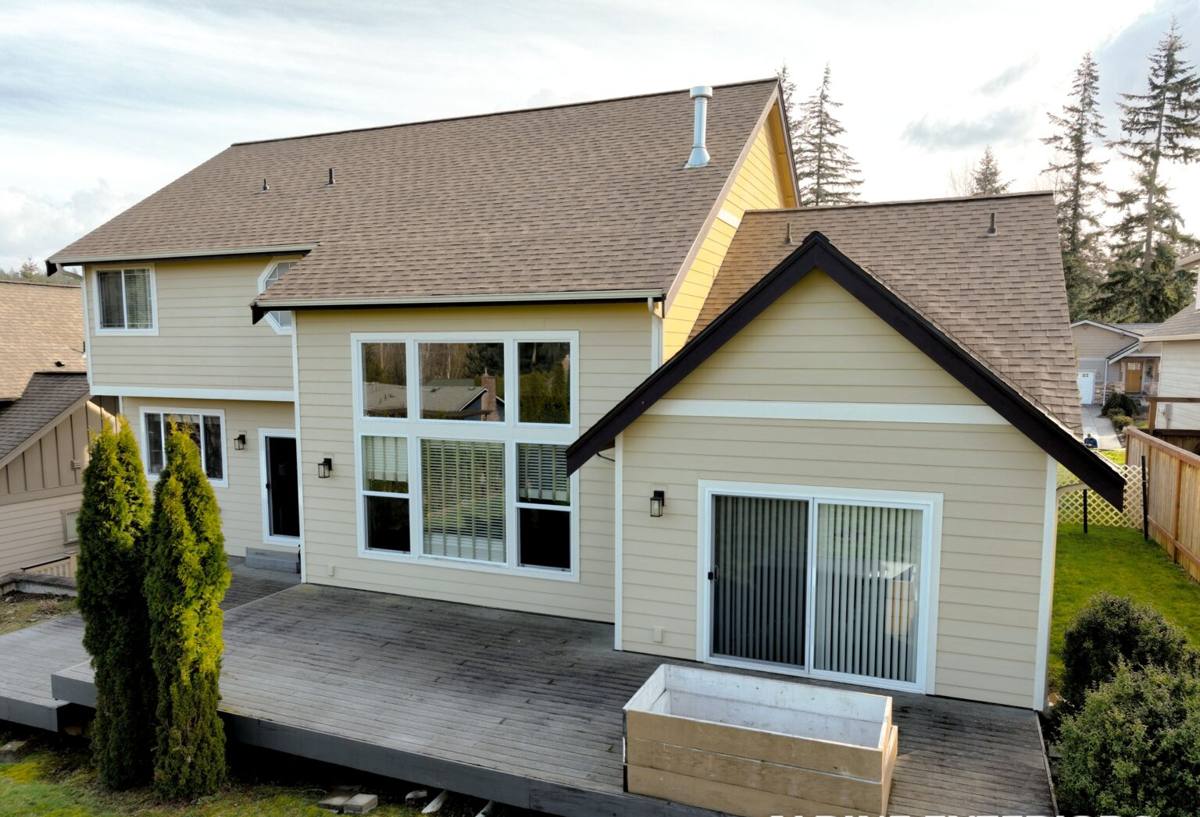
New-Construction Windows vs. Replacement Windows: Why the Difference Matters
The trade draws a hard line between "new-construction" and "replacement" windows, and it's not just marketing language.
New-Construction (Nail-Fin) Windows
These have a flange around the perimeter that gets fastened directly to the wall sheathing before the weather-resistive barrier and siding go on. The flange, combined with properly lapped house wrap and flashing tape, is what actually sheds water away from the wall assembly. This is the correct window for new framing, additions, and any opening where the wall is open down to the studs.
Replacement (Insert) Windows
These are built to slide into an existing, finished window opening without disturbing the surrounding siding or trim. They rely on the old frame and existing flashing rather than replacing the water management system. Using an insert window in new framing — or a nail-fin window in a finished wall — is a mismatch that leads to gaps, poor water control, or unnecessary demolition.
For new builds and additions in Happy Valley, the job almost always calls for true new-construction, nail-fin units installed while the wall is still open. Getting this distinction right at the estimate stage avoids costly rework later.
What Bellingham's Climate Actually Asks of a New Window
Whatcom County doesn't get extreme heat or hard freezes very often, but it asks for something harder to design around: constant, low-grade exposure to moisture and salt, day after day, for months at a time.
Salt Air and Metal Fatigue
Proximity to Bellingham Bay means airborne salt settles on exterior surfaces even a couple of miles inland. Over years, that accelerates corrosion on unprotected fasteners, hardware, and lower-grade aluminum components. It's a slow process, which is exactly why it gets overlooked during a build — the damage shows up long after the crew that installed the windows has moved on.
Driving, Wind-Driven Rain
Rain here rarely falls straight down. Wind off the Sound pushes it sideways and upward under trim, around corners, and into any gap in the flashing sequence. A window that would perform fine in a drier, calmer climate can leak in Bellingham simply because the installer skipped a sill pan or lapped a flashing course backward.
Moss, Algae, and a Long Damp Season
Many Happy Valley lots carry mature tree cover and hillside shade, which keeps surfaces damp long after a storm passes. That's ideal territory for moss and algae to take hold on sills, trim, and anywhere water is allowed to pool instead of drain. Window details that don't shed water cleanly become long-term maintenance headaches, not just cosmetic ones.
None of this means Bellingham is uniquely hostile to windows — it means the margin for installation error is smaller here than in a lot of other places, and it's worth planning for that up front rather than discovering it later.
The Install Sequence That Actually Keeps Water Out
A new-construction window is only as good as the sequence it's installed in. The window itself is rarely the point of failure — the flashing and water-management details around it are.
- Rough opening is checked for square, level, and correct size before the window ever arrives on site
- A sloped sill pan is installed at the base of the opening so any water that gets past the window drains back outside instead of into the wall
- Weather-resistive barrier is cut and integrated with the opening in the correct order — sill, sides, then head — so every layer sheds water onto the layer below it
- Window is set, shimmed level and plumb, and fastened through the nailing flange per the manufacturer's schedule, not just "wherever it holds"
- Flashing tape is applied over the flange at the sides and head, lapped correctly with the house wrap
- Interior gaps are sealed with low-expansion foam or backer rod and sealant — never packed solid with can foam, which can bow the frame
- Exterior trim and sealant joints are finished last, once the water-management layers behind them are already doing the real work
Every step in that list has a wrong way to do it that still looks fine from the outside on install day. The problems it causes typically don't show up until the first hard winter storm season, which is exactly why the sequence matters more than the brand of window.
Choosing a Frame Material for a Happy Valley Build
Frame material affects upfront cost, long-term maintenance, and how the window handles this specific climate. There's no single right answer for every project — it depends on budget, the style of the home, and how much upkeep you want to sign up for.
| Frame Material | Upfront Cost | Maintenance | Salt Air / Moisture Behavior |
|---|---|---|---|
| Vinyl | Lowest | Minimal — no painting, won't rot or rust | Handles salt air well; very stable in wet climates |
| Fiberglass | Mid to high | Low — very stable dimensionally, can be painted | Excellent; resists both moisture and corrosion |
| Wood-Clad (exterior clad) | High | Moderate — cladding protects wood, but seams need monitoring | Good if detailed correctly; failure points are usually seams and end grain |
| Aluminum | Mid | Low, but prone to corrosion over time near salt air unless a marine-grade finish is specified | Weakest choice this close to the bay without upgraded hardware and finish |
For most Happy Valley new-construction projects, vinyl and fiberglass are the practical default because they hold up to salt air and constant moisture with the least ongoing attention. Wood-clad windows can work well for homeowners who want a specific look and are willing to keep an eye on cladding seams. We're straightforward with clients about the trade-offs of each option rather than pushing one product line — the right call depends on your project, not ours.
Mistakes We Commonly Find on New Construction
Most window problems on newer Bellingham-area homes trace back to a handful of repeatable installation errors, not defective products.
- Flashing tape lapped in the wrong order, so water is directed into the wall instead of away from it
- No sill pan, or a flat sill pan with no slope to drain water back outside
- Weather-resistive barrier cut too tight around the opening, leaving gaps at the corners
- Windows fastened out of square, which stresses the frame and can affect how well it seals and operates over time
- Sealant used as the primary water barrier instead of as a secondary line of defense behind proper flashing
Any one of these can pass a walk-through and look completely normal for a year or two. The climate here has a way of finding the ones that were skipped.
How We Work With Builders and Homeowners in Happy Valley
On a new build or addition, window installation has to slot into a tight construction schedule alongside framing, house wrap, and siding crews. We coordinate directly with the general contractor or, for owner-managed projects, with you, to make sure the openings are framed correctly and the weather-resistive barrier is in place before we show up to set windows.
A typical sequence looks like a site visit to review the plans and rough openings, confirming window sizes and specs against the schedule, scheduling install once the wall is ready, and a final walk-through to check operation, sealant lines, and flashing before trim and siding close everything up. We build in time for weather — a driving rain day in Whatcom County is not the day to be cutting into an open wall, and we'd rather shift the schedule than install windows under bad conditions and hope for the best.
Because this is a step that gets covered up by siding and trim within days, we document the flashing and installation details before they disappear behind finish materials. That gives you a record of what's actually behind your walls, not just what it looks like from the curb.
A Practical Checklist Before Windows Go In
Whether you're a homeowner managing your own build or working through a general contractor, these are worth confirming before window installation starts:
- Rough openings match the ordered window sizes, with allowance for shimming
- Weather-resistive barrier is installed and ready for the window crew to integrate, not fully taped shut
- A sill pan flashing plan is part of the install — ask specifically if it isn't mentioned
- Frame material and glass package (U-factor, SHGC) match what was quoted, in writing
- Installer will document flashing and sealant details with photos before siding covers them
- Timeline accounts for weather delays rather than forcing an install during driving rain
Why a Local Crew That Already Works This Neighborhood Matters
Happy Valley's mix of older lots, newer infill, and additions near mature tree cover means every project has its own quirks — drainage patterns, shade, wind exposure off the water — that a crew unfamiliar with the neighborhood has to learn on your job. A contractor who already works in Bellingham and Whatcom County has already seen how salt air, driving rain, and a long moss season play out on homes like yours, and builds the water-management details accordingly instead of relying on a one-size-fits-all install method built for a drier climate.
It also means faster response if a question comes up mid-build, familiarity with local inspection expectations, and a crew that isn't guessing about how this specific stretch of coastline treats exterior materials over time.
If you're planning new-construction windows for a build, addition, or ADU in Happy Valley, we're happy to walk the plans with you and put together a straightforward, no-pressure estimate — just fill out the form below to get started.