 Bellingham Siding
 Why Happy Valley Roofs Wear Differently Than Roofs Inland
Happy Valley sits close enough to the water and to Bellingham's marine weather patterns that its roofs take a specific combination of abuse: salt-laden air off Puget Sound, wind-driven rain that gets pushed sideways under normal flashing details, and a moss season that runs longer here than it does in drier parts of Whatcom County. None of these alone is unusual for Western Washington. Together, and applied year after year, they shorten the life of repairs that weren't done with this exact climate in mind.
A patch that would hold up fine in a drier, calmer climate can fail here in a season or two. That's not a knock on any particular material — it's just what happens when moisture has more ways to get in and more time of year to work on a roof before it dries out again. Repair work in this neighborhood has to account for that reality, not just cover the visible problem.
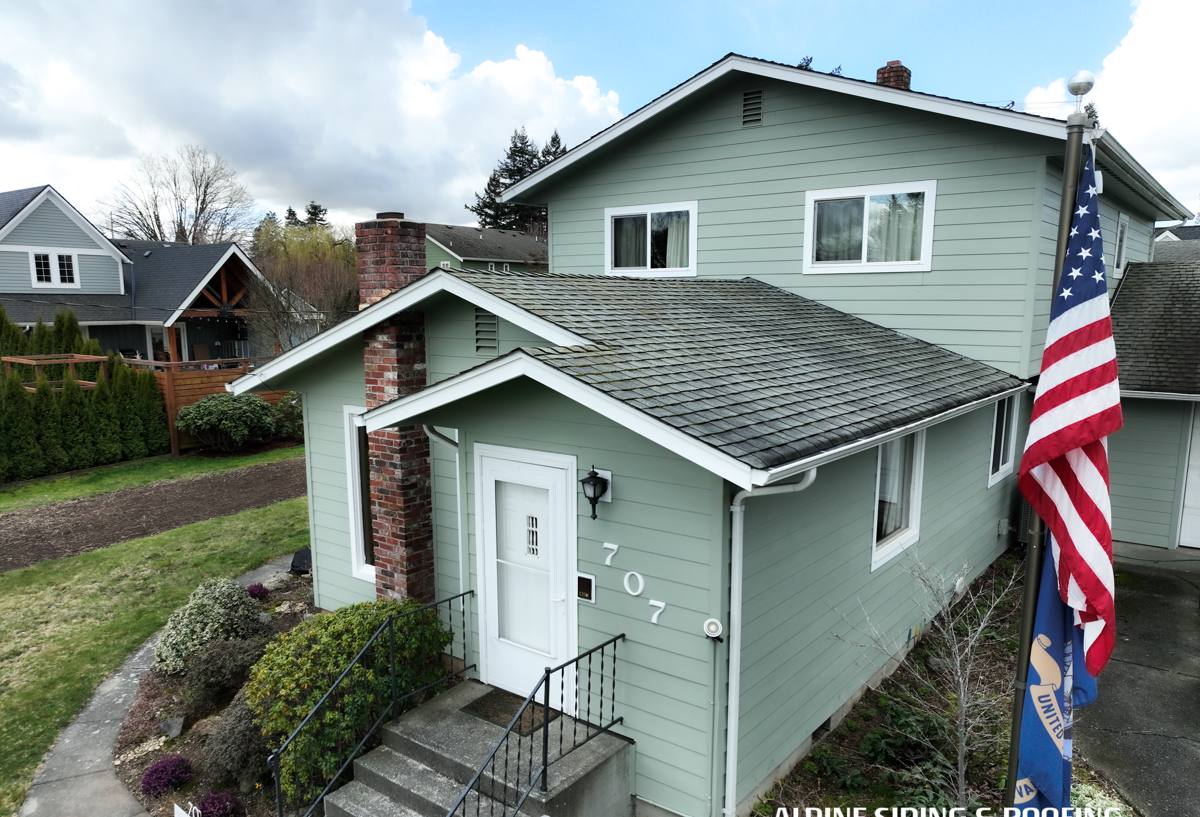
Signs Your Roof Needs Repair, Not a Full Replacement
Most roofs don't fail all at once. They show localized problems first, and catching those early is what keeps a repair a repair instead of turning into a replacement. Watch for:
- Dark streaking or thickening moss growth concentrated on the north-facing or shaded slopes
- Granule buildup in gutters or at the base of downspouts (a sign asphalt shingles are wearing thin)
- Soft spots, sagging, or visible daylight in the attic near valleys, chimneys, or vent pipes
- Water stains on interior ceilings that appear only during heavy, wind-driven rain
- Curling, cracked, or missing shingles after a windstorm
- Rust streaks or separated seams around flashing at chimneys, skylights, and dormers
Any one of these, caught early, is usually a targeted repair. Left alone through another wet season, several of them can compound into deck damage, insulation damage, or interior repairs that cost far more than the roof work itself.
What a Correct Roof Repair Actually Involves
A repair that's done right doesn't just cover the hole. It addresses why water got in and makes sure it can't happen the same way again.
Flashing First
A large share of the roof leaks we find in this area trace back to flashing, not the shingles themselves — around chimneys, skylights, dormers, and roof-to-wall transitions. Driving rain finds the smallest gap in a flashing detail and pushes water uphill under materials that would otherwise shed it fine. Proper repair means re-bedding or replacing flashing correctly, not just caulking over the symptom.
Underlayment and Deck Condition
Once shingles or panels are pulled back, the underlayment and roof deck underneath tell the real story. If the deck has taken on moisture, patching the surface layer without addressing what's underneath just delays the same failure. We check for soft or delaminated decking before closing anything back up.
Moss and Debris Removal
Moss holds moisture against the roofing material and, over time, lifts shingle edges as it grows. Any repair in a moss-prone section should include careful removal — not power-washing, which can strip granules and shorten shingle life further — along with clearing debris from valleys and gutter lines so water has a clear path off the roof.
Ventilation Check
Poor attic ventilation traps moisture that condenses on the underside of the roof deck, which can look like a leak even when the exterior repair is solid. A thorough repair visit includes a look at intake and exhaust venting, especially on older homes where insulation upgrades over the years have sometimes blocked original vent paths.
Roofing Materials in Happy Valley: Repair Considerations
What a roof is made of changes how it fails and what a proper repair looks like. Here's how the common types we see in this area compare on the issues that matter most locally.
| Material | Moss/Algae Susceptibility | Typical Repair Focus | Notes for This Climate |
|---|---|---|---|
| Asphalt composition shingle | Moderate to high in shaded areas | Flashing, granule loss, wind-lifted tabs | Most common; repairable in sections if the deck is sound |
| Cedar shake/shingle | High — organic material holds moisture | Split shakes, moss lifting edges, moisture rot | Requires more frequent maintenance in a wet, mossy climate |
| Standing seam metal | Low | Seam fasteners, sealant at penetrations | Sheds moss and water well; repairs are usually isolated |
| Low-slope/torch-down or membrane | Low to moderate, ponding-dependent | Seam separation, ponding water, membrane punctures | Common on additions and outbuildings; drainage detail matters most |
None of these materials is a bad choice on its own — each has trade-offs in cost, maintenance, and appearance. What matters for repair work is diagnosing correctly for the material in front of us instead of applying a one-size-fits-all fix.
Our Repair Process
1. Inspection
We walk the roof and the attic when it's accessible, not just a glance from the ground. Most leaks show up somewhere other than where the interior stain appears, so a proper diagnosis means tracing the actual path water is taking.
2. Diagnosis and Written Quote
Before any work starts, you get a clear explanation of what's failing, why, and what fixing it correctly involves — along with a written price. No vague "we'll figure it out as we go."
3. The Repair
We match materials to what's already on the roof where possible, address the root cause (flashing, deck, ventilation — not just the surface symptom), and use fasteners and sealants rated for this climate rather than whatever's fastest.
4. Cleanup and Follow-Up
Debris and old material get hauled off, gutters and valleys get cleared of anything dislodged during the repair, and we tell you honestly what to expect going forward — including if we think a section is nearing the end of its useful life rather than pretending a patch will hold indefinitely.
Moss, Algae, and Salt Air: The Ongoing Maintenance Piece
A one-time repair fixes what's broken today. Staying ahead of moss and salt-air exposure is what keeps the next repair from being needed in twelve months instead of several years. In this part of Whatcom County, that generally means:
- Clearing moss growth before it thickens, using methods that don't strip granules or damage the surface
- Keeping gutters and valleys clear so water doesn't pool against roofing material
- Trimming back overhanging branches that keep shaded sections damp longer after rain
- Checking exposed fasteners and flashing on an annual basis, since salt air accelerates corrosion on unprotected metal
None of this replaces a proper repair when something's actually failed, but it's the difference between a roof that needs occasional attention and one that needs the same repair redone every couple of years.
What Roof Repair Costs Depend On
We won't quote a number without seeing the roof — too many variables affect the real cost, and honest contractors don't guess. But the factors that typically drive price up or down are consistent:
| Factor | Why It Matters |
|---|---|
| Roof pitch and access | Steeper or harder-to-reach roofs take longer and require more safety setup |
| Extent of deck damage | Surface repairs are quick; rotted decking underneath adds material and labor |
| Material match | Matching older or discontinued shingle colors/profiles can add sourcing time |
| Number of penetrations | Each chimney, skylight, or vent pipe is a separate flashing detail to get right |
| How long the leak has been active | Water that's been getting in for months often means insulation and interior damage beyond the roof itself |
Why It Matters That We Already Work in Happy Valley
Repair work benefits from local familiarity in a very practical way: knowing how the neighborhood's weather actually behaves — which slopes stay shaded and mossy longest, how hard wind-driven rain hits from certain directions, how salt air treats exposed metal near the water — means less guesswork and fewer repeat visits. A crew that only occasionally works this area is diagnosing from scratch every time. A crew that works Happy Valley regularly is applying what's already worked here before.
That local pattern recognition also shows up in honesty about scope. We'd rather tell a homeowner a repair will genuinely hold for years than sell a bigger job than necessary — and we'd rather say plainly when a roof is past the point where another patch makes sense.
Before You Call: A Quick Homeowner Checklist
If you're not sure whether what you're seeing is worth a call, run through this first:
- Check the attic (if accessible) for daylight, staining, or damp insulation near valleys and penetrations
- Look at gutters for granule buildup or moss debris
- Note whether interior staining appears only during wind-driven storms versus steady rain — that's a clue to where water is entering
- Photograph any visible moss thickness or shingle damage from the ground for reference
- Avoid walking on the roof yourself, especially moss-covered sections — they're more slippery than they look
If your roof is showing any of these signs, it's worth getting a professional look before the next round of driving rain finds the gap. We offer free, no-pressure estimates for Happy Valley homeowners — just fill out the form below and we'll take a look and tell you honestly what we find.