 Bellingham Siding
 Metal Roofing Built for Happy Valley's Weather
Happy Valley sits close enough to Bellingham Bay and the surrounding waterways that homes here deal with a specific mix of weather stress: salt-laden air drifting in off the water, wind-driven rain that gets pushed sideways under poorly flashed edges, and a wet season that runs long enough for moss to take hold on anything north-facing or shaded by trees. A roof in this neighborhood isn't just shedding water from above — it's fighting corrosion from the air, saturation from the side, and organic growth that never really stops trying to root in.
Metal roofing handles that combination better than most other roofing materials, but only when it's installed correctly for this specific environment. A metal roof detailed the way you'd detail one in a dry inland climate will underperform here. This page covers what Happy Valley homes actually need from a metal roof, what correct installation looks like, and how we approach the job from estimate to finish.
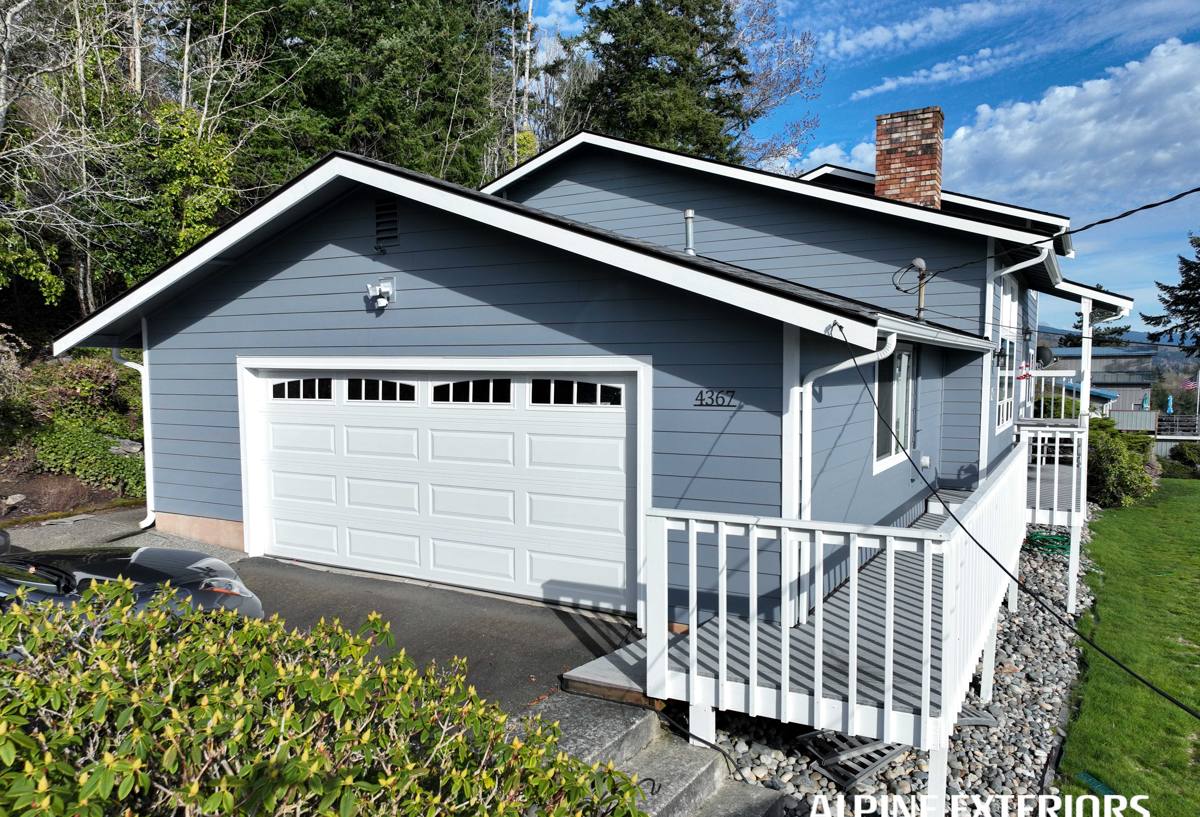
What Salt Air, Driving Rain, and Moss Season Do to a Roof
Salt Air and Corrosion
Proximity to Bellingham Bay means airborne salt settles on exposed metal surfaces over time. On roofing, this shows up as accelerated corrosion at fastener heads, cut edges, and any spot where the protective coating has been scratched or compromised during installation. Not all metal roofing products or fasteners are rated the same way for coastal exposure — this matters more in Happy Valley than it would ten or fifteen miles inland.
Driving Rain
Storms coming off the water frequently bring rain in sideways rather than straight down. That kind of wind-driven rain finds weaknesses that a calm, vertical rainfall never would — under-lapped panels, undersized flashing, and fastener patterns that were adequate for a gentler climate but not for wind-loaded moisture intrusion. Roof penetrations (chimneys, vents, skylights) and valleys are where this shows up first.
Moss Season
Western Washington's wet season stretches long, and Whatcom County's tree cover means most roofs get shaded at some point during the day. Moss and lichen thrive in that combination of moisture and shade. On asphalt shingles, moss roots into the granule surface and lifts shingle edges. On metal roofing, moss can't root into the panel itself, but it can still collect in valleys, around fasteners, and along ridge caps if debris is allowed to build up — and trapped moisture under organic debris is still corrosive over time.
Why Metal Roofing Is a Strong Fit Here
Metal roofing's core advantages line up well with what Happy Valley's climate demands:
- Smooth surface: moss and lichen have a much harder time establishing on metal than on shingles, since there's no granule texture for spores to grip.
- Steep water-shedding: properly lapped metal panels move driving rain off the roof fast, reducing the window for wind-driven moisture to find a way in.
- Long service life: a correctly installed and coated metal roof is built to handle decades of exposure, which matters when you're factoring in coastal wear.
- Fire and wind resistance: metal roofing performs well in the wind events that come through with coastal storms.
None of that is automatic, though. The coating specification, fastener choice, and flashing detail all have to be matched to a marine-influenced climate, or you're just trading one set of problems for another.
Panel Types and Finishes: What Actually Matters for This Climate
Not every metal roofing product is built the same way, and the differences matter more here than in a drier, inland part of the state. The table below covers the main options homeowners in Happy Valley typically weigh.
| Option | Best For | Coastal Considerations |
|---|---|---|
| Standing seam steel (concealed fasteners) | Homes wanting the longest service life and cleanest look | Concealed fasteners remove the most common corrosion and leak point; strong choice for salt air exposure |
| Exposed-fastener metal panels | Budget-conscious projects, outbuildings, secondary structures | Fastener gaskets wear over time and need periodic inspection; more vulnerable to salt air corrosion at each fastener |
| Steel with premium coating systems | Primary homes wanting corrosion resistance without the standing-seam price | Coating quality matters far more near the bay than it does inland — this is not a place to cut corners on finish |
| Aluminum panels | Homes especially close to salt air exposure | Naturally corrosion-resistant, often specified in the most marine-exposed applications |
We'll walk through which option fits your home, your roofline, and your budget as part of the estimate — there's no single "right" panel for every Happy Valley property, and honest tradeoffs (upfront cost versus long-term maintenance) are part of that conversation.
What a Correct Installation Actually Involves
Metal roofing is unforgiving of shortcuts in a way that shingle roofing sometimes isn't. A panel that's slightly under-lapped or a flashing detail that's slightly off won't necessarily fail on day one — it'll fail two or three winters in, once enough driving rain events have found the gap. Here's what we consider non-negotiable on a Happy Valley roof:
- Underlayment matched to the climate: a synthetic or self-adhered underlayment rated for high-moisture exposure, not a bare-minimum product.
- Ice-and-water shield at vulnerable zones: valleys, eaves, and penetrations get extra protection against wind-driven moisture, not just the field of the roof.
- Corrosion-appropriate fasteners: fastener material has to match the panel material to avoid galvanic corrosion, and needs to be rated for salt-air exposure.
- Proper panel overlap and seam direction: laps run with the prevailing wind and rain direction, not just "downhill."
- Flashing at every penetration and transition: chimneys, vent stacks, skylights, and wall-to-roof transitions are where driving rain gets in — these get custom-formed flashing, not generic trim pieces stretched to fit.
- Ventilation that actually balances: intake and exhaust ventilation sized to the attic space, so condensation doesn't become its own moisture problem underneath a roof that's otherwise doing its job well.
Every one of these is a place where a rushed or inexperienced install shows up as a callback a few winters later. We build the roof once, correctly, rather than build it fast and revisit it.
Living With a Metal Roof Through Moss Season
A metal roof isn't maintenance-free, even though it's lower-maintenance than shingles. In Whatcom County's wet season, a couple of habits go a long way:
- Keep gutters and valleys clear of needles and leaf debris, since trapped organic matter holds moisture against the panel longer than open air would.
- Trim back overhanging branches where practical — less shade means less time for moss and algae to get a foothold near seams and fasteners.
- Have penetrations and flashing points inspected periodically, since these are the areas most likely to show early wear from driving rain and salt exposure, well before the panels themselves show any issue.
- Avoid pressure washing metal roofing — it can damage coatings and drive water under laps; a soft rinse and gentle brushing is enough for most moss and debris buildup.
Our Process, Start to Finish
We keep the process straightforward because most of the risk in a metal roofing project is in the details, not the sales pitch:
- On-site assessment: we look at your roof's condition, pitch, existing ventilation, and any trouble spots — flashing, valleys, penetrations — before recommending anything.
- Straight-forward estimate: panel options, coating choices, and a clear breakdown of what's included, so you're comparing apples to apples if you're getting other quotes.
- Tear-off and deck inspection: we don't install over a deck that's compromised — any rot or soft sheathing gets addressed before a single panel goes on.
- Underlayment and flashing first: the parts of the job nobody sees are the parts that determine whether the roof performs in a driving rainstorm.
- Panel installation: correct laps, correct fastening, correct seam direction for wind and rain exposure specific to your roof's orientation.
- Final walkthrough: we go over the finished roof with you, including what maintenance (if any) it'll need going forward.
What Drives the Cost of a Metal Roof in Happy Valley
Metal roofing costs more upfront than asphalt shingles, and the final number depends on a handful of factors specific to your home and to this climate:
| Cost Factor | Why It Matters Here |
|---|---|
| Panel material and finish | Aluminum and premium-coated steel cost more upfront but hold up better against salt air over the life of the roof |
| Roof complexity | More valleys, penetrations, and transitions mean more flashing labor, which is where driving rain resistance is won or lost |
| Tear-off and deck condition | Existing moss or moisture damage found during tear-off may need repair before installation |
| Ventilation upgrades | Older Happy Valley homes sometimes need ventilation brought up to a level that supports a tight, well-sealed metal roof system |
| Fastener and underlayment spec | Coastal-grade materials cost more than minimum-code options but reduce long-term corrosion risk |
We'd rather walk you through these factors in person, against your actual roof, than throw out a broad number that doesn't hold up once we're standing on the roof deck.
Why Local Experience in Happy Valley Matters
A roofing crew that works Bellingham and Whatcom County regularly knows how differently a roof behaves here compared to a drier climate. We've seen how moss actually accumulates on north-facing sections shaded by mature trees, how driving rain off the bay tends to hit certain roof orientations harder than others, and which flashing details hold up over repeated wet seasons versus which ones need revisiting. That's not something you get from a crew that treats every roof the same regardless of where it sits.
It also means we're accountable locally — we're not driving in from out of the area for one job and gone. If a question comes up two winters after installation, we're still here, working in this same neighborhood.
Is Metal Roofing Right for Your Happy Valley Home?
Metal roofing isn't the right call for every home or every budget, and we'll tell you honestly if a different approach makes more sense for your situation. Before deciding, it helps to think through a few things:
- How long do you plan to stay in the home — metal roofing's upfront cost pays off most clearly over a long ownership horizon.
- How much tree shade does your roof get — heavier shade means more attention to moss-prone valleys regardless of material.
- What's your roof's current ventilation like — this affects both performance and installation cost.
- Are there existing leaks or soft spots you already know about — these need to factor into any estimate from the start.
If you're weighing metal roofing for a Happy Valley home, we're happy to take a look and give you a straightforward assessment — no pressure, no inflated urgency. Reach out using the form below to schedule a free estimate.