 Bellingham Siding
 Building New in Sudden Valley? The Window Install Has to Be Right the First Time
New construction gives you one real shot at getting windows installed correctly. Unlike a replacement job, where a crew is working around existing siding and trim, new-construction windows go in during the framing and dry-in stage — before the weather-resistive barrier is fully lapped, before siding goes on, and before anyone can see what's happening behind the finish. Whatever gets built into the wall at that point either protects the house for the next few decades or sets up a slow leak that nobody notices until there's rot in the sheathing.
We install new-construction windows for homes going up in Sudden Valley and the surrounding Lake Whatcom area, working alongside builders, framers, and general contractors rather than around them. This page is about that one job — getting new-construction windows installed correctly on a Sudden Valley build — not a general overview of window replacement.
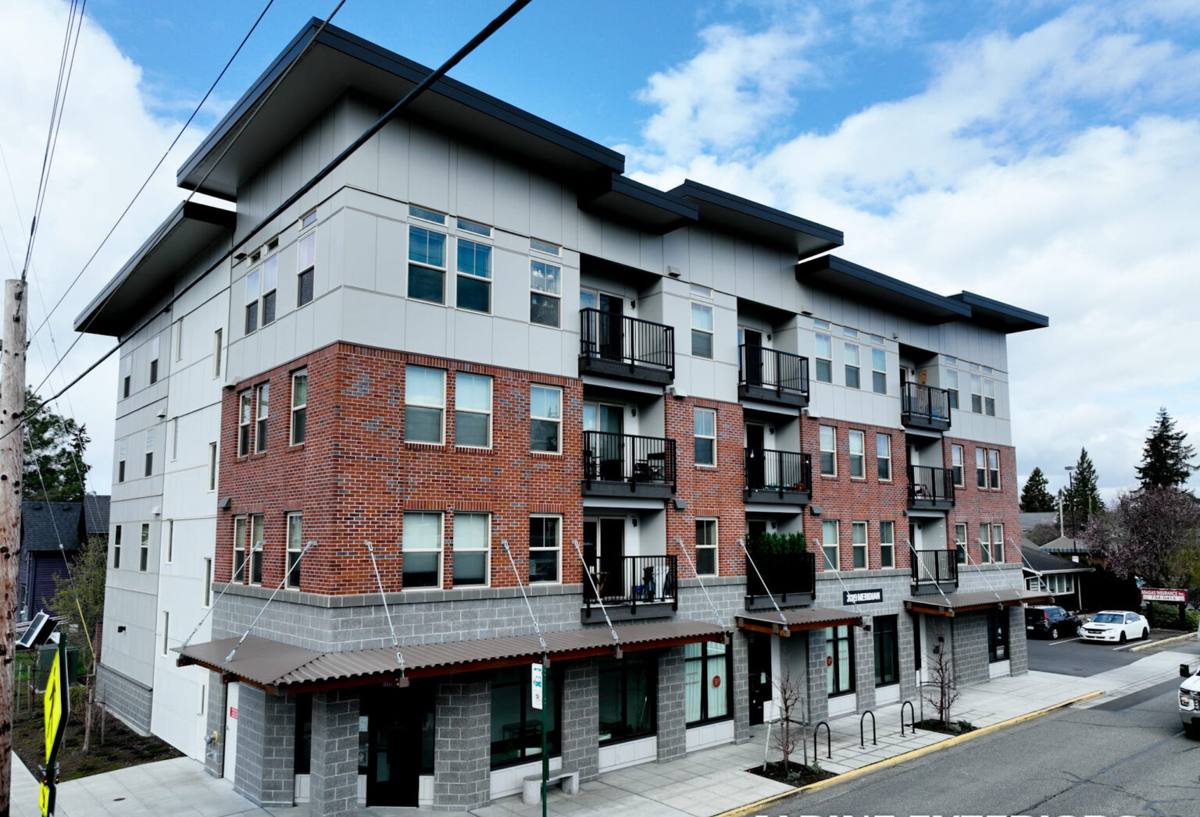
What Sudden Valley's Site Conditions Mean for This Job
Sudden Valley sits in a wooded, lake-adjacent setting east of Bellingham, and that setting changes how a window install should be handled compared to an open lot in town. Heavy tree cover means more shade on large portions of most homes, which means slower drying after a storm. Whatcom County's marine climate already gives us long stretches of wind-driven rain and a moss season that can run nearly half the year on north- and shaded sides of a house — on a wooded lot, that moss and moisture pressure is even more concentrated on the walls and roof planes that don't get direct sun.
Moss, Shade, and Slow-Drying Walls
Moss doesn't just grow on roofs. On shaded exterior walls near Lake Whatcom, it can establish around window trim and sills if the assembly behind it can't shed water and dry out between storms. That's a detail issue, not a product issue — it comes down to how the sill pan, flashing, and drainage plane are built at the rough opening, long before trim goes on.
Driving Rain and Wall Orientation
Whatcom County gets a lot of its worst weather as wind-driven rain off Pacific storm systems, and Sudden Valley's tree-sheltered lots don't fully block that — wind still finds gaps, and salt-tinged marine air off the Bellingham coastline still reaches inland enough to accelerate corrosion on cheap fasteners and hardware over time. Walls facing the prevailing weather need a flashing and sealant approach that assumes water will hit the window, not one that just hopes it won't.
New-Construction Windows vs. Replacement Windows: Why the Method Is Different
These two jobs use different products and completely different installation sequences. Getting them confused — or having a crew install a new-construction window using replacement techniques, or vice versa — is one of the more common ways a new build ends up with an early leak.
| Factor | New-Construction Window | Replacement Window |
|---|---|---|
| Installed when | During framing/dry-in, before siding | After home is finished, into an existing opening |
| Frame feature | Nailing fin fastens directly to sheathing | No fin — fits inside existing frame |
| Weatherproofing | Integrated with WRB, flashing tape, and sill pan | Relies on existing wall assembly plus sealant |
| Access | Open stud bays, full visibility of rough opening | Limited to existing opening and trim |
| Best suited to | New homes, additions, full remodels to the studs | Existing homes keeping original framing |
What a Correct New-Construction Install Involves
The window unit itself is only part of the job. The flashing and drainage sequence around it is what actually keeps water out over the life of the house, and it has to happen in the right order.
Flashing Sequence
- Sill pan flashing installed first, sloped and end-dammed so any water that gets past the window drains back out, not into the framing
- Weather-resistive barrier lapped correctly at the rough opening before the window goes in, following shingle-lap principles so water always moves down and out
- Window set into the opening, checked for level, plumb, and square before fastening — an out-of-square unit stresses the frame and can compromise the seal over time
- Nailing fin fastened per the manufacturer's schedule, then flashed at the jambs and head in the correct order so upper laps always overlap lower ones
- Head flashing installed with a drip edge, and building paper or WRB lapped back over it to complete the drainage path
Fastening and Air Sealing
Fasteners matter more here than most homeowners expect. Given the marine air and moisture exposure common to this part of Whatcom County, we use corrosion-resistant fasteners rather than the cheapest option that happens to fit. On the interior side, the gap between the window frame and rough opening gets air-sealed with backer rod and low-expansion sealant or foam rated for window use — not just packed with insulation, which does nothing to stop air and moisture movement.
Choosing the Right Window for a Whatcom County New Build
Material and glazing choice matter more here than in a dry climate, because the window has to hold up to sustained moisture exposure and perform well in a mild but consistently damp environment.
- Vinyl — low maintenance, good value, solid moisture resistance; a common choice for new builds where budget and upkeep are priorities
- Fiberglass — more dimensionally stable across temperature swings, holds paint well if you want a custom color, generally a step up in cost
- Wood-clad — real wood interior with a weather-resistant exterior cladding; strong look for certain architectural styles, but requires more attention to installation detail since any gap in the cladding exposes wood to moisture
On glazing, condensation resistance matters as much as raw insulation value in our climate. A window with good U-factor performance but poor edge-of-glass detailing can still fog or sweat on cold, damp mornings, which is a common complaint we hear about older or budget windows in this area. Washington's state energy code sets minimum performance requirements for new construction, and we'll help you land on window specs that meet code and perform well long after the inspection is signed off.
Our Process for New-Construction Window Installs
We work directly with the builder or general contractor's schedule, since window installation on a new build has to land at the right point in the framing sequence — after dry-in prep but before siding starts.
- Rough opening review — we check framing dimensions against the window specs before units arrive, so any sizing issues get caught before install day, not after
- Sill pan and flashing installation, following manufacturer instructions and standard shingle-lap sequencing
- Window setting, leveling, and fastening per the manufacturer's schedule
- Head and jamb flashing, tied into the WRB so the drainage plane stays continuous
- Interior air sealing and a final check of operation — every window gets tested open, closed, and locked before we consider the install done
- Coordination with the siding crew so trim and cladding tie in cleanly to the finished window opening
A Homeowner's Checklist Before Windows Go In
- Confirm window specs (U-factor, sizing, grille pattern, hardware finish) match your building plans before ordering
- Ask what sill pan and flashing method your installer uses — it should be a specific, describable sequence, not a vague answer
- Confirm who is responsible for WRB lapping at the rough opening — the window installer or the framer — so nothing falls through the gap between trades
- Check that fastener and sealant materials are rated for exterior, moisture-exposed use
- Walk the site after install, before siding starts, if you want to see the flashing work while it's still visible
Why Hire a Crew That Already Works Sudden Valley
New-construction window work depends on getting a lot of small sequencing details right, and a crew that's worked wooded, lake-adjacent lots in this area already knows what those lots throw at a job — limited equipment access on tighter driveways, tree cover that shortens the dry window for flashing work, and the moisture patterns that show up on shaded walls a few years down the road if the install was rushed. Many properties in this community are also part of a homeowners' association, and it's worth checking with them early about any exterior design or material guidelines before finalizing your window order — that's a conversation better had before install day than after.
If you're building new in Sudden Valley and want windows installed by a local crew that treats the flashing and drainage detail as seriously as the window itself, we're happy to walk your plans and give you a straightforward, no-pressure estimate. Use the form below to get started.