 Bellingham Siding
 Asphalt Shingle Roofing Built for Puget's Weather
Homes in the Puget area of Bellingham sit close enough to the water and the tree line that their roofs take on a specific combination of stress most inland Whatcom County homes never see. Salt-laden air off the Sound works on exposed metal and fastener heads. Driving rain, pushed sideways by wind off the water, finds its way into laps and valleys that a calmer climate would never test. And a long, damp moss season keeps the roof surface wet and shaded for months at a time. None of these factors are dramatic on their own, but together they shorten the useful life of a roof that wasn't installed with this specific mix of exposures in mind.
Asphalt shingle roofing remains the right choice for the large majority of homes in this neighborhood — it's cost-effective, well-understood, and when installed correctly it holds up well against everything Puget's climate throws at it. The key phrase is "installed correctly." A shingle roof that looks fine from the driveway can still be missing the underlayment detail, ventilation balance, or fastening pattern that determines whether it lasts fifteen years or thirty in this specific microclimate.
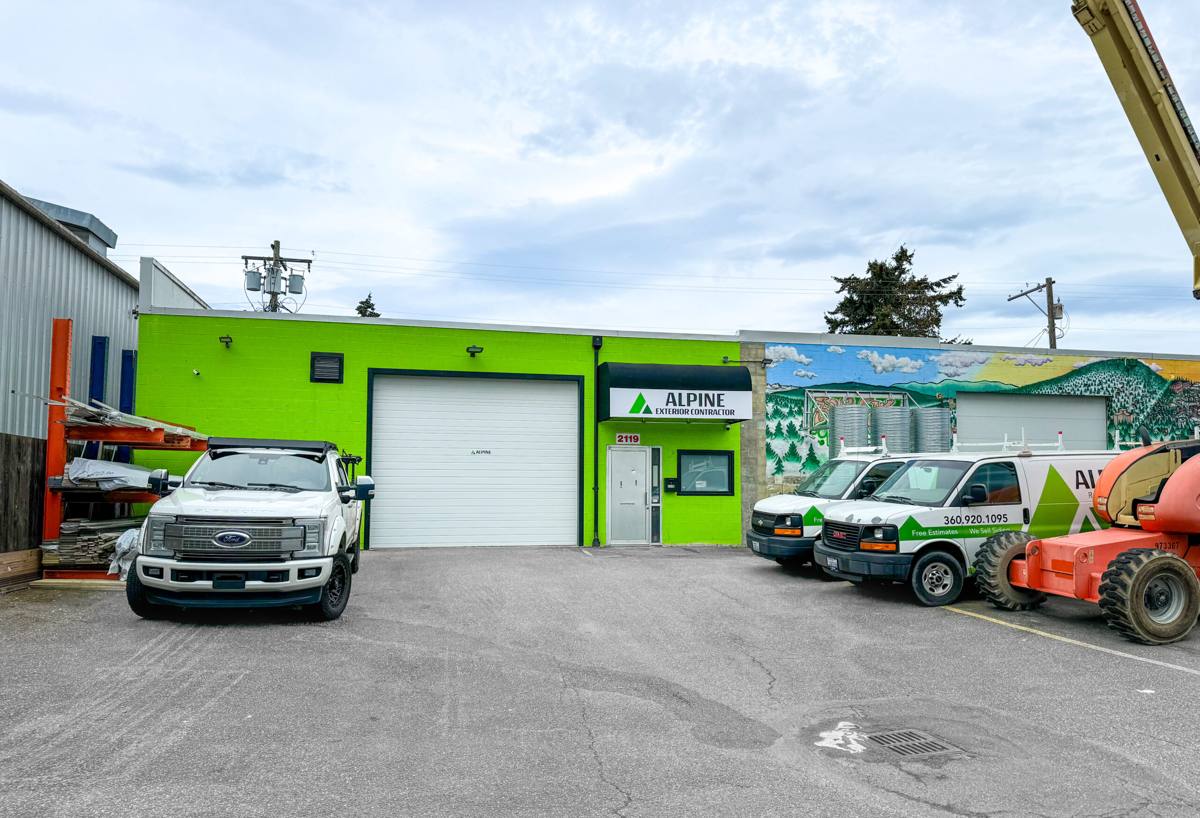
What Puget's Climate Actually Does to a Shingle Roof
Salt Air and Corrosion
Proximity to salt water accelerates corrosion on anything metal on the roof — flashing, nail heads, vent caps, and drip edge. Standard galvanized fasteners can start showing rust streaks years before they would inland. We spec corrosion-resistant fastener and flashing materials on homes in this area as a default, not an upsell, because replacing a $2 nail now is a lot cheaper than chasing a leak stain on a ceiling later.
Driving Rain and Wind-Driven Water
Wind off the water doesn't just make rain fall harder — it pushes it sideways, which means water can be driven up under shingle laps and around vent penetrations that would stay dry in a straight-down rain. This is why underlayment choice and lap technique matter more here than in a landlocked neighborhood. A roof that's "watertight" in a calm rain can still leak in a Puget windstorm if the details weren't built for wind-driven moisture.
Moss and Prolonged Shade/Moisture
Whatcom County's long wet season, combined with tree cover common in this neighborhood, gives moss and algae plenty of time to establish. Moss doesn't just look bad — it lifts shingle edges as it grows, holds moisture against the roof deck, and accelerates granule loss. A roof that isn't detailed or maintained with moss in mind will age faster than the shingle's rated lifespan would suggest.
What a Correct Installation Involves Here
A shingle roof built for this specific environment isn't a different product — it's the same asphalt shingle system installed with a few details treated as non-negotiable rather than optional:
- Ice-and-water shield or a comparable self-adhering membrane at eaves, valleys, and around every penetration, not just where code minimums require it
- Corrosion-resistant flashing and fasteners given the salt air exposure
- Balanced intake and exhaust ventilation so the underside of the deck can dry out between rain events instead of staying damp
- Proper nailing pattern and shingle exposure so wind-driven rain can't work its way under laps
- Valley and penetration detailing sized for sustained heavy rain, not just average rainfall totals
- A drip edge and starter course installed to shed water cleanly at the most vulnerable edge of the roof
None of this is exotic. It's standard trade knowledge applied consistently, which is exactly the part that gets skipped when a crew is moving fast or unfamiliar with what this specific stretch of coastline does to a roof over time.
Our Process for a Puget Re-Roof or Repair
1. Roof Assessment
We start by getting on the roof, not just looking at it from the ground. We check deck condition, existing ventilation, flashing condition around chimneys and vents, and how much moss or granule loss has already occurred. This tells us whether the job is a straightforward re-roof or whether there's deck repair or ventilation correction that needs to happen first.
2. Material Selection
We walk through shingle class, warranty terms, and color options with the homeowner, and we're upfront about where the extra cost buys real durability versus where it's mostly cosmetic. Given the local climate, we generally steer homeowners toward algae-resistant shingle lines and away from the cheapest base-grade product, because the moss and salt exposure here will find the weak points in a low-grade shingle faster than in a drier climate.
3. Tear-Off and Deck Inspection
We remove the old roofing down to the deck rather than layering over it. This is the only point where hidden moisture damage, soft decking, or old ventilation mistakes are visible, and it's the point where fixing them costs the least.
4. Underlayment and Flashing
This is where the climate-specific work happens — self-adhering membrane at vulnerable areas, corrosion-resistant flashing, and careful valley construction. It's also the least visible part of the job once it's finished, which is exactly why it's the part worth asking a contractor about directly.
5. Shingle Installation
Installed to manufacturer spec for nailing pattern and exposure, with attention to wind exposure on this particular lot — a roof facing open water or a wind corridor gets treated differently than one tucked behind other structures.
6. Final Walkthrough
We review the finished roof with the homeowner, including ventilation, cleanup, and what maintenance (if any) makes sense given the tree cover and moss exposure on that specific property.
Shingle Options: What Actually Matters for This Area
| Factor | Why It Matters in Puget |
|---|---|
| Algae-resistant granules | Slows the moss/algae staining and buildup this area's shade and moisture accelerate |
| Wind rating | Homes exposed to open water or wind corridors benefit from a higher wind-rated shingle and matching fastening pattern |
| Shingle weight/thickness | Heavier shingles resist granule loss longer under sustained heavy rain and freeze-thaw cycling |
| Warranty structure | Understand what's prorated versus full replacement, and whether workmanship is covered separately from material defects |
| Color | Darker colors show algae streaking less visibly, though algae-resistant granules matter more than color choice alone |
None of these factors make one shingle line objectively "better" in every situation — they're trade-offs, and the right answer depends on the specific home, its tree cover, and its exposure to wind and water.
Repair, Recover, or Replace?
Not every roof in Puget needs full replacement, and we're not going to tell a homeowner they do when they don't. The honest breakdown usually comes down to three questions: how much of the roof's service life is left, whether the deck underneath is sound, and whether the existing ventilation is adequate. A roof with isolated flashing leaks or a handful of damaged shingles is usually a repair. A roof approaching the end of its rated life with widespread granule loss, or one with underlying deck or ventilation problems, is usually better served by a full tear-off and replacement — patching an aging roof in this climate tends to buy a year or two at best before the next issue shows up somewhere else.
Moss Management and Ongoing Maintenance
Given how much moss season affects roofs in this neighborhood, a little maintenance goes a long way toward protecting the investment in a new roof:
- Keep overhanging branches trimmed back to reduce shade and debris buildup on the roof surface
- Clear gutters and valleys of accumulated debris before the wet season sets in
- Have moss growth removed by a qualified crew rather than pressure-washed, which can strip granules and shorten shingle life
- Watch for early moss growth at the eaves and in shaded valleys, since that's typically where it establishes first
- Schedule a periodic roof check rather than waiting for a visible leak, since most shingle problems are visible from the roof surface well before they show up as ceiling stains
Why It Matters That We Already Work Puget
A roofing crew that primarily works drier, inland areas isn't wrong about asphalt shingles in general — but they may not default to the fastener grade, underlayment coverage, or ventilation approach that this specific stretch of Whatcom County actually needs. We work in this neighborhood regularly, which means we're not guessing at how much wind-driven rain a given roofline sees, or how aggressive the moss season is under a particular tree canopy. That familiarity shows up in the details that don't get inspected after the job is done — the ones buried under the shingles that either hold up for decades or become the reason for a callback in three years.
Get a Straight Answer on Your Roof
If you're dealing with a roof that's showing its age, has moss creeping in along the eaves, or you just want an honest read on how many years it has left, we're happy to take a look. Use the form below to request a free, no-pressure estimate — we'll walk the roof, tell you what we actually see, and lay out the options without any pressure to choose the most expensive one.