 Bellingham Siding
 Puget's Climate Puts Real Stress on Siding
Homes in the Puget area of Bellingham sit inside a marine climate that doesn't let up. Salt-tinged air moves in off the water, driving rain comes in sideways during winter storms, and the long, cool, wet stretch from fall through spring gives moss and algae months to establish themselves on anything that stays damp. None of that is unusual for Whatcom County — it's just the tradeoff for living this close to the water and the evergreen tree cover that shades so many lots. But it means the siding on a Puget home is doing real work every single day, not just sitting there for curb appeal.
Siding that isn't built or installed for this environment shows it early: swelling at the bottom edges, chalky or peeling paint, dark streaking under eaves, and soft spots where water has been sitting against the material longer than it should. We install and think about siding differently in Puget than we would in a dry inland climate, because the failure points here are specific and predictable.
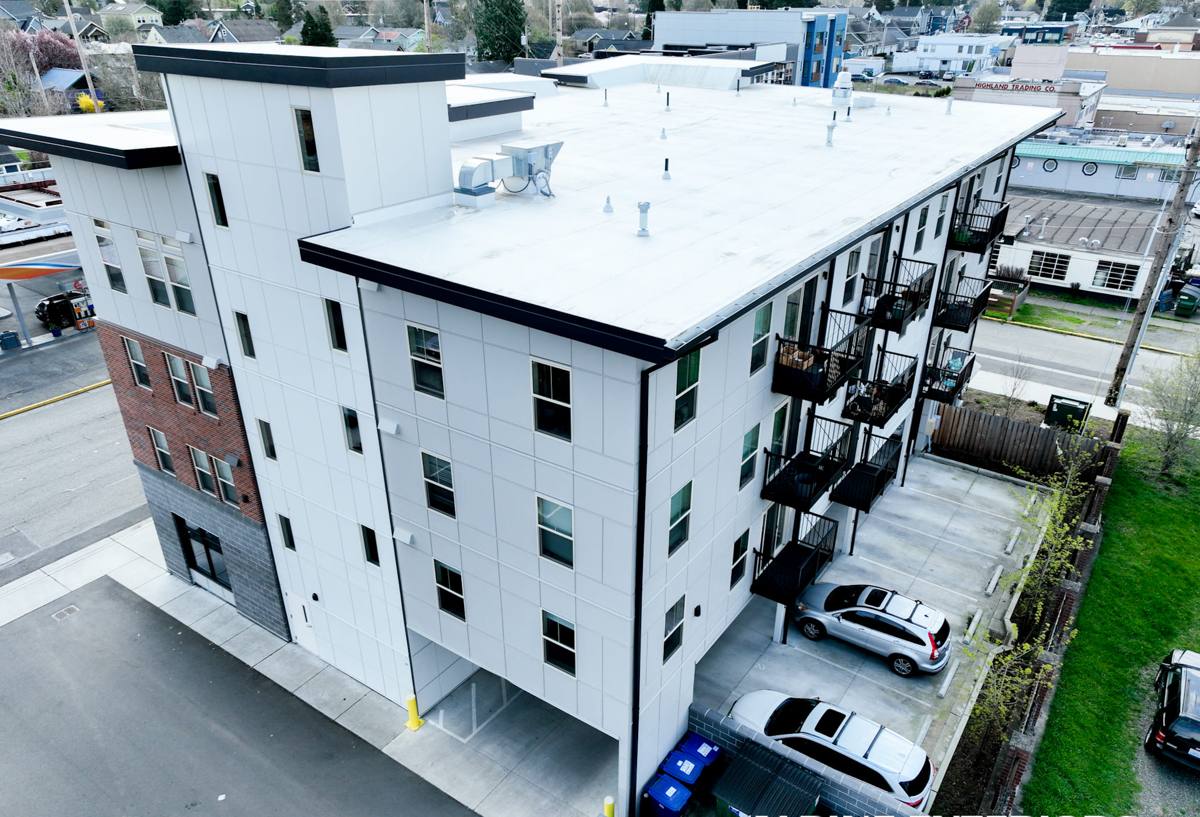
What Constant Moisture and Salt Air Do to the Wrong Siding
Salt Air and Fastener Corrosion
Salt-laden coastal air accelerates corrosion on anything metal — fasteners, flashing, trim edges. Cheap or mismatched fasteners can start rusting years before the siding itself shows any wear, and a rusting fastener head is a slow leak waiting to happen. This is a detail that's invisible from the ground and easy for a crew unfamiliar with coastal installs to overlook.
Driving Rain and Wind-Driven Water
Bellingham's winter storms don't just fall — they push water horizontally into wall assemblies, especially on exposed elevations facing the water or open terrain. Siding systems depend on lap sequencing, flashing, and drainage gaps to shed that water back out. Skip any one of those details and water finds its way behind the cladding, where it can sit against sheathing for weeks between dry spells.
Moss, Algae, and Shaded Lots
Tree cover is part of what makes Puget attractive, but shaded, damp siding is exactly what moss and algae need to take hold. On porous or poorly finished siding, that growth digs into the surface over time and becomes a maintenance headache instead of something you can rinse off. A dense, factory-cured finish resists that growth far longer than a field-painted or unfinished surface.
Why We Install Only James Hardie Fiber Cement Here
We standardized on James Hardie fiber cement for every siding job we do, including in Puget, and we don't install vinyl, LP SmartSide, Cemplank, Allura, or bare wood siding. That's not a marketing position — it's what we've found holds up correctly, for the long haul, in this exact climate.
A Non-Combustible, Moisture-Stable Core
Fiber cement is made from cellulose fiber, sand, and Portland cement, cured into a dense, non-combustible panel. It doesn't absorb and release moisture the way wood-based products do, so it isn't prone to the swelling, delaminating, or fastener-pull that shows up on organic-core siding after repeated wet-dry cycles — exactly the cycle Puget goes through most of the year.
ColorPlus Factory Finish vs. Field-Applied Paint
James Hardie's ColorPlus finish is baked on in a controlled factory environment, coat after coat, rather than rolled or sprayed on-site. That gives it better adhesion and UV stability than field-applied paint, which matters in a climate where the finish is constantly wet, then drying, then wet again. It also holds up better against the mildew and algae staining that shaded, damp lots are prone to.
HZ5 Engineering for Western Washington
James Hardie engineers its products by climate zone. Western Washington falls in the HZ5 zone, built for regions that see freeze-thaw cycles and sustained moisture rather than extreme heat or humidity. That's a meaningful difference from a one-size-fits-all siding product — the formulation is matched to what this specific climate actually throws at a house.
What a Correct Installation Actually Involves
The product only performs as well as the install. Most siding failures we get called out to inspect aren't a material problem — they're a flashing, fastening, or clearance problem that let water in behind a perfectly good panel.
Flashing and Water Management Details
Every window, door, deck ledger, and roof-to-wall transition needs flashing that's sequenced correctly — installed so water is always directed out and down, never trapped behind the siding. This is the single most common place we find corners cut on prior installs.
Fastening, Clearances, and Gaps
Fiber cement needs to be fastened per manufacturer spec, kept clear of grade, roofing, and decking by the required distance, and given expansion gaps at butt joints and trim. Skipping these clearances is one of the fastest ways to trap moisture against the bottom edge of a panel.
Rainscreen Drainage for Wet Climates
In a climate as wet as this one, a drainage gap behind the siding — sometimes called a rainscreen — gives any incidental moisture a way to escape instead of sitting against the water-resistive barrier. It's not always required by code, but it's a detail worth discussing on Puget homes, especially on rain-exposed elevations.
Comparing Siding Options for a Puget Home
| Factor | James Hardie Fiber Cement | Vinyl | LP SmartSide | Cedar |
|---|---|---|---|---|
| Moisture behavior in a wet climate | Stable, non-organic core | Doesn't absorb, but seams and gaps leak | Engineered wood, sensitive to sustained moisture | Absorbs and releases moisture constantly |
| Fire resistance | Non-combustible | Melts/deforms under heat | Combustible | Combustible |
| Finish longevity | Factory ColorPlus, long service life | Color molded in, can fade/chalk | Field or factory paint, needs upkeep | Needs regular refinishing |
| Resistance to moss/algae staining | Dense finish resists growth | Moderate | Moderate, wood substrate is vulnerable | Low, porous surface |
| Typical maintenance | Occasional gentle wash | Low, but brittle over time | Regular inspection and repainting | Frequent refinishing and sealing |
Our Process for Puget Siding Projects
Every job follows the same basic sequence, adjusted for the specific home:
- On-site assessment of existing siding, trim, and any signs of moisture intrusion or rot in the sheathing
- Review of flashing points at windows, doors, and roof transitions before any new siding goes on
- Removal of old siding and repair of any damaged sheathing or framing found underneath
- Installation of water-resistive barrier and flashing per manufacturer detailing
- Fastening and clearance work following James Hardie's published installation instructions
- Trim, corner, and joint finishing for a clean, weather-tight appearance
- Final walkthrough so you understand what was done and why
We don't skip the tear-off inspection step, even when the existing siding looks fine from the outside. In a climate this wet, hidden moisture damage behind old siding is common enough that we'd rather find it and fix it than cover it up.
What Affects the Cost of a Fiber Cement Project in This Area
Every Puget home is different, so we don't quote off a flat rate. A few things consistently move the number:
| Cost Factor | Why It Matters |
|---|---|
| Home size and number of stories | More surface area and access complexity add labor time |
| Condition of the existing wall assembly | Moisture or rot found during tear-off adds repair work before new siding goes on |
| Trim and detailing | Homes with more corners, windows, and architectural trim take longer to finish cleanly |
| Panel profile and finish choice | Lap width, texture, and color selection affect material cost |
| Site access and exposure | Tight lots, tree cover, or steep grades can slow staging and installation |
We walk through all of this in person before giving you a number, so the estimate reflects your actual house, not a generic average.
Why Hiring a Crew That Already Works Puget Matters
A contractor who regularly works this part of Bellingham already knows where water tends to collect on these lots, which elevations take the worst of the driving rain, and how much shade and moss exposure a given property typically deals with. That local pattern recognition shows up in small decisions — where to add extra flashing attention, which details to double-check, how to sequence a job around Whatcom County's weather windows — that a crew unfamiliar with the area might not think to make. It also means the work is done by people who understand James Hardie's installation requirements well enough to get warranty coverage right, not just get siding on the wall.
If you're weighing a siding replacement or repair on a Puget-area home, we're happy to take a look and talk through what your house actually needs. Reach out for a free, no-pressure estimate using the form below.