 Bellingham Siding
 Roofing in Puget Means Building for Salt Air, Rain, and Moss — Not Just Shingles
Homes in the Puget area near Bellingham sit close enough to the water and under enough tree cover that a roof here works harder than a roof almost anywhere inland. Salt-laden air off the Sound accelerates corrosion on fasteners, flashing, and metal components. Driving rain off Whatcom County's frequent fall and winter storms tests every seam, valley, and penetration on a roof, not just the shingles themselves. And the long, wet moss season here — often eight months or more of favorable growing conditions — means organic growth is a near-guarantee on any roof that isn't detailed and maintained with that in mind.
A new roof installation done right in Puget isn't just "put shingles on a house." It's a system built specifically to handle these three stressors together, because they compound. Trapped moisture feeds moss. Moss holds moisture against the roofing material. Corroded fasteners loosen under wind-driven rain. Each weak point makes the others worse. That's the lens we bring to every new roof we install in this area.
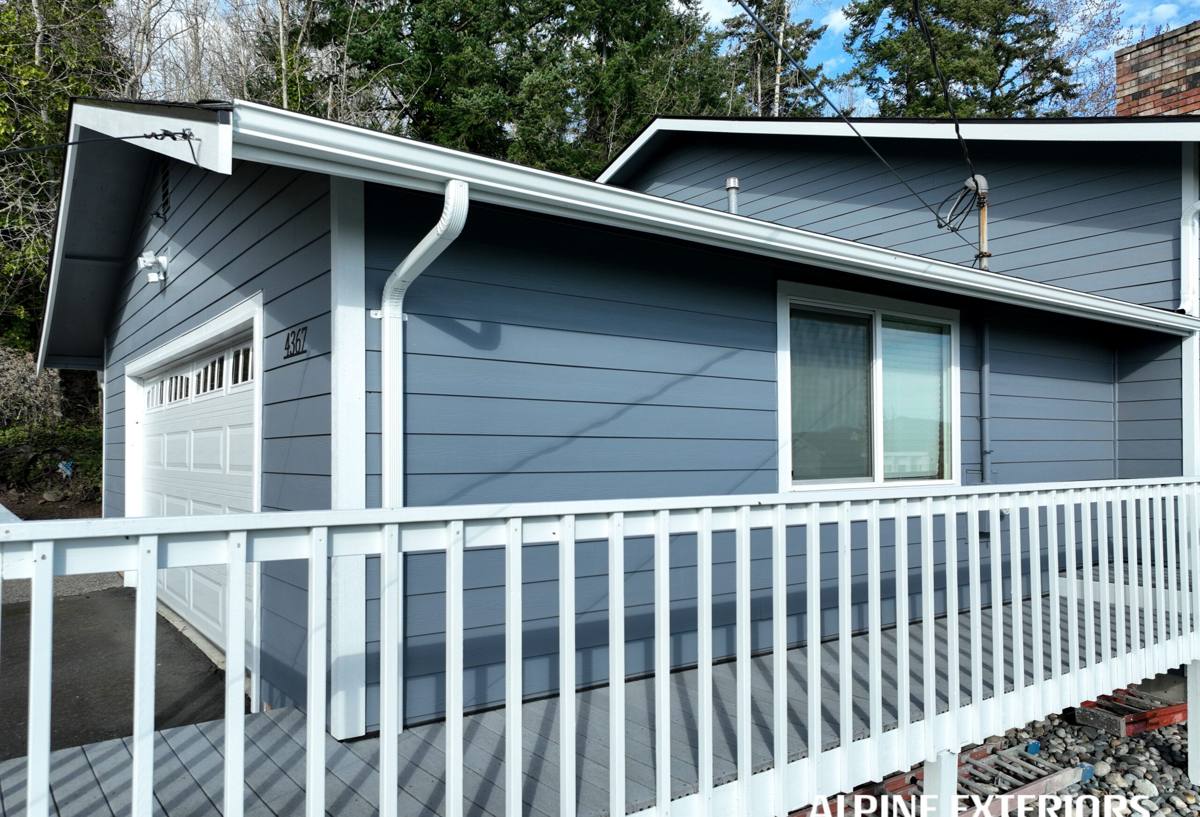
Signs a Puget Home May Need a New Roof, Not Another Repair
Roofs in this climate rarely fail all at once — they wear down gradually, and homeowners often patch symptoms for a few years before facing the real issue. Watch for these signs:
- Shingles that are cupping, curling at the edges, or missing granules in patches
- Thick moss mats, especially on north-facing slopes that stay shaded and damp longer
- Dark streaking or algae staining across large sections of the roof
- Soft spots or sagging when walked on, which often means the decking underneath has taken on moisture
- Daylight visible through the attic roof boards, or damp insulation after a storm
- Rusted or lifting flashing around chimneys, skylights, and roof-to-wall transitions
- Interior ceiling stains that reappear after every heavy rain, even after past patch repairs
- A roof approaching or past 20–25 years old for asphalt composition, or showing widespread wear regardless of age
Any one of these can sometimes be handled with a targeted repair. Several together, especially on an older roof, usually means the underlying materials and moisture protection are wearing out faster than the visible shingles suggest.
What a Correct New Roof Installation Actually Involves
It's Not Just the Top Layer
A new roof is really a stack of components working together, and skipping or under-building any one of them is where most premature failures come from in this climate:
- Full tear-off down to the decking, so we can actually see and address what's underneath instead of layering over hidden problems
- Deck inspection and repair, replacing any plywood or sheathing that's gone soft or delaminated from long-term moisture exposure
- Ice and water shield at eaves, valleys, and penetrations — the areas most exposed to driving rain and ponding
- A synthetic or high-quality underlayment across the full roof as a secondary moisture barrier
- Properly lapped and sealed flashing at every chimney, vent, skylight, and wall transition
- Balanced intake and exhaust ventilation so the attic can actually dry out between storms
- The finish roofing material itself, installed to manufacturer spec and correct nailing pattern — not just "close enough"
In our experience, the roofs that fail early in Whatcom County almost never fail because the shingles themselves were bad. They fail because flashing was reused, ventilation was skipped to save a step, or underlayment coverage was thin in the areas that see the most water.
Choosing a Roofing Material for Puget's Conditions
There's no single "best" roofing material for every home — it depends on your roof's pitch, sun exposure, tree cover, and budget. Here's how the common options actually perform in a coastal, moss-prone climate like ours:
| Material | Moss & Moisture Resistance | Typical Lifespan Here | Maintenance Reality |
|---|---|---|---|
| Architectural asphalt shingle | Good with proper ventilation; algae-resistant granules help | 20–30 years | Periodic soft-wash and gutter clearing recommended |
| 3-tab asphalt shingle | Fair; thinner profile sheds less debris naturally | 15–20 years | More frequent moss monitoring needed |
| Standing seam metal | Excellent; smooth surface discourages moss buildup | 40–50+ years | Low, but fastener and coastal corrosion resistance matter |
| Cedar shake | Requires diligent upkeep; naturally moisture-absorbent | 20–30 years with maintenance | Highest maintenance burden in wet, shaded settings |
We don't steer homeowners away from any of these outright — each has a place. But we're honest about trade-offs. Cedar shake, for example, looks great and has real advantages, but in a shaded, damp Puget lot it demands a maintenance commitment that a lot of homeowners underestimate going in. Metal costs more up front but effectively removes moss as an ongoing battle. Asphalt remains the practical middle ground for most homes when it's installed with real attention to ventilation and flashing detail.
Our New Roof Installation Process
How We Approach Every Project in the Puget Area
- On-site assessment. We inspect the existing roof, decking condition, attic ventilation, and any problem areas — chimneys, valleys, skylights — before quoting anything.
- Written scope and material selection. You know exactly what's being torn off, what's being replaced, and what materials and warranty apply before work starts.
- Protection of the property. Landscaping, siding, and gutters are protected during tear-off; debris is contained and hauled off daily where possible.
- Tear-off and deck inspection. We don't install over old roofing, and we don't guess at deck condition — soft or damaged sheathing gets replaced, not covered.
- Moisture barrier and flashing installation. Ice and water shield, underlayment, and new flashing go in before a single finish shingle or panel is placed.
- Ventilation correction. If intake or exhaust airflow is inadequate — common on older Whatcom County homes — we address it as part of the install, not as an afterthought.
- Finish material installation to manufacturer specification, including correct fastening patterns for our wind and rain exposure.
- Final walkthrough so you can see the completed work and ask questions before we consider the job done.
Ventilation and Moisture Control: The Part Homeowners Don't See
A new roof can look perfect from the ground and still be set up to fail early if the attic underneath can't breathe. In our climate, poor ventilation traps warm, moist air against the underside of the decking, which accelerates rot and gives moss and algae a head start from the inside out. Balanced ventilation — enough intake at the eaves and exhaust at the ridge — keeps that space closer to outdoor temperature and humidity, which extends the life of everything above it.
This is one of the most common gaps we find when replacing older roofs in the Puget area: homes built decades ago often have exhaust vents but little to no intake, or vents that have been painted over or blocked by insulation over the years. Correcting this during a re-roof is far cheaper and less disruptive than doing it as a standalone project later.
Permits, Timeline, and What to Expect During the Job
Most residential roof replacements in Whatcom County require a building permit, which we handle as part of the project. Typical timelines depend on roof size, pitch, and material, but a standard single-family home re-roof usually takes a few days of active work, weather permitting. Because Bellingham gets genuine rain windows even outside the wettest months, we plan installation timing around forecasts to avoid exposing your decking to open weather.
During the job, expect noise, some vibration inside the house, and crews on-site for the full workday. We keep the yard and driveway as clear of debris as possible throughout, not just at the end.
What Affects the Cost of a New Roof in the Puget Area
Roofing costs vary widely based on real, specific factors rather than a flat per-square rate. The main drivers we see on local jobs:
| Factor | Why It Matters |
|---|---|
| Roof size and pitch | Steeper roofs take longer and require more safety setup |
| Number of layers to remove | Tear-off labor increases with each existing layer |
| Deck condition | Rotted sheathing found during tear-off adds material and labor |
| Material choice | Asphalt, metal, and cedar carry very different material costs |
| Roof complexity | Valleys, dormers, chimneys, and skylights all add flashing work |
| Ventilation corrections | Adding or upgrading intake/exhaust vents adds scope but pays off long-term |
We give exact numbers only after seeing your roof in person — anyone quoting a firm price over the phone for a home they haven't inspected is skipping information that matters.
Why Hire a Crew That Already Works in Puget and Bellingham
A roofer who mainly works drier inland climates can still do competent work, but they're often calibrating decisions — ventilation ratios, underlayment coverage, moss-resistant detailing — around conditions that don't match what a roof in this part of Whatcom County actually faces year-round. A crew that regularly works Puget and the surrounding Bellingham area already knows which roof orientations hold moss longest, which flashing details fail first under our driving rain, and how to sequence a tear-off around our weather instead of getting caught by it mid-project.
That local familiarity shows up in fewer callbacks, not in flashy claims — it's the difference between a roof that's built to code and one that's built for the specific weather it will actually sit under for the next two or three decades.
If you're weighing a repair against a full replacement, or just want an honest read on where your current roof stands, we're happy to take a look. Fill out the form below for a free, no-pressure estimate.