 Bellingham Siding
 Window Replacement Built for the Puget Neighborhood's Weather
Homes in and around Puget deal with a specific combination of conditions: salt-laden air off the water, long stretches of driving rain, and a moss season that can run for months. None of that is dramatic on its own, but stacked together year after year, it's exactly the kind of exposure that finds every weak point in a window installation. A window that was installed correctly ten years ago in a drier inland climate might still be fine today. A window installed with shortcuts in a Puget-area home usually isn't.
This page is about one service in one area: replacing windows on homes in the Puget part of Bellingham, Washington, in Whatcom County. We're not going to give you a generic national rundown on window types. We're going to talk about what actually matters here — what the local climate does to windows, what a correct replacement job looks like in response, and why it's worth hiring a crew that already knows this neighborhood rather than learning it on your project.
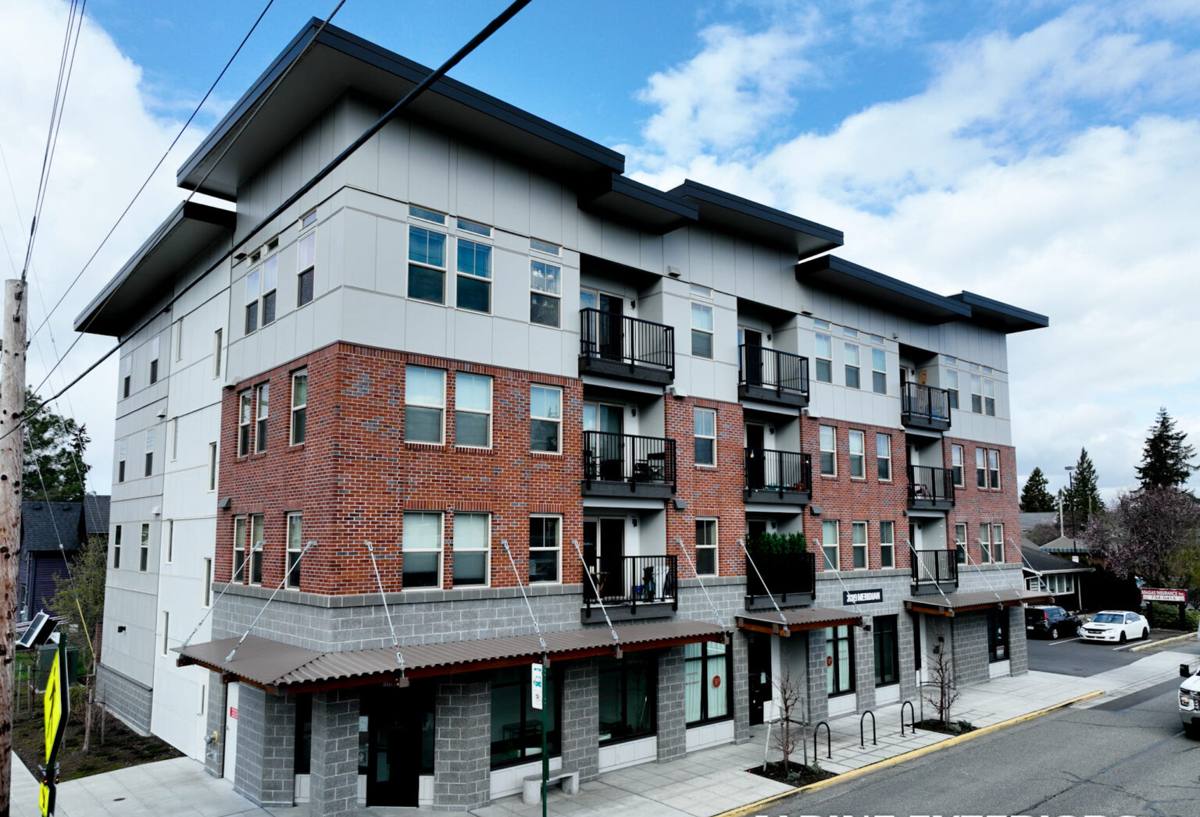
What Salt Air, Rain, and Moss Actually Do to a Window
Each of these three factors attacks a window in a different way, and a good installer has to account for all three at once.
Salt Air
Airborne salt accelerates corrosion on exposed metal — hinges, cranks, screws, and especially lower-grade aluminum components. It also breaks down certain sealants and finishes faster than they'd wear in a non-coastal climate. This matters most for hardware selection and for how exposed fasteners and trim pieces are treated during installation.
Driving Rain
Bellingham doesn't just get a lot of rain — a good share of it comes in sideways during storms, which means it hits window assemblies at odd angles instead of running straight down and off. That kind of wind-driven rain will find any gap in flashing, any missed bead of sealant, or any sloppy sill detail. Water doesn't need a big opening to get in; it needs a path, and driving rain creates more paths than vertical rain does.
Moss and Sustained Dampness
A long moss season means extended periods where surfaces around a window — siding, trim, sills — stay damp rather than drying out between rain events. Moss and algae growth right up against window trim keeps that trim wet longer, which speeds up rot in wood components and creates a steady source of moisture pressure against the window opening itself.
None of this means Puget homes need exotic products. It means the installation details — flashing sequence, sealant choice, drainage path, hardware grade — have to be treated as essential, not optional.
Signs a Puget Home's Windows Need Attention
Homeowners often wait for a window to be obviously broken before calling anyone. In this climate, the more useful signals show up earlier and are easier to miss.
- Condensation forming between the panes of a double-pane window (a failed seal, not a cleaning issue)
- Soft or discolored trim or sill wood, especially on north- and west-facing walls that catch more driving rain
- Moss or dark streaking building up directly below or beside a window frame
- Windows that feel drafty even when fully latched, or that whistle in wind
- Difficulty opening, closing, or locking — often corrosion or swelling, not just age
- Visible gaps between the window frame and siding or trim
- A noticeable jump in heating costs without any other explanation
- Paint or finish failing faster around the windows than on the rest of the siding
Any one of these can be minor. Several at once, especially on the same wall, usually points to water getting past the original installation, not just an old window.
What a Correct Window Replacement Job Involves
Window replacement has a bad reputation in some circles because it's genuinely easy to do poorly and have it look fine for a year or two before problems show up. The window itself is often not the weak point — the installation is. Here's what we treat as non-negotiable.
Removal Without Collateral Damage
Old windows come out carefully enough to expose the full opening, including the sill and surrounding framing, so we can actually see what's there instead of covering up an existing problem with a new window.
Checking for Hidden Rot or Water Damage
In a climate with this much sustained moisture exposure, it's common to find some degree of rot or water staining in the framing or sheathing around an old window, especially one that's been leaking slowly for years. This gets addressed before the new window goes in — installing a new window into a compromised opening just resets the clock on the same problem.
Flashing and Drainage Path
This is the single most important detail for driving rain. Flashing has to be layered correctly — sill pan first, then side flashing, then head flashing — so that any water that does get behind the surface has a clear path back out, rather than pooling against wood framing. This is also where sequencing with the surrounding siding and building paper matters; a window installed out of order with its water-resistive barrier can leak even if the window itself is high quality.
Sealant and Fastener Choice
Given the salt air, we favor corrosion-resistant fasteners and sealants rated for sustained exposure rather than whatever is cheapest. This is a small cost difference during installation and a significant difference in how the window performs a decade later.
Air Sealing and Insulation
The gap between the new window frame and the rough opening needs to be sealed and insulated properly — not just stuffed with fiberglass, which can settle and leave gaps. This affects both drafts and long-term moisture control inside the wall cavity.
Frame Material Considerations for This Climate
There's no single "best" window material for every home — it depends on budget, the home's style, and how exposed a particular wall is. Here's how the common options hold up under salt air, driving rain, and a long damp season specifically.
| Frame Material | Salt Air Behavior | Moisture Behavior | Maintenance |
|---|---|---|---|
| Vinyl | Doesn't corrode; hardware is the exposed part | Handles sustained dampness well; no rot risk | Low — occasional cleaning |
| Fiberglass | Very stable, resists corrosion and expansion | Excellent; dimensionally stable in wet-dry cycles | Low |
| Wood or wood-clad | Cladding protects wood if fully intact | Vulnerable if cladding or finish fails; needs prompt attention | Higher — finish upkeep and inspection |
| Aluminum (uncoated or low-grade) | Prone to corrosion and pitting near salt air over time | Can conduct condensation without thermal breaks | Moderate to high |
We don't rule out wood or wood-clad windows for Puget-area homes — plenty of homeowners want that look and are willing to keep up with the maintenance. But we're upfront that it's a higher-maintenance choice in this climate, and we'll say so before you buy rather than after.
What Drives the Cost of a Window Replacement Here
We don't publish blanket prices because the real cost depends on the specifics of your home, but these are the factors that consistently move the number up or down.
| Factor | Why It Matters |
|---|---|
| Hidden rot or water damage | Framing repair is common in older Puget-area homes and adds labor beyond the window itself |
| Window count and size | Larger openings and specialty shapes take more time and custom flashing work |
| Frame material chosen | Vinyl, fiberglass, and wood-clad options carry different material costs |
| Full-frame vs. insert replacement | Full-frame replacement addresses the flashing and sill directly; inserts are faster but can't fix an existing water problem |
| Access and building height | Second-story or hard-to-reach windows take longer and may need staging |
How Our Process Works
1. On-Site Assessment
We look at each window from both outside and in, note any signs of past water intrusion, and check the condition of the surrounding trim and siding — not just the glass and frame.
2. Honest Recommendation
We'll tell you which windows genuinely need full replacement, which could reasonably wait, and where we found something that needs repair regardless of whether you replace the window. If insert replacement is a reasonable option for a given opening, we'll say so instead of defaulting to the more expensive job.
3. Written Estimate
You get a clear estimate broken down by scope, not a single lump number, so you can see what you're paying for.
4. Installation
Removal, any needed repair, flashing, window setting, insulation, and sealing — done in that order, with attention to the details that matter for driving rain and sustained dampness specifically.
5. Cleanup and Walkthrough
We walk each finished window with you — operation, locking, and how it looks from both sides — before we consider the job done.
Why a Crew That Already Works Puget Matters
A window installer who mostly works drier inland projects isn't necessarily doing anything wrong technically — but they may not default to the flashing sequencing, sealant grades, and hardware choices that matter most where salt air and wind-driven rain are a constant rather than an occasional event. A crew that regularly works the Puget area and greater Bellingham has already seen how homes here age, where water tends to find its way in on local wall assemblies, and which shortcuts show up as callbacks two or three winters later. That's not a marketing distinction — it shows up in fewer leaks and less repeat work.
Living With Your Windows After Installation
A correct installation dramatically reduces future problems, but a little homeowner attention goes a long way in this climate:
- Rinse salt residue off exterior frames and hardware periodically, especially after storms
- Keep gutters and downspouts clear so water isn't sheeting down over window trim
- Trim back vegetation that's holding moisture or shade directly against a window opening
- Check exterior caulk lines once a year and have any cracking addressed before the next wet season
- Remove moss or algae buildup on trim promptly rather than letting it sit against the wood or siding
If you're noticing drafts, condensation between panes, soft trim, or moss building up around your windows, it's worth having them looked at before another wet season passes. We're happy to come out, take a straightforward look, and give you a free, no-pressure estimate — no obligation, just an honest read on where things stand.