 Bellingham Siding
 Why Ferndale Roofs Wear Out Differently Than Roofs Inland
Ferndale sits close enough to the water and open farmland that roofs here take a different kind of beating than a roof twenty miles inland. The salt-laden air drifting off Bellingham Bay and the Strait works into fasteners, flashing, and granule surfaces over time. Add the driving, wind-pushed rain that comes through Whatcom County most of the fall and winter, plus a moss season that can run eight months or longer under our tree cover and cloud ceiling, and you get a roof that's dealing with three separate stressors at once instead of one.
None of that means Ferndale roofs fail faster than they should — it means they need to be built and maintained with those specific conditions in mind. A roof spec'd for a dry inland climate, installed without regard for wind-driven moisture or moss growth, will underperform here even if every shingle is nailed correctly. That's the gap we try to close on every replacement.
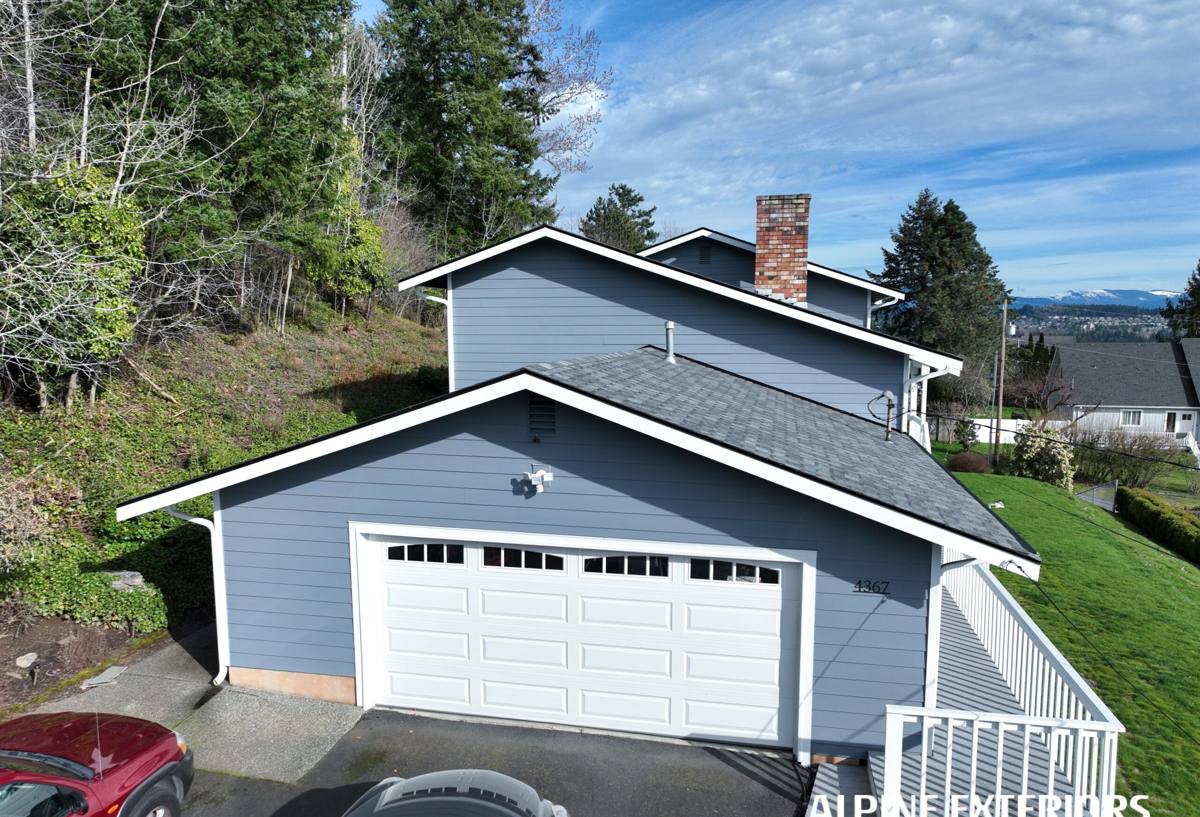
Signs a Ferndale Roof Needs Replacing, Not Just Patching
Not every roof problem calls for a full tear-off. But there's a point where patching becomes a way of spending money without solving anything. Here's how we tell the difference:
- Granule loss heavy enough that you can see bare, shiny patches on multiple slopes, not just one weathered area
- Shingles that are cupping, curling at the edges, or cracking when you press on them lightly
- Moss that has worked its way under shingle tabs rather than just sitting on the surface
- Soft or spongy spots in the decking, usually found from the attic side as dark staining or sagging
- Repeated leaks in different locations each season, rather than one isolated spot
- A roof that's already had two or more patch repairs in the last few years
If a roof only shows one of these signs in one location, a repair is often the honest answer. When several show up together, replacement usually costs less over a five-year horizon than continuing to chase leaks.
What a Correct Roof Replacement Actually Includes
"Roof replacement" gets used loosely in this trade, and it's worth being specific about what should happen on a job that's done right, especially in a climate that punishes shortcuts.
Full Tear-Off, Not Overlay
We remove the old roofing down to the deck rather than layering new shingles over old. An overlay hides problems instead of fixing them, and it traps moisture between layers — a real liability with the amount of driving rain Whatcom County sees.
Deck Inspection and Repair
Once the old material is off, we check the sheathing for soft spots, delamination, and old fastener damage. Any bad sections get replaced before anything new goes down. Skipping this step is one of the most common ways a "new roof" ends up leaking within a couple of years.
Ice and Water Shield at Vulnerable Points
Eaves, valleys, and areas around chimneys or skylights get a self-adhering waterproof membrane underneath the primary underlayment. These are the spots where wind-driven rain most often finds a way in, and they're worth the extra material cost.
Correct Flashing
Flashing around chimneys, walls, vents, and valleys is one of the highest-leak-risk parts of any roof and one of the most commonly rushed. We use new flashing rather than reusing old pieces, and we detail it so water sheds away from the house rather than pooling or wicking sideways under salt-air corrosion.
Balanced Ventilation
Intake at the eaves and exhaust at the ridge, sized to actually move air through the attic. This matters as much for moss and moisture control as the roofing material itself, which we cover below.
Choosing a Roofing Material for This Climate
There's no single "best" roofing product — the right choice depends on your budget, your roof's slope and exposure, and how much long-term maintenance you're willing to take on. Here's how the common options stack up for a coastal Whatcom County property like a Ferndale home:
| Material | Moss Resistance | Salt Air / Coastal Durability | Typical Lifespan | Maintenance Load |
|---|---|---|---|---|
| Architectural asphalt shingle | Moderate — improves with algae-resistant granules | Good with quality fasteners and flashing | 25–30 years | Low to moderate; periodic moss treatment recommended |
| Standing seam metal | Very good — moss struggles to grip smooth panels | Very good with coated, corrosion-resistant panels | 40–50+ years | Low |
| Cedar shake | Poor without regular treatment | Fair — needs diligent upkeep near salt air | 20–30 years with maintenance | High |
| Synthetic composite shingle | Good | Good | 30–50 years | Low |
Cedar shake can look great on the right home, but we're upfront with clients about the tradeoff: it needs consistent cleaning and treatment to hold up against moss and moisture in this climate, and skipping that maintenance shortens its life significantly. That's not a knock on the material — it's just a maintenance commitment worth going in with eyes open about. For most Ferndale homeowners who want a lower-maintenance long-term roof, architectural asphalt with algae-resistant granules or standing seam metal tends to be the more practical call.
Ventilation and Moisture Control Matter as Much as the Shingles
A roof can be installed with premium materials and still underperform if the attic underneath it isn't ventilating correctly. Poor airflow traps warm, moist air against the underside of the deck, which accelerates moss growth from the outside and can lead to rot and mold from the inside. In a climate with as much cloud cover and rainfall as we get here, that trapped moisture doesn't get a chance to dry out the way it might in a drier region.
On every replacement, we look at existing intake and exhaust ventilation and correct it if it's undersized or unbalanced — this is often a five-minute fix during a tear-off that gets skipped entirely on rush jobs, and it's one of the more consequential details for long-term roof health.
Our Replacement Process, Start to Finish
- On-site inspection. We walk the roof (and the attic, where accessible) to assess deck condition, ventilation, flashing points, and overall scope before quoting anything.
- Written estimate. A clear breakdown of material options, scope, and cost — no vague allowances that turn into surprise change orders.
- Material selection. We walk through the tradeoffs above so you're choosing based on your priorities, not a sales script.
- Scheduling around weather. We plan tear-off days with the forecast in mind and stage materials to minimize how long a deck sits exposed.
- Tear-off and deck repair. Old roofing removed, deck inspected and repaired as needed.
- Underlayment, flashing, and ventilation correction. The parts of the job that don't show but determine whether the roof actually performs.
- Installation. Material installed to manufacturer spec, which is also what keeps the manufacturer's warranty valid.
- Cleanup and final walkthrough. Site cleared, debris and old material hauled off, and a walkthrough so you know exactly what was done.
Moss Prevention and Ongoing Roof Care
A new roof still needs some upkeep to get its full expected life out of it, especially under Whatcom County tree cover. A little routine attention goes a long way:
- Keep gutters and valleys clear of needles and debris, especially heading into fall
- Trim back overhanging branches to reduce shade and debris buildup, which both encourage moss
- Have moss growth treated before it works under shingle tabs, not after
- Check attic ventilation isn't blocked by insulation or storage
- Schedule a visual roof check every year or two, particularly after a hard windstorm
None of this requires climbing on the roof yourself — most of it can be handled from the ground or during a brief professional check-in.
Permits and What to Expect During the Project
Roof replacements in Whatcom County typically require a building permit, and we handle that process as part of the job rather than leaving it on the homeowner. Most straightforward residential tear-off-and-replace jobs move quickly once work starts — often completed within a few days for an average-sized roof, weather permitting. We'll give you a realistic timeline specific to your roof's size and complexity before work begins, not a generic estimate.
Why Hiring a Crew That Already Works Ferndale Matters
A roofing crew that mainly works dry, inland climates will still know how to install a shingle correctly — but they won't necessarily default to the ventilation balance, flashing details, and material choices that matter most for a home dealing with salt air and a long wet season. A crew that regularly works Ferndale and the surrounding Bellingham area already knows which details to prioritize, which manufacturers' products actually hold up locally, and how to schedule around our weather instead of getting caught by it mid-project.
That local familiarity also means faster, more accurate estimates. We're not guessing at how your roof will behave in this climate — we've seen how similar roofs on similar homes in this area have held up over time, and that shapes the recommendations we make.
If your roof is showing wear or you just want an honest read on how much life it has left, we're happy to take a look. Reach out for a free, no-pressure estimate using the form below.