 Bellingham Siding
 Building a Deck That Actually Holds Up in Sehome
A deck in Sehome lives outside year-round in a climate that doesn't give wood or composite decking much of a break. Salt air moving in off the Salish Sea, rain that comes in sideways more often than straight down, and a moss season that can run most of the year on shaded ground all put steady pressure on a structure that's already exposed to full weather with no siding, roof, or wall assembly protecting it. Sehome's mix of older lots close to Sehome Hill and flatter infill closer to downtown means grading and shade vary a lot from property to property, which changes how much moisture a given deck actually deals with.
We build decks throughout Bellingham, including Sehome, and we treat deck construction as its own discipline rather than a smaller version of siding or roofing work. The framing, fastening, and drainage details that keep a deck solid and safe in this climate are specific to decks, and getting them right the first time is what separates a structure that lasts decades from one that starts needing repairs within five or six years.
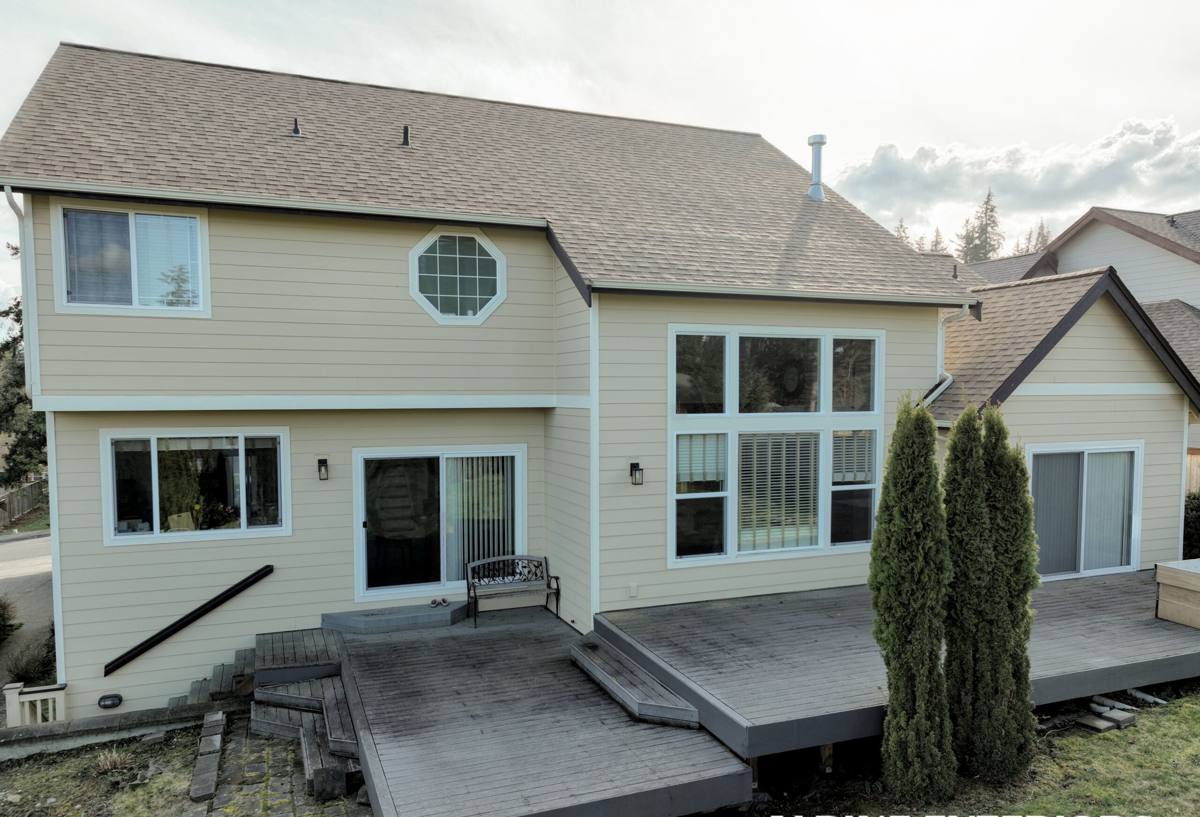
What Sehome's Climate Actually Does to a Deck
Salt Air and Fastener Corrosion
Every deck is held together by hundreds of fasteners, hangers, and structural connectors, and in a salt-air environment, the grade of that hardware matters more than most homeowners realize. Standard galvanized fasteners can corrode faster here than they would inland, and once a joist hanger or ledger bolt starts rusting, it's losing holding strength in a part of the structure you can't see without pulling decking boards. We spec corrosion-resistant, code-rated hardware for that reason, not because it looks better, but because it's the piece of the deck that actually keeps it standing.
Driving Rain and Standing Water
Wind-driven rain doesn't just fall on a deck surface, it gets pushed into board gaps, around post bases, and against the house at the ledger connection. That ledger connection, where the deck attaches to the house, is one of the most common failure points in decks built in wet climates, because water that isn't flashed and diverted properly works its way behind the ledger board and into the house's rim joist over time. On a sloped Sehome lot, grading can also send more water toward post footings than a flat lot would, which is worth accounting for at the design stage rather than discovering after the fact.
Moss, Shade, and Slick Surfaces
Shaded decks under tree cover or on the north side of a house stay damp for extended stretches through fall, winter, and much of spring, which is exactly the condition moss and algae need to take hold. Beyond the cosmetic green film, a mossy deck surface is a real slip hazard on stairs and walking paths, and sustained dampness against wood decking accelerates rot at board ends, around fastener holes, and anywhere water can pool instead of shed.
What a Deck Actually Needs to Handle This Climate
A deck that holds up in Sehome isn't built differently in some dramatic way, it's built with more attention to the details that matter in a wet, salty climate and less tolerance for shortcuts that might get away with it in a drier region.
- Corrosion-resistant, code-rated joist hangers, ledger bolts, and structural screws throughout, not just at visible connections
- Properly flashed ledger board with flashing tape and a drip edge that directs water away from the house rim joist
- Post footings sized and set below frost depth with drainage considered for the specific lot's grading
- Consistent board gapping for drainage and airflow underneath the decking surface
- Joist tape or a comparable moisture barrier on top of framing members to slow rot at the fastener points where water collects
- A decking material chosen with this specific climate in mind, not just upfront cost
Decking Material Options and How They Handle This Climate
The decking surface itself gets the most attention from homeowners, and it's worth being honest about how different materials actually perform here rather than just listing what's available.
| Material | How It Handles Salt, Rain, and Moss | Maintenance Burden |
|---|---|---|
| Pressure-treated lumber | Resists rot reasonably well when properly maintained, but can cup, check, and hold moisture at fastener points over time | Needs regular sealing or staining, typically every one to three years |
| Cedar | Naturally moisture- and insect-resistant, but the surface finish still weathers and can gray or absorb water without upkeep | Regular sealing or oiling needed to maintain both appearance and water resistance |
| Composite decking | Doesn't absorb water the way wood does and resists rot at fastener points, though lower-grade composites can still trap moisture against framing if gapping isn't correct | Occasional cleaning to prevent moss and algae film, no sealing or staining required |
| PVC decking | Fully resists moisture absorption and won't rot, though surface can still get slick with moss film in shaded, damp conditions | Lowest ongoing maintenance of the common options, periodic cleaning only |
There isn't a single correct answer for every property. A sunny, well-drained lot can get a long service life out of a properly maintained wood deck, while a shaded, sloped lot in a wetter pocket of Sehome often does better with a composite or PVC surface that doesn't depend on the homeowner keeping up with a sealing schedule. We'll walk through the actual conditions on your property before recommending a material rather than defaulting to whatever is easiest to sell.
Our Deck Building Process
1. On-Site Assessment
We start by looking at the actual site: grading, drainage, sun and shade exposure, proximity to the house, and how the deck will be used. On a Sehome property near Sehome Hill's slope, that assessment often includes how water currently moves across the lot, since that affects both footing placement and how aggressively we need to manage drainage under the finished deck.
2. Design and Permitting
Deck size, height, and structural requirements determine what permitting is needed through the City of Bellingham. We handle the permit process and design the structure to meet current code requirements for footings, framing spans, guardrails, and stair geometry, not just to what was acceptable when an older deck on the same lot was originally built.
3. Framing and Structural Work
This is where the corrosion-resistant hardware, proper ledger flashing, and correctly sized footings all come together. Framing is the part of a deck nobody sees once it's finished, and it's also the part that determines whether the deck is still solid in fifteen years or starting to show soft spots and movement in five.
4. Decking, Railing, and Finish Work
Once the structure is sound, we install the decking material, railings, and any stairs, with attention to consistent board gapping and clean fastening. Railing height and baluster spacing are set to current code, which matters for both safety and resale if you ever sell the home.
5. Final Walkthrough
We walk the finished deck with the homeowner, cover basic maintenance expectations for whatever material was chosen, and make sure everything meets both code and the standard we hold ourselves to before calling the job done.
Repair, Replace, or Rebuild: Signs a Sehome Deck Needs Attention
Not every aging deck needs a full rebuild. But a few signs are worth having a professional look at rather than waiting to see if they get worse on their own.
- Soft, spongy, or springy spots when walking across the deck surface
- Visible rust streaks running down from fasteners or hardware
- Gaps opening up at the ledger board where the deck meets the house
- Persistent moss or algae growth that comes back quickly after cleaning
- Wobble or movement at railings or posts
- Boards that are cupping, splitting, or staying visibly wet longer than the rest of the deck
A deck with a couple of these signs might just need targeted repairs, replacing a few boards or re-flashing a ledger connection. A deck with rot at multiple structural connections or a ledger that's pulling away from the house usually needs a more honest conversation about rebuilding versus continuing to patch a structure that's fighting the climate every year it stays up.
Why Hire a Crew That Already Works in Sehome
Deck framing and hardware specs that work fine in a dry inland climate aren't automatically the right call here. A crew that regularly builds and repairs decks around Bellingham has already seen where local decks tend to fail, ledger flashing that wasn't detailed for wind-driven rain, standard hardware that corroded faster than expected, decking installed without enough gap for drainage, and builds around that experience instead of relearning it on your project. That local pattern recognition is part of what you're paying for when you hire a crew with a real track record in this specific climate rather than a general contractor working outside their usual region.
We're licensed and insured to build decks in Washington state, and we hold ourselves to code requirements and structural standards that are built for Whatcom County's conditions, not just the minimum that would pass inspection somewhere drier.
Ready to Talk Through a Deck Project?
Whether you're planning a new deck, replacing an aging one, or dealing with a specific problem like a soft spot or a mossy surface that keeps coming back, an honest look at the property is the right starting point. We'll walk the site, talk through material options that fit your budget and your lot's actual sun, shade, and drainage conditions, and give you a straightforward read on what the project involves. Reach out using the form below to schedule a free, no-pressure estimate.