 Bellingham Siding
 Deck Repair Built for Sehome's Climate
Sehome sits close enough to Bellingham Bay that salt-laden air reaches your deck year-round, and close enough to the wooded slopes around it that shade and moisture linger long after a storm passes. That combination is hard on outdoor structures. Boards that would dry out in a drier climate stay damp for days. Fasteners that would last decades elsewhere corrode faster here. And moss, which needs almost nothing but shade and standing moisture to take hold, gets a running start on any deck that isn't cleaned and inspected regularly.
We repair decks throughout Bellingham and Whatcom County, and Sehome's mix of older, established homes and newer infill means we see decks at every stage of life — some original to a house built decades ago, others added more recently but already showing wear from a few wet winters. A repair here needs to account for what got the deck into trouble in the first place, not just patch the visible damage.
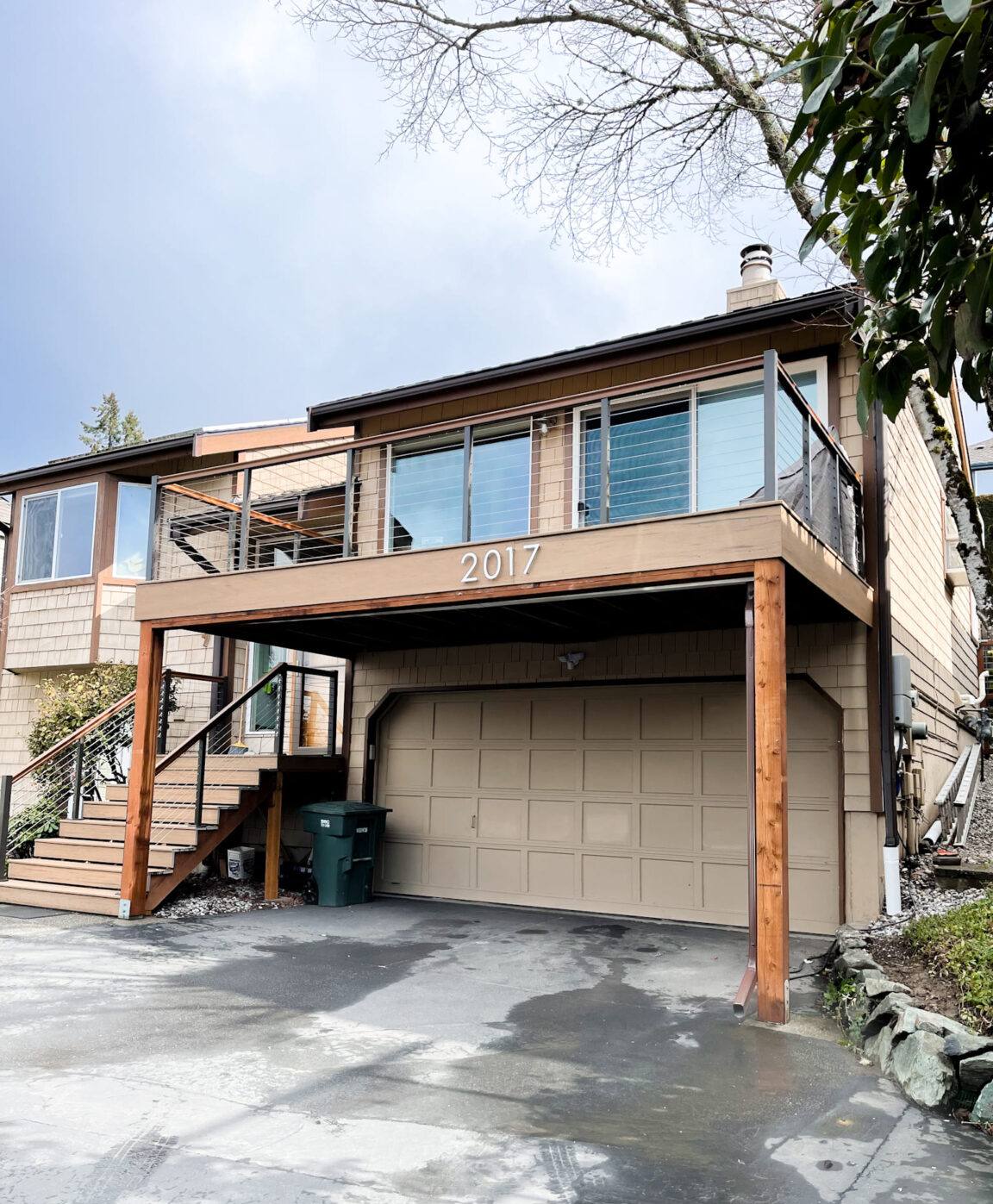
What the Regional Climate Does to a Deck
Salt Air and Metal Fasteners
Proximity to the bay means airborne salt settles on exposed surfaces, including the nails, screws, and structural hardware holding your deck together. Once corrosion starts on a fastener, it weakens from the inside — often long before any rust is visible on the surface. This is one of the most common hidden problems we find on decks in this area: boards that look fine but are barely held down anymore.
Driving Rain and Water Intrusion
Bellingham's rain doesn't just fall straight down — wind-driven rain gets pushed sideways into ledger boards, under railing posts, and into any gap where flashing has failed or was never installed correctly. Water that gets behind a ledger board (the piece that attaches your deck to the house) is one of the most serious issues a deck can have, because it can rot both the deck framing and the house's rim joist before it's ever visible from outside.
Moss and Prolonged Moisture
Whatcom County's long, mild, wet stretch of the year is exactly what moss needs. On a deck, moss does more than look bad — it holds moisture against the wood surface, blocks sunlight and airflow that would otherwise let boards dry between rains, and makes the surface slick and genuinely dangerous underfoot on stairs and ramps. A deck that gets heavy shade, from tree cover or the house itself, will grow moss faster than a similar deck in full sun, and needs more frequent attention as a result.
Signs Your Sehome Deck Needs Repair, Not Just Cleaning
Some deck problems are cosmetic and some are structural. Knowing the difference matters, because a structural issue left alone gets worse every wet season, not better.
- Boards that feel spongy, springy, or soft underfoot, especially near the house or stairs
- Visible gaps, cracks, or splitting along the ledger board where the deck meets the house
- Rust streaks below fasteners or hardware, or fasteners that have backed out or spin freely
- Railings or posts that wobble or flex when pushed
- Persistent green or black staining that returns quickly after cleaning
- Stair stringers that feel uneven or have visible cracking
- Gaps between decking boards that have closed up or widened unevenly, a sign of moisture-driven movement
- Any spot where you can see daylight or bare soil directly beneath rotted framing
If you're seeing one or two of these, a targeted repair is usually enough. If you're seeing several at once, especially anything involving the ledger board or main support posts, the deck needs a full structural evaluation before any cosmetic work happens.
What a Correct Deck Repair Actually Involves
Structural Inspection First
Before we replace a single board, we check the parts of the deck you can't see from the surface: the ledger board attachment, the condition of the joists and beams underneath, the footings, and the connection hardware. A deck can look presentable on top and still have a compromised structure underneath — that's especially true here, where the underside of a deck stays damp longer than the surface does.
Ledger Board and Flashing
If water has been getting behind the ledger board, repair means more than sealing a crack. It usually means removing the affected decking, inspecting the ledger and the house's rim joist for rot, and installing or correcting flashing so water sheds away from the house instead of into it. This is the single most important repair on many older decks in wet climates, because it's the connection point where a deck failure can turn into a house repair.
Fastener and Hardware Replacement
Corroded fasteners get replaced with hardware rated for coastal and wet-climate exposure, not the standard fasteners that may have been used originally. This is a small cost relative to the rest of a repair and it's the difference between a fix that lasts and one that fails again in a few years.
Board Replacement and Structural Framing
Individual rotted or split boards get replaced board-by-board where the rest of the deck is sound. Where joists, beams, or posts have been compromised, those get sistered or replaced before any new decking goes down — new boards over a weak frame just hide the problem.
Railings and Stairs
Because railings and stair stringers take direct load and direct weather exposure, they're often the first parts of a deck to show damage. We check post attachment, baluster spacing and condition, and stringer integrity as a standard part of any repair, even when the original concern was somewhere else on the deck.
Repair vs. Replacement: How We Help You Decide
Not every deck problem calls for a full rebuild, and not every deck is worth patching indefinitely. The honest answer depends on how much of the structure is still sound.
| Factor | Favors Repair | Favors Replacement |
|---|---|---|
| Ledger board condition | Solid, dry, properly flashed | Rotted or improperly flashed against the house |
| Framing (joists, beams, posts) | Sound, isolated damage | Widespread rot or undersized for current use |
| Decking surface | Scattered board issues | Most boards cracked, cupped, or failing |
| Footings | Stable, no settling or heaving | Shifted, cracked, or below code depth |
| Age and material | Under 15-20 years, standard lumber | Original construction decades old, outdated hardware |
We'll always tell you plainly which category your deck falls into. If a repair will genuinely hold up through several more wet seasons, that's what we recommend. If the underlying structure is too compromised, patching it would just be spending money on a deck that fails again soon — and we'd rather tell you that upfront than let you find out the hard way.
Our Deck Repair Process
- On-site evaluation. We walk the full deck, check the underside where possible, and test suspect boards, railings, and connections by hand.
- Clear scope and pricing. You get a plain explanation of what's failing, why, and what it will take to fix it correctly — no vague line items.
- Repair work. Structural issues get addressed first, from the ledger board down, followed by framing, decking, and railings as needed.
- Hardware and fastener upgrade. Any corroded or undersized hardware is replaced with fasteners suited to a wet, salt-air climate.
- Final walkthrough. We check the repaired areas with you and point out any maintenance that will extend the life of the work.
Maintenance That Slows the Next Repair
A deck in this climate will always need more attention than one in a dry, sunny region, but a few habits make a real difference between seasons:
- Clear leaves, needles, and debris from between boards before they trap moisture
- Clean moss and algae off the surface and stairs at least once a year, more often in heavy shade
- Keep gutters and downspouts directing water away from the deck footprint, not onto it
- Check railings and stair connections for movement each spring
- Reseal or restain according to the product's schedule — most finishes wear out faster here than the label assumes
Why a Local Crew Matters for This Kind of Work
Deck repair looks straightforward until you're the one deciding whether a soft board is cosmetic or structural, or whether that rust stain means the fastener underneath is still holding. A crew that works Bellingham and Whatcom County regularly has already seen how salt air, driving rain, and moss season play out on decks like yours over years, not just at the moment of inspection. That experience shows up in what gets flagged, what gets prioritized, and what materials and hardware actually hold up here rather than just on paper.
We're not interested in selling you more work than your deck needs, and we're not interested in a quick patch that leaves the real problem in place. If your Sehome deck has soft spots, rust stains, a stubborn moss problem, or just needs an honest second opinion, we're glad to take a look. Reach out for a free, no-pressure estimate using the form below.