 Bellingham Siding
 Siding Installation Built for Sehome's Climate
Sehome sits close enough to Bellingham Bay that salt-laden air is a constant factor in how exterior materials age, and close enough to the hillside and tree cover around Sehome Hill that shade, moisture, and moss are part of daily life for most of the year. Add Whatcom County's long wet season and the wind-driven rain that comes off the water, and you have a set of conditions that will find every weakness in a siding system within a few winters. Siding installation here isn't just about picking a product homeowners like the look of — it's about installing something that can actually stand up to salt exposure, constant moisture cycling, and months of low sun that keeps north- and shade-facing walls damp longer than they should be.
We install siding on homes throughout Bellingham and Whatcom County, and Sehome's mix of established, tree-shaded lots and closer-set homes near Western Washington University presents its own version of these challenges. What works on an open, sun-exposed lot in another part of the county doesn't always hold up the same way on a shaded Sehome property with less airflow and more standing moisture on the walls.
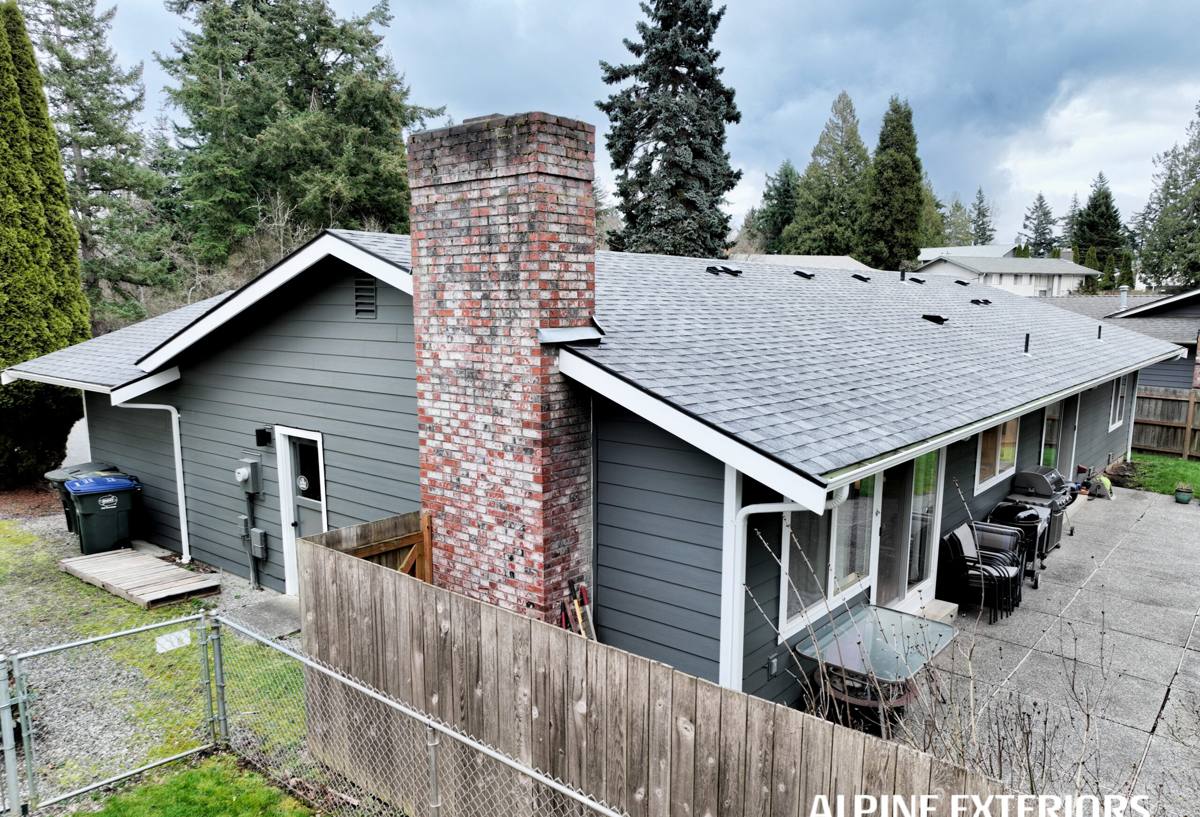
What Salt Air, Driving Rain, and Moss Actually Do to Siding
Each of these factors attacks siding differently, and understanding how helps explain why installation quality matters as much as material choice.
Salt Air
Airborne salt from Bellingham Bay accelerates corrosion on any exposed metal fasteners, flashing, or trim components, and it can degrade paint finishes and caulking faster than in inland areas. Siding systems that rely on unprotected metal or lower-grade sealants tend to show their age sooner in neighborhoods this close to the water.
Driving Rain
Wind-driven rain doesn't just wet the surface of a wall — it pushes water sideways and upward into laps, seams, and penetrations that would stay dry in a calmer climate. A siding installation that isn't detailed with proper overlaps, flashing, and a functioning drainage plane behind the cladding will eventually let water in, regardless of how good the siding material itself is.
Moss Season
Bellingham's moss season can run most of the year on shaded walls and north-facing elevations, which describes a good number of lots around Sehome. Moss and algae hold moisture against the siding surface, which keeps wood-based products damp for extended periods and can stain or degrade finishes that aren't built to resist it.
What Correct Installation Looks Like on an Established Bellingham Neighborhood
Sehome has a mix of home ages, from older houses that have already gone through one or more siding replacements to newer builds. That mix matters because correct installation starts underneath the siding, not with the siding itself.
Moisture Management Comes First
Every proper installation includes a weather-resistive barrier installed with correct overlaps, careful flashing at windows, doors, and any wall penetrations, and a drainage plane that lets incidental moisture drain and dry out rather than getting trapped against the sheathing. On older Sehome homes, this often means addressing whatever was done — or not done — during a previous siding job, since it's common to find gaps in the water management layer that were simply covered over rather than corrected.
Fastening and Fit Matter as Much as the Material
Fiber cement siding has specific fastening requirements — nail placement, spacing, and penetration depth all affect how the panels perform over time. Installed too tight or fastened incorrectly, even a high-quality product can crack, cup, or fail prematurely. Clearances also matter: siding installed too close to grade, decks, roofs, or hardscaping traps moisture against the bottom edge and shortens its life regardless of what material was used.
Proper Clearances and Terminations
Every termination point — where siding meets a foundation, a roofline, a window, or a trim board — is a place water can get behind the cladding if it isn't detailed correctly. This is where most premature siding failures actually start, and it's the kind of detail that separates a fast installation from a correct one.
Why We Install Only James Hardie Fiber Cement
We made a deliberate decision to install James Hardie fiber cement siding exclusively, and not vinyl, LP SmartSide, cedar, primed spruce, or other fiber cement brands. That's not a marketing position — it's a standard we hold because of what we've seen these materials do, and not do, in a climate like this one.
Vinyl siding is affordable and low-maintenance in mild conditions, but it can become brittle in cold snaps and its seams and J-channels give wind-driven rain more opportunities to work behind the panel over time. Wood-based products like cedar or primed spruce look great initially but require an ongoing maintenance commitment — repainting, sealing, and monitoring for moisture damage — that most homeowners underestimate, especially on shaded, moss-prone walls. Engineered wood products such as LP SmartSide perform reasonably well when maintained strictly to spec, but they're wood-based at the core, which means moisture intrusion at a damaged edge or unsealed cut can lead to swelling and deterioration that's expensive to catch early.
James Hardie fiber cement is non-combustible, dimensionally stable, and doesn't feed moss or rot the way wood-based products can. Hardie's ColorPlus factory finish is baked on under controlled conditions, which gives it more consistent, longer-lasting color performance than field-applied paint. Hardie also engineers specific product lines — including HZ5 formulations — for regions with freeze-thaw cycling and high moisture exposure, which fits Whatcom County's climate better than a one-size-fits-all product. The manufacturer's transferable warranty backs that engineering, which matters to us because we're the ones standing behind the installation.
| Consideration | Vinyl | Wood / Engineered Wood | James Hardie Fiber Cement |
|---|---|---|---|
| Moisture resistance | Moderate; seams vulnerable to driving rain | Lower; prone to swelling if finish fails | High when installed correctly |
| Maintenance | Low, but limited repair options | Ongoing repainting/sealing required | Low; factory finish holds up over years |
| Fire resistance | Combustible | Combustible | Non-combustible |
| Moss/algae resistance | Moderate | Lower on shaded walls | Higher; finish resists staining longer |
| Manufacturer warranty | Varies by product line | Varies; often finish-dependent | Strong, transferable, climate-engineered |
Our Process for a Sehome Siding Project
The steps don't change much house to house, but the details we're watching for shift depending on the site — shade exposure, wall orientation, existing wall condition, and how close the home sits to neighboring structures.
- On-site assessment: we look at the existing siding and, where accessible, the wall assembly underneath — checking for signs of past moisture intrusion, prior repairs, or areas where drainage has been compromised.
- Scope and product selection: we walk through Hardie's plank, panel, and shingle options and colors, and explain which profile and HZ formulation fits the home's exposure.
- Removal and prep: old siding comes off, the sheathing is inspected and repaired as needed, and any water damage found is addressed before anything new goes up — not covered over.
- Weather-resistive barrier and flashing: installed with correct laps and sealed penetrations, building the drainage plane that protects the wall for the life of the siding.
- Siding installation: panels or planks fastened to Hardie's specifications, with proper clearances at grade, roofline, and trim.
- Final inspection and walkthrough: we check fastening, caulking, and clearances, and walk the homeowner through what to expect and how to maintain the finish.
Signs a Sehome Home May Need New Siding
- Persistent moss or algae staining that returns shortly after cleaning
- Soft spots, warping, or visible swelling, especially on shaded or north-facing walls
- Paint that's peeling, bubbling, or failing faster than expected
- Cracked, cupped, or separated siding panels
- Visible gaps or caulking failure around windows, doors, or trim
- Rising energy bills that may point to compromised insulation behind failing siding
- Siding that's original to a home over 25-30 years old and has never been replaced
Maintenance After Installation
Fiber cement siding is low-maintenance, but "low" isn't "none" — especially given how much of the year Bellingham spends in wet, moss-friendly conditions. A yearly rinse to clear salt residue and organic buildup, keeping gutters and downspouts clear so water isn't sheeting down the wall, and trimming back vegetation that keeps siding shaded and damp all go a long way toward protecting the investment. Hardie's factory finish reduces how often repainting is needed compared to field-finished materials, but it's still worth a periodic visual check for caulking or trim issues, particularly after a hard winter.
Why Local Experience in Bellingham Matters
A crew that already works in and around Sehome understands how differently a shaded, tree-lined lot behaves compared to an open one a few miles away, and how salt exposure near the bay changes what fastener and flashing choices actually hold up. That local knowledge shows up in the details — where extra flashing gets added, which walls need closer attention to drainage, and how a home's specific exposure should shape the installation plan. It's the difference between a siding job that looks right on day one and one that's still performing the way it should ten and twenty years later.
If you're considering new siding for a Sehome home, we're happy to take a look and walk you through what we'd recommend for your specific property. Reach out for a free, no-pressure estimate using the form below.