 Bellingham Siding
 Siding Installation Built for Sudden Valley's Conditions
Sudden Valley sits in a heavily wooded, lake-adjacent pocket of Whatcom County, and that setting cuts both ways. The tree canopy and lake proximity that make the neighborhood pleasant to live in also mean homes here spend more of the year in shade, with less direct sun to dry out siding after rain. Add in the long, wet Pacific Northwest winter, the salt-laden air that moves through this part of Whatcom County off Bellingham Bay, and a moss season that can stretch from October into May, and you have a set of conditions that will find every weakness in a siding installation within a few years — not decades.
This page is specifically about installing new siding correctly in Sudden Valley. Not a general overview of siding types, not a sales pitch — just what local homes actually need from an installation, what a correct job looks like, and why the crew doing the work matters as much as the material they're using.
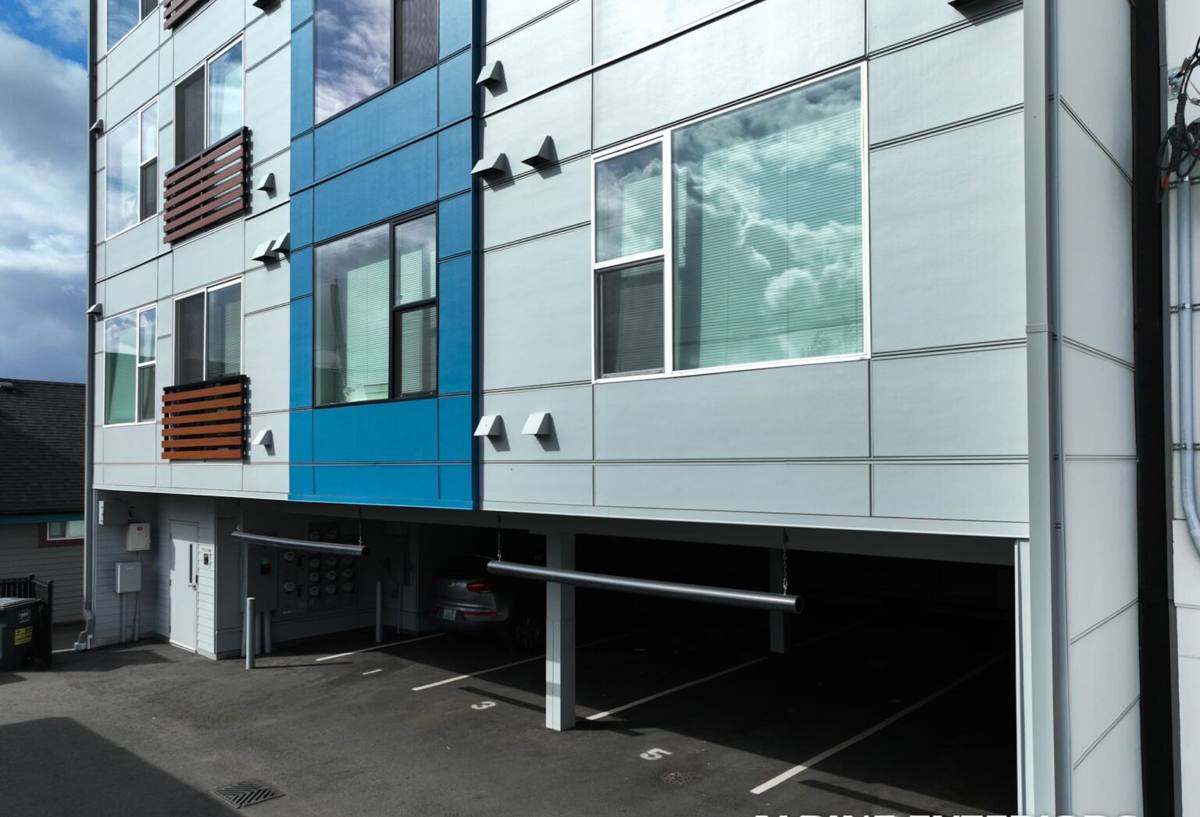
What Sudden Valley's Climate Actually Does to Siding
Shade and slow drying
Homes tucked under fir and cedar canopy don't get the wind and sun exposure that dries out a wall system quickly after a storm. Moisture that would evaporate off an open, sunny elevation in a day can sit against north- and east-facing walls in Sudden Valley for much longer. Siding and the water-resistive barrier behind it need to tolerate that extended damp period without swelling, delaminating, or feeding rot in the sheathing underneath.
Driving rain off the lake
Wind off Lake Whatcom pushes rain sideways into walls, not just straight down onto roofs. That means lap joints, butt joints, and every penetration — hose bibs, light fixtures, vents — are under real pressure to shed water outward rather than let it track behind the siding. A installation that only handles vertical rain will eventually leak on a wall that regularly takes wind-driven rain.
Moss, algae, and organic growth
Shade plus moisture plus organic debris from overhanging trees is exactly the recipe moss and algae need. On absorbent or poorly sealed siding materials, that growth holds moisture against the surface and accelerates whatever degradation is already happening underneath. Siding that resists moisture absorption at the surface, and a finish that doesn't give algae an easy foothold, buys homeowners years of reduced washing and re-coating.
Salt-influenced air
Whatcom County's proximity to Bellingham Bay means the regional air carries some salt content, which accelerates corrosion of exposed fasteners, flashing, and trim hardware over time. Installation details that keep fasteners covered and flashing properly lapped matter more here than they would somewhere landlocked and dry.
What a Correct Siding Installation Actually Involves
A lot of siding jobs fail not because the material was wrong, but because the installation cut corners on details nobody sees once the job is done. For Sudden Valley specifically, these are the ones we don't skip:
- A continuous, properly lapped water-resistive barrier (WRB) installed shingle-style so every layer sheds water down and out, never into the wall
- Correct rainscreen or drainage gap behind the siding so any moisture that does get behind the cladding can drain and the wall can breathe, instead of staying trapped against shaded, slow-drying walls
- Properly flashed and sealed penetrations — every vent, light box, hose bib, and utility line — since these are the first place wind-driven rain finds a way in
- Fastener spacing, type, and depth set to manufacturer specification, not "close enough," since under- or over-driven fasteners are a leading cause of siding failure
- Correct clearance from grade, roof lines, decks, and hardscaping so splashback and standing moisture don't sit against the bottom courses
- Factory-finished panels and trim where possible, minimizing field-cut edges that need to be sealed on site
Skipping any one of these doesn't usually show up in year one. It shows up in year five or eight, as soft spots, staining, or bubbling finish — right when a homeowner assumed they had another decade of life left in the siding.
Why We Install James Hardie and Nothing Else
We install exclusively James Hardie fiber cement siding. We don't install LP SmartSide, vinyl, Cemplank, Allura, or unprimed cedar or spruce products, and we're upfront about why: in a climate like this one, the material has to do a lot of passive work between service visits, and we've standardized on the product line we trust to do that job consistently.
Fiber cement is non-combustible and dimensionally stable — it doesn't swell, cup, or rot the way wood-based products can when they take on repeated moisture cycles under tree cover. James Hardie's ColorPlus factory finish is baked on under controlled conditions rather than field-applied, which matters directly for moss and algae resistance and for how the color holds up against damp, shaded exposures. Hardie also engineers regional HZ product formulations specifically for high-moisture climates like the Pacific Northwest, and backs the material with a long transferable warranty that stays with the house if it's sold.
None of that replaces correct installation — even the best material fails if it's hung wrong. But it gives us a starting point we're confident in before the crew ever shows up.
How the Common Alternatives Hold Up Here
| Material | How it handles Sudden Valley's shade, rain, and moss |
|---|---|
| James Hardie fiber cement | Non-combustible, dimensionally stable, factory finish resists moss/algae staining, engineered HZ lines for wet climates |
| Vinyl | Won't rot, but can warp/fade with age, seams and J-channels give moisture a path, doesn't hold up as well to sustained damp shade |
| LP SmartSide / engineered wood | Wood-based core is more moisture-sensitive; edge sealing and maintenance become critical in slow-drying, shaded conditions |
| Unprimed cedar or spruce | Naturally attractive but absorbs moisture, requires ongoing sealing/staining, most exposed to moss and rot in shaded, damp walls |
Our Process for Sudden Valley Homes
1. On-site assessment
We walk the property and look specifically at shade patterns, drainage around the foundation, roof-to-wall transitions, and any existing moisture or moss damage on the current siding. Sudden Valley lots vary a lot in how much direct sun different elevations get, and that changes how we detail the installation.
2. Tear-off and sheathing check
Old siding comes off and we inspect the sheathing underneath before anything new goes up. This is the point where hidden rot or long-term moisture damage from a prior installation shows up — better to find it now than to bury it under a new wall system.
3. WRB and drainage plane installation
We install the water-resistive barrier and drainage components to spec, with extra attention on north- and east-facing walls and any elevation under heavy tree cover, where moisture has the least help drying out on its own.
4. Flashing and penetration detailing
Every window, door, vent, and fixture penetration gets flashed and sealed before siding closes in around it. This is the step that determines whether wind-driven rain off the lake stays out or finds its way behind the wall.
5. Hardie installation to manufacturer spec
Panels, lap siding, or trim go up with correct fastening, clearances, and joint treatment, following James Hardie's installation instructions rather than shortcuts that would void warranty coverage.
6. Final walkthrough
We walk the finished job with the homeowner, check clearances and finish work, and go over basic care — mainly, keeping vegetation trimmed back and gutters clear, which does more for long-term siding health in a shaded lot than almost anything else.
Signs Sudden Valley Homeowners Should Watch For
If your current siding shows any of the following, it's worth having it looked at before a small problem becomes a sheathing replacement:
- Persistent moss or dark staining that returns quickly after washing
- Soft, spongy, or bubbling spots, especially on shaded walls or near ground level
- Visible gaps, warping, or separation at lap joints and corners
- Peeling or chalking paint/finish that keeps recurring in the same spots
- Water stains or soft drywall on interior walls that back up to exterior siding
Why Local Experience in Sudden Valley Matters
A crew that already works in Sudden Valley knows which elevations stay damp longest, how much tree trimming clearance a fresh installation needs to actually dry properly, and where prior installations in the area tend to have cut corners. That's not something a crew coming in from outside the region picks up on the first job — it's the kind of detail that only shows up after seeing enough Whatcom County homes go through a full wet season. It's also why we'd rather walk a property in person and talk through the specific conditions on your lot than quote siding work off a photo.
If you're planning a siding replacement or new installation in Sudden Valley, we're happy to come take a look and give you a straightforward, no-pressure estimate — just fill out the form below.