 Bellingham Siding
 Siding Replacement in Blaine: The Job, Not Just the Product
Blaine sits at the northern edge of Whatcom County, close enough to the water that salt air is a daily condition rather than an occasional one, and close enough to the border that Pacific storm systems tend to make landfall here before they've lost much of their punch. That combination of salt exposure, driving rain, and a moss season that can run most of the year puts real, cumulative wear on a home's exterior. When siding on a Blaine house reaches the point where patching and spot repairs stop being enough, a full replacement is a bigger decision than most homeowners make more than once or twice in a lifetime — which means getting the process right matters as much as picking the right material.
This page is specifically about siding replacement for Blaine homes: how to tell when a full replacement is the right call, what a correct replacement job actually involves from tear-off to final walkthrough, and why we do that work with one product system rather than several. We also handle roofing, windows, and decks, but siding replacement — done properly, for this climate — is the focus here.
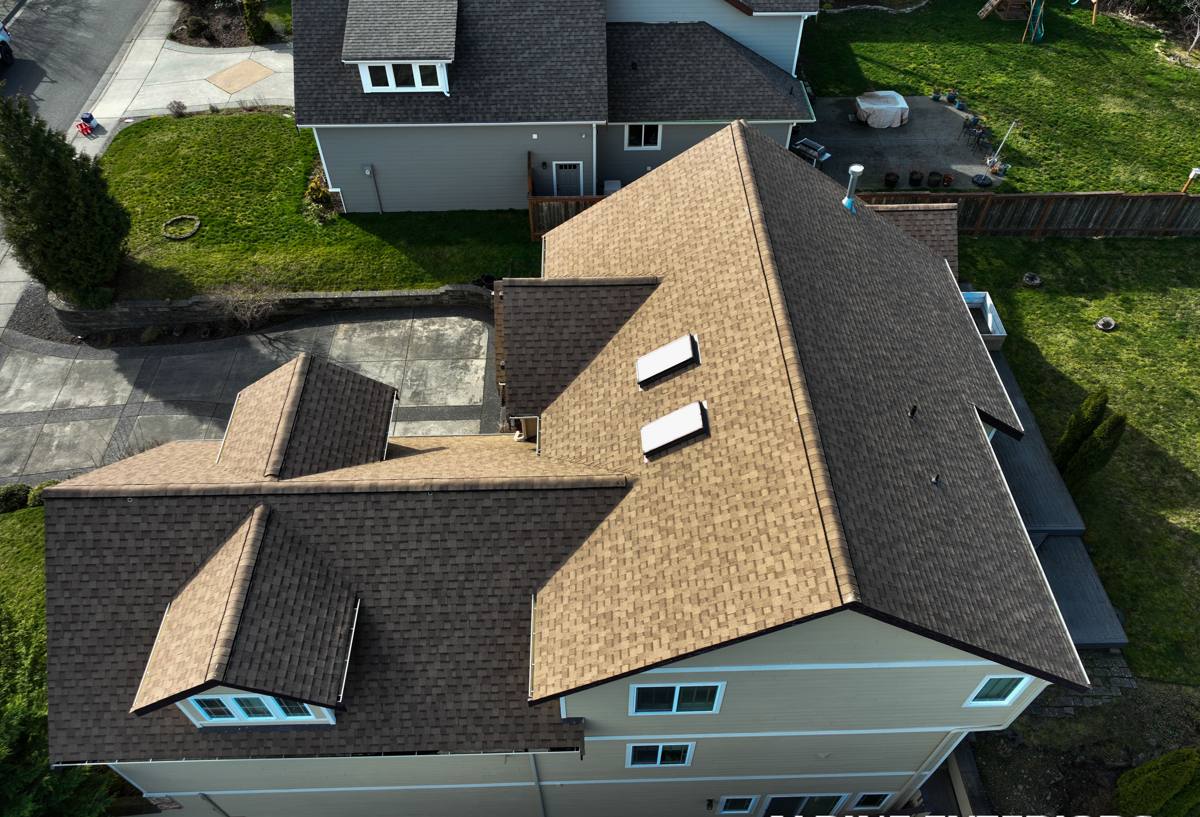
When a Blaine Home Actually Needs Full Replacement
Not every siding problem calls for tearing the whole exterior off. But in a coastal, high-moisture town like Blaine, the line between "repair" and "replace" gets crossed sooner than homeowners expect, because moisture that gets behind siding tends to keep working even after the visible symptom is patched.
Signs Pointing Toward Full Replacement
- Soft, spongy, or delaminating siding in more than one or two isolated spots, rather than a single damaged board
- Moisture staining or soft sheathing found once a section of siding is opened up for inspection
- Widespread moss, mildew, or dark staining that returns quickly after cleaning across multiple walls
- Persistent paint failure, cupping, or warping on an older wood-based or engineered wood product
- Siding original to the house and past 20-25 years old, especially with no documented repair history
- Musty odors or interior staining on walls that back up to exterior siding
When Repair Is Still the Right Call
A single cracked or storm-damaged panel, isolated fastener corrosion, or a small area of moisture intrusion traced to one clear cause — a failed piece of flashing, for example — can often be repaired without replacing the whole exterior. The honest answer depends on what's found once we actually look at the house, including what's underneath the siding in the affected area, not on a generic rule of thumb.
What Blaine's Climate Demands From a Replacement Job
Salt Air
Homes near the water in Blaine take a steady dose of salt-laden air that accelerates corrosion on fasteners, flashing, and trim hardware faster than it would twenty miles inland. A replacement project here needs corrosion-resistant hardware specified up front, not substituted later to save a few dollars.
Driving Rain
Storms coming off the water push rain sideways into wall assemblies rather than straight down, loading up window flashing, butt joints, and the transitions where roof meets wall. A replacement that doesn't account for that wind-driven pattern can look fine on installation day and still let water in behind the new siding within a couple of wet seasons.
A Long Moss Season
Mild temperatures and near-constant moisture give moss and mildew a growing season that can run close to year-round on shaded or north-facing walls. Replacement is also the moment to address whatever's been feeding moss growth on the old siding — usually trapped moisture or a lack of drainage — rather than simply installing new material over the same underlying problem.
What a Correct Siding Replacement Involves
Full Tear-Off and Sheathing Inspection
A real replacement means removing the existing siding entirely, not covering it with a new layer. Once it's off, the sheathing underneath gets checked for rot, soft spots, or trapped moisture before anything new goes up. Covering damaged sheathing with new siding hides a problem that keeps getting worse behind the wall — we find and repair it at this stage instead.
Weather Barrier and Flashing Detail
Most coastal siding failures trace back to water getting behind the cladding, not through it. That makes the house wrap, window flashing, and every wall penetration the part of the job that's easy to rush and hard to inspect once the new siding is up — which is exactly why we treat it as non-negotiable rather than optional.
Rain Screen Gap and Drainage
A small drainage cavity behind the new siding lets any moisture that does get past the exterior surface drain and evaporate instead of sitting against the sheathing. In a town with Blaine's moisture load, that detail is part of a correct installation, not an upgrade.
Installation to Manufacturer Spec
James Hardie's warranty depends on following their published installation specifications — correct fastener spacing and type, clearances above grade and rooflines, and proper field-cutting and sealing practices. We install to that spec as the baseline on every replacement job.
Disposal and Final Walkthrough
Old siding, damaged sheathing, and job debris get hauled off as part of the project rather than left for the homeowner to deal with. We walk the finished job together, cover maintenance expectations specific to a coastal property, and confirm the work matches what was estimated before calling it done.
Why We Replace With James Hardie Fiber Cement Only
We used to install a broader range of siding products. We narrowed that down to James Hardie fiber cement after seeing, on tear-offs and service calls across Whatcom County's coastal towns, what actually held up in sustained salt and moisture exposure and what didn't.
- Non-combustible core: Fiber cement doesn't feed a fire the way wood-based siding products can.
- Factory-applied ColorPlus finish: Baked on under controlled conditions rather than brushed on in the field, holding color and adhesion longer against salt air and UV exposure.
- Climate-engineered HZ product lines: Hardie's HZ5 formulation targets regions with sustained moisture and freeze-thaw cycling, a solid match for coastal Whatcom County.
- Dimensional stability: Fiber cement doesn't swell, cup, or warp the way engineered wood can after repeated wetting cycles.
- Strong transferable warranty: Provided the installation follows Hardie's spec, the warranty backing is among the stronger structures in the industry.
We don't install LP SmartSide, vinyl siding, Cemplank, Allura, primed spruce, or cedar. Each has a place in the broader market and homeowners elsewhere who are satisfied with them. On a full replacement — a job meant to last decades, not a few years — we'd rather commit the homeowner to one system we fully stand behind than offer something cheaper that quietly shifts maintenance risk onto them down the road.
Replacement Cost Factors
| Factor | Why It Moves the Price | Blaine-Specific Consideration |
|---|---|---|
| Home size and stories | More square footage and height mean more material and labor | Multi-story homes near open water often need extra attention on wind-exposed upper walls |
| Tear-off scope | Full removal costs more than an overlay, but is the only correct approach for a real replacement | Existing moisture damage found during tear-off can add sheathing repair to the scope |
| Trim and detail complexity | More windows, corners, and trim transitions mean more labor-intensive flashing and finish work | Every additional penetration is a place wind-driven rain can find a way in if rushed |
| Product line and color | Different Hardie lines and ColorPlus colors carry different material costs | Darker colors and certain textures may have different maintenance profiles under constant salt air |
| Site access and disposal | Harder-to-reach homes and larger debris loads add labor and hauling cost | Waterfront and bluff-adjacent lots sometimes have tighter access than inland properties |
These are general drivers, not a quote. We walk the property and often pull a test section of existing siding before finalizing a number, because what's actually happening behind the old siding can change the scope more than anything visible from the ground.
Timing a Replacement Around Blaine's Weather
Whatcom County's wettest, windiest stretch typically runs from late fall through winter, and Blaine's coastal exposure makes that stretch harder on both the house and the installation than it is further inland. Spring and summer generally offer the driest, most stable conditions for tear-off and installation, since fiber cement, house wrap, and sealants all perform better when they're installed and allowed to set up between storms rather than during them. That said, a home with active moisture intrusion is worth addressing on its own timeline rather than waiting out the calendar for ideal weather.
Questions Worth Asking Before You Sign a Replacement Contract
- Is this a full tear-off, or does the quote assume siding goes over the existing material?
- Who inspects the sheathing once old siding comes off, and how is unexpected damage handled and priced?
- What specific product and product line is being installed, and why was it chosen for this house?
- What fastener type and rain screen detail are included, given how much moisture Blaine sees off the water?
- What does the written warranty actually cover, and is it tied to correct installation to the manufacturer's spec?
- Is disposal of old material and job debris included in the price?
Why a Local Crew Matters for a Replacement Job in Blaine
A crew that works Blaine and the surrounding Whatcom County coastline regularly sees how salt air, driving rain, and a long moss season actually play out on real houses over a full year, not just how a product performs on a spec sheet. That shapes practical decisions during a replacement — where extra flashing attention pays off, which walls hold moisture longest, and which fastener and drainage details are worth the extra time so a homeowner isn't dealing with a callback after the next storm off the water. It also means that if a warranty or maintenance question comes up years later, it's a call to a crew still working in the same area.
If your Blaine home's siding is past the point where patching makes sense, we're glad to take a look and give you a straightforward, honest assessment of whether it needs full replacement and what that would involve. Reach out using the form below to schedule a free, no-pressure estimate.