 Bellingham Siding
 Why Window Installation Looks Different in Silver Beach
Silver Beach sits close to the water and under a heavy tree canopy, which means homes here deal with a specific combination of moisture, shade, and wind-driven rain that doesn't hit every Bellingham neighborhood the same way. Add in the salt-tinged air that moves through Whatcom County off the bay, and you've got conditions that are hard on window frames, sealant, and flashing year-round. A window installation that would hold up fine in a drier inland climate can fail here in a fraction of the time if it isn't detailed for this environment.
This isn't a scare story — it's just physics. Wood swells and shrinks with humidity. Vinyl and aluminum expand and contract with temperature swings. Sealants break down faster under constant UV-and-moisture cycling. Moss and algae hold water against siding and trim longer than most homeowners realize, and that moisture eventually finds the nearest seam. When we install windows in Silver Beach, we're not just fitting a product into a hole in the wall — we're building a moisture-management system around it.
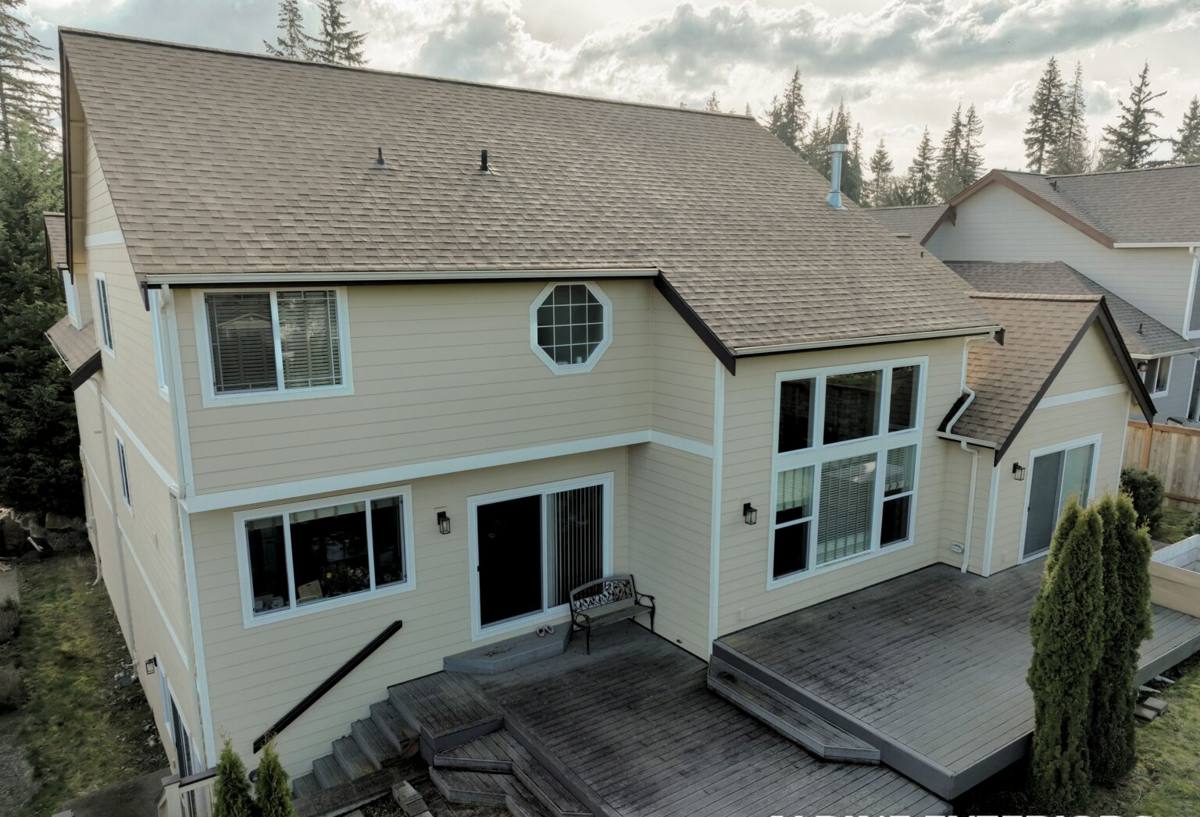
Signs Your Current Windows Are Losing the Fight
Most window failures in this part of Bellingham don't show up as a cracked pane. They show up slowly, in the wall and trim around the window, long before the glass itself is the problem. Homeowners in Silver Beach should watch for:
- Soft or discolored trim boards, especially on the bottom sill and lower corners
- Green or black staining that keeps returning even after cleaning
- Fogging or condensation between panes on double- or triple-glazed units
- Drafts you can feel with a hand near the frame on a windy day
- Paint or caulk that's cracked, peeling, or pulling away from the frame edge
- A window that's noticeably harder to open, close, or lock than it used to be
Any one of these can be minor. Two or three together, especially on a window facing prevailing weather, usually means water has already gotten behind the frame and is doing quiet damage to the framing lumber. That's a bigger and more expensive repair than a straightforward window swap, which is why we'd rather catch it early.
What a Correct Window Installation Actually Involves
The window unit itself is maybe a third of what determines whether an installation lasts. The rest is prep work and detailing that isn't visible once the trim goes back on — which is exactly why it gets skipped by crews trying to move fast.
Removal and Opening Inspection
Once the old window is out, we inspect the rough opening before anything new goes in. This is the point where hidden rot, soft sheathing, or old failed flashing gets found. In a wet, shaded location like Silver Beach, it's common to find some degree of moisture staining on the sill plate even when the window looked fine from outside. We address that before the new unit ever goes in — installing a new window over a compromised opening just buries the problem for the next owner to find.
Flashing and Weather Barrier Integration
This is the step that decides whether the installation survives its first few wet seasons. Flashing tape and pan flashing need to integrate correctly with the existing weather-resistive barrier so that any water that does get past the exterior finish drains back out — not down into the wall cavity. We shingle-lap every layer (top over bottom, like roof shingles) so water always has a way out and never a path in.
Sealing, Insulating, and Trim
The gap between the window frame and the rough opening gets sealed and insulated correctly — not overpacked with expanding foam, which can bow a frame out of square, and not left with gaps that let air and moisture track in. Exterior trim and caulking go back with materials rated for constant damp exposure, not a general-purpose caulk that will crack within a couple of seasons in this climate.
Choosing the Right Window for This Climate
There's no single "best" window material — there's a best fit for how exposed the wall is, what the home's style calls for, and what the homeowner wants to maintain over time. Here's how the common options actually perform in a wet, shaded, coastal-influenced climate like Silver Beach's:
| Material | Moisture Behavior | Maintenance | Typical Trade-off |
|---|---|---|---|
| Vinyl | Won't rot; sealed frame handles constant damp well | Low — occasional cleaning | Frame color and trim options are more limited |
| Fiberglass | Excellent — very stable, minimal expansion/contraction | Low | Higher upfront cost than vinyl |
| Wood (unclad) | Needs consistent upkeep to prevent moisture damage | High — regular painting/sealing | Best appearance for historic-style homes, but demanding here |
| Wood-clad (aluminum or fiberglass exterior) | Good — exterior shell protects the wood core | Moderate | Cladding seams need correct detailing at install |
| Aluminum | Durable but conducts cold and can condense | Low | Less common for residential in this climate for comfort reasons |
For most Silver Beach homes, we steer clients toward vinyl or fiberglass for straightforward, low-maintenance performance, and reserve solid wood for homeowners who specifically want that look and are prepared for the upkeep it takes to protect it. That's a maintenance-and-moisture-behavior call, not a judgment on any manufacturer — every material has a place, it's about matching it to the wall it's going into.
Our Installation Process
We keep this consistent from house to house because consistency is what prevents callbacks:
- On-site assessment — we look at each window opening individually, not just the home as a whole, since sun exposure and wind exposure can vary wall to wall
- Measurement and product selection — exact sizing plus a material and glass-package recommendation suited to that specific opening
- Removal and opening inspection — old unit out, framing checked, any rot or soft wood addressed before moving forward
- Flashing and barrier integration — correctly lapped flashing tied into the existing weather barrier
- Installation, leveling, and insulating — window set plumb and square, gap sealed and insulated properly
- Exterior trim and sealant — finish materials and sealants rated for sustained damp exposure
- Interior finish and operation check — trim restored, and every sash, lock, and screen tested before we call it done
- Walkthrough — we go over the work with you and answer questions on the spot
What Affects the Cost
Pricing on a window job depends on more than just the number of windows. The honest range for a straightforward replacement window installed in an existing opening is broad because these factors move it in either direction:
| Factor | Why It Matters |
|---|---|
| Window material and glass package | Fiberglass and upgraded glass (double vs. triple pane, low-E coatings) cost more than base vinyl |
| Size and configuration | Large picture windows, bays, and custom shapes take more labor and material than standard sizes |
| Existing opening condition | Rot or moisture damage found during removal adds repair time before the new window can go in |
| Full-frame vs. insert replacement | Removing down to the studs costs more than an insert but is often the right call on an older, weathered home |
| Access and story height | Second-story or hard-to-access windows take longer and may need staging |
| Number of windows in the same visit | Bundling several windows in one visit typically brings the per-window cost down |
We'll never give a real number without seeing the openings — anyone quoting a whole-house price over the phone sight unseen is guessing. What we can promise is a clear, itemized estimate before any work starts, so you know exactly what you're paying for and why.
Timing: When to Install
Window replacement can happen almost any time of year, but a few practical notes apply locally. Drier stretches make for a cleaner, faster install with less risk of moisture getting into an open wall cavity mid-job. That said, we install through the wetter months regularly — we just plan the work in stages so no opening sits exposed longer than necessary, and we protect the opening if weather turns during the job. Waiting for a "perfect" dry week isn't necessary and, if your current windows are actively failing, waiting can cost you more in hidden damage than it saves in convenience.
Why a Crew That Already Works Silver Beach Matters
A window installer who works this specific area regularly already knows what tends to show up when an opening is opened up — how far moisture typically travels under a sill in a shaded, tree-covered lot, which flashing details hold up against Bellingham's driving rain, and how the moss and algae common here behave against trim and siding over a few seasons. That's not a marketing point, it's a practical one: fewer surprises mid-job, fewer callbacks after, and a crew that isn't learning the neighborhood's quirks on your project.
It also means we're not far away if a question comes up after the install. Being local isn't just about drive time — it's accountability. We're not disappearing to the next city once the trim is back on.
Questions Worth Asking Any Contractor You're Considering
- Do you inspect the rough opening for rot before installing, or just swap the window?
- What flashing method do you use, and how does it tie into the existing weather barrier?
- Is your estimate itemized, or a single lump-sum number?
- What's covered under warranty — the product, the labor, or both — and for how long?
- Can I see examples of similar work in this area?
- Who's actually doing the installation — your crew, or a subcontractor?
A contractor who answers these plainly, without dodging, is usually one worth hiring. Vague answers on flashing or warranty coverage are a red flag no matter how good the sales pitch sounds.
Maintaining Your Windows After Installation
A correctly installed window is largely maintenance-free, but a few habits extend its life in this climate:
- Rinse pollen, dust, and moss spores off frames and sills a couple of times a year
- Check exterior caulk lines annually for cracking or separation, especially after a hard winter
- Keep nearby vegetation trimmed back so airflow can dry the wall surface between rains
- Clear debris from weep holes on vinyl and fiberglass frames so water can drain out as designed
- Address any soft trim or staining right away rather than waiting for it to spread
None of this is demanding, but skipping it is how small issues turn into wall repairs a few years down the line.
If your windows in Silver Beach are drafty, fogging, or just past their useful life, we're happy to take a look and give you a straight assessment — no pressure, no obligation. Reach out for a free estimate using the form below.