 Bellingham Siding
 Why South Hill's Older Homes Need a Different Window Strategy
South Hill sits above Bellingham Bay, and that position cuts both ways. Homeowners get some of the best views in Whatcom County, but the same exposure that makes the view means the same wind, salt-laden air, and driving rain hit the windows on that side of the house harder and more often than they would a few miles inland. Add in the fact that a lot of South Hill's housing stock is older — original wood-frame windows, early aluminum replacements, or a first round of vinyl units installed decades ago — and you end up with a neighborhood where window performance is genuinely a different problem than it is in a newer subdivision.
A generic "replace your windows" page doesn't account for any of that. This one does. Below is what we actually look at when we're bidding a South Hill window job, what a correct installation involves in this climate, and how our process works from the first estimate to the final walkthrough.
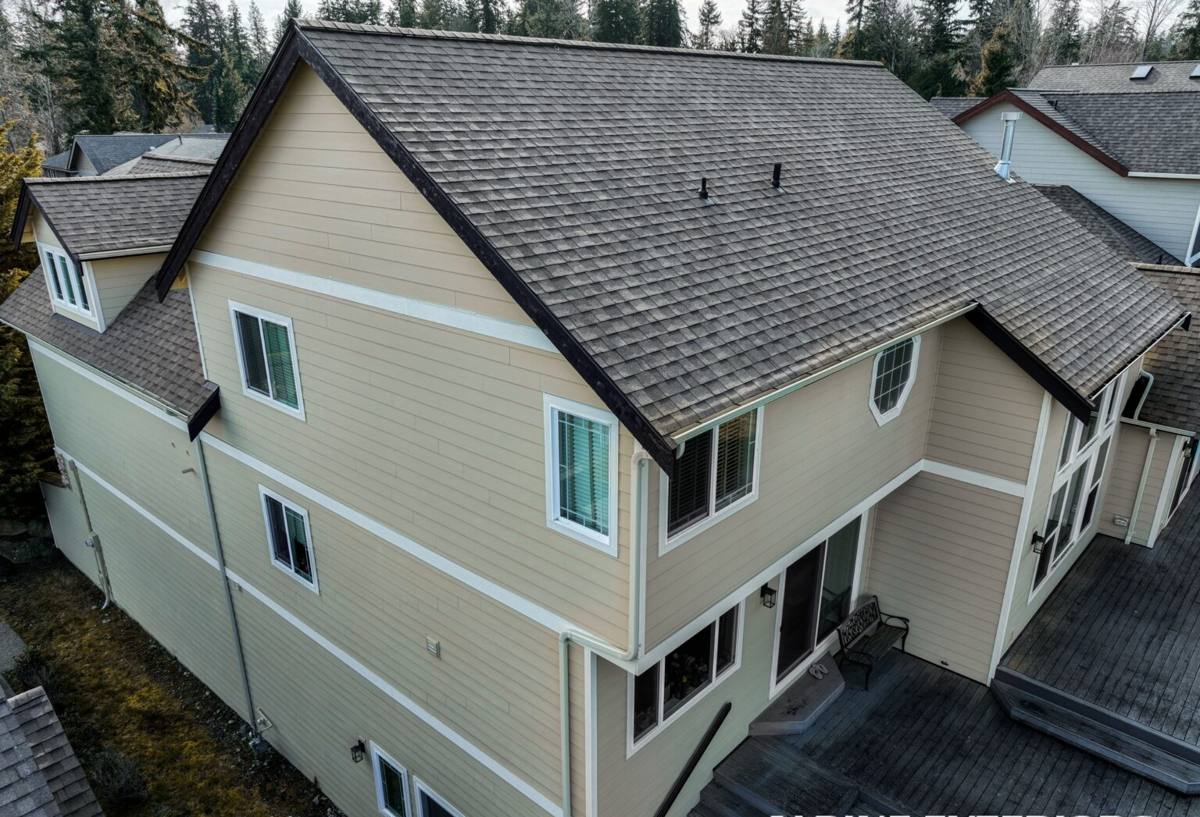
What Bellingham's Climate Does to Windows Over Time
Whatcom County's marine climate is mild, but mild doesn't mean easy on building materials. Three things do most of the damage to windows here, and all three show up on South Hill in particular:
- Salt air. Homes with any exposure toward the bay take on airborne salt that accelerates corrosion of aluminum frames, hardware, and unprotected fasteners. It also breaks down cheap weatherstripping faster than a dry inland climate would.
- Driving rain. Wind off the water doesn't just drop rain straight down — it pushes it sideways into the wall assembly. Windows installed without proper flashing and sealing will eventually let water track behind the trim, even if the glass and frame themselves are fine.
- A long moss season. Extended damp, shaded stretches of the year keep moisture sitting on sills, tracks, and exterior trim longer than in a drier region. That moisture feeds rot in wood components and mildew in seals, and keeps grime and organic growth clinging to frames that don't shed water well.
None of this means South Hill is a hard place to own a house. It means window choices and installation details that would be fine elsewhere need to be more deliberate here.
What "Energy-Efficient" Actually Means in This Climate
Manufacturers advertise a lot of numbers, but two matter most for a marine climate like Bellingham's.
U-Factor Over Solar Heat Gain
In a hot, sunny climate, contractors chase a low Solar Heat Gain Coefficient (SHGC) to keep houses cool. Whatcom County has the opposite problem most of the year — we're trying to hold heat in, not keep it out. That means U-factor, which measures how well a window resists heat loss, matters more here than SHGC does. A window with an excellent SHGC rating but a mediocre U-factor is the wrong pick for a South Hill living room that already loses heat through an old, drafty frame.
Low-E Coatings and Gas Fills
Double-pane windows with a low-emissivity (low-E) coating and an argon gas fill between the panes are the baseline for real efficiency gains in this climate. Triple-pane is worth discussing on a north- or west-facing wall that takes the brunt of the weather, but it isn't automatically worth the added cost on every elevation of every house — that's a case-by-case call made during the estimate, not a default upsell.
Frame Material and Spacer Type
The frame and the spacer bar between the panes affect performance as much as the glass does. A warm-edge spacer made of foam or a non-metal composite resists condensation and heat transfer far better than an old-style aluminum spacer, which becomes a cold bridge right at the edge of the glass — often the first place you'll notice fogging or frost forming on an underperforming window.
Choosing the Right Window Material for a South Hill House
Older South Hill homes often have real architectural character worth preserving, and the right replacement window respects that instead of fighting it. Here's how the common options stack up for this climate and housing style:
| Material | How It Handles Salt Air & Rain | Best Fit |
|---|---|---|
| Vinyl | Won't corrode or rot; seams and welds are the weak point if installation is sloppy | Straightforward replacements, budget-conscious projects |
| Fiberglass | Excellent resistance to moisture and temperature swings; dimensionally stable over time | Homes wanting long-term low maintenance without sacrificing a narrow, clean sightline |
| Wood-clad | Good if the exterior cladding is fully sealed at every joint; failure point is a breach letting moisture reach the wood core | Historic-style homes where interior wood trim matters and exterior upkeep should be minimized |
| Solid wood | Requires the most upkeep — repainting and sealing on a real schedule — to hold up against driving rain and prolonged damp | Strict historic-character preservation where the owner accepts the maintenance trade-off |
We don't tell homeowners which material is "best" in the abstract. We tell them which material fits their specific house, their exposure, and how much upkeep they actually want to take on. That's a maintenance and trade-off conversation, not a sales pitch.
What a Correct Installation Actually Involves
The window unit itself is maybe half the job. The other half is what happens at the rough opening, and that's where most window failures in this climate actually start. A window with a great energy rating installed with a poor seal will leak, fog, and lose efficiency within a few years, while a mid-grade window installed correctly will outperform it for the long haul.
Here's what we check on every South Hill window job:
- Old caulk, rotted sill material, and failed flashing fully removed before anything new goes in — not caulked over
- A proper flashing sequence (sill pan, side flashing, head flashing) so water that does get behind the trim drains back out instead of pooling
- Correct shimming so the window isn't racked or bowed, which stresses seals and shortens their life
- Low-expansion foam or backer rod and sealant sized to the actual frame gap — not overfilled or underfilled
- Exterior trim and caulk joints sealed against wind-driven rain, particularly on bay-facing and west-facing walls
- Interior air sealing so warm indoor air isn't reaching the cold glass edge and condensing
Skipping any one of these doesn't usually show up on day one. It shows up as a soft sill, a fogged pane, or a musty smell around the frame two or three winters later — right when the moss season has had time to do its work.
Our Process, Start to Finish
- Walkthrough and assessment. We look at each window's exposure, current condition, and how the house sits relative to wind and rain before recommending anything.
- Honest options, not a single package. We show material and glass options that fit your house and your budget, with the real trade-offs for each — not just the highest-margin option.
- Written estimate. Scope, materials, and price in writing before any work starts. No surprise change orders for work that should have been scoped up front.
- Removal and prep done right. Old units come out, the opening gets inspected for hidden rot or old water damage, and any bad framing gets addressed before a new window ever goes in.
- Installation with full flashing and sealing. Every window gets the same moisture-management detailing described above, regardless of size or price point.
- Final walkthrough. We check operation, sealing, and cleanup with you before we consider the job done.
Signs Your Current Windows Are Already Costing You Money
A lot of South Hill homeowners call us not because they woke up wanting new windows, but because something tipped them off that the old ones were failing. Common signs worth acting on:
- Condensation or fogging between the panes, a sign the seal has already failed
- Visible daylight or a draft you can feel around the frame on a windy day
- Soft, spongy, or discolored wood at the sill or interior trim
- Windows that are difficult to open, close, or lock, often a sign the frame has shifted or swollen
- A noticeable jump in heating costs without any other explanation
- Persistent moss, algae, or black streaking on the exterior sill that won't stay clean between washings
Any one of these on its own might just need a repair. Several at once, especially on original single-pane or early-generation replacement windows, usually means it's time to talk about full replacement.
Why It Matters That We Already Work in South Hill
Window work here isn't the same as window work in a dry, inland climate, and it isn't quite the same as window work on a flat lot with no wind exposure either. A crew that already works South Hill's hillside lots knows to expect wind-driven rain from a particular direction, knows that a house's bay-facing side usually needs more attention at the flashing details than its street-facing side, and isn't guessing about how a long, damp moss season will treat a given material choice over the next fifteen years.
That local pattern-recognition shows up in small decisions — which side of the house gets the extra flashing detail, which material we steer a homeowner away from given their specific exposure, when triple-pane is worth the added cost and when it isn't. Those are judgment calls built from doing this work in this specific setting, not from a manufacturer's install manual alone.
Maintaining Your Windows After Installation
Even a correctly installed, high-quality window benefits from basic upkeep in this climate:
- Rinse salt residue and organic buildup off frames and glass a couple of times a year, more often on bay-facing walls
- Keep weep holes, the small drainage openings at the bottom of the frame, clear of debris and moss so water can escape
- Check exterior caulk joints annually and touch up any that have cracked or pulled away
- Lubricate hardware and tracks periodically so moving parts don't seize or corrode
None of this is intensive, but skipping it entirely does shorten the life of even a well-installed window in a climate this damp.
If you're dealing with drafty, fogged, or aging windows on your South Hill home, we're glad to take a look and give you an honest read on your options. The estimate is free, there's no pressure, and you'll get a straight answer about what your house actually needs — just fill out the form below to get started.