 Bellingham Siding
 Storm Damage Roofing in Columbia: A Different Set of Problems Than Most of the Country
Homes in Columbia deal with a roofing climate that's rougher than it looks from the ground. Bellingham doesn't get hurricanes or hailstorms the way other regions do, but the combination of salt-laden air off Bellingham Bay, sustained winter wind events, driving horizontal rain, and a moss season that can run eight or nine months a year adds up to a slow, steady kind of storm damage. It's rarely one dramatic event that takes a roof down. It's usually a windstorm that lifts a few shingles, followed by weeks of rain finding that opening, followed by moss holding moisture against the same spot until the decking underneath starts to suffer.
That's the pattern we see most often on storm damage calls in Columbia and the surrounding Whatcom County neighborhoods: damage that started small after a windstorm and got worse because it sat unaddressed through a wet stretch. Catching it early is the difference between a repair that costs a few hundred dollars and one that requires replacing decking or a full section of roofing.
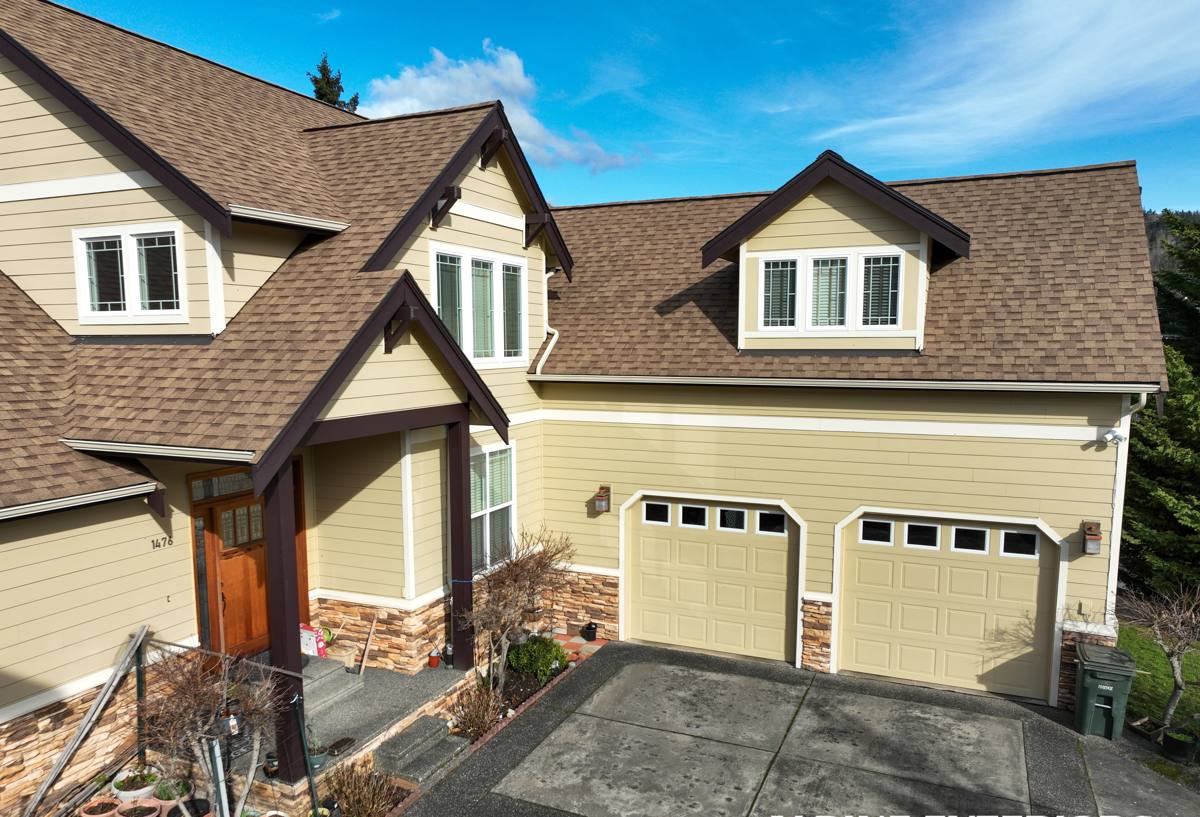
What Bellingham's Weather Actually Does to a Roof
Wind and Driving Rain
Whatcom County windstorms, especially the ones that roll through in late fall and winter, tend to come with a strong directional push rather than straight-down gusts. That matters for roofing because wind-driven rain gets forced up and under shingle tabs, flashing edges, and ridge caps in a way that vertical rain never does. A roof that's held up fine for years can develop a leak after one bad wind event simply because a seal that was already aging finally gave way.
Salt Air and Metal Fatigue
Columbia's proximity to Bellingham Bay means homes here get more salt exposure in the air than roofs further inland. Salt air accelerates corrosion on exposed metal — flashing, fasteners, gutter hardware, and vent caps — faster than in a dry inland climate. Corroded flashing is one of the most common root causes of a "mystery leak" we find after a storm; the shingles look fine, but the metal that was supposed to seal a valley or a chimney has quietly failed underneath.
Moss and Sustained Moisture
Bellingham's long, mild, wet season is close to ideal moss-growing weather, and moss is more than a cosmetic issue. It holds water against the roof surface long after a storm has passed, which keeps shingles saturated, degrades granule coverage, and can work its way under tabs and lift them. A roof with active moss growth going into a storm season is much more likely to develop damage from that storm than a clean one, because the moss has already compromised the shingles' ability to shed water.
Recognizing Storm Damage Before It Gets Worse
Most storm damage isn't obvious from the driveway. Some of it isn't obvious from a ladder either — it takes knowing what to look for. Here's what we check for on a post-storm inspection, and what homeowners can look for themselves between visits:
- Shingles that look lifted, curled, or out of alignment compared to the surrounding field
- Bare or shiny patches where granules have been stripped by wind-driven rain
- Soft or discolored spots on interior ceilings, especially near exterior walls or chimneys
- Flashing around chimneys, vents, and skylights that looks bent, separated, or rust-streaked
- Debris buildup or moss mats sitting in valleys where water is supposed to flow freely
- Granules collecting in gutters or at downspout outlets after a storm
- Gutters pulling away from the fascia or sagging under trapped debris and water weight
- Daylight visible through the roof deck from inside an attic space
Any one of these on its own might not mean much. Two or three together, especially right after a windstorm, is a good reason to get a roof looked at before the next system moves through.
What a Correct Storm Damage Repair Actually Involves
Assessment First, Not Guesswork
A proper storm damage repair starts with figuring out where the water is actually getting in, not just patching the spot where it showed up inside the house. Water can travel along rafters and decking for several feet before it drips through a ceiling, so the visible damage indoors and the actual entry point on the roof are often not in the same place. We trace it back — checking flashing, seams, fastener lines, and the roof deck itself — before deciding on a repair scope.
Matching the Repair to the Actual Damage
Not every storm-related issue needs a full section replaced, and not every issue can be fixed with a patch. Isolated wind lift on a handful of shingles is usually a straightforward repair. But if water has been sitting under those shingles for weeks before anyone noticed, the decking underneath may be soft or delaminated, and patching over compromised decking just sets up the next failure. Part of doing this correctly is being honest about which category a given repair falls into, rather than defaulting to the cheapest fix or the most expensive one.
Getting the Details Right
Storm repairs fail most often at the small details — a flashing lap installed backwards, fasteners that weren't reset to the right depth, shingle courses that don't tie into the surrounding pattern correctly, or sealant used in place of proper flashing work. We rebuild storm-damaged sections so they integrate with the existing roof's water path, not just cosmetically match it.
Repair Scope and Cost Factors
Storm damage repair costs vary a lot depending on how much of the roof is affected and whether the decking underneath was compromised. This is a general guide to help set expectations before an inspection — every roof is different, and the only way to know for sure is a physical assessment.
| Damage Level | Typical Scope | What's Usually Involved | Rough Cost Range |
|---|---|---|---|
| Minor | A few lifted or missing shingles, minor flashing issue | Shingle replacement, re-securing, spot flashing repair | $300 – $900 |
| Moderate | A section of roof affected, some decking exposure | Section tear-off, decking spot repair, new underlayment and shingles | $900 – $3,500 |
| Significant | Widespread wind damage or a leak that's been active for weeks | Larger section replacement, decking repair, flashing rebuild | $3,500 – $10,000+ |
| Deferred/Neglected | Long-standing moss or moisture damage discovered during storm repair | Rot remediation, structural decking replacement, possible full re-roof discussion | Varies widely — requires inspection |
Our Process for Columbia Storm Repairs
- Inspection and documentation. We get on the roof (or use safe alternative methods when conditions don't allow it) and document the actual condition with photos, not assumptions.
- Honest scope and options. We walk through what we found, what's causing it, and what the realistic repair options are — including telling you when something doesn't need fixing yet.
- Written estimate. No verbal ballpark that changes once work starts. You get a clear scope and price before we schedule anything.
- Repair work. We match materials and technique to the existing roof system so the repair holds up the same way the rest of the roof does.
- Final check. We confirm the repair area sheds water correctly and walk you through what we did.
Insurance and Storm Damage Claims
If a windstorm caused clear, sudden damage — shingles torn off, a tree limb impact, flashing ripped loose — that's often a straightforward insurance claim. Damage that built up gradually from moss and neglected maintenance is a different situation; most policies distinguish between sudden storm damage and long-term wear, and insurers know the difference. We give you an honest read on which category your damage likely falls into so you're not surprised by how a claim gets handled. We can provide documentation and photos to support a claim, but we don't inflate a report to make a claim more likely to succeed — that's not a risk worth taking with your policy or your home.
Why a Crew That Already Works Columbia Matters
Roofing crews who work primarily in drier inland climates sometimes under-build for what Bellingham roofs actually face — lighter flashing details, underlayment choices that aren't suited to sustained wet exposure, or repair techniques that hold up fine somewhere with less rain but don't last through a Whatcom County winter. A crew that regularly works Columbia and the surrounding Bellingham neighborhoods knows which failure points show up again and again in this specific climate — salt-air corrosion on flashing, moss-driven moisture retention, wind patterns off the bay — and builds repairs to hold up against those conditions specifically, not generic ones.
Preventing the Next Round of Storm Damage
A repair is a good moment to address the conditions that made the damage worse in the first place. That usually means:
- Clearing moss and treating the roof surface so it doesn't regrow immediately
- Making sure gutters and downspouts are clear before the wet season ramps up
- Trimming back overhanging branches that add wind-driven debris and shade that keeps moss thriving
- Having flashing and seals checked annually, since salt air ages metal faster here than in drier regions
- Addressing small issues — a lifted shingle, a soft spot — before the next storm system finds them
None of this is complicated, but it's the kind of maintenance that gets skipped until a storm forces the issue. Staying ahead of it costs a lot less than repairing what it prevents.
Get an Honest Look at Your Roof
If a recent storm has you wondering whether your roof took damage, or you've noticed a leak, missing shingles, or moss buildup that's been sitting for a while, we're happy to come take a look. The estimate is free, there's no pressure to move forward, and you'll get a straight answer about what's actually going on with your roof — whether that's a small repair or something more.