 Bellingham Siding
 Storm Season in Puget: What Bellingham Weather Does to a Roof
Homes in the Puget area of Bellingham sit close enough to the water that the weather off the Salish Sea shapes almost everything about how a roof ages. Winter storms bring driving, sideways rain rather than the straight-down kind, which pushes moisture up under shingle edges and into places a roof was never designed to shed water from. Add in wind gusts that funnel through the tree lines and off the bay, and you get lifted shingle tabs, torn ridge caps, and flashing that works loose a little more with every storm.
Salt-laden air is the quieter problem. It doesn't announce itself the way a missing shingle does, but it accelerates corrosion on exposed fasteners, metal flashing, and vent boots over years of exposure. Combine that with Whatcom County's long, wet moss season — moss can actively grow here nine or ten months out of the year under the right shade and moisture conditions — and you have a roof that's under more or less constant low-grade stress even between named storms.
None of this means Puget homeowners need to panic about their roofs. It means storm damage repair here has to account for causes that a drier or more inland climate simply doesn't deal with, and a repair that only patches the visible hole without addressing the underlying moisture and wind exposure tends to fail again within a season or two.
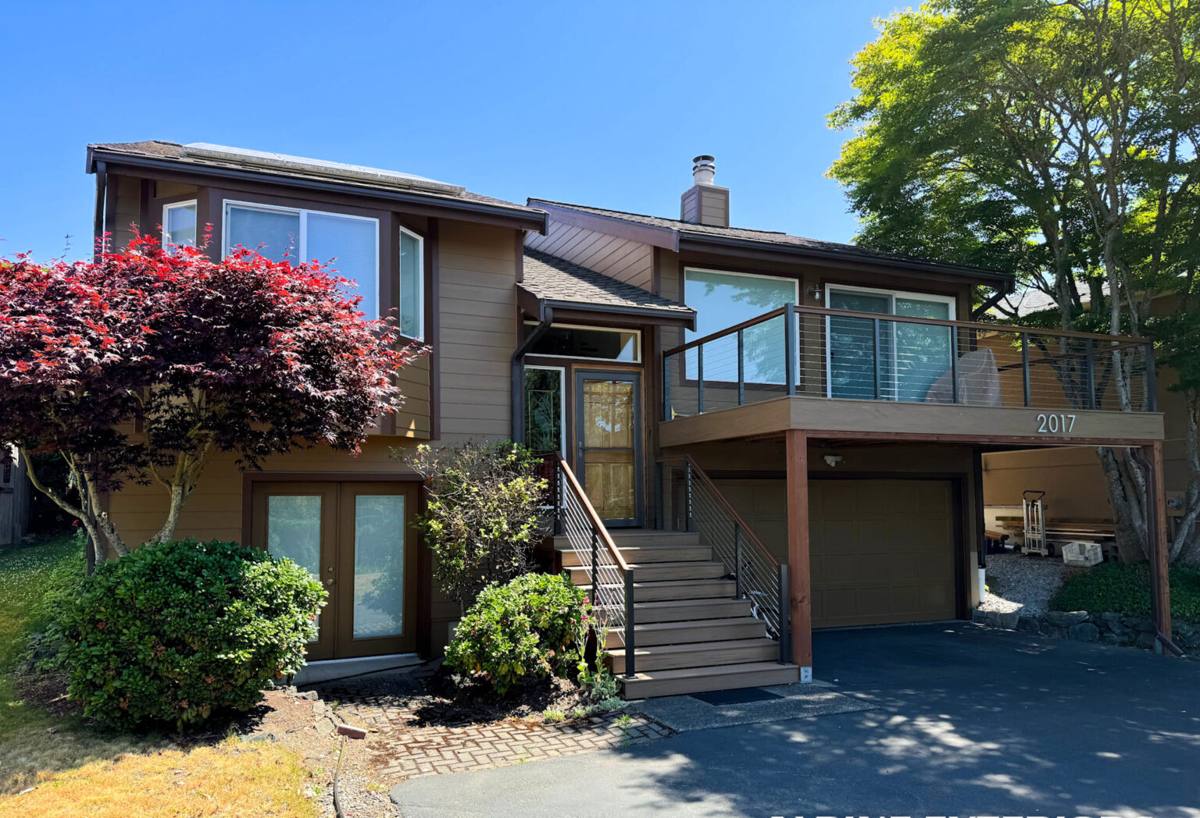
Recognizing Storm Damage on a Puget Roof
Storm damage isn't always obvious from the ground. Some of it shows up right after a windstorm; some of it shows up weeks later as a stain on a ceiling. Here's what we tell homeowners in this area to watch for after any significant wind or rain event:
- Shingles that look curled, cracked, or are missing granules — often visible as dark patches where the shingle surface has worn thin
- Lifted or torn tabs along roof edges and ridges, where wind gets the most leverage
- Bent, loose, or missing flashing around chimneys, skylights, and roof-to-wall transitions
- Granules collecting in gutters or at the base of downspouts after a storm
- Soft or spongy spots when walking the roof, which can indicate saturated decking underneath
- New or worsening moss growth along seams and in shaded valleys, which traps moisture against the roofing material
- Water stains, discoloration, or a musty smell in the attic or on interior ceilings
- Dented or cracked vent caps, especially after hail or windborne debris
Any one of these on its own might be minor. Several together, especially after a known storm event, are a good reason to have the roof looked at before the next round of rain finds its way in.
What a Proper Storm Damage Repair Actually Involves
Beyond the Visible Damage
A rushed repair replaces what's obviously broken and stops there. A correct repair starts with the assumption that wind-driven rain has probably gotten further than the visible damage suggests, and checks accordingly. That means pulling back shingles around the damaged area to inspect the underlayment and decking, not just swapping out the shingles that are missing.
Checking the Deck
Roof decking that's been wet repeatedly can delaminate or soften even if it still looks solid from above. We check for give underfoot and moisture at the seams before deciding whether the existing decking can be reused or needs to be cut out and replaced in that section. Skipping this step is the single most common reason a "repaired" roof leaks again the next winter.
Underlayment and Flashing
Given how much wind-driven rain this area sees, underlayment condition matters as much as the shingles themselves. Damaged or aged underlayment gets replaced, not patched over. Flashing around penetrations — chimneys, vents, skylights — gets the same treatment; a rushed reinstall of bent flashing is a near-guaranteed future leak point.
Matching Materials
Where a full section replacement isn't warranted, we match shingle type, color, and exposure as closely as the manufacturer's current line allows, so the repair doesn't stand out as a patch and so the repaired section weathers at a similar rate to the surrounding roof.
Repair or Replace? How We Make the Call
Not every storm-damaged roof needs full replacement, and not every roof that "just needs a patch" should be patched. The decision comes down to a few honest factors, which we walk through with the homeowner before recommending either direction.
| Factor | Repair Is Usually Right | Replacement Is Usually Right |
|---|---|---|
| Roof age | Under 12-15 years, otherwise sound | Nearing or past expected lifespan |
| Extent of damage | Localized — one slope, one area | Widespread across multiple slopes |
| Decking condition | Dry, solid underneath | Soft, delaminated, or repeatedly wet |
| Moss/moisture history | Minimal, recent growth only | Long-term moss with underlying wear |
| Material availability | Current shingle line still matches | Discontinued line, poor match likely |
We'd rather tell a homeowner honestly that a repair will hold for several more years than sell a full replacement that isn't needed yet — and we'd rather flag a roof that's genuinely at the end of its service life than patch it repeatedly and have it fail in the next storm.
Our Process, Start to Finish
- Inspection. We walk the roof (weather permitting) and the attic where accessible, and document what we find with photos.
- Honest assessment. We explain what's damaged, what caused it, and whether repair or replacement makes sense — in plain terms, not sales language.
- Temporary protection. If there's active leaking or exposed decking, we tarp or otherwise secure the area the same visit to stop further water intrusion.
- Written scope and estimate. A clear description of the work, materials, and cost before anything else happens.
- Repair work. Decking, underlayment, flashing, and shingles are addressed in that order, not shingles alone.
- Cleanup and debris removal. Old materials, nails, and granules are cleared from the roof, gutters, and ground.
- Final walkthrough. We show the homeowner the completed work and address any questions before calling the job done.
Materials and Methods Suited to This Climate
What holds up on a dry-climate roof doesn't always hold up a few miles from Bellingham Bay. A few choices we make specifically because of the local conditions:
- Synthetic underlayment in most repairs, for better resistance to the prolonged damp exposure common here compared to older felt products
- Ice-and-water shield at eaves, valleys, and around penetrations — the areas most exposed to wind-driven rain and ponding
- Corrosion-resistant fasteners and flashing given the salt content in the air this close to the water; standard fasteners simply don't hold up as long here
- Balanced attic ventilation so trapped moisture doesn't condense against the underside of the decking, which both shortens roof life and feeds moss and mildew
- Moss-resistant shingle options where a full replacement is on the table, particularly for slopes that stay shaded most of the year
None of this is exotic — it's standard practice adjusted for what actually wears a roof out in Whatcom County versus a drier part of the state.
Storm Damage and Insurance Claims
Many storm repairs in this area involve a homeowner's insurance policy, and we try to make that part as straightforward as possible without overpromising. We document damage thoroughly with photos and a written scope so there's a clear record if an adjuster needs it. We're happy to meet an adjuster on site and answer questions about the cause and extent of damage. What we won't do is inflate a scope of work to match a settlement amount, or guarantee how an insurer will rule on a specific claim — that decision sits with the insurance company, and any contractor who promises otherwise isn't being straight with you.
Why Local Experience in Puget Matters
A roofing crew that only shows up in this neighborhood after a storm is starting from zero every time — guessing at wind exposure, guessing at how shaded a particular slope stays, guessing at whether moss has been quietly working under the shingles for a season or two before anyone noticed. A crew that already works this part of Bellingham has a working sense of which streets catch the worst of the wind off the water, which lots hold shade and moisture longest, and how local homes of a given age and roof type typically hold up.
That familiarity also means a faster response after a storm, when timing matters most — a tarp on a damaged roof within a day or two is the difference between a contained repair and a much larger interior repair from water that had a week to spread.
Preventing the Next Storm From Doing the Same Damage
Storm damage repair fixes what already happened. A few habits reduce how much damage the next storm causes in the first place:
| Task | Recommended Frequency |
|---|---|
| Gutter and downspout cleaning | Twice a year, more with heavy tree cover |
| Moss treatment/removal | Annually, before the wet season builds up growth |
| Roof inspection | Once a year, and after any major storm |
| Overhanging branch trimming | As needed, at least every couple of years |
| Attic ventilation check | Every few years or with any new moisture signs |
Clear gutters keep wind-driven rain from backing up under the roof edge. Moss control keeps shingle surfaces from staying damp and deteriorating early. Regular inspection catches small issues — a lifted tab, a loose flashing piece — while they're still a small fix, before a storm turns them into a larger one.
Getting an Honest Look at Your Roof
If a recent storm has left you with missing shingles, a leak, or just a nagging feeling that the roof took a hit, it's worth having someone look before the next round of rain moves through. We offer free, no-pressure estimates for homeowners in the Puget area of Bellingham — a straightforward inspection, an honest answer about what's actually needed, and a written estimate you can take your time with. Reach out using the form below to get started.