 Bellingham Siding
 Storm Damage Roofing in Silver Beach: What Makes This Neighborhood Different
Silver Beach sits on the north side of Bellingham near Lake Whatcom, with a lot of tree-covered lots, older roof lines, and homes that catch wind funneling off the water and through the surrounding tree stands. That combination changes what "storm damage" usually looks like here compared to a wide-open subdivision. It's rarely one dramatic event that tears a roof apart. It's more often a hard windstorm that lifts a row of shingles just enough to break the seal, followed by weeks of Whatcom County drizzle finding that opening before anyone notices a problem inside.
We've worked enough Bellingham-area roofs to know the pattern: driving rain off a fall or winter storm gets pushed sideways under marginal flashing, moss that's been building all season holds moisture against the shingle mat, and salt-laden air off Bellingham Bay accelerates corrosion on fasteners, flashing, and gutter hardware even a few miles inland. None of that shows up as a hole in the roof. It shows up as a stain on a bedroom ceiling two months later. This page covers what storm damage repair actually involves for a Silver Beach home — how we assess it, what a correct repair looks like, and why hiring a crew that already knows this neighborhood's roofs matters more than it might seem.
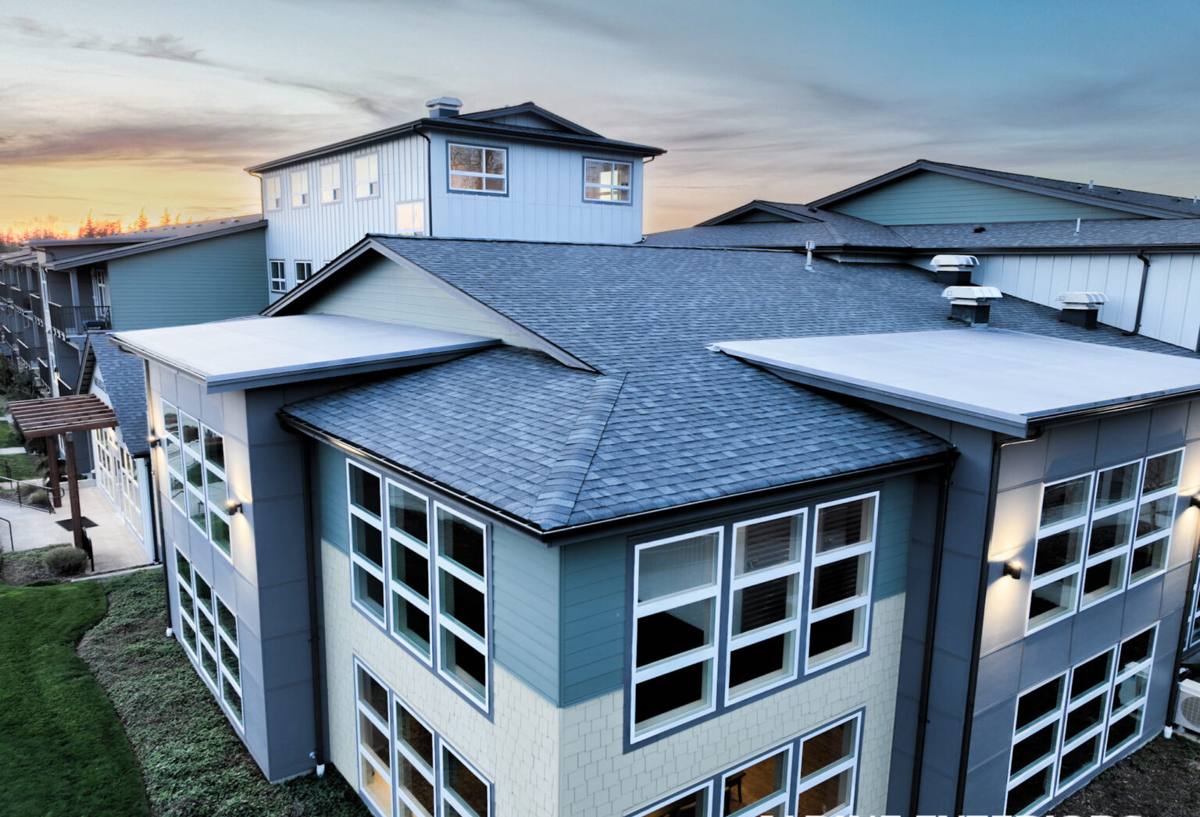
How Storms Actually Damage a Roof Here
Roof damage from Pacific Northwest storms is usually cumulative rather than sudden. Understanding the mechanism helps explain why we inspect the way we do.
Wind
Sustained wind and gusts don't need to remove shingles outright to cause a problem. Most damage starts with wind getting under a shingle tab, breaking the adhesive seal, and creasing it. The shingle can look nearly normal from the ground while no longer being watertight. Repeated wind events widen that gap over a season.
Wind-driven rain
Bellingham's storms tend to bring rain sideways, not straight down. That matters at every penetration point on the roof — chimney flashing, vent boots, skylight curbs, and the step flashing where a roof meets a wall or dormer. Water that would never get past standard flashing in a calm rain can be pushed uphill under it during a wind-driven event.
Moss and organic debris
Silver Beach's tree cover is part of what makes the neighborhood pleasant to live in, and it's also what keeps roofs shaded and damp for a large part of the year. Moss holds moisture against the shingle surface, lifts shingle edges as it grows, and traps needles and debris that clog valleys and gutters — which then backs water up under the shingle courses during the next storm. Moss damage and storm damage are often the same problem showing up on the same roof at the same time.
Corrosion from salt air
Homes anywhere in the greater Bellingham area, including inland neighborhoods like Silver Beach, get some benefit of proximity to Bellingham Bay's salt air. It's a slow effect, but it shortens the working life of exposed fasteners, flashing seams, and gutter systems compared to the same materials used further inland. A storm repair is a good moment to check whether corrosion, not just the storm, is the real reason a flashing seam failed.
Signs You Have Storm Damage Worth Checking
Most homeowners call us for one of two reasons: they saw obvious damage after a storm, or they found an interior stain with no idea how long it's been developing. Both are worth a look, but the earlier the better. Warning signs include:
- Shingles that look curled, cracked, creased, or missing after a windy night
- Granules collecting in gutters or at downspout outlets — a sign of shingle wear accelerated by wind abrasion
- A new ceiling stain, especially near a chimney, skylight, or where two roof planes meet
- Visible daylight or gaps in the attic near roof penetrations
- Moss buildup that's thick enough to hold water against the shingles, particularly on north-facing or shaded slopes
- Gutters pulling away from the fascia or overflowing during moderate rain
- Flashing that looks bent, lifted, or rusted at a seam
None of these guarantee active leaking, and none of them should be ignored either. A roof can shed water fine for a surprising amount of time with a compromised seal — until the one storm that finally pushes enough water past it.
What Happens If Storm Damage Sits Unrepaired
The risk with storm damage isn't usually the storm itself — it's the gap between when the damage happens and when it's found. Water finds the path of least resistance, and in an older roof deck that often means the damage shows up somewhere other than directly under the original opening. A few consequences of delay we see repeatedly:
- Underlayment saturation that spreads well beyond the original damaged shingles, turning a patch repair into a larger section replacement
- Sheathing rot, which is a structural repair, not a roofing repair, and considerably more expensive
- Insulation compression and mold risk in the attic once moisture gets past the deck
- Interior damage to drywall, framing, and finishes that costs more than the roof repair itself
- Insurance complications — most policies expect prompt mitigation, and delayed reporting can affect a claim
None of this means every storm requires a full roof replacement. Most storm damage we find in Silver Beach is repairable in a focused area if it's caught within a reasonable window. The point is that "it's not leaking yet" isn't the same as "it's fine."
Our Storm Damage Repair Process
We keep this straightforward because storm repair is stressful enough without a confusing process on top of it.
- Inspection. We walk the roof and the attic, not just one or the other. Exterior damage tells us where the storm hit; interior signs tell us where the water actually went, and those two points aren't always the same.
- Documentation. We photograph and note the damage in a way that's usable for an insurance claim, whether or not you end up filing one.
- Temporary protection if needed. If there's active exposure, we get the area covered before we leave, so a follow-up storm doesn't compound the problem while repairs are scheduled.
- A clear scope. We tell you plainly what's damaged, what caused it, and what the repair options are — targeted repair versus a larger section, and why.
- The repair. Matched materials where possible, correct flashing and underlayment detail at every penetration in the repair area, and fasteners and hardware suited to this climate, not just whatever's fastest.
- Cleanup and check. We clear debris, check gutters and downspouts in the repair zone, and confirm the fix before we consider the job done.
We don't upsell a full roof replacement to fix a storm-damaged section unless the roof's overall condition genuinely calls for it. If the rest of the roof has useful life left, a correct repair is the honest answer.
Repair Approach: Matching the Fix to the Damage
Not every storm-damaged roof needs the same response. The table below outlines how we think through the common scenarios.
| Situation | Typical Approach | Key Consideration |
|---|---|---|
| A handful of lifted or missing shingles, roof otherwise sound | Targeted shingle and underlayment repair | Matching existing shingle color and profile as closely as possible |
| Flashing failure at a chimney, skylight, or wall intersection | Full flashing replacement at that penetration, not just re-sealing | Sealant alone is a short-term fix; proper flashing geometry is the real fix |
| Storm damage layered on heavy moss coverage | Moss and debris removal first, then repair, then a maintenance plan | Repairing over moss just traps moisture again |
| Water intrusion with visible deck or sheathing damage | Localized deck replacement plus roofing repair | Sheathing must be sound before new roofing goes over it |
| Widespread wind damage across multiple slopes | Larger section or full roof assessment | Compare age and remaining life of the whole roof, not just the damaged area |
Insurance and Storm Claims
Many storm repairs in this area go through homeowners' insurance, and we're used to working within that process. We provide clear photo documentation and a written scope that adjusters can use, and we'll walk you through what's typically covered — wind and rain damage usually is, while damage attributed to long-term neglect, like moss that's gone unmanaged for years, often isn't. We're straightforward about that distinction upfront, because a mixed cause on a roof (storm plus prior wear) is common and it's better to know how a claim is likely to be viewed before you file it than after.
We're not a public adjuster and won't pretend to be one, but a documented, professional repair scope makes the claims conversation with your insurer considerably smoother.
Moss Season and Timing in Silver Beach
Whatcom County's wet season runs long, and Silver Beach's tree cover keeps roofs damp longer after a storm than a more exposed property nearby. That has two practical effects on timing. First, storm damage found in fall or winter often can't wait for a dry spell to fix properly — we work through the wet months and manage weather around the repair, not the other way around. Second, if moss is part of what's going on, late storm season is a reasonable time to have it addressed alongside the repair, since removing it before spring growth resumes gets more life out of the fix.
Choosing a Contractor for Storm Repair in This Neighborhood
Storm damage brings out a lot of door-knocking crews after a bad windstorm, and Silver Beach homeowners aren't immune to that. A few things worth checking before you hire anyone:
- Washington contractor license and current insurance, verifiable and not just claimed
- A physical local presence, not just a phone number tied to a storm-chasing crew from out of the area
- A written scope of work before any payment, not a verbal estimate and a rushed contract
- Willingness to show you the damage directly — on the roof or in photos — rather than just stating a price
- No pressure to sign an insurance assignment of benefits without reading it carefully
- A clear answer on flashing and underlayment detail, not just "we'll replace the shingles"
A crew that already works this part of Whatcom County knows how Silver Beach's tree cover, moss cycle, and wind exposure interact, and that experience shows up in fewer callbacks and a repair that actually holds through the next storm season.
Get a Free, No-Pressure Estimate
If a recent storm left you with missing shingles, a new stain on a ceiling, or just a nagging feeling something's not right up there, it's worth a proper look before the next round of Bellingham rain finds the gap. Fill out the form below for a free estimate — no pressure, no obligation, just a straight answer on what's going on with your roof and what it would take to fix it right.