 Bellingham Siding
 Why Windows Fail Faster in Sudden Valley
Sudden Valley sits back in the trees along Lake Whatcom, and that setting is exactly why windows in this community wear differently than windows on an open, sunny lot closer to town. Heavy tree canopy means less direct sun to dry out siding and window frames after a storm. Lake humidity sits in the air longer than it would on a breezier, more exposed site. And a lot of the original homes out here were built as cabins and vacation properties decades ago, then converted to full-time residences over the years — which means plenty of them are still running on the windows they were built with.
None of that is a knock on the neighborhood. It's just the reality of a wooded, lake-adjacent community in Whatcom County, and it means window decisions here should account for moisture and shade first, and curb appeal second.
What Bellingham's Climate Does to Windows Over Time
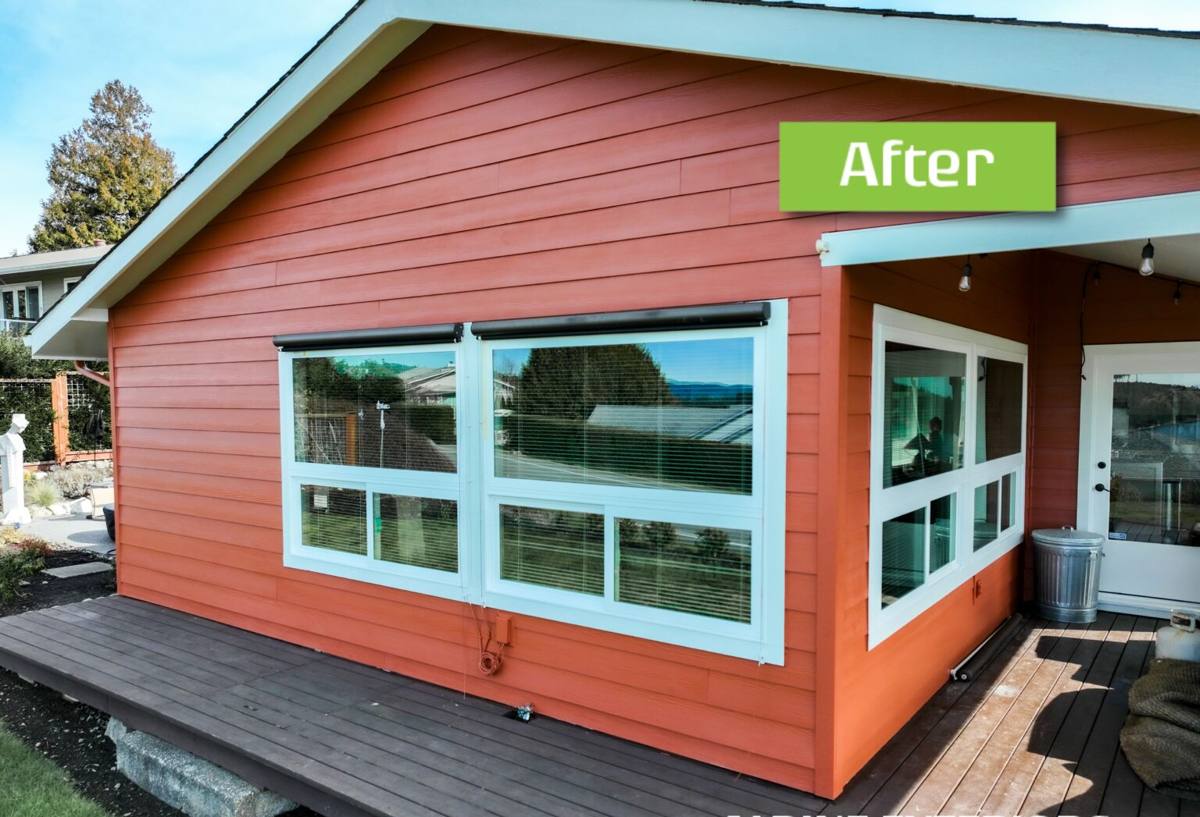
Whatcom County's marine climate is mild, but it's relentless. Salt-tinged air moves inland off the bay and settles into the county for months at a stretch, driving rain comes in sideways during fall and winter storms, and low, wet winters give moss a long season to take hold — on roofs, on north-facing siding, and in window tracks and sills that don't get much sun exposure. Add Sudden Valley's tree cover on top of that and you get windows that stay damp longer between dry spells than windows would in a more open part of Bellingham.
What this actually does to a window
- Aluminum-frame windows (common in older builds) corrode and pit at the hardware and seams over time
- Wood sills and frames absorb moisture, swell, and eventually rot if they're not sealed and maintained
- Moss and organic buildup hold moisture against sills and tracks longer than plain dirt would
- Weatherstripping and old glazing compounds break down faster in constant damp-dry cycling
- Single-pane and early dual-pane glass fogs or seals-fails as the edge seals age
Signs Your Windows Are Costing You Money
Most homeowners don't notice window failure as a dramatic event — it shows up as a slow creep in comfort and heating bills. Here's what to watch for:
- Fogging or a milky haze between the panes (the seal has failed and the gas fill is gone)
- A noticeable draft near the frame even with the window latched shut
- Frames that are swollen, sticky, or hard to open — especially on north- or shade-facing walls
- Visible moss, black staining, or soft wood at the sill or bottom corners
- Condensation forming on the inside of the glass regularly through the winter
- Rooms near older windows that feel noticeably colder than the rest of the house
Any one of these on its own isn't an emergency. Several of them together, especially on a home that's still running original windows, usually means the glass and frame are no longer doing their job.
What "Energy-Efficient" Actually Means for This Climate
Energy-efficient window marketing tends to focus on hot, sunny climates — solar heat gain, keeping cooling costs down. That's not the priority here. In Bellingham, the job of a good window is to hold heat in, resist condensation, and shrug off constant moisture without degrading. That changes which specs actually matter for a Sudden Valley home:
The specs worth paying attention to
- U-factor — how well the window resists heat loss. Lower is better; this matters more here than solar heat gain coefficient does.
- Condensation resistance rating — directly relevant given how much moisture sits in the air around the lake and under tree cover.
- Low-E coated, gas-filled dual or triple-pane glass — reduces heat loss through the glass itself, not just the frame.
- Warm-edge spacer systems — the material separating the panes affects both insulation and how long the seal lasts in damp conditions.
- Frame material — has to tolerate years of damp shade without warping, rotting, or corroding.
A window can carry a great efficiency rating on paper and still underperform here if it's not installed with proper flashing and sealing against wind-driven rain. The product matters, but the installation is what actually keeps water and cold air out over the long run.
Frame Material Trade-Offs for a Shaded, Damp Lot
There's no single "correct" frame material for every house — it depends on the home's age, exposure, and how much upkeep the owner wants to do. Here's how the common options actually compare in a climate like this:
| Frame Type | Moisture Performance | Maintenance | Best Fit |
|---|---|---|---|
| Vinyl | Won't rot or corrode; handles constant damp well | Low — no painting or sealing needed | Most Sudden Valley homes, especially shaded lots |
| Fiberglass | Excellent — very stable through wet/dry cycling | Low | Homes wanting a higher-end frame with minimal upkeep |
| Wood | Needs consistent sealing to prevent rot in constant shade | High — periodic painting/sealing required | Homes prioritizing a traditional wood look and willing to maintain it |
| Wood-clad (wood interior, composite exterior) | Good — exterior shell protects the wood from weather | Moderate | Homes wanting a wood interior look with less exterior upkeep |
| Aluminum | Poor in this climate — prone to corrosion and thermal loss | Moderate | Generally not our recommendation for damp, shaded lots |
We steer most Sudden Valley homeowners away from bare aluminum replacements not because it's a bad product everywhere, but because it conducts cold and corrodes faster in exactly the conditions this neighborhood has — constant shade, lake humidity, and long stretches without a real dry-out period.
How We Approach a Window Job Out Here
- On-site assessment — we look at sun exposure, tree cover, existing frame condition, and any signs of rot or moisture intrusion before we recommend anything.
- Measure and select — matched to the opening, the home's age of construction, and the specific wall's exposure (a north-facing, tree-shaded wall may warrant a different spec than a south wall).
- Remove and inspect the opening — this is where hidden rot or old water damage shows up, and it needs to be dealt with before a new window goes in, not covered over.
- Flash and seal properly — correct flashing tape, sill pans, and sealant sequencing so wind-driven rain can't get behind the new window.
- Install and insulate — window set plumb and square, gaps insulated (not just caulked), interior and exterior trim finished.
- Clean up and haul away — old windows and debris removed from the site.
The install sequence matters as much as the window itself. A quality window with sloppy flashing will leak eventually; a mid-grade window installed correctly will outperform it.
Why Local Experience in Sudden Valley Matters
A crew that's worked this community before knows things a general contractor coming in cold won't — how the older cabin-era homes were originally built, what to expect when opening up a wall that's been shaded and damp for fifty years, and how tree-covered lots affect access, staging, and drying time during the job. If Sudden Valley's HOA has design or exterior guidelines that apply to your project, a local crew is also more likely to have already worked within them.
Beyond that, local experience means fewer surprises mid-job. We know which conditions in this specific area tend to hide rot behind old trim, and we plan for that instead of discovering it halfway through and stalling the project.
What Affects Window Replacement Cost
| Factor | Why It Matters |
|---|---|
| Number of windows | Per-window cost typically drops on larger, whole-house projects |
| Frame material | Vinyl is generally the most budget-friendly; fiberglass and wood-clad cost more upfront |
| Window size and style | Larger openings and specialty shapes (bay, picture, custom) cost more than standard sizes |
| Existing damage | Rot or water damage found at removal adds repair work beyond the window itself |
| Access and site conditions | Tree-covered or hard-to-reach openings can affect staging and labor time |
| Glass package | Dual vs. triple-pane, low-E coatings, and gas fill all affect price and performance |
We give a firm, written quote after seeing the actual openings — we don't quote sight unseen, because on older Sudden Valley homes, what's behind the existing trim can change the scope.
A Quick Checklist Before You Decide
- Are your windows original to the home, or a prior replacement?
- Do you see fogging, drafts, or condensation between panes on any of them?
- Is there visible moss, staining, or soft wood at any sills?
- Do any windows stick, swell, or resist opening seasonally?
- Have you had any water intrusion around a window during a heavy storm?
- Are you comparing quotes that include flashing and installation detail, not just the window price?
If you can check even two or three of these, it's worth having someone look at the openings before another wet season goes by.
If you're in Sudden Valley and want a straight answer on whether your windows need replacing or just some maintenance, we're glad to take a look. The estimate is free, there's no pressure, and you'll get a clear explanation of what we see — just fill out the form below to get started.