 Bellingham Siding
 Siding Replacement in Sudden Valley: A Different Job Than a Repair
Replacing siding is a different project than patching it, and on a Sudden Valley property, the gap between those two jobs tends to be wider than homeowners expect. This is a heavily wooded, lakeside community on Lake Whatcom, and the same tree canopy and humidity that make the neighborhood attractive to live in are hard on whatever material is covering the walls. By the time siding on a Sudden Valley home has reached the point where a homeowner is seriously considering full replacement, there's usually more going on behind the wall than what's visible from the yard. This page is specifically about that job: full siding replacement on a Sudden Valley home, what it should involve, and what to expect from a crew that already knows this community's conditions.
We install one siding system on every replacement project: James Hardie fiber cement. Everything below is written around that standard, because a replacement is a once-in-a-generation decision for most homeowners, and we don't think it's the moment to install something we'd expect to be having this same conversation about again in fifteen years.
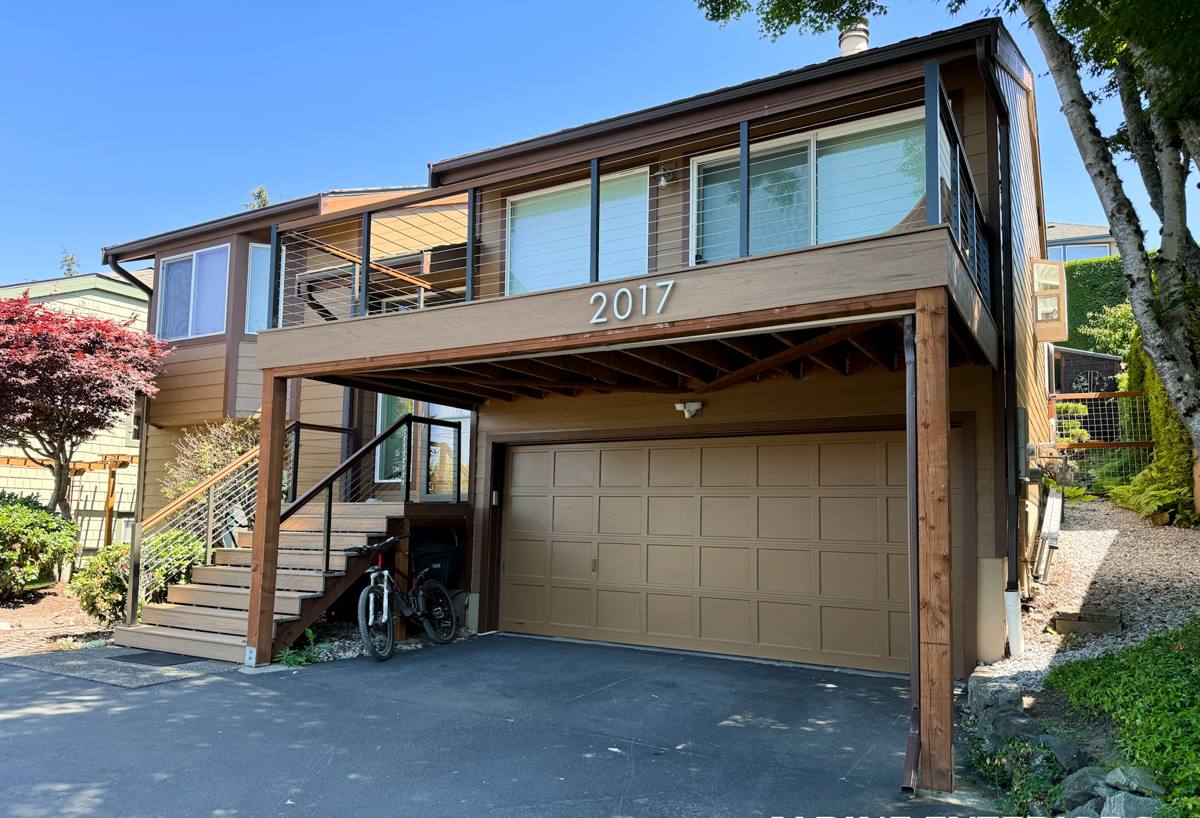
Why Sudden Valley Wears Out Siding Faster Than Open, In-Town Lots
Heavy Tree Canopy and Walls That Never Fully Dry
Most lots in Sudden Valley sit under substantial second-growth forest, and it's common for a home to have one or more wall faces that get very little direct sun across the entire year. A wall that dries out within a few hours of a storm ending behaves very differently, over decades, than a wall that stays damp for days. Siding that depends on sun exposure to shed moisture between rain events doesn't get that chance here, and that's a large part of why replacement timelines on shaded Sudden Valley elevations often run shorter than the manufacturer's general expectations for the region.
Driving Rain and Lake Humidity
Whatcom County sits inside a marine weather pattern that pushes rain sideways more often than it falls straight down, and the same weather systems that carry salt-tinged air off Bellingham Bay reach this far inland too, adding to the moisture load Lake Whatcom already puts into the air around Sudden Valley. Add the community's hilly terrain — homes here sit at a range of elevations and orientations relative to the lake and the surrounding ridgelines — and different walls of the same house can take on very different amounts of wind-driven water. A replacement has to account for that wall-by-wall variation rather than treating the whole house as one uniform exposure.
A Long Moss Season
Shade, humidity, and Whatcom County's mild temperatures add up to a moss and mildew season that runs most of the year on Sudden Valley's shaded walls and roof planes. On siding, that's not just a staining problem. Sustained moisture sitting against a porous or moisture-absorbing material is what eventually leads to swelling, softening, and rot at seams and cut edges — and it's frequently the actual reason a homeowner ends up needing full replacement instead of a simple repair.
Repair or Full Replacement? How We Make That Call
Not every siding problem on a Sudden Valley home means the whole house needs to come off. Isolated impact damage, a section that failed around a single window, or trim that's come loose can often be repaired and matched into existing siding without a full tear-off. We'll always say so plainly when that's the honest answer, because a repair that will genuinely hold is a better outcome for a homeowner than an unnecessary full job.
Full replacement becomes the right call in a few specific situations: when moisture has clearly been tracking behind the wall assembly for an extended period, when the existing siding is an older material that's reached the natural end of its service life, when damage is spread across multiple elevations rather than isolated to one spot, or when the sheathing underneath has already been compromised and needs to be exposed and addressed properly. On a shaded, moisture-heavy lot, that last situation shows up more often than homeowners expect, because damp sheathing doesn't always announce itself with visible siding problems until it's fairly advanced.
What a Correct Full Replacement Actually Involves
Tear-Off and What It Reveals
Full removal of the old siding is what exposes the sheathing and framing underneath, and on a Sudden Valley property that's the point in the project where hidden problems become visible — soft or delaminated sheathing, framing that's taken on moisture around window openings, or house wrap that failed years ago without ever showing on the surface. We treat this discovery as a normal, expected part of a replacement on a shaded, damp lot rather than a surprise change order sprung on a homeowner mid-project. Any substrate repair needed gets identified, explained, and addressed before a single new board goes up.
Weather-Resistive Barrier and Flashing
New house wrap or weather-resistive barrier goes on next, lapped correctly from the bottom of the wall up so water is always shed downward and outward, never trapped behind a seam. Flashing at every window, door, and penetration gets integrated into that barrier as one continuous system, not treated as a separate step done after the fact. On walls that stay damp longer because of tree cover, this layer is doing more work over the life of the siding than it would on a sunnier lot, which is exactly why it's not a place to cut corners or rush.
Clearances, Fastening, and Joints
James Hardie only performs the way it's engineered to when it's installed to the manufacturer's published specifications: correct fastener type and spacing, proper clearance from grade, roofline, and any hardscape, and joints that are lapped and sealed the way the spec calls for. On some wall assemblies a rain-screen or drainage gap behind the panels is the correct detail for a consistently damp, shaded property — we'll tell you when that applies to your home rather than skipping it to save a step.
Finish and Final Details
We install James Hardie's factory-applied ColorPlus finish rather than field-painted boards wherever it's an option, because a color coat cured under controlled factory conditions holds up to years of shade and dampness far better than paint applied on-site. Trim, caulking at appropriate joints, and a final walkthrough close out the job — and we point out anything a homeowner should keep an eye on going forward, particularly on the shadiest elevations of the house.
Why We Replace With James Hardie Fiber Cement — Not Vinyl, LP SmartSide, or Wood
A full siding replacement is an expensive, disruptive project that most homeowners only want to go through once. That's the entire reason we standardized on one product for this work instead of offering a menu.
- Non-combustible core: fiber cement doesn't feed a fire the way wood-based siding can, which matters in a heavily forested community surrounded by trees.
- Dimensional stability: it doesn't swell, cup, or warp the way engineered wood can after repeated wetting cycles that never fully resolve on a shaded wall.
- Factory-applied ColorPlus finish: baked on under controlled conditions, resisting the fading and chalking that constant dampness and UV cycling accelerate.
- Climate-engineered HZ product lines: Hardie's HZ5 formulation is built for regions with heavy sustained moisture and freeze-thaw cycling, which fits Sudden Valley's lake-and-forest conditions.
- Strong transferable warranty: backed by Hardie, provided the installation follows their published specifications — one more reason correct installation isn't optional.
We don't install LP SmartSide, vinyl siding, Cemplank, Allura, primed spruce, or cedar. Those are legitimate products and other contractors install them competently. Our decision came from what we kept seeing on tear-offs like the ones described above: on a shaded, moisture-retentive lot, materials that depend on a field-applied coating or that absorb moisture directly tend to shift real maintenance cost back onto the homeowner within a decade or two. On a project as significant as a full replacement, we'd rather stand behind one system completely.
Our Sudden Valley Siding Replacement Process
- On-site assessment: we walk every elevation of the home, noting shade patterns, existing damage, and any areas where moisture has likely been an issue longer than it's been visible.
- Written scope and timeline: a clear plan covering tear-off, expected substrate work, material selection, and color before anything is signed.
- Tear-off and substrate inspection: old siding comes off, sheathing and framing get inspected, and any repair needs are identified and explained before moving forward.
- Weather-resistive barrier and flashing: new house wrap and flashing installed as one integrated system at every window, door, and penetration.
- Hardie installation to spec: correct fastening, clearances, joint treatment, and drainage detailing for the specific wall and its sun exposure.
- Final walkthrough: trim and finish details reviewed with the homeowner, along with anything worth watching on the shadiest sides of the house.
Cost Factors in a Sudden Valley Siding Replacement
| Factor | What It Affects | Why It Matters in Sudden Valley |
|---|---|---|
| Home size and wall complexity | Total material and labor | More trim, dormers, and roof intersections create more places wind-driven rain can work its way in |
| Extent of hidden substrate damage | Repair costs uncovered at tear-off | Prolonged shade and dampness on some elevations means sheathing damage is more common here than on open lots |
| Site access and terrain | Labor time, staging, and equipment needs | Sloped, wooded lots and private-road access can add setup and material-handling time |
| Tear-off volume and disposal | Labor scope and haul-away costs | Full removal of older siding is standard on a full replacement and scales with home size |
| Drainage or rain-screen detailing | Material and labor for the wall assembly | Consistently shaded walls sometimes call for added drainage detail behind the siding |
| Trim and color selection | Material cost and long-term finish life | Factory ColorPlus finish outlasts field-applied paint on walls that rarely see direct sun |
Real numbers depend on what we find once we're actually looking at the house, especially the condition of the sheathing underneath the existing siding, which is why we walk the property and give a written scope rather than quoting from square footage alone.
Signs Your Sudden Valley Home's Siding Needs Full Replacement
- Moss or dark staining on shaded walls that returns quickly after cleaning
- Soft, spongy, or springy siding when pressed, especially near the base of walls or around trim
- Siding that's cupping, warping, or separating at seams across more than one wall
- Paint that keeps failing or peeling no matter how recently it was redone
- Visible gaps at trim or corner joints where water can track behind the wall
- A musty smell or water staining on interior walls near an exterior surface
- Siding that's original to a home built more than a few decades ago and has never been replaced
Any single item on that list doesn't automatically mean full replacement is the only option, but on a shaded, damp Sudden Valley lot, several of them showing up together usually does.
Why Hiring a Crew That Already Works Sudden Valley Matters
Sudden Valley is a private community with its own internal road network and a homeowners association, and that has real, practical effects on a siding replacement project — how deliveries and staging get scheduled, how a crew works around the community's access rules, and how much material handling a wooded, sloped lot requires compared to a flat in-town yard. A crew that already works here regularly has that logistics side figured out before the first truck shows up.
It also shows up in the technical decisions that matter most once the walls are open: which elevations need extra drainage detailing because they never see direct sun, how flashing needs to be lapped on a steep roof-to-wall transition shaded by tall trees, and which fastener grade actually holds up in a damp, wooded microclimate over the following decades. Those are the details a crew learns from working this specific community repeatedly, not from a general siding background applied to a neighborhood they've never worked in before.
- Confirm current Washington contractor licensing and active liability insurance
- Ask what happens, in writing, if hidden substrate damage turns up during tear-off
- Ask specifically how they detail drainage and flashing on shaded, tree-covered walls
- Ask about experience with Sudden Valley's HOA and private-road access requirements
- Get a written scope of work and a stated warranty before signing anything
If your Sudden Valley home's siding is showing its age, or you just want an honest, no-pressure read on whether it's a repair or a full replacement, we're glad to walk the property with you. Reach out using the form below to schedule a free estimate.