 Bellingham Siding
 Why Sunnyland Roofs Take a Different Kind of Beating
Sunnyland is a quiet, established residential neighborhood in Bellingham, and like most of Whatcom County it doesn't get the roofing punishment of a hailstorm belt or a wildfire zone. What it gets instead is slower and more persistent: months of low-intensity moisture, salt-tinged air moving in off the water, and enough shade and dampness in the right spots to keep moss and algae in business year-round. Asphalt shingles handle this climate well when they're installed correctly. When they're not, the problems show up gradually — a soft spot here, a granule trail in the gutter there — until one wet winter turns a small issue into a real one.
Salt Air and Marine Moisture
Bellingham sits close enough to salt water that homes across the city, including Sunnyland, deal with airborne salt and moisture settling on exterior surfaces. On a roof, that moisture doesn't just sit on top of the shingle — it works into fasteners, flashing, and any exposed metal. Galvanized or poorly coated fasteners and flashing corrode faster here than they would inland, which is one reason material selection matters as much as the shingle brand itself.
Driving Rain Off Bellingham Bay
Rain in this part of Washington rarely comes straight down. Wind off the water pushes it sideways, which means it hits vertical surfaces, works up under shingle tabs, and finds its way into any gap in flashing or underlayment that a drier climate might get away with. A roof built for Arizona or even inland Washington isn't automatically built for wind-driven rain hitting it from the side for days at a stretch.
A Long, Shaded Moss Season
Bellingham's moss season isn't really a season — on shaded, north-facing slopes it's closer to year-round. Moss holds moisture against the shingle surface, lifts tabs as it grows, and shortens the practical lifespan of an otherwise sound roof. Homes in Sunnyland with mature trees or tight side yards tend to see moss on the north and west-facing slopes first, and that's exactly where a roof needs the most attention during maintenance.
What "Correct" Actually Means on an Asphalt Shingle Roof Here
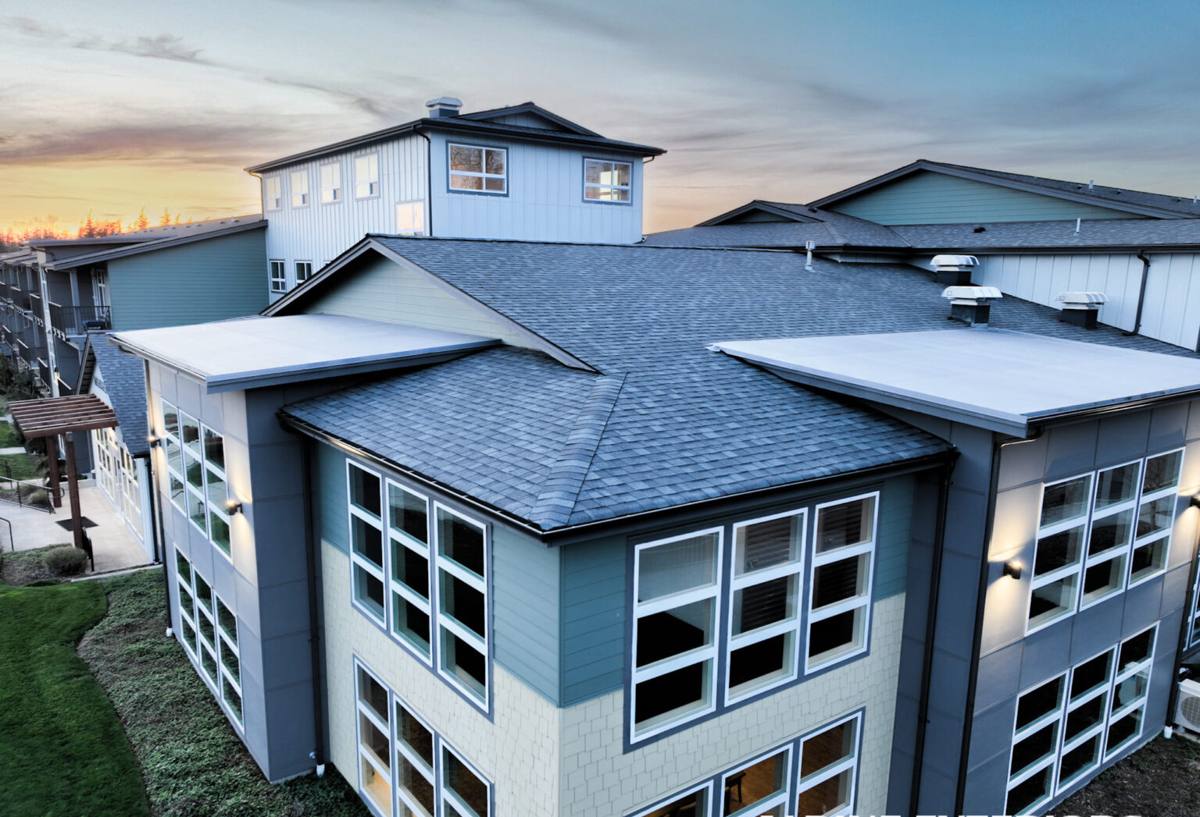
A shingle roof is a system, not a single product. In this climate, the parts underneath the shingle do as much work as the shingle itself.
Underlayment and Water Barrier
A synthetic underlayment with real tear resistance, installed with proper overlaps, is the baseline in this climate — not an upgrade. In areas prone to ice damming or valley concentration, a self-adhered ice-and-water membrane at eaves, valleys, and penetrations gives the roof a second line of defense for the times wind-driven rain gets past the shingle surface.
Ventilation That Actually Works
Poor attic ventilation traps moisture underneath the roof deck, which shortens shingle life from below at the same time moss and rain are working it from above. A balanced system — intake at the eaves, exhaust at the ridge — keeps the deck dry and helps the shingles perform closer to their rated lifespan instead of failing early from trapped humidity.
Flashing Details
Most roof leaks in this region don't start in the open field of shingles — they start at flashing: chimneys, skylights, sidewalls, and roof-to-wall transitions. Step flashing, counter-flashing, and properly lapped valley metal, all in corrosion-resistant material given the salt air, are what keep those transition points dry through a wet Bellingham winter.
Choosing a Shingle System for This Neighborhood
Not every asphalt shingle is built the same way, and the differences matter more here than they would in a milder, drier climate. The table below compares the shingle characteristics most relevant to Sunnyland conditions.
| Shingle Feature | Standard 3-Tab | Architectural / Laminate |
|---|---|---|
| Wind resistance | Lower rated, more prone to lifting in driving rain and gusts | Higher rated, better suited to coastal wind exposure |
| Algae/moss resistance | Available on some lines, but coating is thinner | Usually available with a more durable algae-resistant coating |
| Expected lifespan in this climate | Shorter, especially on shaded slopes | Longer, particularly with proper ventilation and maintenance |
| Upfront cost | Lower | Moderate to higher |
| Appearance | Flat, uniform tab pattern | Dimensional, heavier shadow lines |
For most Sunnyland homes, we recommend an architectural shingle with an algae-resistant coating. The upfront cost difference is modest compared to the difference in how the roof holds up against moss regrowth and wind-driven rain over its lifespan. That said, a well-installed 3-tab roof with correct underlayment and ventilation can still be a reasonable, honest option for homeowners working within a tighter budget — the installation quality underneath matters more than which shingle line sits on top.
Our Process, Start to Finish
- Roof and attic inspection. We check the shingle surface, flashing, valleys, and attic ventilation before recommending repair or replacement — not before.
- Honest scope of work. You get a written plan covering tear-off (if needed), underlayment, flashing, ventilation, and shingle selection, so there's no ambiguity about what's included.
- Deck inspection during tear-off. Any soft or water-damaged decking gets identified and replaced before new underlayment goes down — covering a bad deck with new shingles just hides the problem.
- Underlayment and flashing installed to spec. This is where most of the roof's actual weather resistance comes from, and it's the step that's easiest to shortcut if a crew is rushing.
- Shingle installation with attention to nailing pattern and exposure. Correct fastener placement and exposure are what keep shingles from lifting in the wind events this area gets in fall and winter.
- Final walkthrough. We go over the finished roof, ventilation, and any warranty paperwork with you before calling the job done.
Moss and Algae: What Actually Slows It Down
No roof in Bellingham is moss-proof, but the right combination of choices makes a real difference in how often it needs attention:
- Algae-resistant shingle coatings that release trace amounts of metal ions to slow regrowth
- Zinc or copper strips near the ridge on moss-prone slopes, which help limit regrowth as rain washes over them
- Keeping overhanging branches trimmed back so shaded slopes get more light and airflow
- Gentle, low-pressure moss removal on a regular schedule rather than aggressive pressure washing, which can strip protective granules
- Clear gutters and valleys so water isn't sitting against the shingle edge longer than it needs to
None of these eliminate moss entirely in a climate like this one, but together they meaningfully extend the interval between cleanings and reduce the chance moss lifts tabs before the shingles are otherwise due for replacement.
Repair or Replace? Reading the Signs
Not every roof problem in Sunnyland means a full replacement. Isolated flashing failures, a handful of wind-lifted shingles, or a damaged section around a chimney are often repairable if the rest of the roof is sound. Signs that point toward repair rather than replacement include a roof under 15 years old, damage limited to one area, and a deck that's still solid underneath. Signs that point toward replacement include widespread granule loss, shingles that are curling or cupping across multiple slopes, recurring leaks in different spots each winter, or a deck with soft spots found during inspection. An honest inspection should tell you which category your roof falls into — a roof that only needs a repair shouldn't be sold as a replacement, and a roof that's genuinely failing shouldn't be patched repeatedly just to delay the real conversation.
Cost Factors for a Sunnyland Roof
Every roof is different, but the factors that move the price of an asphalt shingle roof in this area tend to be the same ones:
| Factor | Why It Affects Cost |
|---|---|
| Roof size and pitch | More square footage and steeper slopes mean more material and labor time |
| Number of layers to remove | Tear-off of existing layers adds labor and disposal cost |
| Deck condition | Rotten or soft decking found during tear-off requires replacement before new roofing goes down |
| Shingle grade selected | 3-tab, architectural, and premium lines carry different material costs |
| Flashing and penetration complexity | Chimneys, skylights, and multiple valleys take more time to flash correctly |
| Ventilation upgrades | Adding or correcting intake and exhaust ventilation is worth the modest added cost |
We don't quote a roof over the phone. A firm number comes after we've actually looked at the deck, the pitch, and the access — anything else is a guess dressed up as an estimate.
Why a Crew That Already Works Sunnyland Matters
A roof installed for this climate looks slightly different from a roof installed for a drier one — the underlayment choices, the flashing details, the ventilation balance, and the shingle coating all get adjusted for salt air, driving rain, and a long moss season. A crew that works this specific pocket of Whatcom County day in and day out isn't guessing at those adjustments; it's routine. That familiarity also shows up in smaller ways — knowing which slopes in a shaded lot are going to need moss attention first, or which flashing details tend to fail on homes of a certain age in this area.
Before hiring anyone for a roof in Sunnyland, it's worth asking a few direct questions:
- Are you licensed and insured to do roofing work in Washington State?
- Will you inspect the roof deck during tear-off, and how do you handle rot if you find it?
- What underlayment and flashing materials do you use, and why those specifically for this climate?
- Is attic ventilation part of the scope, or an extra you'll charge for later?
- What's covered under workmanship warranty, separate from the shingle manufacturer's warranty?
- Can you provide a written, itemized scope of work before any deposit changes hands?
A contractor who answers these plainly, without dodging or padding the conversation with sales pressure, is generally the one worth trusting with the job.
If you're dealing with moss buildup, a roof that's getting close to the end of its life, or you just want an honest read on where your Sunnyland roof stands, we're glad to take a look. Reach out for a free, no-pressure estimate using the form below.