 Bellingham Siding
 Board & Batten in Sunnyland: A Style That Has to Earn Its Keep
Board & batten shows up a lot in Sunnyland — on craftsman-influenced homes, on newer infill builds going for a modern farmhouse look, and as an accent on gables, dormers, and entry features where homeowners want more visual texture than flat lap siding gives them. It's a good-looking style: strong vertical lines, deep shadow lines at the battens, a look that reads as substantial rather than production-grade.
The problem is that board & batten is also one of the least forgiving siding styles when the wrong material or the wrong install method gets used. The batten strips create extra seams, extra fastener penetrations, and extra edges where water can get behind the cladding if the wall isn't built and flashed correctly. In a Bellingham microclimate — with salt-laden air off the Sound, long stretches of driving rain, and moss that colonizes anything damp and shaded for more than a season — those small mistakes compound fast. This page is about what board & batten actually needs to hold up on a Sunnyland home, not just what it needs to look good on install day.
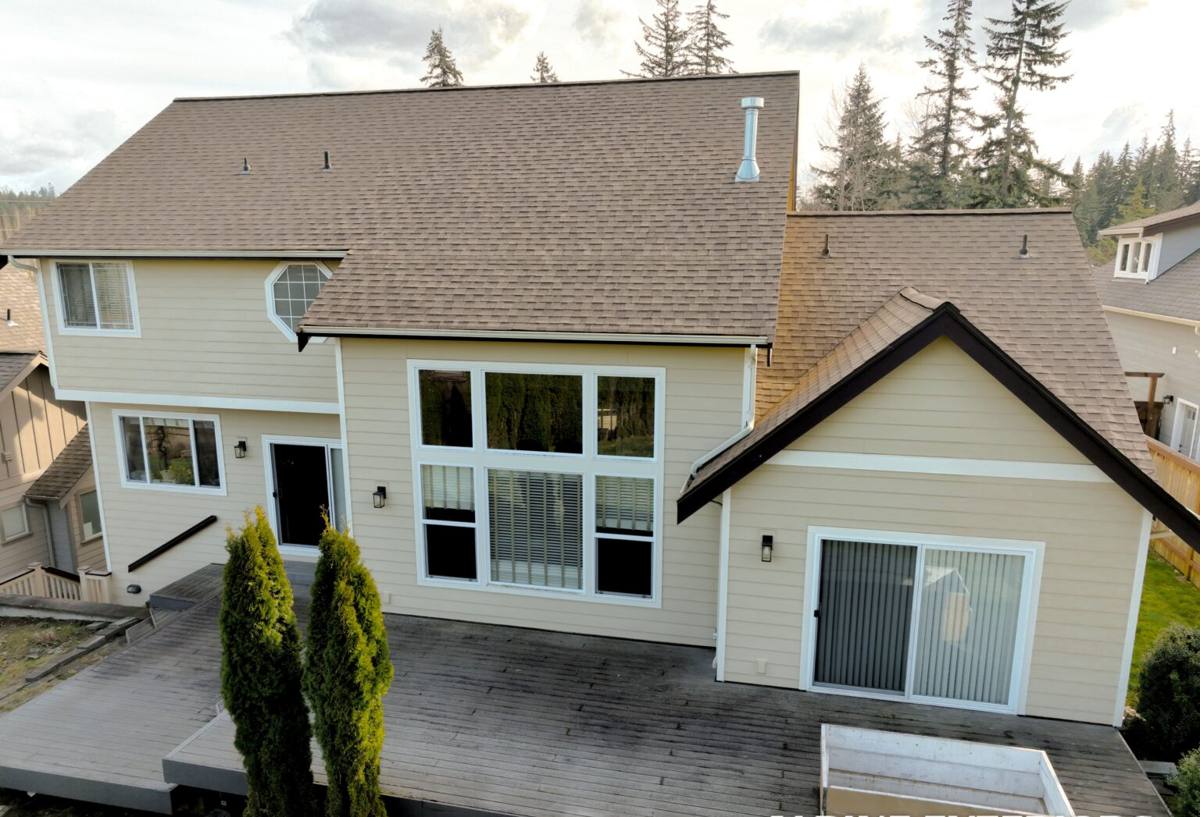
What Whatcom County Weather Does to Vertical Siding
Three things matter most for board & batten performance here:
- Salt air: Proximity to Bellingham Bay means airborne salt exposure that accelerates corrosion on exposed fasteners, cheap flashing, and unprotected metal trim — a real issue on a siding style that relies on a lot of nailing through battens.
- Driving rain: Wind-driven rain doesn't just fall straight down; it gets pushed sideways into vertical seams and batten edges, which is exactly where board & batten is most vulnerable if there's no drainage plane behind it.
- Moss season: Whatcom County's wet, shaded stretches (roughly fall through spring) give moss and algae months to establish on any siding surface that stays damp — north-facing walls, shaded battens under eaves, and any spot where water sheds slowly instead of draining away.
None of this means board & batten is a bad choice for a Sunnyland home. It means the material and the installation details have to be matched to what this climate actually does, not to what looks fine on a sunny install day.
Why We Install Board & Batten Only in James Hardie Fiber Cement
Board & batten can be built out of several materials — vinyl panels styled to look like board & batten, engineered wood products like LP SmartSide, primed spruce boards and battens, cedar, or fiber cement. We've made a deliberate decision to install board & batten in one material: James Hardie fiber cement. Here's the honest reasoning, not a sales pitch.
Vinyl board & batten is inexpensive and low-maintenance in the sense that it won't rot, but it's thin, it expands and contracts with temperature swings, and the vertical battens can telegraph waviness over time. It also doesn't hold paint, so your color options are locked to whatever the panel comes in.
Primed spruce and cedar boards and battens look great fresh, but they're wood — they need repainting on a real schedule, they're vulnerable to moisture wicking at end grain and batten seams, and in a climate this wet, that maintenance burden shows up faster than most homeowners expect.
LP SmartSide and other engineered wood panels are an improvement on solid wood in some ways, but they're still wood-based products with edge-swell and moisture-sensitivity concerns, especially at cut ends and seams — the same seams that board & batten multiplies.
James Hardie fiber cement is cement, sand, and cellulose fiber — it doesn't rot, it doesn't feed moss the way organic wood surfaces can, and it's non-combustible. Hardie's factory-applied ColorPlus finish is baked on and warranted against fading and peeling, which matters on a style like board & batten where the batten strips and field boards need to weather evenly for the look to hold up. We standardized on Hardie because it's the one material we can install to a batten-heavy detail and trust for decades, not just for the first few winters.
What a Correct Board & Batten Installation Actually Involves
The visual style of board & batten is simple. The assembly behind it is where the job is won or lost. On every Sunnyland board & batten project, we build to these fundamentals:
A drainage plane behind the cladding
Fiber cement board & batten should be installed over a weather-resistant barrier with a drainage gap — often furring strips or a rainscreen mat — so any water that gets past the battens has somewhere to go and dries out instead of sitting against the sheathing.
Correct batten spacing and fastening
Battens need consistent spacing over the field panels, fastened into structural framing or furring at the intervals James Hardie's installation instructions specify — not just wherever a stud happens to line up. Under-fastened battens work loose in driving wind; over-fastened or misplaced fasteners crack the board.
Flashing at every horizontal transition
Window heads, water tables, roof-to-wall intersections, and any horizontal trim board need proper flashing and correct lap direction. Board & batten's vertical seams make horizontal transitions the highest-risk spots on the whole wall for wind-driven rain intrusion.
Gaps and sealant at the right joints, not all of them
Hardie's manufacturer details call for specific gaps at butt joints and trim intersections, sealed with the right sealant — not caulk smeared over every seam as a catch-all. Sealant is a backup to good flashing, not a substitute for it.
Corrosion-resistant fasteners throughout
Given the salt air here, we use fasteners rated for the exposure rather than whatever's cheapest — a detail that doesn't show on install day but shows up as rust streaking and loosened battens within a few years if skipped.
Board & Batten Compared to Other Siding Styles for Sunnyland Homes
Board & batten isn't the only option, and it isn't always the right one for every elevation. Here's how it stacks up against the styles we install most often in this area, all assuming James Hardie fiber cement as the material:
| Style | Best fit | Moisture risk profile | Typical use in Sunnyland |
|---|---|---|---|
| Board & Batten | Craftsman, farmhouse, modern builds; gables and accents | Higher seam count; needs strict flashing and drainage detail | Full walls or accent gables/dormers |
| Lap Siding (HardiePlank) | Traditional and most home styles | Lower seam exposure; horizontal laps shed water naturally | Most common full-home choice |
| Shingle/Shake Panel (HardieShingle) | Cottage and traditional coastal styles | Moderate; textured surface can hold moisture slightly longer | Gable accents, dormers |
| Panel Siding (smooth or textured) | Modern and minimalist designs | Similar seam concerns to board & batten without the battens | Accent walls, modern infill homes |
Board & batten earns its place when the architectural style calls for it and when it's installed to the standard above. We'll tell you honestly if a different style is a better fit for your home's exposure before we recommend board & batten just because it's requested.
How We Approach a Board & Batten Project in Sunnyland
Our process is the same discipline on every job, adjusted for what board & batten specifically demands:
- On-site assessment: We walk the exterior, check current siding and sheathing condition, note exposure direction relative to prevailing wind and rain, and flag any existing moisture damage before quoting.
- Detail plan for flashing and drainage: Before any board goes up, we plan out water table, window, and roofline flashing specific to your home's geometry — this isn't a generic step, it changes house to house.
- Substrate prep: Damaged sheathing or trapped moisture gets addressed before new siding goes on. Covering a wet wall with new board & batten just hides a problem, it doesn't fix it.
- Installation to James Hardie's published specs: Batten spacing, fastener schedule, gaps, and sealant application follow manufacturer instructions, not shortcuts.
- Final walkthrough: We review the finished wall with you, including how to spot early warning signs down the road.
Maintenance: What Board & Batten Actually Needs Afterward
One of the real advantages of Hardie fiber cement board & batten over wood-based alternatives is how little ongoing maintenance it asks for — but "little" isn't "none," especially with Bellingham's moss season working against you.
- Rinse siding periodically to clear pollen, road grime, and early moss growth before it establishes, particularly on shaded, north-facing walls.
- Keep gutters clean and downspouts directed away from the wall — overflow at a gutter directly above board & batten is a common source of localized staining and moss growth.
- Trim back vegetation that shades battens or keeps them damp longer than the rest of the wall.
- Inspect caulked joints every couple of years and have any cracked or missing sealant addressed before wet season.
- Watch horizontal trim and water table boards specifically — they take the most direct hit from wind-driven rain.
Signs Your Current Siding Needs a Closer Look
Whether you already have board & batten or you're dealing with an older siding style you're thinking of replacing with it, these are the warning signs we look for on Sunnyland homes:
- Persistent moss or algae growth that returns quickly after cleaning, especially on shaded walls
- Soft spots, bubbling, or visible warping in boards or battens
- Rust streaking below fastener heads or metal trim
- Paint that's peeling or chalking unevenly rather than aging uniformly
- Gaps opening up at butt joints or around window and door trim
- Staining patterns that trace back to a specific gutter, downspout, or roofline transition
Why a Crew That Already Works Sunnyland Matters Here
Board & batten done wrong doesn't fail on day one — it fails two, five, or eight winters later, after the crew that installed it is long gone. A contractor who works this specific area regularly knows which elevations in Sunnyland catch the worst of the wind-driven rain, how the shade patterns from mature trees affect moss growth on north walls, and what the salt exposure actually does to fasteners and trim over time here versus a drier inland job. That local pattern recognition is what turns a good-looking install into one that's still performing correctly a decade out.
We install James Hardie fiber cement exclusively because it's the one material we're willing to warranty our work on for the long haul in this climate — not vinyl, not LP SmartSide, not primed wood, not cedar. If you're considering board & batten for a Sunnyland home, we're glad to walk your property, talk through what your specific elevations need, and give you a straightforward, no-pressure estimate using the form below.