 Bellingham Siding
 Why Sunnyland Roofs Wear Differently
Sunnyland sits close enough to Bellingham Bay that salt-laden air reaches every roof in the neighborhood, and it sits far enough into Whatcom County's marine climate that rain isn't an occasional event — it's a season that runs most of the year. Add the shade from mature trees along many Sunnyland streets and you get the third factor: moss and moisture that linger on north-facing slopes long after the rest of the roof has dried out. None of these three things is dramatic on its own. Together, over ten or fifteen years, they're what separates a roof that makes it to its full warranty life from one that starts leaking early.
A roof replacement built for this neighborhood has to account for all three at once — not just swap old shingles for new ones. That's the difference between a roofing job that looks right on installation day and one that's still doing its job a decade later.
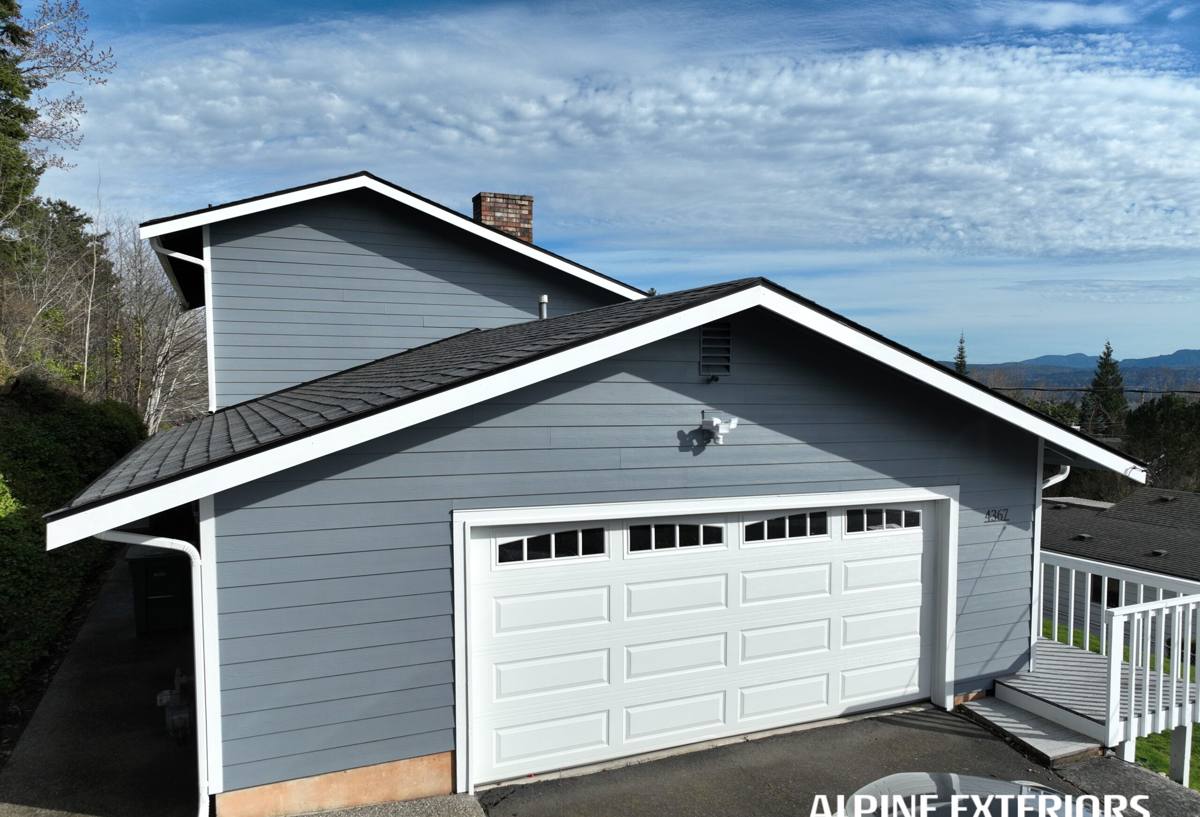
What Bellingham's Climate Actually Does to a Roof
Salt Air
Airborne salt from the bay accelerates corrosion on any exposed metal — nails, flashing, vent stacks, gutter hardware. Cheaper fasteners and untreated flashing can start rusting years before the shingles above them show any wear, and once a nail head corrodes it stops holding properly, which is how small leaks start.
Driving Rain
Bellingham doesn't just get a lot of rain, it gets wind-driven rain, which pushes water sideways and uphill under shingle edges, around chimneys, and into any flashing detail that was cut corners on. A roof that would be fine in a drier climate can still fail here if the underlayment and flashing aren't sized for wind-driven moisture.
Moss Season
Shade, humidity, and mild temperatures give moss and algae a long growing window in Whatcom County — often nine or ten months of the year on shaded slopes. Moss doesn't just look bad; it holds moisture against the shingle surface, lifts shingle edges as it grows, and works its way into fastener holes over time.
Signs a Sunnyland Roof Needs Replacement, Not Another Repair
Not every issue means a full tear-off. But there's a point where patching stops making financial sense and a full replacement becomes the honest recommendation. We look for:
- Granule loss heavy enough that you can see bare asphalt on multiple slopes, not just one worn spot
- Shingles that are cupping, curling, or cracking across a wide area rather than in isolated patches
- Moss growth thick enough that it's lifting shingle tabs, not just staining the surface
- Soft or spongy decking felt underfoot during inspection, which usually means water has already gotten past the shingles
- Repeated leak calls to the same general area of the roof over multiple seasons
- A roof already past 20-25 years old (for standard asphalt composition) regardless of how it looks from the ground
If a roof is showing one or two of these signs in a limited area, repair is usually still the right call. When several show up together, or the roof is already near the end of its expected service life, replacement is the more honest — and often more economical — recommendation than another round of patching.
What a Correct Roof Replacement Involves
A roof replacement is more than removing old shingles and nailing down new ones. In this climate especially, the parts you don't see matter as much as the ones you do.
Full Tear-Off and Deck Inspection
We remove existing roofing down to the deck rather than layering over it. That's the only way to actually see the plywood or plank sheathing underneath and find out whether moisture has already softened or rotted any sections — which is common on older Sunnyland homes where a leak went unnoticed for a while. Any compromised decking gets replaced before anything new goes down.
Underlayment Built for Wind-Driven Rain
Given how much of Bellingham's rain arrives at an angle, we don't treat underlayment as a formality. Synthetic underlayment with properly lapped seams, plus self-adhered membrane at vulnerable points — eaves, valleys, around penetrations — gives the roof a real second line of defense if wind ever pushes water past the shingle surface.
Flashing That Won't Corrode Early
Chimneys, skylights, sidewalls, and vent stacks are where most roof leaks actually originate — not the open field of shingles. We use flashing materials and fasteners suited to salt-air exposure, and we form and seat them correctly rather than relying on caulk to make up for a poor fit.
Ventilation Sized to the Roof
Balanced intake and exhaust ventilation keeps the attic space closer to outdoor temperature and humidity, which reduces condensation buildup in our damp climate and helps shingles last through their full expected lifespan instead of failing from the underside first.
Moss-Resistant Details on Shaded Slopes
On the sections of a roof that stay shaded most of the day, we factor moss resistance into the shingle choice and, where it makes sense, install zinc or copper strips near the ridge — a low-maintenance way to slow regrowth on the slopes that need it most.
Comparing Roofing Materials for This Climate
Most Sunnyland roof replacements land on architectural asphalt shingles, but it's worth understanding the honest trade-offs between the common options before deciding.
| Material | Typical Lifespan | Moss/Moisture Behavior | Relative Cost |
|---|---|---|---|
| 3-Tab Asphalt | 15-20 years | Lower moss resistance; economical but shortest service life here | Lowest |
| Architectural (Laminate) Asphalt | 25-30 years | Better moss resistance with algae-resistant granules; good balance for this climate | Moderate |
| Standing Seam Metal | 40-50+ years | Sheds moisture and moss very well; higher upfront cost, lowest long-term maintenance | Highest |
| Synthetic/Composite Shake | 30-40 years | Good moisture resistance; installation quality matters more than with asphalt | Moderate-High |
We don't push one product line as a default. The right call depends on how long you plan to stay in the home, how much shade the roof gets, and what budget you're working with — we'll walk through the honest trade-offs for your specific roof rather than a generic pitch.
Our Process for a Sunnyland Roof Replacement
- On-site inspection — we walk the roof and attic, note existing damage, ventilation, and any shaded/moss-prone areas that need specific attention
- Written estimate — clear scope, material options, and cost factors explained, not just a bottom-line number
- Scheduling around weather windows — we plan tear-off days around Bellingham's forecast rather than gambling on an open deck in the rain
- Tear-off and deck repair — old roofing removed, decking inspected and repaired as needed
- Underlayment, flashing, and ventilation installed — the parts of the job that determine how the roof performs in ten years, not just how it looks this week
- New roofing installed — to manufacturer specification, with attention to nailing pattern and exposure, which affects wind and rain performance
- Cleanup and final walkthrough — magnetic sweep for stray fasteners, debris hauled off, and a walkthrough so you know what was done and why
Why a Crew That Already Works Sunnyland Matters
A roof replacement isn't a generic job you can plan the same way in every zip code. A crew that already works in Sunnyland and the surrounding Bellingham neighborhoods knows which streets get heavier tree cover and need extra moss-prevention detailing, which areas catch the worst of the wind off the bay, and how local permitting and inspection typically move through Whatcom County. That familiarity shows up in fewer surprises mid-project and a roof that's actually built for the block it's on, not a one-size-fits-all install.
It also means accountability. A crew that lives and works in this area has a reputation to maintain with neighbors, not just a single job to finish and move on from.
What to Ask Before You Hire
- Is the roofing crew licensed and insured in Washington State, and can they provide proof?
- Will they do a full tear-off, or are they proposing to layer over existing shingles?
- What underlayment and flashing materials are included, not just the shingle brand?
- How is attic ventilation being assessed and addressed as part of the job?
- What's the manufacturer's warranty, and is the installer certified to offer any enhanced warranty coverage?
- How do they plan around Bellingham's rain when scheduling tear-off and dry-in?
If your Sunnyland roof is showing its age or you just want an honest read on how much life it has left, we're happy to take a look. Fill out the form below for a free, no-pressure estimate — no obligation, just a clear picture of what your roof actually needs.