 Bellingham Siding
 Storm Damage Roof Repair Built for Sunnyland's Climate
Sunnyland sits close to Bellingham Bay, and that proximity shapes everything about how roofs age here. Salt-laden marine air moves through the neighborhood year-round, driving rain comes in sideways off the water during winter storms, and the tree cover and shade common to this part of Bellingham keep roof surfaces damp long after a storm has passed. That combination doesn't just cause dramatic storm damage during a single wind event. It also grinds away at a roof quietly, season after season, until a storm finally exposes weaknesses that were building for years. When we get a call for storm damage repair in Sunnyland, we're rarely looking at just one problem. We're usually looking at a roof that had a head start toward failure before the wind ever picked up.
This page is specifically about storm damage roof repair for Sunnyland homes, not a general roofing overview. The goal is to explain what actually happens to roofs in this neighborhood during and after storms, what a correct repair looks like, and how our process works from the first call to a finished job.
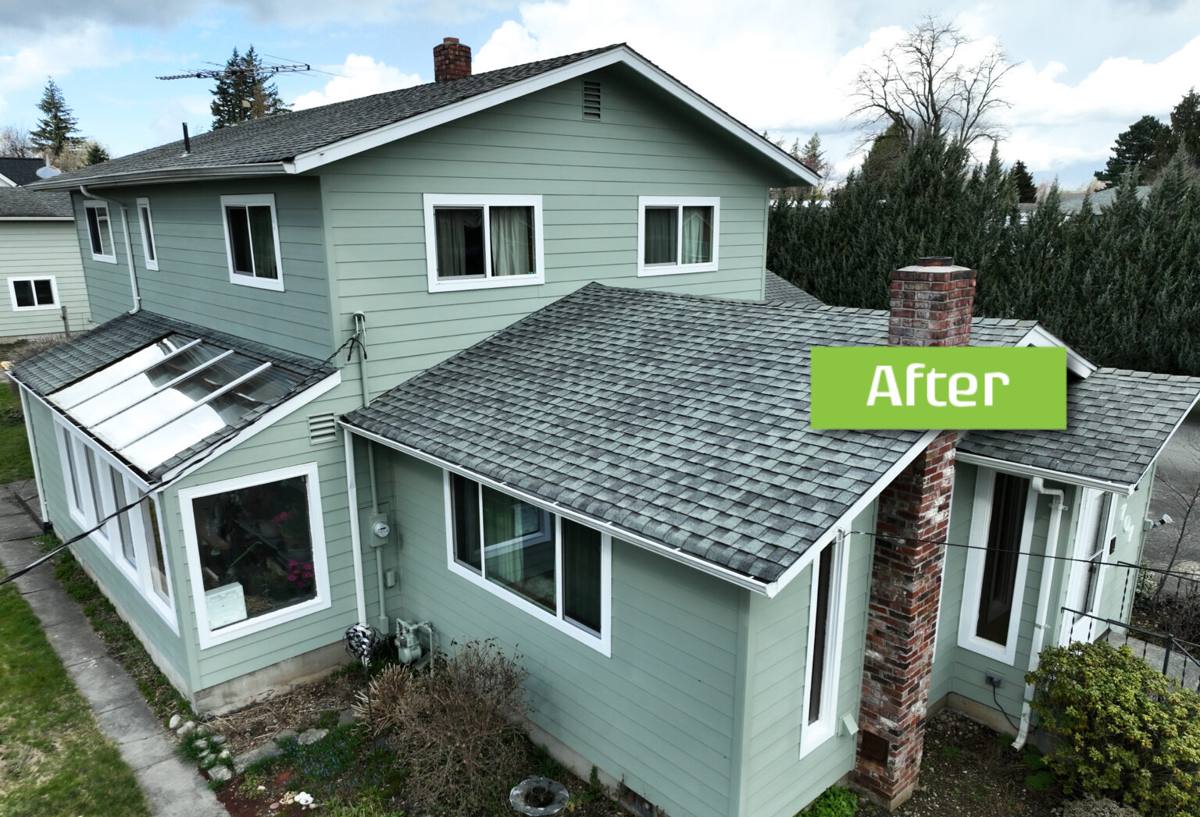
What Storm Damage Actually Looks Like in Sunnyland
Wind and Wind-Driven Rain
Whatcom County storms moving in off the Salish Sea tend to push rain sideways rather than dropping it straight down, which puts stress on roof edges, ridge caps, and any shingle or flashing detail that assumes water only arrives from above. Wind uplift can loosen or tear shingles along eaves, rakes, and ridgelines even when the rest of the field looks fine, and once a shingle tab lifts, wind-driven rain has a direct path underneath it.
Debris Impact
Sunnyland's mature tree canopy is part of what makes the neighborhood pleasant to live in, and it's also a source of storm damage. Falling limbs, wind-thrown branches, and accumulated needles and leaves in valleys can crack shingles, dent flashing, and clog drainage paths during and after a storm, and the damage isn't always visible from the ground.
Moss and Long-Term Moisture Damage
A long moss season is part of daily life for roofs in this part of Bellingham. Moss holds moisture against shingles well after a storm has cleared, which softens granule adhesion, degrades the shingle mat underneath, and can lift edges enough for wind to get a grip during the next storm. A roof already carrying moss damage is far more vulnerable to storm damage than a clean one, which is why moss condition is one of the first things we check on a storm call, even if the homeowner only called about a visible leak.
What a Correct Storm Damage Repair Involves
A storm damage repair that's done right isn't just about replacing the shingles that are obviously missing. It requires checking the roof as a full system, because storm damage in Sunnyland's climate rarely stays contained to the spot where it first shows up.
- Decking inspection: Where shingles have been missing or lifted for any length of time, we check the plywood or OSB decking underneath for soft spots, delamination, or rot before any new material goes down.
- Underlayment continuity: Storm repairs need underlayment that ties into the existing roof system correctly, not a patch that leaves a seam where water can track sideways.
- Flashing at penetrations and transitions: Chimneys, vents, skylights, and roof-to-wall transitions are common failure points during wind events, and flashing at these areas needs to be re-secured or replaced, not just caulked over.
- Matching shingle material: Where a full replacement isn't needed, we match shingle type, weight, and where possible color as closely as the market allows, so a repair doesn't stand out or leave a mismatched seam that ages differently than the rest of the roof.
- Ventilation check: A roof that isn't ventilating properly holds moisture underneath the deck, which compounds storm damage and shortens the life of any repair done on top of it.
Repair Versus Replacement After a Storm
Not every storm call in Sunnyland ends in a full roof replacement, and we don't default to recommending one. The right call depends on how much of the roof is affected, how old the existing roofing is, and what we find once we're actually up there.
| Situation | Typical Approach | Why |
|---|---|---|
| Isolated shingle loss or wind lift, roof under 10-12 years old | Targeted repair | Localized damage on a roof with remaining service life can usually be fixed without disturbing the rest of the system |
| Repeated storm damage in the same area over multiple seasons | Repair plus root-cause check | Recurring damage in one spot often points to a ventilation, flashing, or drainage issue that a patch alone won't fix |
| Widespread granule loss, curling, or moss damage across the roof | Full replacement likely | A roof already near the end of its service life often can't hold a repair through the next storm season |
| Storm damage plus visible decking rot | Depends on extent | Small areas of rotten decking can be replaced during a repair; widespread rot usually means the roof needs full replacement |
We'll walk you through which category your roof falls into and why, in plain terms, before we talk about scope or cost.
Our Storm Damage Repair Process
1. Initial Call and Roof Assessment
We start with a conversation about what you've noticed, whether it's a specific leak, visible shingle loss, or just concern after a bad windstorm. We then schedule a physical inspection of the roof, not just a look from the driveway.
2. Documentation
We photograph and document the damage we find, both for your records and to support an insurance claim if you're pursuing one. This includes damage that isn't visible from the ground, like lifted flashing or soft decking under an intact-looking shingle.
3. Honest Scope and Estimate
We explain what needs to happen, why, and give you a written estimate that separates emergency stabilization (like a tarp or temporary patch to stop active leaking) from the permanent repair. If we think a repair won't hold and full replacement makes more sense, we'll say so plainly rather than sell you a patch we don't believe in.
4. The Repair Itself
We match materials, tie new work into the existing roof system correctly, and clean up debris and old material before we leave. We don't consider a storm repair finished until the roof is watertight and the repair blends into the surrounding roofline rather than leaving an obvious seam.
Working With Insurance on Storm Damage Claims
Many storm damage repairs in Sunnyland involve a homeowner's insurance claim, and we can support that process with documentation and a clear scope of work, but the claim itself is between you and your insurer. We're not adjusters and won't promise a specific claim outcome. What we can do is give you an honest, itemized assessment of the damage and the repair it actually requires, which is the kind of documentation that holds up when an adjuster reviews it.
Signs Your Sunnyland Roof Should Be Inspected After a Storm
- Shingles visible in the yard or gutters after a windstorm
- Water staining on interior ceilings or upper walls following heavy rain
- Visible gaps, lifted tabs, or curling shingles from the ground
- Moss buildup that's thickened noticeably since the last dry season
- Granules collecting in gutters or at downspout outlets
- Daylight visible through the attic roof deck
- A roof that's due for its 10-15 year inspection and hasn't had one recently
Any one of these on its own isn't necessarily an emergency, but after a storm they're worth a real inspection rather than a wait-and-see approach, since a small gap left through another wet season tends to become a much larger repair.
Why a Crew That Already Works Sunnyland Matters
A roofing crew that regularly works Sunnyland and the surrounding Bellingham neighborhoods has seen how this specific combination of bay-adjacent wind exposure, tree cover, and a long moss season plays out on real roofs across full storm seasons, not just in isolated jobs. That experience shows up in practical ways: knowing which roof orientations in the neighborhood take the worst of the wind-driven rain, which shingle and flashing details hold up and which don't, and how to tell the difference between fresh storm damage and older moss-related deterioration that a storm simply exposed. It also means a faster, more accurate assessment, because we're not learning the neighborhood's weather pattern for the first time on your roof.
If a recent storm has left your Sunnyland home with missing shingles, a leak, or just some uncertainty about what the wind actually did up there, we're glad to take a look. Reach out using the form below to schedule a free, no-pressure estimate.