 Bellingham Siding
 Board & Batten Siding Built for York, Not Just Sold to It
York is one of the pockets of Bellingham where board and batten still makes visual sense — the vertical lines pair well with the mix of older cottages, mid-century ranches, and newer infill homes you see through this part of Whatcom County. It's a clean, confident look. But board and batten is also one of the least forgiving siding styles to get wrong, because every vertical seam is a place water can travel if the wall behind it wasn't built to handle moisture. In a marine climate like ours, that detail is the whole job.
This page is about doing board and batten correctly for a York home specifically — what the local weather asks of it, what the installation actually requires underneath the boards you see, and why we only do this work in James Hardie fiber cement.
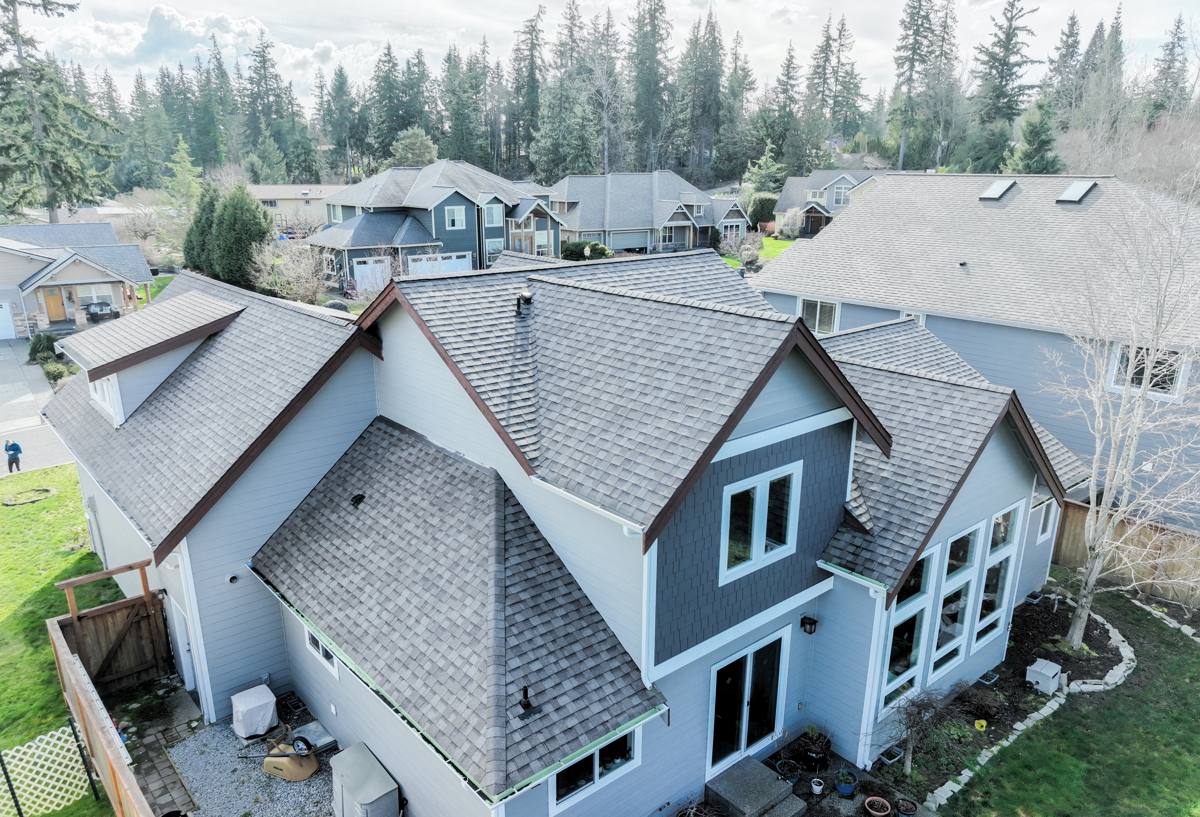
What Bellingham's Climate Does to Board & Batten Siding
Whatcom County sits close enough to the water that salt-laden air is a real factor on siding, fasteners, and trim — not just a coastal-town talking point. Add in the region's long stretch of driving rain each fall and winter, plus a moss season that can run half the year on shaded north- and west-facing walls, and you've got three separate stresses working on the same wall assembly at once.
- Salt air accelerates corrosion on exposed fasteners and cheaper trim hardware, which is why fastener choice and coverage matter more here than in drier inland climates.
- Driving rain, especially wind-driven rain off Bellingham Bay, pushes water sideways into vertical seams that a purely gravity-drained assembly wasn't designed to resist.
- Moss and algae thrive in the shade and moisture that mature York-area trees and closely-spaced lots create, and they hold water against the siding surface far longer than open sun-exposed walls.
None of that is a reason to avoid board and batten. It's a reason to insist on the right materials and the right water management behind them — which is where most board and batten failures actually start.
Why the Vertical Seams Are the Real Test
A lap siding wall sheds water downward across overlapping horizontal joints almost automatically. Board and batten relies instead on a vertical batten covering the seam between two panels, which means the assembly is only as good as the flashing, spacing, and drainage plane behind that batten. If a previous installer caulked the seams and called it done, that's not a drainage system — that's a maintenance liability that will eventually crack, trap water, and rot the sheathing behind it. Correct board and batten construction assumes water will get past the surface occasionally and gives it somewhere to go.
What a Correct Board & Batten Installation Actually Involves
The visible boards and battens are maybe a third of the job. The rest is the part that determines whether the siding lasts 10 years or 40.
Rainscreen Drainage Gap
We install with a drainage gap (rainscreen) between the siding and the weather-resistive barrier, not siding fastened flat against the wall. That gap lets bulk water and moisture vapor drain and dry instead of sitting against the sheathing — a meaningful upgrade in a climate that gets as much sustained rain as Bellingham does.
Flashing at Every Penetration
Windows, doors, hose bibs, light fixtures, and vents all need proper head flashing and kick-out flashing where a roofline meets a wall. This is the step that gets skipped most often on lower-bid jobs, and it's the one that causes the most expensive rot repairs later.
Fastener Selection and Placement
Given the salt air across this part of Whatcom County, we use fasteners rated for coastal exposure, sized and spaced to manufacturer specification — not just "close enough." Under-fastened or wrong-gauge fasteners are a slow failure that doesn't show up for years.
Batten Spacing and Board Layout
Battens need consistent spacing over the panel seams with room for the material to expand and contract without buckling. We plan the layout around window and door openings first so cuts land in sensible places, not wherever a full board happens to end.
Sealant Used Correctly, Not as a Crutch
Sealant belongs at specific transition points, not smeared along every seam as a substitute for flashing. Used as a primary water barrier instead of a backup, caulk fails first and hides the failure until the damage is already inside the wall.
Why We Install James Hardie Board & Batten, and Nothing Else
We standardized on James Hardie fiber cement for every siding job we do, board and batten included, and we don't install LP SmartSide, vinyl, Cemplank, Allura, primed spruce, or cedar board and batten. That's a deliberate call, not a sales position.
For a vertical-seam siding style in a wet marine climate, the material behind the batten matters as much as the detailing:
- Fiber cement doesn't rot. Wood-based and engineered wood products can absorb moisture at cut edges and seams over time; James Hardie's cement composition doesn't feed the mold and rot cycle the way wood fiber can.
- It's non-combustible, which matters in a region that has seen more wildfire smoke and dry-season fire risk in recent years, even west of the Cascades.
- ColorPlus factory finish is baked on and warrantied against fading, so a York home isn't relying on a field-applied paint job to hold up against our rain and UV cycle.
- HZ5 product engineering means the panels themselves are formulated for the freeze-thaw and moisture cycling common to the Pacific Northwest, rather than a generic national spec.
- Transferable warranty backing gives a homeowner real recourse if there's a manufacturing defect, without relying on the goodwill of whoever installed it.
James Hardie's vertical siding system (HardiePanel with HardieTrim battens) is purpose-built for this look, which means the batten spacing, fastening pattern, and drainage details are engineered for the assembly rather than improvised on site.
Our Process on a York Job
- On-site assessment. We look at the existing wall assembly, sheathing condition, moisture history, and any problem areas — north-facing walls under tree cover get extra attention for moss and shade-driven moisture.
- Tear-off and sheathing check. Old siding comes off and we inspect the sheathing underneath before anything new goes up. Hidden rot gets addressed before it gets covered again, not after.
- Weather-resistive barrier and rainscreen install. This is the layer that does the real water-management work, and it's the one a homeowner will never see once the job is finished.
- Flashing at every opening and penetration. Done before panels go up, not patched around afterward.
- Panel and batten installation to James Hardie fastening and spacing specifications, with layout planned around your home's openings.
- Final inspection and walkthrough so you know what was done and what to expect from the finished siding going forward.
What Board & Batten Costs Depend On
| Factor | Why It Moves the Price |
|---|---|
| Existing wall condition | Rot or moisture damage found during tear-off adds sheathing repair before new siding can go on |
| Home size and wall complexity | More corners, gables, and dormers mean more cuts, more flashing, and more labor per square foot |
| Batten spacing and reveal choice | Wider or custom spacing changes material takeoff and layout time |
| Trim and window detailing | Homes with more window and door openings need more flashing and trim work per square |
| Color and ColorPlus selection | Factory-finished panels vs. field-painted trim can shift material cost |
| Access and site conditions | Tight lots, mature landscaping, or multi-story walls affect staging and labor time |
We give a real, itemized number after seeing the specific wall — broad national averages don't account for what's actually behind your siding.
Why a Crew That Already Works York Matters
York isn't a large area, but it has a real mix of home ages and construction types, and a crew that's worked here before recognizes the pattern of problems specific to this part of Bellingham faster than a crew seeing it for the first time — how a given lot's tree cover holds moisture, which orientations take the worst of the driving rain, and what condition older sheathing tends to be in on homes of a certain vintage. That familiarity shortens the assessment phase and reduces surprises mid-job. It also means we're a known, findable local crew if you ever have a warranty question years down the road, not a name from an out-of-area lead-gen call.
Keeping Board & Batten Siding in Good Shape
- Rinse siding annually, especially shaded and north-facing walls, to keep moss and algae from establishing
- Trim back vegetation and tree cover that keeps walls damp and shaded longer than necessary
- Walk the exterior after major windstorms and check for loose battens or trim
- Keep gutters and downspouts clear so roof runoff isn't dumping extra water onto siding or foundation walls
- Repaint or touch up only where ColorPlus finish has been damaged — factory finish shouldn't need routine repainting
- Have caulking at windows, doors, and trim transitions inspected periodically rather than waiting for a visible gap
If you're weighing board and batten for a home in York, we're glad to take a look, walk the exterior with you, and give you a straight, itemized estimate — no pressure, no obligation. The form below is the easiest way to get that started.