 Bellingham Siding
 James Hardie Siding in York: Built for Bellingham's Marine Climate
York is one of Bellingham's older, established in-town neighborhoods, with a housing mix that spans mid-century homes and newer infill tucked in among mature trees. That mix of vintages means a mix of siding problems: some houses are still wearing whatever material they were built with decades ago, others have been re-sided once already with something that didn't hold up the way it was supposed to. Whatever the starting point, every home in York is dealing with the same underlying condition — Whatcom County's marine climate, which pushes salt-tinged air, wind-driven rain, and a moss season that runs most of the year against exterior walls that were never designed with an expiration date in mind.
We work throughout Bellingham and the wider county, and we install James Hardie fiber cement siding exclusively. This page walks through what that actually means for a York home specifically: what the climate does to siding here, what a correct installation looks like, how our process runs from first call to finished wall, and why a crew that already works this neighborhood is worth something a stranger with a truck and a price sheet isn't.
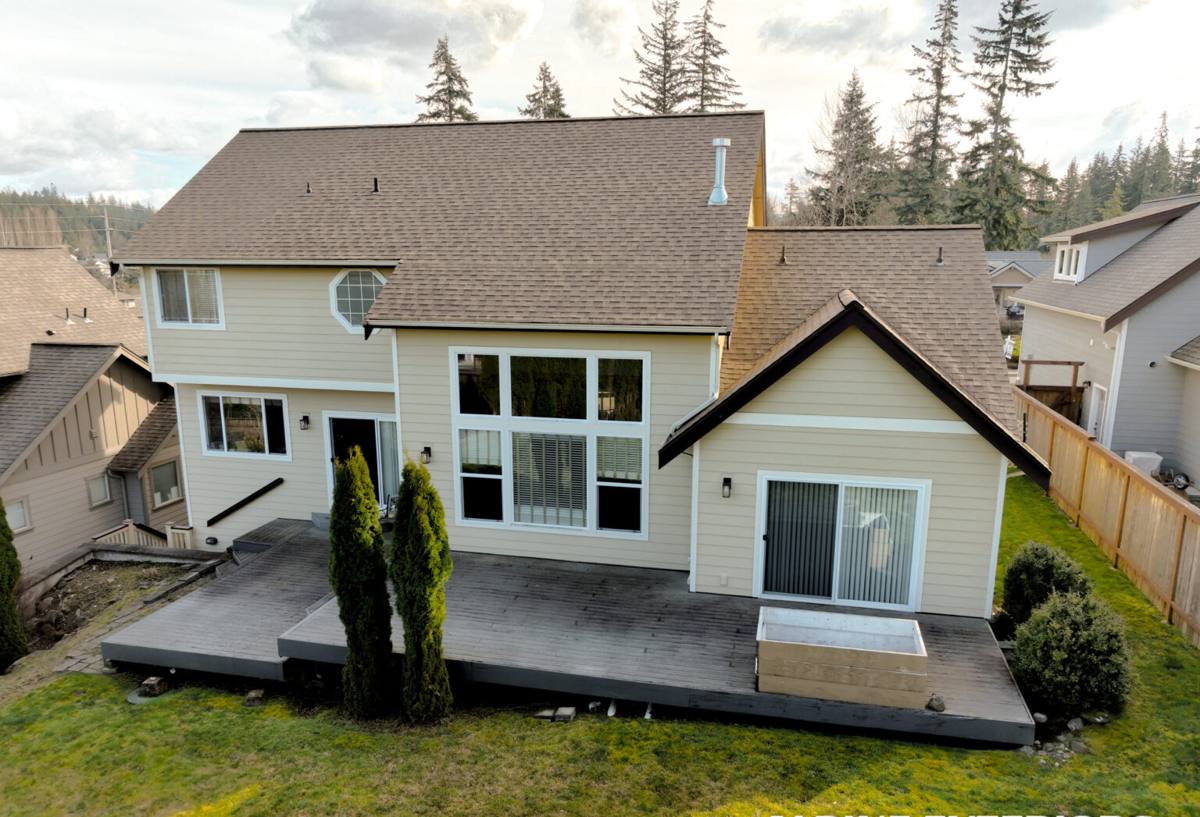
What Salt Air, Driving Rain, and a Long Moss Season Do to a York Home
Salt-Tinged Marine Air
Bellingham sits on Bellingham Bay, and the marine air that comes with that doesn't stop at the waterfront neighborhoods. It moves inland, and York gets a steady, low-grade dose of moisture-laden air even without being right on the water. That kind of exposure isn't dramatic on any single day. It works slowly, on fasteners, on flashing, on lower-grade paint and finishes, and it tends to show up years later as rust bleed at nail heads, caulking that's gone brittle and cracked, or a painted finish that's chalking and fading ahead of schedule.
Wind-Driven Rain
Rain in this part of Washington doesn't just fall straight down. Storms off the Sound and the Strait push rain sideways, and that wind-driven rain finds its way into lap joints, trim seams, and wall penetrations from angles a siding system designed for a calmer, drier region was never really built to handle. A house that would perform just fine in a drier inland climate can still take on water here, purely because of how wind interacts with this coastline and the terrain around it.
A Moss and Mildew Season That Doesn't Really End
Mild temperatures, consistent dampness, and the tree canopy common throughout York's older residential blocks add up to a moss and mildew season that runs long, especially on north-facing walls and anywhere shade keeps a surface from drying out between rain events. Materials that are porous or that hold moisture become a growth surface over time. The problem usually starts in spots homeowners don't check often — behind shrubs, under eaves, along the shaded side of the house — and it's already established by the time it's visible from the street.
Why We Install Only James Hardie Siding
We don't carry a lineup of brands and let price sort out the decision for the homeowner. We install James Hardie fiber cement siding, and only James Hardie, because of what we've consistently seen on tear-offs and repair calls in exactly this kind of wet, salt-exposed climate.
- Non-combustible core: Fiber cement doesn't feed a fire the way wood-based siding products can, which matters for household safety and can matter for insurance considerations too.
- Factory-applied ColorPlus finish: The color coat cures under controlled factory conditions rather than being brushed on at the job site, giving it meaningfully better resistance to fading, chalking, and moisture intrusion over time.
- Climate-engineered HZ product lines: Hardie's HZ5 formulation is built specifically for regions with heavy sustained moisture and freeze-thaw cycling, a closer match to coastal Whatcom County than a generic national spec.
- Dimensional stability: Fiber cement doesn't swell, cup, or warp the way engineered wood products can after repeated wet-season moisture cycles.
- Strong transferable warranty: Hardie backs its products with one of the more substantial warranty structures in the industry, provided installation follows spec.
We don't install LP SmartSide, vinyl siding, Cemplank, Allura, primed spruce, or cedar. Those are legitimate products, and other contractors install them competently. Standardizing on one system lets us understand it completely, install it correctly every time, and stand fully behind the result, instead of offering a cheaper option and quietly letting maintenance risk land on the homeowner later.
What the Alternatives Trade Off in This Climate
| Material | What It Gets Right | The Trade-Off Here |
|---|---|---|
| LP SmartSide | Lower material cost, engineered wood workability | Resin-treated strand core is more sensitive to moisture at cut edges and fastener penetrations than fiber cement in a climate this wet |
| Vinyl siding | Affordable, low routine maintenance | Can warp under direct sun exposure, crack in a cold snap, and trap moisture behind the panel if house wrap and flashing weren't installed carefully |
| Cemplank / Allura | Other fiber cement options, generally similar core material | Different manufacturing and finish specs, and we standardize our crews and warranty backing on one system we know inside and out |
| Cedar / primed spruce | Natural appearance, genuine curb appeal | Needs ongoing painting or sealing to keep moisture out; in a climate this consistently wet, that maintenance schedule tends to slip |
What a Correct James Hardie Installation Actually Involves
Picking the right material is only half the job. A Hardie installation that performs the way it's engineered to depends on installation details that are easy to skip and hard to spot once the wall is closed up.
Fastening and Clearance
Hardie specifies exact fastener types, spacing, and penetration depth, along with minimum clearance from grade, roofline, and decks. Get the clearance wrong and you've built in a moisture problem before the first board is even painted. Get the fastening wrong and boards can work loose or crack over time, especially with the freeze-thaw cycling this region sees in winter.
Flashing and House Wrap as One System
Siding is a water-management system, not just a decorative surface. House wrap, flashing at windows and penetrations, and the siding itself all have to work together to shed water rather than trap it. This is where wind-driven rain finds its way in on a poorly detailed job, and it's also the part of the job that's invisible once the siding is up, which is exactly why it has to be done right the first time.
Joints, Caulking, and the ColorPlus Finish
Lap joints need to be cut, gapped, and sealed to spec so they can move with seasonal humidity swings without opening up a path for water. And one of the real advantages of ColorPlus prefinished siding is that it doesn't need to be caulked and painted at every field-cut edge the way older systems did — but the cut edges that are exposed still need to be treated correctly, or you lose part of what you paid for in factory finish durability.
How Our Process Works, From Estimate to Finished Wall
- Walk-through and assessment: We look at the actual condition of your walls, not just the visible siding — trim, flashing, window integration, and any soft spots that hint at what's happening underneath.
- Honest scope and written estimate: You get a written plan that specifies the Hardie product line, color, fastening approach, and flashing details, not just a square-footage number.
- Substrate check at tear-off: Once old siding comes off, we check sheathing and framing for hidden moisture damage before anything new goes on. We'll tell you plainly if we find something and what it takes to fix it.
- House wrap and flashing installed as one system: This is the step that determines whether the siding actually keeps water out for the next several decades, and we don't rush it.
- Hardie installation to manufacturer spec: Correct fastening, clearance, and joint detailing throughout, not just on the parts of the wall that are easy to see from the street.
- Final walk-through: We go over the finished job with you before we consider it done.
Repair or Full Replacement? How We Make That Call
Not every siding problem on a York home means tearing the whole house down to the studs. Isolated impact damage, a section that's failed around a window, or trim that's worked loose can often be repaired and matched into existing Hardie siding without a full replacement. But when moisture has been tracking behind the wall assembly for a while, or the existing siding is an older material that's simply reached the end of its usable life, a patch job tends to just delay a bigger, more expensive project. We'll give you a straight read on which situation you're actually in before we recommend either path.
What James Hardie Siding Costs in York
| Factor | What It Affects | Why It Matters Here |
|---|---|---|
| Home age and wall complexity | Total material and labor | York's mix of older homes and newer infill means trim detail and roofline complexity vary a lot house to house |
| Tear-off vs. overlay | Labor scope and substrate access | Tear-off exposes hidden moisture damage that's common under decades-old siding in this climate |
| Substrate condition | Repair costs before new siding goes on | Years of trapped moisture behind failing siding can rot sheathing before it's ever visible from outside |
| Tree cover and shade | Prep and maintenance planning | Heavier tree canopy common in York's older blocks extends moss season and can affect drying time during installation |
| Trim and color selection | Material cost and finish longevity | ColorPlus factory finishes outlast field-applied paint against salt air and UV exposure over the life of the siding |
Real numbers depend on the specific house, which is why we walk the property in person before quoting instead of pricing off square footage alone.
Signs a York Home's Siding Needs Attention
- Moss or dark staining that returns quickly after cleaning, especially on shaded or north-facing walls
- Soft or spongy siding, particularly near the base of the wall or around window and door trim
- Peeling, bubbling, or chalking paint on siding boards or trim
- Cracked, chipped, or missing siding sections after wind events
- Visible gaps at seams, corners, or trim joints where water can track in
- Rust staining around fasteners or flashing, an early sign of marine air exposure
- Rising heating bills that may point to a wall assembly that's no longer sealing properly
Why Hiring a Crew That Already Works York Matters
A crew that regularly works this part of Bellingham has already seen how salt air, wind-driven rain, and moss behave on real houses over a full year, not just how a product performs on a spec sheet. That translates into practical decisions on install day — where extra flashing attention actually pays off, which wall orientations stay damp longest, and which details are worth the extra time so you're not dealing with a callback two winters later. York's mix of older housing stock and mature tree cover isn't identical to conditions in every other Bellingham neighborhood, and a crew with real local experience accounts for that instead of applying a one-size-fits-all approach to every job.
If your York home needs new siding, a repair, or just an honest opinion on what's actually going on behind an aging wall, we're glad to take a look. Reach out using the form below to schedule a free, no-pressure estimate.