 Bellingham Siding
 Metal Roofing Built for York's Climate
Homes in York sit close enough to the water and the tree canopy that roofs here take a specific kind of beating: salt-laden air off Bellingham Bay, long stretches of driving rain that comes in sideways during winter storms, and a moss season that can run eight or nine months out of the year under shaded, north-facing slopes. A roof that's rated for "the Pacific Northwest" in general terms doesn't always account for what a York roof actually deals with day to day. Metal roofing, installed correctly, handles all three of those stressors better than most other roofing materials available at a comparable price point — but "installed correctly" is doing a lot of work in that sentence, and it's the part most homeowners never get a straight answer on.
We install metal roofing throughout York and the surrounding Bellingham area, and this page walks through what the material actually needs to perform here, what a correct installation involves, and how we run the job from first call to final walk-through.
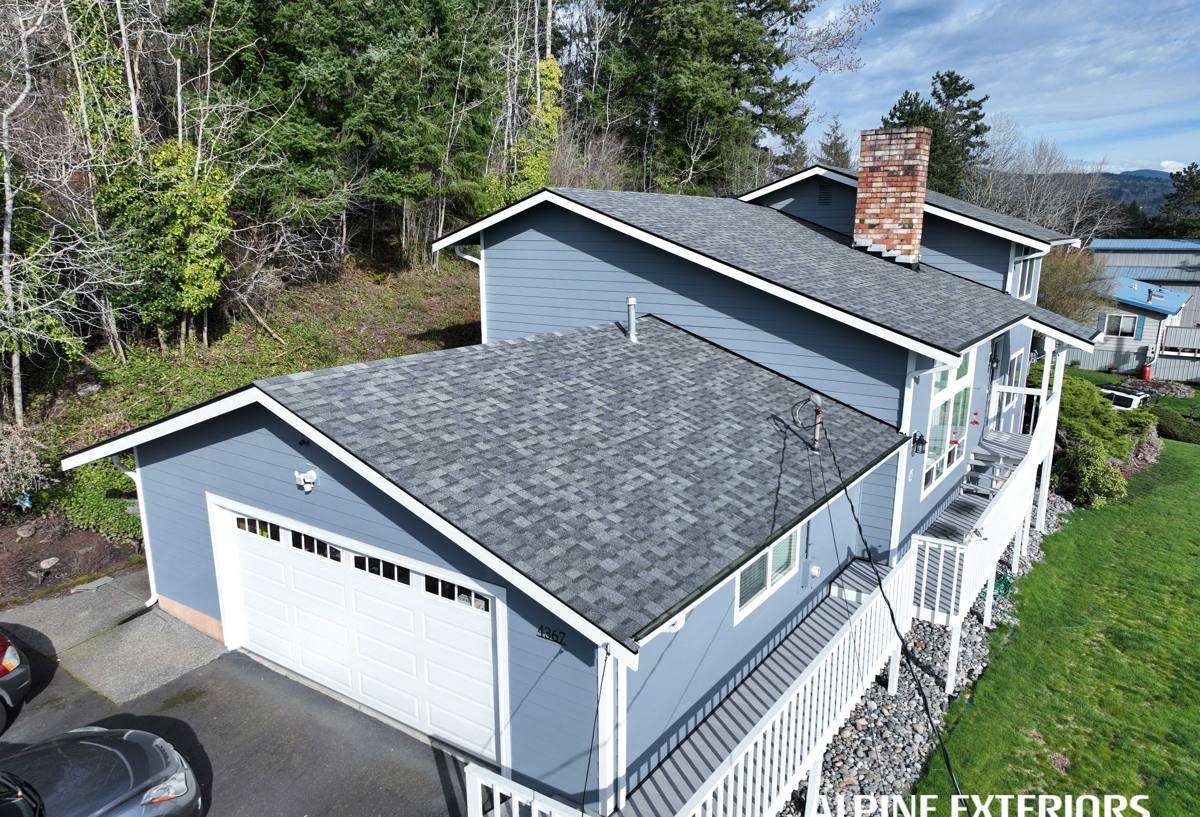
Why Metal Roofing Suits This Corner of Whatcom County
Salt Air and Corrosion
Proximity to the bay means airborne salt settles on every exterior surface, roofs included. Bare or poorly coated metal will corrode faster near the water than it will further inland. This isn't a reason to avoid metal roofing — it's a reason to be specific about which metal, which coating, and which fastener system goes on a York roof versus a roof twenty miles inland. Aluminum and properly coated steel both hold up well here; the coating and finish matter more than the base metal in most cases.
Driving Rain and Wind-Driven Water
Storms coming off the Strait of Georgia don't always fall straight down. Wind-driven rain gets pushed sideways and upward under eaves, around chimneys, and into any seam that isn't properly lapped or sealed. Standing seam metal roofing, when the panels are correctly interlocked and the flashing details are done right, sheds this kind of water far more reliably than shingle systems that depend on gravity and overlap alone.
Moss and Shaded Slopes
York has enough mature tree cover that many roofs have at least one slope that rarely sees direct sun. That's prime moss territory. Moss holds moisture against the roof surface, and on organic materials like asphalt shingles or wood shakes, that trapped moisture accelerates decay. Metal doesn't give moss the same foothold — there's no granule bed or wood grain for spores to root into — and a smooth, properly sloped metal panel sheds moss growth far more easily than it would establish on a textured or absorbent surface.
What a Correct Metal Roof Installation Actually Involves
A lot of roofing problems we get called out to inspect aren't material failures — they're installation shortcuts. Metal roofing is less forgiving of sloppy work than shingles because the whole system relies on tight, continuous seams rather than layered overlap. Here's what we consider non-negotiable on every metal roof we install:
- Proper underlayment — a high-temperature, self-adhered underlayment at eaves, valleys, and penetrations, not just felt paper
- Correct panel fastening — concealed clip systems for standing seam so panels can expand and contract with temperature changes without stressing the seams
- Full flashing at every penetration — chimneys, vents, skylights, and wall transitions, custom-formed rather than pieced together from stock trim
- Ice-and-water protection in valleys and at eaves, given how much of our rain arrives as sustained, heavy volume rather than brief showers
- Ventilation planning so the attic space underneath doesn't trap the moisture the roof itself is keeping out
Skip any one of these and you can end up with a roof that looks right for a few years and then leaks at exactly the spot that was cut short.
Choosing a Metal Roofing System
Not every metal roofing product is the same, and the differences matter more in a coastal, wet climate than they would in a dry one. We walk York homeowners through the trade-offs honestly rather than pushing whatever's easiest to install.
| System | Typical Use | Strengths in This Climate | Trade-offs |
|---|---|---|---|
| Standing seam (steel or aluminum) | Full roof replacement, higher-end remodels | Concealed fasteners, best water-shedding, longest service life | Higher upfront cost, requires skilled installation |
| Exposed-fastener metal panels | Budget-conscious replacements, outbuildings | Lower cost, faster install | Fasteners can loosen over time and need re-torquing; more maintenance |
| Metal shingle/shake panels | Homes wanting a traditional look with metal performance | Matches shingle or shake aesthetics, good water-shedding | More seams than standing seam, slightly more installation labor |
For most York homes, especially anything within a mile or two of the water, we lean toward standing seam with a marine-grade coating rated for coastal exposure. It costs more up front, but the concealed fastener design removes the single most common failure point on metal roofs in salt-air environments: fasteners that back out or corrode over the decades.
How We Approach a Metal Roofing Project in York
Assessment and Estimate
We start with an on-site look at the existing roof structure, decking condition, ventilation, and any problem areas — moss buildup, past leak staining, sagging valleys. Because we work in this part of Bellingham regularly, we already have a sense of which streets and slope orientations in York tend to hold moss longest or catch the worst of the wind-driven rain, and that shapes the recommendation we give you.
Deck and Structure Check
Metal roofing is lighter than many people assume, but it still needs a sound deck underneath. If moss and trapped moisture have been sitting on the old roof for years, there's a real chance of soft or rotted decking underneath, especially at eaves and valleys. We check this before panels go on, not after — finding rot mid-install turns a clean job into a delayed one, and we'd rather flag it during the estimate.
Installation
Panels are measured and, where the system allows, formed to the specific run lengths of your roof to minimize seams. Underlayment goes down first, flashing is fabricated and installed at every penetration and transition, and panels are set with the fastening method appropriate to the system — concealed clips for standing seam, properly spaced and torqued fasteners for exposed-fastener panels.
Final Walk-Through
Before we call a job done, we walk the roof and the ground-level sightlines with you, check flashing and seam lines, and confirm gutters and downspouts are tied in correctly so water actually leaves the roof rather than pooling at a transition point.
Maintenance: What a Metal Roof Needs (and Doesn't)
One of the honest selling points of metal roofing is how little ongoing maintenance it needs compared to shingles or wood — but "little" isn't "none," especially with York's tree cover and moisture.
- Clear debris (needles, leaves, small branches) from valleys and around penetrations once or twice a year, more often under heavy tree cover
- Check gutters and downspouts stay clear so water leaving the roof has somewhere to go
- Look for early moss or algae streaking on shaded slopes and address it before it spreads — it's much easier to remove from metal than from shingles
- Have flashing and seams visually checked every few years, particularly after major windstorms
- Avoid pressure-washing the panel finish directly — a soft wash with the right cleaner protects the coating better than high-pressure water
Compare that to an asphalt roof under the same tree cover, which typically needs moss treatment, granule-loss monitoring, and more frequent inspection just to reach a fraction of a metal roof's service life.
Cost Factors Homeowners Should Understand
Metal roofing costs more upfront than asphalt shingles, and the range is wide enough that a single number isn't useful without context. What actually moves the price on a York job:
| Factor | Effect on Cost |
|---|---|
| Panel system (exposed-fastener vs. standing seam) | Standing seam typically costs more due to labor and clip hardware |
| Roof complexity (valleys, dormers, penetrations) | More cuts, flashing, and seams increase labor time |
| Existing deck condition | Rot repair or re-decking adds cost but prevents bigger problems later |
| Coating and material grade | Marine-grade coatings for coastal exposure cost more but reduce corrosion risk near the bay |
| Tear-off vs. overlay | Removing old roofing adds labor but lets us properly inspect and repair the deck |
We'd rather walk you through these trade-offs at the estimate stage than have you compare a lowball number against our quote without knowing what's missing from it.
Why a Local Crew Matters for This Job
Metal roofing installation quality shows up over years, not on move-in day. A crew that hasn't worked much in coastal Whatcom County conditions can install a technically sound roof that still isn't matched to what York's climate actually throws at it — wrong coating grade for the salt exposure, underlayment specs suited to a drier region, or ventilation planning that doesn't account for how much moisture this area holds in the air most of the year. We work on homes throughout Bellingham and the surrounding communities, including York, and that means we're not guessing at what the local weather does to a roof over a ten- or twenty-year span — we're seeing it on the roofs we've already worked on nearby.
If you're weighing metal roofing for a York home — whether it's a full replacement, a re-roof after storm damage, or a decision you're making ahead of a moss problem getting worse — we're happy to come take a look and give you a straightforward estimate with no pressure attached.