 Bellingham Siding
 Why York Roofs Wear Differently Than Roofs Inland
York sits close enough to Bellingham Bay and the Salish Sea that salt-laden air is a constant, low-grade stress on every exposed metal component on a roof — nail heads, flashing, vent boots, gutter hardware. Add Whatcom County's long wet season, where driving rain comes in sideways off frequent southwesterly storms, and you get a roof that has to shed water under wind pressure, not just gravity. Then there's moss. Bellingham's combination of shade, moisture, and mild temperatures gives moss and algae a long growing season, and once it gets a foothold on a roof surface it holds moisture against the material for months at a time.
None of these factors are dramatic on their own. What they do, over years, is compound. A roof installed without that combination in mind — thin underlayment, undersized flashing, poor ventilation — tends to show problems five to ten years earlier here than the same roof would in a drier, calmer climate. A roof installed correctly for York's conditions is a different story.
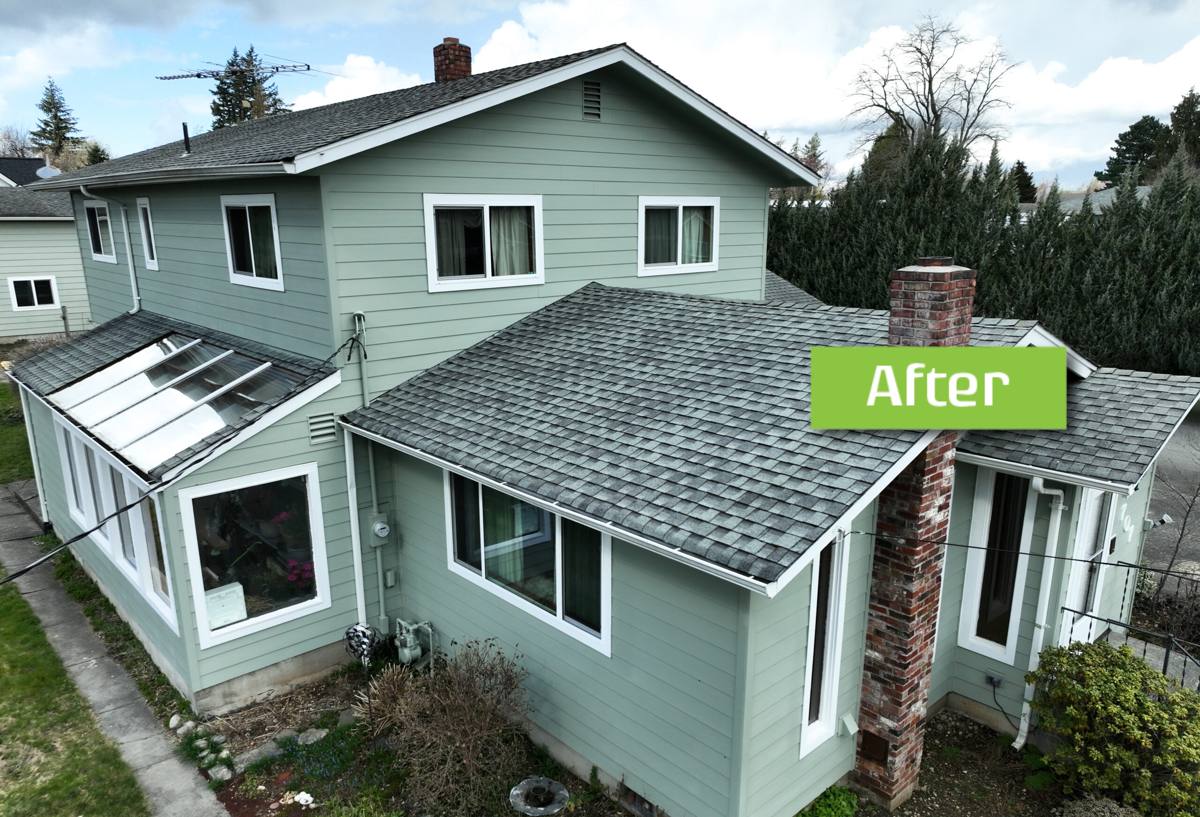
What a Correct New Roof Installation Actually Involves
A new roof is more than shingles nailed to plywood. In a climate like this, the parts you don't see matter as much as the parts you do.
Tear-Off and Deck Inspection
We remove the old roofing down to the deck rather than layering over it. That's the only way to actually see the sheathing — and in this climate, hidden moisture damage around old flashing points, vent penetrations, and valleys is common enough that skipping this step is a real risk. Any soft, delaminated, or water-stained decking gets replaced before anything else goes down.
Underlayment
Given how much wind-driven rain York gets in fall and winter, we use a synthetic underlayment rated for high wind exposure, with self-adhered membrane at eaves, valleys, and any low-slope transitions where water is most likely to be pushed uphill under a shingle edge rather than just running off.
Flashing
Flashing is where most roof leaks actually originate, not the field of the roof itself. Chimneys, skylights, sidewalls, and roof-to-wall transitions all get new metal flashing — not caulked-over old flashing — and we favor corrosion-resistant metals given the salt air exposure this close to the water.
Ventilation
Balanced intake and exhaust ventilation keeps the underside of the deck dry and helps prevent the moss-friendly, moisture-trapping conditions that shorten roof life here. This is covered in more depth below because it's one of the most commonly skipped steps on lower-bid roofing jobs.
Choosing a Roofing System for York's Exposure
There's no single "best" roofing material — the right choice depends on the home's roof pitch, budget, and how much long-term maintenance the owner wants to take on. Here's how the common options compare specifically for a coastal Whatcom County property.
| Material | Performance in Salt Air / Rain | Moss Resistance | Maintenance |
|---|---|---|---|
| Architectural asphalt shingle | Good with proper flashing and fasteners; standard for most York homes | Moderate — benefits from algae-resistant granules | Periodic moss/debris removal |
| Standing seam metal | Excellent when using coastal-rated fasteners and finish | High — moss struggles to grip smooth metal | Low |
| Cedar shake | Requires diligent maintenance near salt air; absorbs moisture | Low without regular treatment | High — not our default recommendation here |
| Synthetic/composite shingle | Good; resists moisture absorption better than wood | Moderate to high depending on product | Low to moderate |
We steer most York homeowners toward architectural asphalt or standing seam metal because both hold up predictably in this climate without demanding constant upkeep. Cedar shake can still be the right call for homeowners set on the look, but we're upfront that it asks for more attention here than in a drier region — that's simply the trade-off of a natural, moisture-absorbing material sitting a few miles from salt water.
Our Installation Process
- On-site inspection and estimate. We walk the roof, check the attic or crawlspace for existing ventilation and moisture issues, and measure for an accurate material quote — not a rough guess.
- Material selection. We go over the options above in the context of your home's pitch, budget, and how it's exposed to wind and rain off the water.
- Permitting. We handle the City of Bellingham permit application so the job is inspected and documented correctly.
- Tear-off and deck repair. Old roofing comes off, the deck is inspected, and any damaged sheathing is replaced.
- Underlayment and flashing installation. This is the layer that determines whether the roof actually stays dry through a wet Whatcom County winter.
- Ventilation correction. Intake and exhaust are balanced to spec, adding or adjusting vents where the existing setup falls short.
- Final roofing material installation. Installed to manufacturer spec, which is also what keeps the material warranty valid.
- Cleanup and final walk-through. Site is cleared of debris and nails, and we walk the finished roof with the homeowner.
Ventilation and Moisture Control: The Part That Prevents Moss
Moss doesn't just land on a roof and cause damage on its own — it thrives where a roof surface stays cool and damp longer than it should, which is exactly what happens when attic ventilation is unbalanced. Warm, moist air trapped under the deck raises the surface temperature and moisture retention of the roofing material from underneath, extending the window each day when moss spores can take hold. Correct intake (usually at the soffit) paired with correct exhaust (ridge or roof vents) keeps air moving and the deck temperature closer to outdoor conditions, which shortens that window.
This is also why moss removal alone is a temporary fix. Scraping moss off a roof with poor ventilation just resets the clock — the underlying conditions that let it grow back are still there. Addressing ventilation during a new roof installation is the point where it's cheapest and easiest to get this right.
Signs a York Home May Need a New Roof, Not a Repair
- Shingles that are cupping, cracking, or missing granules across large sections rather than one isolated spot
- Moss buildup that returns within a season or two of being cleaned off
- Daylight visible through the roof deck from inside the attic
- Soft or spongy spots when walking the roof, indicating deck damage
- Flashing that's rusted, lifted, or was caulked over instead of properly replaced
- A roof nearing or past the expected lifespan of its material, especially if it's never had ventilation reviewed
- Multiple recent leak repairs in different locations — a pattern rather than a one-off
One or two of these on their own might mean a repair is enough. Several together, especially on an older roof, usually mean a repair is a short-term patch on a longer-term problem.
Why a Crew That Already Works in York Matters
York's homes span a range of ages and roof styles, and a crew that regularly works this specific pocket of Bellingham has already seen how the neighborhood's tree cover, roof pitches, and proximity to the water tend to play out over time. That familiarity shows up in practical ways: knowing which older homes are more likely to have outdated or missing ventilation, recognizing typical deck conditions under certain roofing generations, and understanding how the City of Bellingham's permitting and inspection process works so a project doesn't stall waiting on paperwork.
It also means shorter travel time for the crew, easier scheduling around Whatcom County's weather windows, and a contractor who's building a reputation in the same community they're working in — not passing through once and moving on.
Cost Factors for a New Roof in York
Every roof is priced on its own specifics, but the factors that move the number are consistent. We don't publish blanket prices because roof size, pitch, and existing damage vary too much house to house — but here's what drives cost up or down.
| Factor | Effect on Cost |
|---|---|
| Roof size and number of stories | Larger and taller roofs increase labor and material handling |
| Roof pitch and complexity | Steep or multi-valley roofs take longer and require more flashing detail |
| Deck condition found at tear-off | Rotten or delaminated sheathing adds replacement cost |
| Material choice | Asphalt is typically the most budget-friendly; metal costs more upfront but less upkeep |
| Existing ventilation gaps | Adding intake/exhaust vents where none exist adds modest cost, saves on longevity |
| Layers of old roofing | Multiple existing layers add tear-off time and disposal cost |
A detailed, written estimate after an on-site inspection is the only way to get an accurate number — anyone quoting a firm price over the phone without seeing the roof is guessing.
Get a Straightforward Estimate
If your roof in York is showing its age, growing moss faster than it used to, or you just want an honest read on whether repair or replacement makes more sense, we're happy to come take a look. The estimate is free, there's no pressure to book on the spot, and you'll get a clear explanation of what we found and why we'd recommend what we recommend. Fill out the form below to get started.